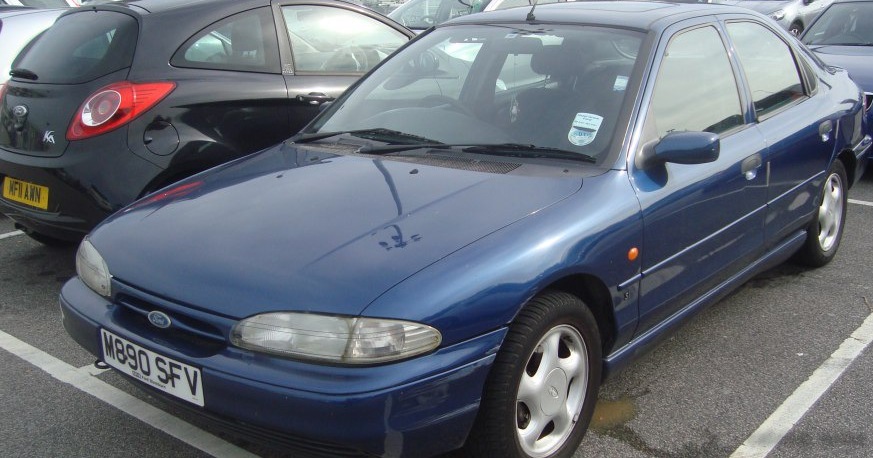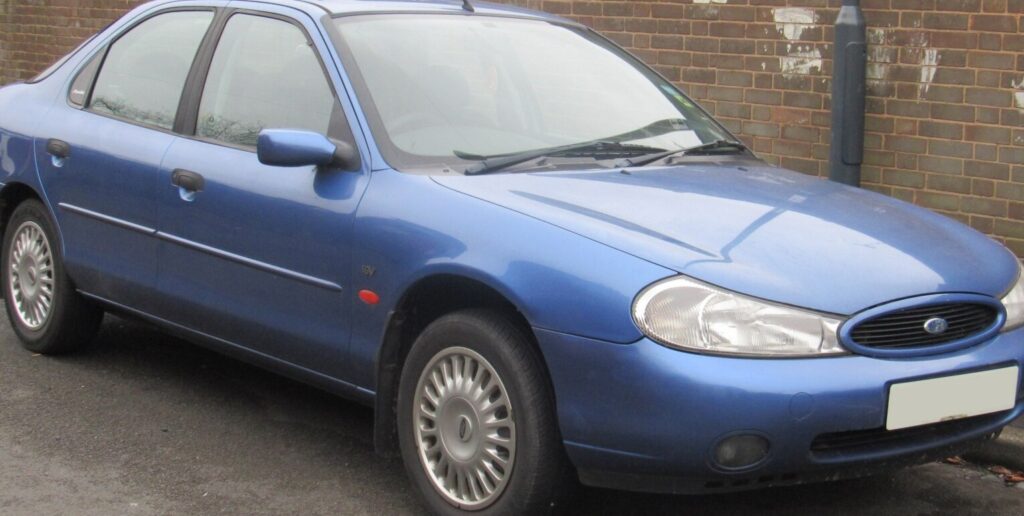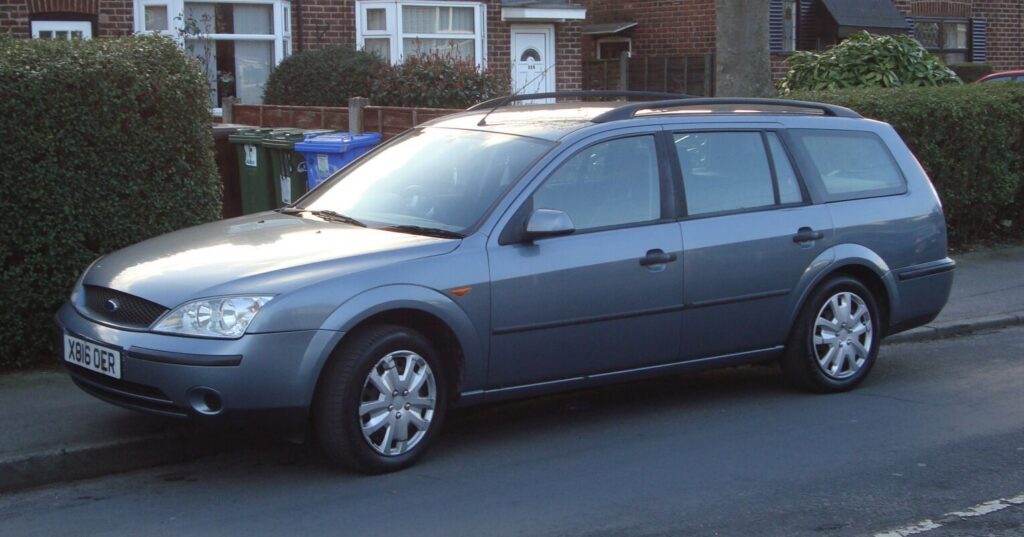
The Ford Mondeo II Wagon 1.8 16V, produced between 2001 and 2007, represented a significant offering in the mid-size station wagon segment. Part of the second generation Mondeo (internally designated as the B500 series), this variant occupied a crucial position in the lineup, providing a balance between affordability, practicality, and reasonable performance. It was primarily aimed at families and individuals seeking a spacious and versatile vehicle for everyday use, particularly in European markets where the station wagon body style remained highly popular. This model was a key component of Ford’s strategy to offer a comprehensive range of Mondeo options, catering to diverse customer needs and budgets.
Technical Specifications
| Brand | Ford |
| Model | Mondeo |
| Generation | Mondeo II Wagon |
| Type (Engine) | 1.8 16V (125 Hp) |
| Start of production | 2001 |
| End of production | 2007 |
| Powertrain Architecture | Internal Combustion engine |
| Body type | Station wagon (estate) |
| Seats | 5 |
| Doors | 5 |
| Fuel consumption (urban) | 11.6 l/100 km (20.3 US mpg, 24.4 UK mpg, 8.6 km/l) |
| Fuel consumption (extra urban) | 5.9 l/100 km (39.9 US mpg, 47.9 UK mpg, 16.9 km/l) |
| Fuel consumption (combined) | 8 l/100 km (29.4 US mpg, 35.3 UK mpg, 12.5 km/l) |
| Fuel Type | Petrol (Gasoline) |
| Acceleration 0 – 100 km/h | 11.2 sec |
| Acceleration 0 – 62 mph | 11.2 sec |
| Acceleration 0 – 60 mph | 10.6 sec |
| Maximum speed | 200 km/h (124.27 mph) |
| Weight-to-power ratio | 11.4 kg/Hp, 87.4 Hp/tonne |
| Weight-to-torque ratio | 8.4 kg/Nm, 118.8 Nm/tonne |
| Power | 125 Hp @ 6000 rpm |
| Power per litre | 69.5 Hp/l |
| Torque | 170 Nm @ 4500 rpm (125.39 lb.-ft. @ 4500 rpm) |
| Engine layout | Front, Transverse |
| Engine Model/Code | CHBA |
| Engine displacement | 1798 cm3 (109.72 cu. in.) |
| Number of cylinders | 4 |
| Engine configuration | Inline |
| Cylinder Bore | 83 mm (3.27 in.) |
| Piston Stroke | 83.1 mm (3.27 in.) |
| Compression ratio | 10.8:1 |
| Number of valves per cylinder | 4 |
| Fuel injection system | Multi-port manifold injection |
| Engine aspiration | Naturally aspirated engine |
| Valvetrain | DOHC |
| Engine oil capacity | 4.3 l (4.54 US qt | 3.78 UK qt) |
| Coolant | 8.1 l (8.56 US qt | 7.13 UK qt) |
| Kerb Weight | 1431 kg (3154.81 lbs.) |
| Max. weight | 2030 kg (4475.38 lbs.) |
| Max load | 599 kg (1320.57 lbs.) |
| Trunk (boot) space – minimum | 540 l (19.07 cu. ft.) |
| Trunk (boot) space – maximum | 1700 l (60.03 cu. ft.) |
| Fuel tank capacity | 58 l (15.32 US gal | 12.76 UK gal) |
| Length | 4804 mm (189.13 in.) |
| Width | 1812 mm (71.34 in.) |
| Height | 1441 mm (56.73 in.) |
| Wheelbase | 2754 mm (108.43 in.) |
| Front track | 1522 mm (59.92 in.) |
| Rear (Back) track | 1537 mm (60.51 in.) |
| Drivetrain Architecture | The Internal combustion engine (ICE) drives the front wheels of the vehicle. |
| Drive wheel | Front wheel drive |
| Number of gears and type of gearbox | 5 gears, manual transmission |
| Front suspension | Wishbone |
| Rear suspension | Coil spring |
| Front brakes | Ventilated discs |
| Rear brakes | Disc |
| Assisting systems | ABS (Anti-lock braking system) |
| Steering type | Steering rack and pinion |
| Power steering | Hydraulic Steering |
| Tires size | 205/55 R16 |
Powertrain & Engine Architecture
The Mondeo II Wagon 1.8 16V utilized the Ford CHBA engine, a 1.8-liter inline-four cylinder gasoline engine. This engine was part of Ford’s Zetec-E family, known for its relatively lightweight construction and decent performance. The ‘16V’ designation indicates the engine featured four valves per cylinder, enhancing breathing and contributing to its power output. Fuel delivery was managed by a multi-port fuel injection system, providing precise fuel metering for improved efficiency and reduced emissions. The engine employed a double overhead camshaft (DOHC) valvetrain, further optimizing valve timing and airflow. The 1.8L engine produced 125 horsepower at 6000 rpm and 170 Nm (125 lb-ft) of torque at 4500 rpm. This power was delivered to the front wheels through a 5-speed manual transmission, although a 4-speed automatic transmission was also available, impacting performance characteristics.
Driving Characteristics
The 1.8 16V Mondeo Wagon, particularly with the manual transmission, offered a reasonably engaging driving experience. Acceleration from 0-60 mph took around 10.6 seconds, which was adequate for everyday driving but not particularly sporty. The engine felt responsive enough in the mid-range, making overtaking maneuvers manageable. The automatic transmission, while providing convenience, noticeably dulled performance, extending the 0-60 mph time to around 11.2 seconds. Gear ratios were tuned for fuel efficiency and comfortable cruising rather than outright acceleration. Compared to the higher-performance Mondeo variants, such as those equipped with the 2.0-liter or V6 engines, the 1.8L felt less powerful, but it offered a more economical and refined driving experience.
Equipment & Trim Levels
The 1.8 16V Mondeo Wagon typically came equipped with a respectable level of standard features. These included power steering, central locking, electric front windows, and an AM/FM radio. Higher trim levels, such as the Ghia, added features like alloy wheels, climate control, upgraded upholstery, and a more comprehensive audio system. Optional extras included a sunroof, rear parking sensors, and leather seats. Interior upholstery was generally cloth, with higher trims offering partial leather options. The dashboard layout was functional and ergonomically designed, providing easy access to controls.
Chassis & Braking
The Mondeo II Wagon featured a front-wheel-drive layout with independent wishbone suspension at the front and a coil spring rear suspension. This setup provided a good balance between ride comfort and handling. The front brakes were ventilated discs, offering good stopping power, while the rear brakes were typically solid discs. Anti-lock Braking System (ABS) was standard, enhancing safety. The chassis was designed to provide a stable and predictable driving experience, even when fully loaded. Stabilizer bars were fitted to both the front and rear axles to reduce body roll during cornering.
Market Reception & Comparison
The 1.8 16V Mondeo Wagon was generally well-received by automotive critics as a practical and affordable family car. It was praised for its spacious interior, comfortable ride, and decent fuel economy. However, some critics noted that the engine lacked the punch of its larger counterparts. Compared to other station wagons in its class, such as the Volkswagen Passat Variant and the Opel/Vauxhall Vectra Estate, the Mondeo offered a competitive package in terms of price, space, and features. Fuel economy was comparable to its rivals, with the combined cycle averaging around 35.3 mpg (UK) or 29.4 mpg (US). Reliability was generally good, although some owners reported minor issues with the electrical system.
Legacy
The Ford Mondeo II Wagon 1.8 16V has proven to be a relatively reliable and durable vehicle. The CHBA engine, while not known for being exceptionally powerful, is generally considered robust and capable of high mileage with proper maintenance. Today, these vehicles are readily available on the used car market at affordable prices. They remain a popular choice for budget-conscious buyers seeking a spacious and practical family car. While not a collector’s item, the Mondeo II Wagon 1.8 16V represents a solid and dependable offering from Ford during the early 2000s, and continues to provide functional transportation for many owners.