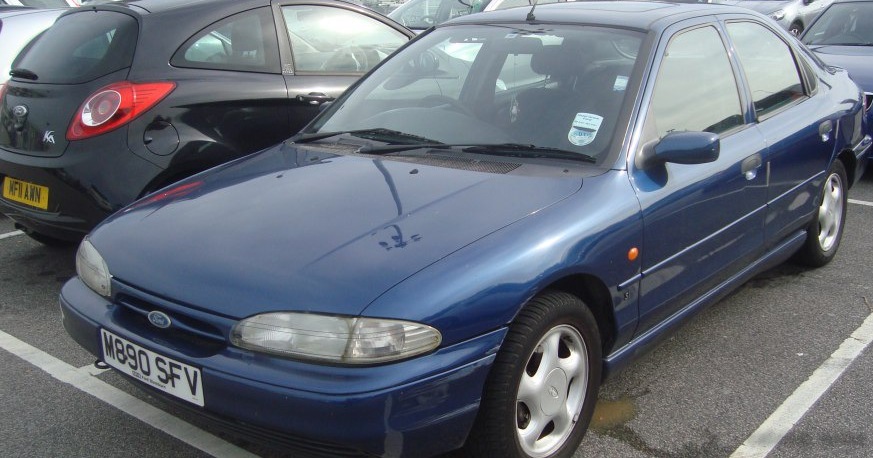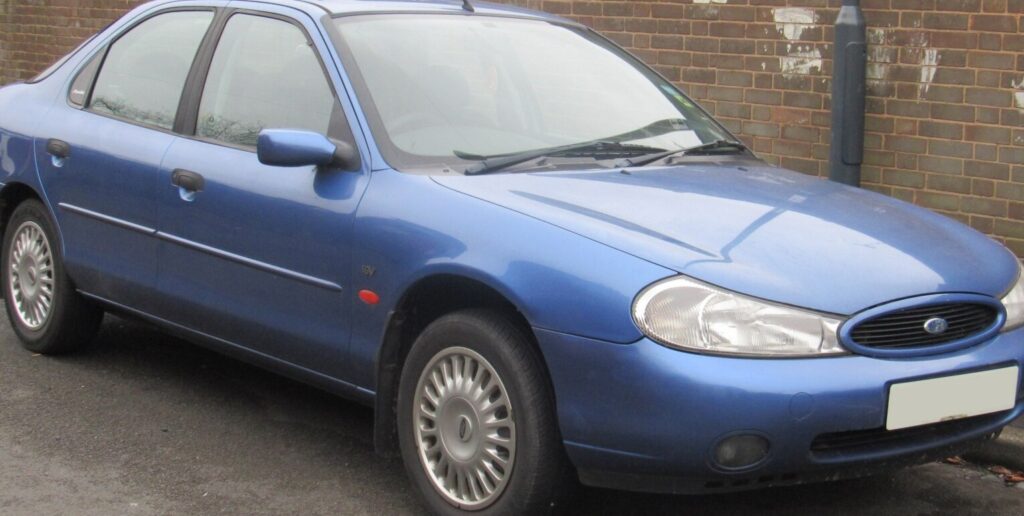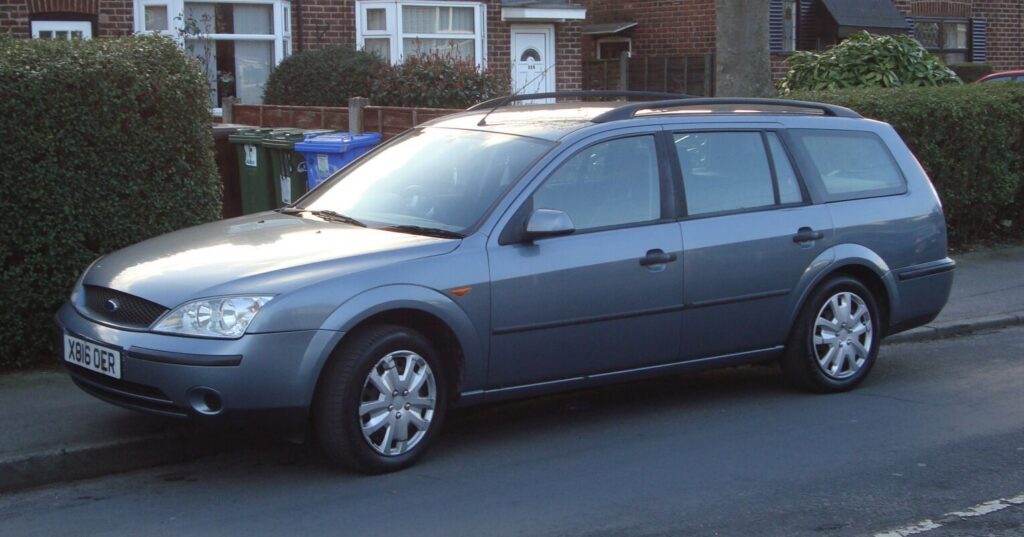
The Ford Mondeo II Wagon 2.0 16V Automatic, produced between 2001 and 2007, represented a significant offering in the mid-size station wagon segment. Part of the second generation Mondeo (internally designated as the B500 series), this variant aimed to provide a balance of practicality, comfort, and reasonable performance for family buyers. It occupied a mid-range position within the Mondeo II Wagon lineup, slotting between the lower-powered 1.8L models and the more performance-oriented 2.5L V6 versions. The Mondeo II, in general, was Ford of Europe’s attempt to create a genuinely world car, and the wagon body style was particularly popular in the European market where estate cars held a strong appeal.
Technical Specifications
| Brand | Ford |
| Model | Mondeo |
| Generation | Mondeo II Wagon |
| Type (Engine) | 2.0 16V (145 Hp) Automatic |
| Start of production | 2001 |
| End of production | 2007 |
| Powertrain Architecture | Internal Combustion engine |
| Body type | Station wagon (estate) |
| Seats | 5 |
| Doors | 5 |
| Fuel consumption (urban) | 12.6 l/100 km (18.7 US mpg, 22.4 UK mpg, 7.9 km/l) |
| Fuel consumption (extra urban) | 7.3 l/100 km (32.2 US mpg, 38.7 UK mpg, 13.7 km/l) |
| Fuel consumption (combined) | 9.2 l/100 km (25.6 US mpg, 30.7 UK mpg, 10.9 km/l) |
| Fuel Type | Petrol (Gasoline) |
| Acceleration 0 – 100 km/h | 11.8 sec |
| Acceleration 0 – 62 mph | 11.8 sec |
| Acceleration 0 – 60 mph | 11.2 sec |
| Maximum speed | 190 km/h (118.06 mph) |
| Weight-to-power ratio | 9.9 kg/Hp, 101 Hp/tonne |
| Weight-to-torque ratio | 7.6 kg/Nm, 132.4 Nm/tonne |
| Power | 145 Hp @ 6000 rpm |
| Power per litre | 72.5 Hp/l |
| Torque | 190 Nm @ 4500 rpm (140.14 lb.-ft. @ 4500 rpm) |
| Engine layout | Front, Transverse |
| Engine Model/Code | CJBA |
| Engine displacement | 1999 cm3 (121.99 cu. in.) |
| Number of cylinders | 4 |
| Engine configuration | Inline |
| Cylinder Bore | 87.5 mm (3.44 in.) |
| Piston Stroke | 83.1 mm (3.27 in.) |
| Compression ratio | 10.8:1 |
| Number of valves per cylinder | 4 |
| Fuel injection system | Multi-port manifold injection |
| Engine aspiration | Naturally aspirated engine |
| Valvetrain | DOHC |
| Engine oil capacity | 4.3 l (4.54 US qt | 3.78 UK qt) |
| Coolant | 8.3 l (8.77 US qt | 7.3 UK qt) |
| Kerb Weight | 1435 kg (3163.63 lbs.) |
| Max. weight | 2030 kg (4475.38 lbs.) |
| Max load | 595 kg (1311.75 lbs.) |
| Trunk (boot) space – minimum | 540 l (19.07 cu. ft.) |
| Trunk (boot) space – maximum | 1700 l (60.03 cu. ft.) |
| Fuel tank capacity | 58 l (15.32 US gal | 12.76 UK gal) |
| Length | 4804 mm (189.13 in.) |
| Width | 1812 mm (71.34 in.) |
| Height | 1441 mm (56.73 in.) |
| Wheelbase | 2754 mm (108.43 in.) |
| Front track | 1522 mm (59.92 in.) |
| Rear (Back) track | 1537 mm (60.51 in.) |
| Drivetrain Architecture | The Internal combustion engine (ICE) drives the front wheels of the vehicle. |
| Drive wheel | Front wheel drive |
| Number of gears and type of gearbox | 4 gears, automatic transmission |
| Front suspension | Wishbone |
| Rear suspension | Coil spring |
| Front brakes | Ventilated discs |
| Rear brakes | Disc |
| Assisting systems | ABS (Anti-lock braking system) |
| Steering type | Steering rack and pinion |
| Power steering | Hydraulic Steering |
| Tires size | 205/55 R16 |
| Wheel rims size | 16 |
Powertrain & Engine Architecture
The 2.0 16V engine, identified by the code CJBA, is a naturally aspirated, inline-four cylinder gasoline engine. It features a dual overhead camshaft (DOHC) valvetrain operating four valves per cylinder. This configuration allowed for improved breathing and higher engine speeds compared to older single overhead cam designs. Fuel delivery was handled by a multi-port fuel injection system, providing precise fuel metering for optimal combustion. The engine’s 145 horsepower output at 6000 rpm and 190 Nm (140 lb-ft) of torque at 4500 rpm were respectable for its displacement and intended application. The automatic transmission used was a conventional four-speed unit. While not as sophisticated as modern transmissions with more gears, it provided smooth and convenient shifting for everyday driving. The transmission was tuned for comfort and fuel efficiency rather than outright performance.
Driving Characteristics
The Mondeo II Wagon 2.0 16V Automatic offered a comfortable and relaxed driving experience. Acceleration was adequate for most situations, with a 0-60 mph time of around 11.2 seconds. However, it wasn’t particularly quick, especially when compared to the manual transmission versions or the higher-output 2.5L V6 model. The automatic transmission, while smooth, did sap some power from the engine. The gear ratios were optimized for fuel economy and cruising, resulting in a somewhat leisurely pace. The suspension provided a good balance between ride comfort and handling, making it suitable for long journeys. Steering was precise and well-weighted, providing a confident feel on the road.
Equipment & Trim Levels
The 2.0 16V Automatic trim typically included features such as air conditioning, power windows, power mirrors, and a basic audio system. Higher trim levels, such as the Ghia, added features like leather upholstery, alloy wheels, and upgraded audio systems. Optional extras included a sunroof, parking sensors, and a navigation system. Interior upholstery was generally cloth, although leather was available on higher-spec models. The dashboard layout was functional and straightforward, with easy-to-read gauges and controls.
Chassis & Braking
The Mondeo II Wagon featured independent front suspension with wishbones and a coil spring rear suspension. This setup provided a comfortable ride and decent handling characteristics. The front brakes were ventilated discs, while the rear brakes were solid discs. Anti-lock Braking System (ABS) was standard, enhancing safety by preventing wheel lockup during hard braking. The chassis was robust and well-engineered, providing a stable and secure platform for the vehicle.
Market Reception & Comparison
The Mondeo II Wagon 2.0 16V Automatic was generally well-received by critics as a practical and comfortable family car. It offered a good balance of space, comfort, and fuel economy. However, some reviewers noted that the automatic transmission dulled the engine’s performance. Compared to the manual transmission version, the automatic was slightly slower and less fuel-efficient. The 1.8L models were more affordable but offered less power, while the 2.5L V6 provided significantly more performance but at a higher price point and with increased fuel consumption. The Mondeo II competed with other mid-size station wagons such as the Volkswagen Passat Variant, Opel/Vauxhall Vectra Estate, and Peugeot 406 SW.
Legacy
The Ford Mondeo II Wagon 2.0 16V Automatic has proven to be a relatively reliable vehicle, with many examples still on the road today. The CJBA engine is known for its durability, although regular maintenance is essential. Common issues include oil leaks and occasional problems with the automatic transmission. In the used car market, these Mondeos represent a good value for money, offering a spacious and comfortable driving experience at an affordable price. They are often sought after by buyers looking for a practical and reliable family car.