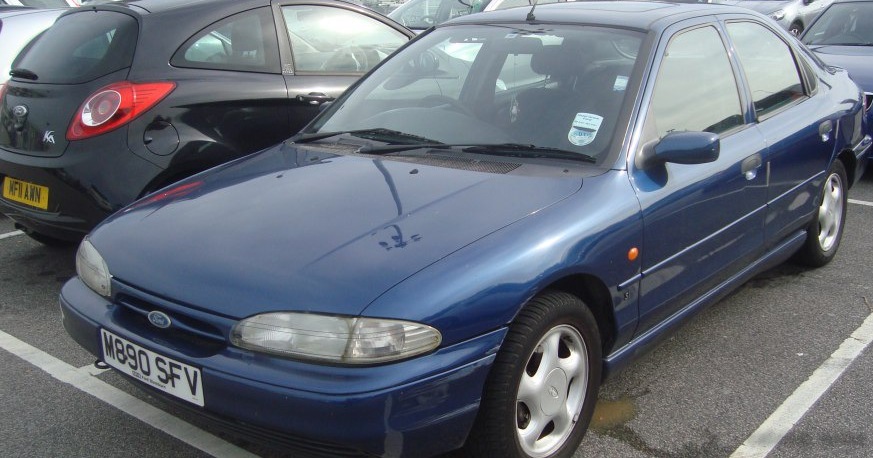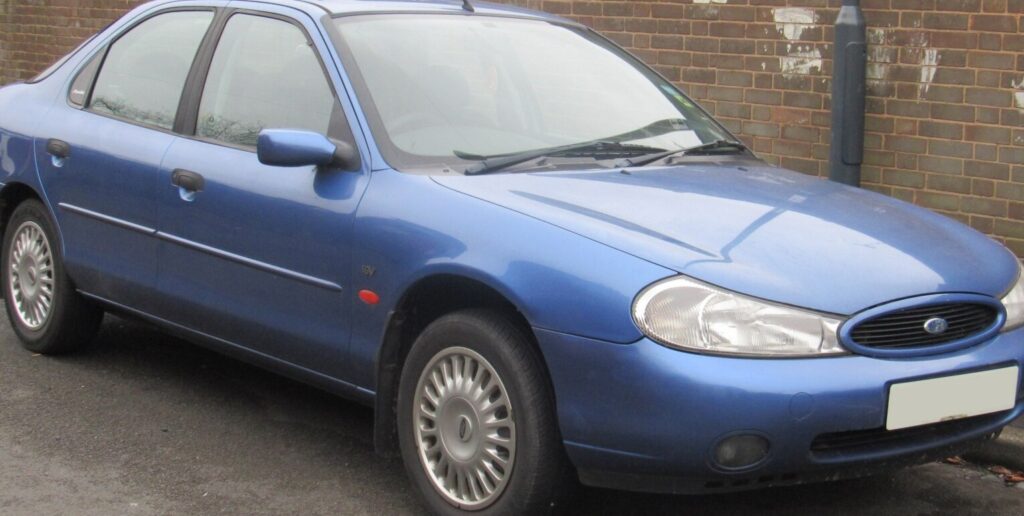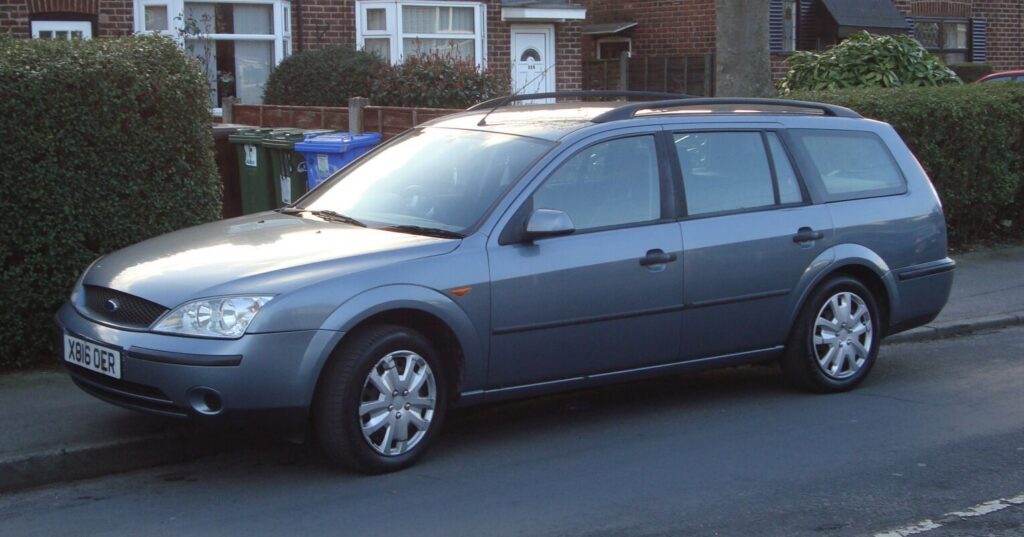
The Ford Mondeo II Wagon 2.5 V6, produced between 2001 and 2007, represented a significant offering in the mid-size station wagon segment. Part of the second generation Mondeo (internally designated as the B500 series), the wagon body style provided a practical and spacious alternative to traditional sedans. This particular variant, equipped with the 2.5-liter V6 engine producing 170 horsepower, positioned itself as a more premium and performance-oriented option within the Mondeo II lineup, appealing to buyers seeking a blend of practicality and driving enjoyment. It was primarily sold in the European market, where wagons held a stronger appeal than in North America.
Technical Specifications
| Brand | Ford |
| Model | Mondeo |
| Generation | Mondeo II Wagon |
| Type (Engine) | 2.5 V6 (170 Hp) |
| Start of production | 2001 |
| End of production | 2007 |
| Powertrain Architecture | Internal Combustion engine |
| Body type | Station wagon (estate) |
| Seats | 5 |
| Doors | 5 |
| Fuel consumption (urban) | 14.4 l/100 km (16.3 US mpg, 19.6 UK mpg) |
| Fuel consumption (extra urban) | 7.4 l/100 km (31.8 US mpg, 38.2 UK mpg) |
| Fuel consumption (combined) | 10 l/100 km (23.5 US mpg, 28.2 UK mpg) |
| Fuel Type | Petrol (Gasoline) |
| Acceleration 0 – 100 km/h | 9 sec |
| Acceleration 0 – 62 mph | 9 sec |
| Acceleration 0 – 60 mph | 8.6 sec |
| Maximum speed | 220 km/h (136.7 mph) |
| Weight-to-power ratio | 8.9 kg/Hp |
| Weight-to-torque ratio | 6.9 kg/Nm |
| Power | 170 Hp @ 6000 rpm |
| Power per litre | 68.1 Hp/l |
| Torque | 220 Nm (162.26 lb.-ft.) |
| Engine layout | Front, Transverse |
| Engine Model/Code | LCBD |
| Engine displacement | 2495 cm3 (152.25 cu. in.) |
| Number of cylinders | 6 |
| Engine configuration | V-engine |
| Cylinder Bore | 81.6 mm (3.21 in.) |
| Piston Stroke | 79.5 mm (3.13 in.) |
| Compression ratio | 9.8:1 |
| Number of valves per cylinder | 4 |
| Fuel injection system | Multi-port manifold injection |
| Engine aspiration | Naturally aspirated engine |
| Valvetrain | DOHC |
| Engine oil capacity | 5.7 l (6.02 US qt | 5.02 UK qt) |
| Coolant capacity | 9.5 l (10.04 US qt | 8.36 UK qt) |
| Kerb Weight | 1518 kg (3346.62 lbs.) |
| Max. weight | 2105 kg (4640.73 lbs.) |
| Max load | 587 kg (1294.11 lbs.) |
| Trunk (boot) space – minimum | 540 l (19.07 cu. ft.) |
| Trunk (boot) space – maximum | 1700 l (60.03 cu. ft.) |
| Fuel tank capacity | 58 l (15.32 US gal | 12.76 UK gal) |
| Length | 4804 mm (189.13 in.) |
| Width | 1812 mm (71.34 in.) |
| Height | 1441 mm (56.73 in.) |
| Wheelbase | 2754 mm (108.43 in.) |
| Front track | 1522 mm (59.92 in.) |
| Rear track | 1537 mm (60.51 in.) |
| Drivetrain Architecture | Front wheel drive |
| Number of gears | 6 |
| Gearbox type | Manual transmission |
| Front suspension | Wishbone |
| Rear suspension | Coil spring |
| Front brakes | Ventilated discs |
| Rear brakes | Disc |
| Assisting systems | ABS (Anti-lock braking system) |
| Steering type | Steering rack and pinion |
| Power steering | Hydraulic Steering |
| Tires size | 205/55 R16 |
Powertrain & Engine Architecture
The heart of the Mondeo II Wagon 2.5 V6 was the Ford LCBD engine, a 2.5-liter, 60-degree V6. This engine utilized a naturally aspirated configuration with multi-port fuel injection and a double overhead camshaft (DOHC) valvetrain. The LCBD engine was known for its relatively smooth power delivery and characteristic V6 sound. The 9.8:1 compression ratio was a compromise between performance and the ability to run on readily available fuel grades. The six-speed manual transmission was the standard offering for this trim, providing drivers with precise control over the engine’s power. The transmission’s gear ratios were tuned to balance acceleration with highway cruising efficiency.
Driving Characteristics
The 2.5 V6 engine provided a noticeable performance upgrade over the four-cylinder options available in the Mondeo II Wagon range. Acceleration from 0-60 mph was achieved in approximately 8.6 seconds, and the car offered a comfortable cruising speed on motorways. While not a sports car, the V6 provided ample power for overtaking and carrying a full load of passengers and luggage. The six-speed manual transmission allowed drivers to keep the engine in its optimal power band, enhancing responsiveness. Compared to the lower-powered 1.8L and 2.0L models, the V6 offered a more refined and engaging driving experience, but at the cost of increased fuel consumption.
Equipment & Trim Levels
The 2.5 V6 Mondeo Wagon typically came with a generous level of standard equipment. This included air conditioning, power windows, power steering, an upgraded audio system, and alloy wheels. Higher trim levels, such as the Ghia, added features like leather upholstery, heated front seats, automatic climate control, and a sunroof. Optional extras included a navigation system, parking sensors, and upgraded sound systems. The interior design was functional and well-built, with a focus on practicality and comfort.
Chassis & Braking
The Mondeo II Wagon featured independent front suspension with wishbones and a coil spring rear suspension. This setup provided a good balance between ride comfort and handling. The 2.5 V6 models were typically equipped with ventilated front disc brakes and solid rear disc brakes, providing adequate stopping power for the vehicle’s weight and performance. Anti-lock Braking System (ABS) was standard, enhancing safety in emergency braking situations. The steering was a hydraulic power-assisted rack and pinion system, offering precise and responsive control.
Market Reception & Comparison
The Ford Mondeo II Wagon 2.5 V6 was generally well-received by automotive critics. It was praised for its spacious interior, comfortable ride, and strong performance. However, its fuel consumption was often cited as a drawback compared to the more economical four-cylinder models. Compared to rivals like the Volkswagen Passat Wagon and the Opel/Vauxhall Vectra Wagon, the Mondeo offered a compelling combination of value, practicality, and driving enjoyment. The V6 engine provided a distinct advantage in terms of performance, but the Passat often held an edge in terms of perceived build quality and refinement.
Legacy
The LCBD 2.5 V6 engine, while not without its quirks, proved to be a relatively reliable powertrain when properly maintained. Common issues included oil leaks and occasional sensor failures, but these were generally not major concerns. Today, the Mondeo II Wagon 2.5 V6 represents a well-rounded and affordable used car option. Its spacious interior, comfortable ride, and relatively strong performance make it a practical choice for families and individuals seeking a versatile station wagon. Parts availability is generally good, and the car’s relatively simple mechanical design makes it accessible to home mechanics. The Mondeo II Wagon 2.5 V6 remains a popular choice for those seeking a classic European wagon with a touch of performance.