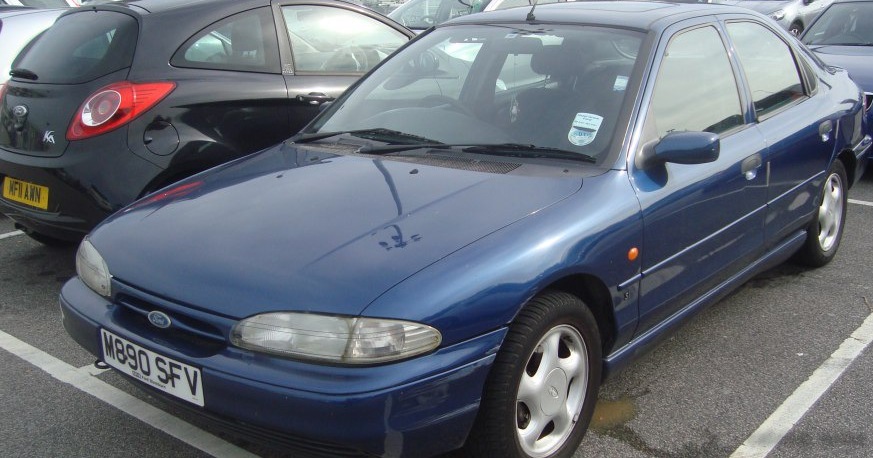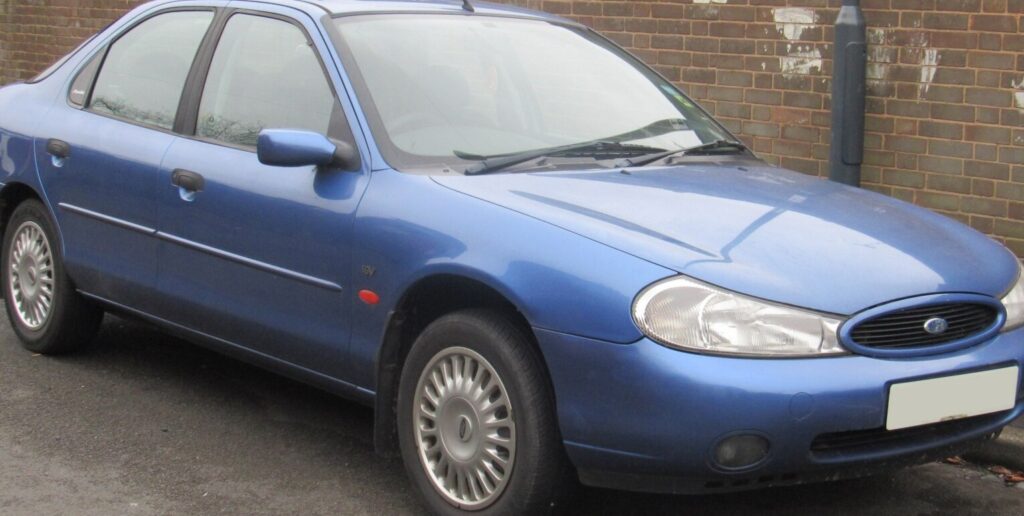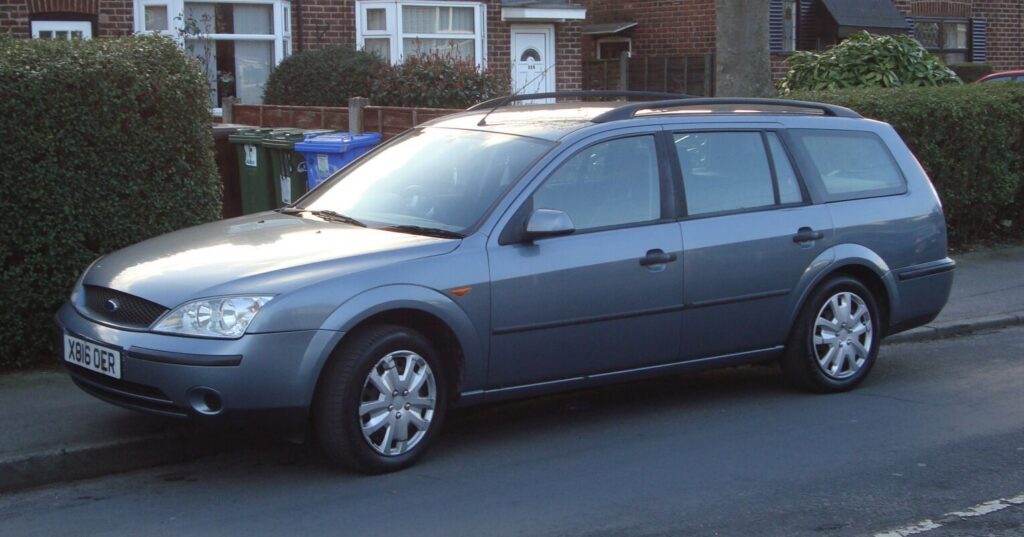
The Ford Mondeo II Wagon 3.0i V6 24V, produced between 2003 and 2007, represented the upper echelon of performance and practicality within the second-generation Mondeo lineup. Positioned as a premium offering, this variant combined the spaciousness of the wagon body style with a potent V6 engine, targeting buyers who desired both family functionality and a more engaging driving experience. It was a key model in Ford of Europe’s strategy to offer a genuinely competitive alternative to established European brands in the mid-size segment.
Technical Specifications
| Brand | Ford |
| Model | Mondeo |
| Generation | Mondeo II Wagon |
| Type (Engine) | 3.0 i V6 24V (204 Hp) |
| Start of production | 2003 |
| End of production | 2007 |
| Powertrain Architecture | Internal Combustion engine |
| Body type | Station wagon (estate) |
| Seats | 5 |
| Doors | 5 |
| Fuel consumption (urban) | 15.3 l/100 km (15.4 US mpg, 18.5 UK mpg, 6.5 km/l) |
| Fuel consumption (extra urban) | 7.7 l/100 km (30.5 US mpg, 36.7 UK mpg, 13 km/l) |
| Fuel Type | Petrol (Gasoline) |
| Acceleration 0 – 100 km/h | 8.1 sec |
| Acceleration 0 – 62 mph | 8.1 sec |
| Acceleration 0 – 60 mph | 7.7 sec |
| Maximum speed | 232 km/h (144.16 mph) |
| Weight-to-power ratio | 7.3 kg/Hp, 137.8 Hp/tonne |
| Weight-to-torque ratio | 5.3 kg/Nm, 189.2 Nm/tonne |
| Power | 204 Hp @ 6000 rpm |
| Power per litre | 68.8 Hp/l |
| Torque | 280 Nm @ 4900 rpm (206.52 lb.-ft. @ 4900 rpm) |
| Engine layout | Front, Transverse |
| Engine Model/Code | REBA |
| Engine displacement | 2967 cm3 (181.06 cu. in.) |
| Number of cylinders | 6 |
| Engine configuration | V-engine |
| Cylinder Bore | 89 mm (3.5 in.) |
| Piston Stroke | 79.5 mm (3.13 in.) |
| Compression ratio | 10:1 |
| Number of valves per cylinder | 4 |
| Fuel injection system | Multi-port manifold injection |
| Engine aspiration | Naturally aspirated engine |
| Valvetrain | DOHC |
| Engine oil capacity | 5.7 l (6.02 US qt | 5.02 UK qt) |
| Coolant | 9.5 l (10.04 US qt | 8.36 UK qt) |
| Kerb Weight | 1480 kg (3262.84 lbs.) |
| Max. weight | 2170 kg (4784.03 lbs.) |
| Max load | 690 kg (1521.19 lbs.) |
| Trunk (boot) space – minimum | 540 l (19.07 cu. ft.) |
| Trunk (boot) space – maximum | 1700 l (60.03 cu. ft.) |
| Fuel tank capacity | 58 l (15.32 US gal | 12.76 UK gal) |
| Length | 4804 mm (189.13 in.) |
| Width | 1812 mm (71.34 in.) |
| Height | 1441 mm (56.73 in.) |
| Wheelbase | 2754 mm (108.43 in.) |
| Front track | 1522 mm (59.92 in.) |
| Rear (Back) track | 1537 mm (60.51 in.) |
| Drivetrain Architecture | The Internal combustion engine (ICE) drives the front wheels of the vehicle. |
| Drive wheel | Front wheel drive |
| Number of gears and type of gearbox | 6 gears, manual transmission |
| Front suspension | Coil spring |
| Rear suspension | Several levers and rods |
| Front brakes | Ventilated discs |
| Rear brakes | Disc |
| Assisting systems | ABS (Anti-lock braking system) |
| Steering type | Steering rack and pinion |
| Power steering | Hydraulic Steering |
| Tires size | 205/55 R16 |
INTRODUCTION
The Ford Mondeo II Wagon 3.0i V6 24V, launched in 2003 as part of the Mondeo Mk II facelift, was a significant upgrade over the earlier models. Built on the 1HX0/A3 platform, this wagon variant aimed to provide a more refined and powerful alternative within the competitive D-segment. It catered to buyers who needed the practicality of a station wagon but weren’t willing to compromise on performance or driving enjoyment. The Mondeo II, in general, was Ford’s attempt to create a genuinely world car, and the wagon version was particularly popular in Europe where estate cars held a strong market share.
Powertrain & Engine Architecture
At the heart of the 3.0i V6 was the REBA engine, a naturally aspirated 2.967-liter V6. This engine featured a 60-degree V-angle, dual overhead camshafts (DOHC), and four valves per cylinder. The REBA engine utilized multi-port fuel injection, delivering a smooth and responsive power delivery. The 24-valve configuration contributed to its relatively high output for its displacement. The engine was transversely mounted in the front of the vehicle. The 6-speed manual transmission was the standard offering, providing precise gear changes and enhancing the driving experience. The transmission’s gear ratios were tuned to balance acceleration with fuel efficiency, although the V6 engine’s thirst for fuel was a notable characteristic.
Driving Characteristics
The 3.0i V6 Mondeo Wagon offered a noticeably different driving experience compared to the four-cylinder variants. The 204 horsepower and 280 Nm (206.52 lb-ft) of torque provided brisk acceleration, with 0-60 mph times around 7.7 seconds. The V6 engine delivered a linear power curve, making it easy to modulate throttle response. The 6-speed manual transmission allowed drivers to keep the engine in its optimal power band. While not a sports car, the Mondeo Wagon V6 offered a level of performance that was rare in the family wagon segment. Compared to the lower-powered models, the V6 felt significantly more relaxed on highway journeys, with ample power for overtaking. However, the added weight of the V6 engine and the front-wheel-drive configuration meant it wasn’t as nimble as some of its rear-wheel-drive competitors.
Equipment & Trim Levels
The 3.0i V6 Wagon typically came with a generous level of standard equipment. This included air conditioning, power windows, power mirrors, a CD stereo system, and alloy wheels. Higher trim levels, such as the Ghia, added features like leather upholstery, heated front seats, automatic climate control, and upgraded audio systems. Optional extras included a sunroof, parking sensors, and a navigation system. Interior upholstery was typically cloth on lower trims, with leather being available as an upgrade. The dashboard layout was functional and well-designed, with clear instrumentation and intuitive controls.
Chassis & Braking
The Mondeo II Wagon featured independent suspension at all four wheels, utilizing coil springs and MacPherson struts at the front and a multi-link setup at the rear. This suspension configuration provided a comfortable ride while maintaining good handling characteristics. The front brakes were ventilated discs, while the rear brakes were solid discs. Anti-lock Braking System (ABS) was standard, enhancing safety and stability during braking. The steering was a hydraulic power-assisted rack and pinion system, providing precise and responsive steering feel. Stabilizer bars were fitted to both the front and rear axles to reduce body roll during cornering.
Market Reception & Comparison
The Mondeo II Wagon 3.0i V6 was generally well-received by automotive critics. It was praised for its powerful engine, spacious interior, and comfortable ride. However, its fuel consumption was often cited as a drawback. Compared to the 1.8-liter and 2.0-liter models, the V6 offered significantly more performance but at the cost of increased fuel bills. The 1.8-liter models were favored by those prioritizing fuel economy and affordability, while the V6 appealed to buyers who wanted a more premium and engaging driving experience. The diesel variants, such as the 2.0 TDCi, offered a good balance of performance and fuel efficiency, making them a popular choice for high-mileage drivers.
Legacy
The Ford Mondeo II Wagon 3.0i V6 24V remains a relatively sought-after model in the used car market, particularly among enthusiasts who appreciate its combination of practicality and performance. The REBA V6 engine is generally considered to be reliable, although regular maintenance is essential. Common issues include oil leaks and occasional sensor failures. Finding well-maintained examples can be challenging, as many have accumulated high mileage. However, for those seeking a spacious, comfortable, and relatively quick family wagon, the Mondeo II 3.0i V6 represents a compelling option. Its blend of Ford’s engineering prowess and a potent V6 engine has cemented its place as a memorable vehicle in the mid-size segment.