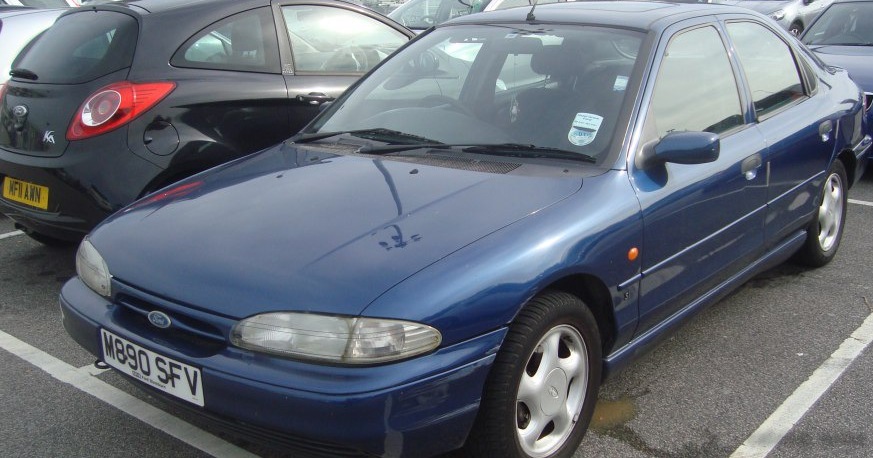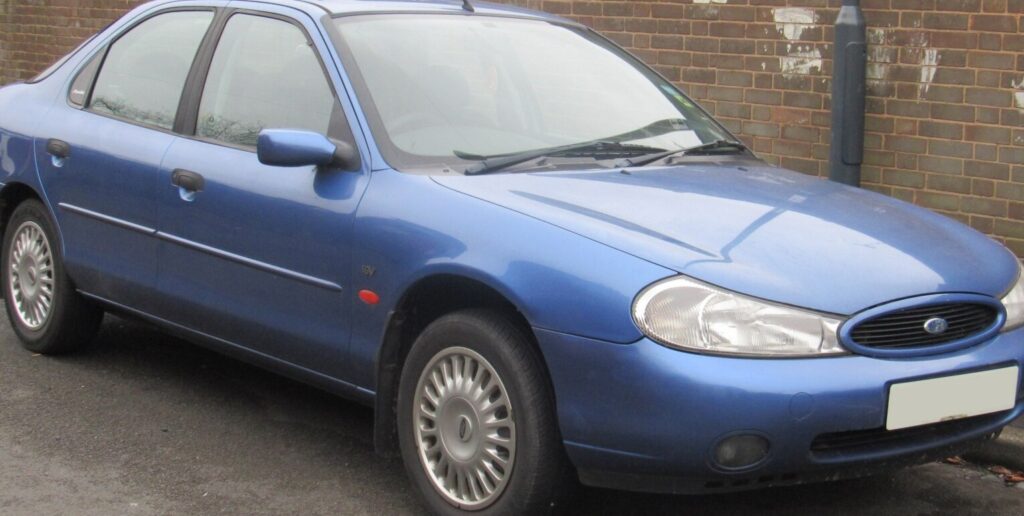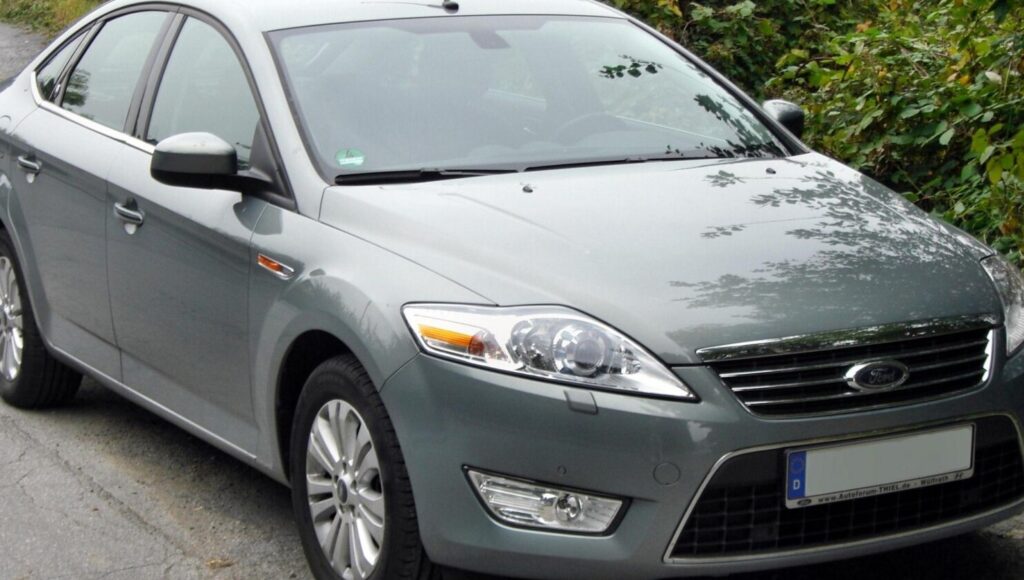
The Ford Mondeo III Hatchback 1.6i 16V, produced between 2007 and 2010, represented an entry-level offering within the broader Mondeo Mk3 range. Positioned as a more affordable and fuel-efficient option, it catered to buyers prioritizing practicality and value over outright performance. This variant was primarily sold in the European market, where the Mondeo competed with vehicles like the Volkswagen Passat, Opel Vectra, and Peugeot 407. The Mondeo Mk3, built on the Ford C170 platform (internally designated as the 1HX0 for the hatchback), aimed to provide a more refined and spacious alternative to traditional family saloons, with the hatchback body style gaining popularity for its versatility.
Technical Specifications
| Brand | Ford |
| Model | Mondeo |
| Generation | Mondeo III Hatchback |
| Type (Engine) | 1.6 i 16V (110 Hp) |
| Start of production | 2007 |
| End of production | 2010 |
| Powertrain Architecture | Internal Combustion engine |
| Body type | Hatchback |
| Seats | 5 |
| Doors | 5 |
| Fuel consumption (urban) | 10 l/100 km (23.5 US mpg) |
| Fuel consumption (extra urban) | 5.6 l/100 km (42 US mpg) |
| Fuel consumption (combined) | 7.2 l/100 km (32.7 US mpg) |
| Fuel Type | Petrol (Gasoline) |
| Acceleration 0 – 100 km/h | 12.7 sec |
| Acceleration 0 – 62 mph | 12.7 sec |
| Acceleration 0 – 60 mph | 12.1 sec |
| Maximum speed | 190 km/h (118.06 mph) |
| Emission standard | Euro 4 |
| Weight-to-power ratio | 13.4 kg/Hp |
| Weight-to-torque ratio | 10.7 kg/Nm |
| Power | 110 Hp @ 6000 rpm |
| Torque | 138 Nm @ 2800 rpm (101.78 lb.-ft. @ 2800 rpm) |
| Engine layout | Front, Transverse |
| Engine Model/Code | RHBA |
| Engine displacement | 1598 cm3 (97.52 cu. in.) |
| Number of cylinders | 4 |
| Engine configuration | Inline |
| Cylinder Bore | 80 mm (3.15 in.) |
| Piston Stroke | 79.5 mm (3.13 in.) |
| Compression ratio | 9.75:1 |
| Number of valves per cylinder | 2 |
| Fuel injection system | Multi-port manifold injection |
| Engine aspiration | Naturally aspirated |
| Valvetrain | OHC |
| Engine oil capacity | 4.1 l (4.33 US qt | 3.61 UK qt) |
| Coolant capacity | 6.2 l (6.55 US qt | 5.46 UK qt) |
| Kerb Weight | 1477 kg (3256.23 lbs.) |
| Max. weight | 2090 kg (4607.66 lbs.) |
| Max load | 613 kg (1351.43 lbs.) |
| Trunk (boot) space – minimum | 486 l (17.16 cu. ft.) |
| Trunk (boot) space – maximum | 1460 l (51.56 cu. ft.) |
| Fuel tank capacity | 70 l (18.49 US gal | 15.4 UK gal) |
| Length | 4778 mm (188.11 in.) |
| Width | 1886 mm (74.25 in.) |
| Height | 1500 mm (59.06 in.) |
| Wheelbase | 2850 mm (112.2 in.) |
| Front track | 1522 mm (59.92 in.) |
| Rear track | 1537 mm (60.51 in.) |
| Minimum turning circle | 11.1 m (36.42 ft.) |
| Drivetrain Architecture | Front wheel drive |
| Number of gears | 5 |
| Gearbox type | Manual transmission |
| Front suspension | Coil spring |
| Rear suspension | Coil spring |
| Front brakes | Ventilated discs |
| Rear brakes | Disc |
| Assisting systems | ABS (Anti-lock braking system) |
| Steering type | Steering rack and pinion |
| Tires size | 205/55 R16 |
Powertrain & Engine Architecture
The 1.6-liter, 16-valve engine, designated RHBA, was a naturally aspirated inline-four cylinder unit. It featured multi-port fuel injection and a single overhead camshaft (SOHC) valvetrain. This engine was a relatively simple design, prioritizing reliability and fuel efficiency over high performance. The 1598cc displacement produced 110 horsepower at 6000 rpm and 138 Nm (101.78 lb-ft) of torque at 2800 rpm. The engine’s design was a carryover from earlier Ford models, refined for improved emissions compliance and fuel economy. Paired with this engine was a five-speed manual transmission, offering a conventional gear ratio spread designed for everyday driving. The transmission was known for its smooth operation, but wasn’t particularly sporty in its feel.
Driving Characteristics
The Mondeo 1.6i 16V offered modest performance. Acceleration from 0-60 mph took around 12.1 seconds, and top speed was approximately 118 mph. While adequate for routine commuting and highway cruising, it lacked the punch of the higher-spec engines available in the Mondeo range, such as the 2.0-liter or 2.5-liter variants. The five-speed manual transmission helped to keep the engine in its optimal power band, but the relatively low torque output meant frequent downshifts were necessary when overtaking or climbing hills. Compared to the automatic transmission options available on other Mondeo models, the manual offered better fuel economy and a more engaging driving experience. The suspension provided a comfortable ride, absorbing bumps and imperfections in the road well, but didn’t offer particularly sharp handling.
Equipment & Trim Levels
The 1.6i 16V typically came equipped with a reasonable level of standard features, though it sat towards the lower end of the Mondeo trim spectrum. Standard equipment generally included air conditioning, power steering, electric front windows, and a basic audio system. Higher trim levels, such as Zetec or Titanium, added features like alloy wheels, upgraded audio systems, climate control, and parking sensors. Interior upholstery was typically cloth, with a functional and durable design. Optional extras included a sunroof, leather upholstery, and a navigation system.
Chassis & Braking
The Mondeo Mk3 utilized a MacPherson strut front suspension and a multi-link rear suspension, providing a good balance between ride comfort and handling. The 1.6i model typically featured ventilated disc brakes at the front and solid disc brakes at the rear. Anti-lock Braking System (ABS) was standard. The chassis was designed to provide a stable and predictable driving experience, prioritizing safety and comfort over outright sportiness. Stabilizer bars were fitted front and rear to reduce body roll during cornering.
Market Reception & Comparison
The Mondeo 1.6i 16V was generally well-received as a practical and affordable family car. Critics praised its spacious interior, comfortable ride, and reasonable fuel economy. However, it was often criticized for its lack of performance compared to higher-spec models. Compared to the 2.0-liter petrol or 1.8-liter TDCi diesel variants, the 1.6i offered lower running costs but significantly less power. The diesel models, in particular, were favored by those covering long distances due to their superior fuel efficiency. The 1.6i appealed to buyers who prioritized value and practicality over performance.
Legacy
The RHBA 1.6-liter engine, while not known for its groundbreaking performance, proved to be a reliable and durable unit. Mondeo Mk3s equipped with this engine are still relatively common on the used car market today. Maintenance costs are generally reasonable, and parts availability is good. However, potential buyers should be aware of the typical wear and tear associated with any vehicle of this age, such as suspension components and exhaust systems. The Mondeo Mk3, in general, is remembered as a well-rounded and practical family car that offered a good balance of comfort, space, and affordability.