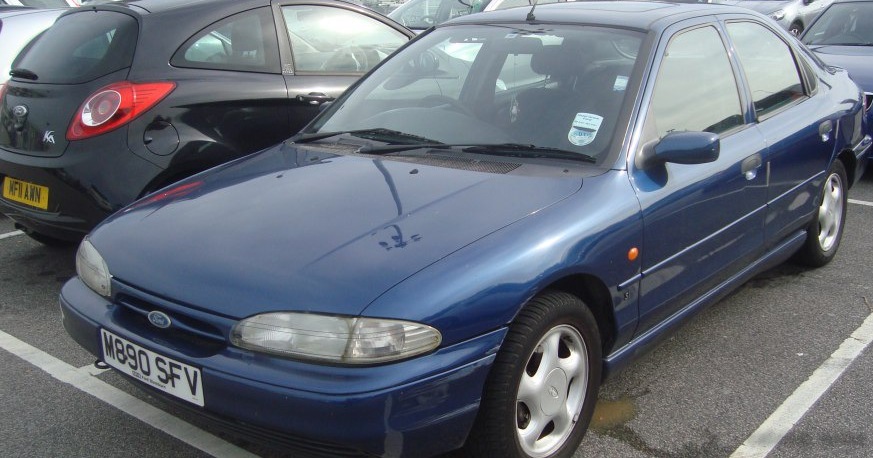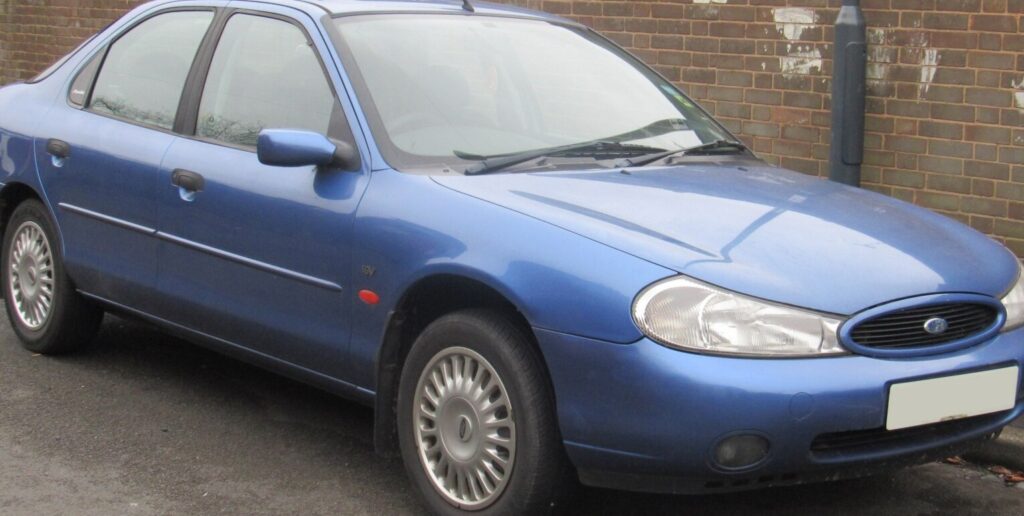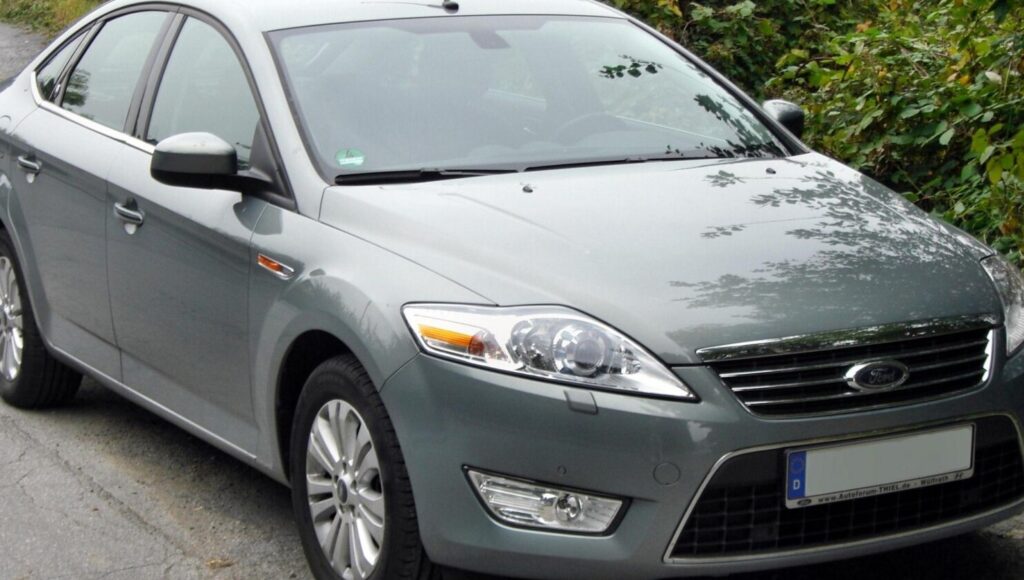
The Ford Mondeo III Hatchback 1.6i 16v, produced between 2007 and 2010, represented an entry-level offering within the broader Mondeo Mk3 range. Positioned as a more affordable and fuel-efficient option, it catered to buyers prioritizing practicality and value over outright performance. This variant was a key part of Ford’s strategy to offer a diverse lineup appealing to a wider customer base in the European market, where the Mondeo competed strongly against rivals like the Volkswagen Passat and Opel Vectra. The Mondeo Mk3 itself was based on Ford’s global CD2 platform (also known as the 1HX0/A3 platform), shared with other models like the Mazda 6 and Volvo S60, emphasizing a focus on engineering commonality and cost efficiency.
Technical Specifications
| Brand | Ford |
| Model | Mondeo |
| Generation | Mondeo III Hatchback |
| Type (Engine) | 1.6i 16v (125 Hp) |
| Start of production | 2007 |
| End of production | 2010 |
| Powertrain Architecture | Internal Combustion engine |
| Body type | Hatchback |
| Seats | 5 |
| Doors | 5 |
| Fuel consumption (urban) | 10.3 l/100 km (22.8 US mpg, 27.4 UK mpg, 9.7 km/l) |
| Fuel consumption (extra urban) | 5.7 l/100 km (41.3 US mpg, 49.6 UK mpg, 17.5 km/l) |
| Fuel consumption (combined) | 7.4 l/100 km (31.8 US mpg, 38.2 UK mpg, 13.5 km/l) |
| Fuel Type | Petrol (Gasoline) |
| Acceleration 0 – 100 km/h | 12.3 sec |
| Acceleration 0 – 62 mph | 12.3 sec |
| Acceleration 0 – 60 mph | 11.7 sec |
| Maximum speed | 190 km/h (118.06 mph) |
| Emission standard | Euro 4 |
| Weight-to-power ratio | 11.8 kg/Hp, 84.6 Hp/tonne |
| Weight-to-torque ratio | 9.2 kg/Nm, 108.3 Nm/tonne |
| Power | 125 Hp @ 6300 rpm |
| Power per litre | 78.3 Hp/l |
| Torque | 160 Nm @ 4100 rpm (118.01 lb.-ft. @ 4100 rpm) |
| Engine layout | Front, Transverse |
| Engine Model/Code | PNBA |
| Engine displacement | 1596 cm3 (97.39 cu. in.) |
| Number of cylinders | 4 |
| Engine configuration | Inline |
| Cylinder Bore | 79 mm (3.11 in.) |
| Piston Stroke | 81.4 mm (3.2 in.) |
| Compression ratio | 11:1 |
| Number of valves per cylinder | 4 |
| Fuel injection system | Multi-port manifold injection |
| Engine aspiration | Naturally aspirated engine |
| Valvetrain | DOHC |
| Engine oil capacity | 4.1 l (4.33 US qt | 3.61 UK qt) |
| Coolant | 6.2 l (6.55 US qt | 5.46 UK qt) |
| Kerb Weight | 1477 kg (3256.23 lbs.) |
| Max. weight | 2090 kg (4607.66 lbs.) |
| Max load | 613 kg (1351.43 lbs.) |
| Trunk (boot) space – minimum | 486 l (17.16 cu. ft.) |
| Trunk (boot) space – maximum | 1460 l (51.56 cu. ft.) |
| Fuel tank capacity | 70 l (18.49 US gal | 15.4 UK gal) |
| Length | 4778 mm (188.11 in.) |
| Width | 1886 mm (74.25 in.) |
| Height | 1500 mm (59.06 in.) |
| Wheelbase | 2850 mm (112.2 in.) |
| Front track | 1522 mm (59.92 in.) |
| Rear (Back) track | 1537 mm (60.51 in.) |
| Minimum turning circle | 11.1 m (36.42 ft.) |
| Drivetrain Architecture | Front wheel drive |
| Drive wheel | Front wheel drive |
| Number of gears and type of gearbox | 5 gears, manual transmission |
| Front suspension | Coil spring |
| Rear suspension | Coil spring |
| Front brakes | Ventilated discs |
| Rear brakes | Disc |
| Assisting systems | ABS (Anti-lock braking system) |
| Steering type | Steering rack and pinion |
| Tires size | 205/55 R16 |
Powertrain & Engine Architecture
The 1.6i 16v engine, designated PNBA by Ford, is a naturally aspirated, inline-four cylinder petrol engine. It features a double overhead camshaft (DOHC) valvetrain operating four valves per cylinder, contributing to improved breathing and efficiency. Fuel delivery is managed by a multi-port fuel injection system, a common setup for engines of this era. The engine’s 1596cc displacement produces 125 horsepower at 6300 rpm and 160 Nm (118 lb-ft) of torque at 4100 rpm. This engine was known for its relatively smooth operation and acceptable, if not exhilarating, performance. The engine was paired with a five-speed manual transmission, which was the most common configuration. While an automatic transmission was offered in some Mondeo Mk3 models, it wasn’t typically paired with the 1.6i engine due to the powertrain’s limited torque output.
Driving Characteristics
The Mondeo 1.6i 16v with the five-speed manual transmission offered a reasonably engaging driving experience, particularly for everyday commuting. Acceleration from 0-60 mph took around 11.7 seconds, and top speed was approximately 118 mph. The engine felt responsive enough for typical driving situations, but lacked the punch of the larger 2.0-liter or turbocharged variants. Gear ratios were well-spaced, allowing for comfortable cruising on the highway. Compared to the more powerful Mondeo models, the 1.6i prioritized fuel economy over outright performance. The lighter engine weight also contributed to slightly improved handling balance compared to the heavier V6 or diesel-powered models.
Equipment & Trim Levels
The 1.6i 16v typically came equipped as a base or mid-range trim level, often designated as ‘Zetec’ or ‘LX’. Standard features generally included air conditioning, power steering, electric front windows, and a basic audio system. Higher trim levels offered options such as alloy wheels, upgraded audio systems, cruise control, and rear parking sensors. Interior upholstery was typically cloth, with a functional and durable design. The dashboard layout was straightforward and user-friendly, prioritizing practicality over luxury.
Chassis & Braking
The Mondeo Mk3 utilized an independent front suspension with MacPherson struts and a multi-link rear suspension, providing a comfortable and controlled ride. Front brakes were ventilated discs, while rear brakes were solid discs. Anti-lock Braking System (ABS) was standard equipment. The suspension was tuned to prioritize ride comfort, making it well-suited for long journeys. The 1.6i models generally featured slightly smaller tires (typically 205/55 R16) compared to the higher-performance variants, contributing to a softer ride but potentially reducing grip in demanding situations.
Market Reception & Comparison
The Mondeo 1.6i 16v was generally well-received by automotive critics as a sensible and practical family car. It was praised for its fuel efficiency, comfortable ride, and spacious interior. However, it was often criticized for its lack of outright performance compared to its rivals and higher-spec Mondeo models. Compared to the 2.0-liter models, the 1.6i offered significantly lower running costs but sacrificed acceleration and overall driving enjoyment. The diesel-powered Mondeos (particularly the 1.8 TDCi and 2.0 TDCi) provided superior fuel economy and torque, but at a higher purchase price.
Legacy
The Ford Mondeo Mk3 1.6i 16v has proven to be a relatively reliable and durable vehicle. The PNBA engine, while not particularly sophisticated, is known for its longevity when properly maintained. Common issues include occasional problems with the throttle body and fuel injectors. On the used car market, these models represent an affordable entry point into Mondeo ownership. They are often favored by buyers seeking a practical and economical family car, rather than a performance-oriented vehicle. Parts availability remains good, and maintenance costs are generally reasonable, making it a sensible choice for budget-conscious buyers.