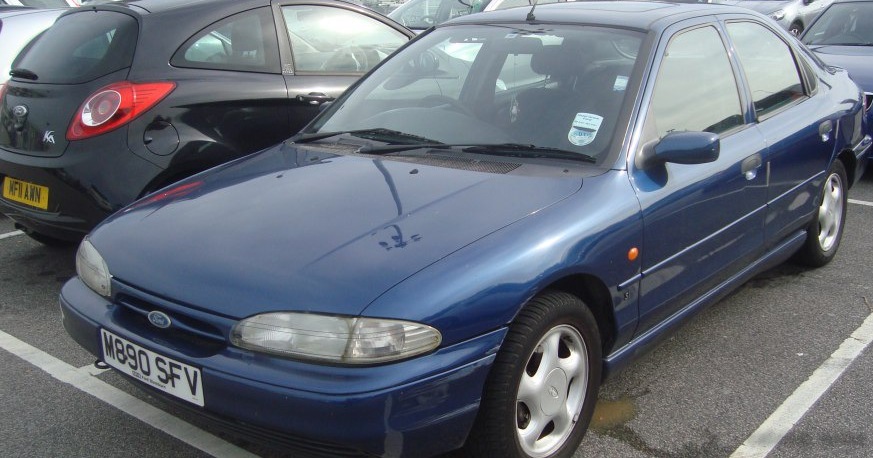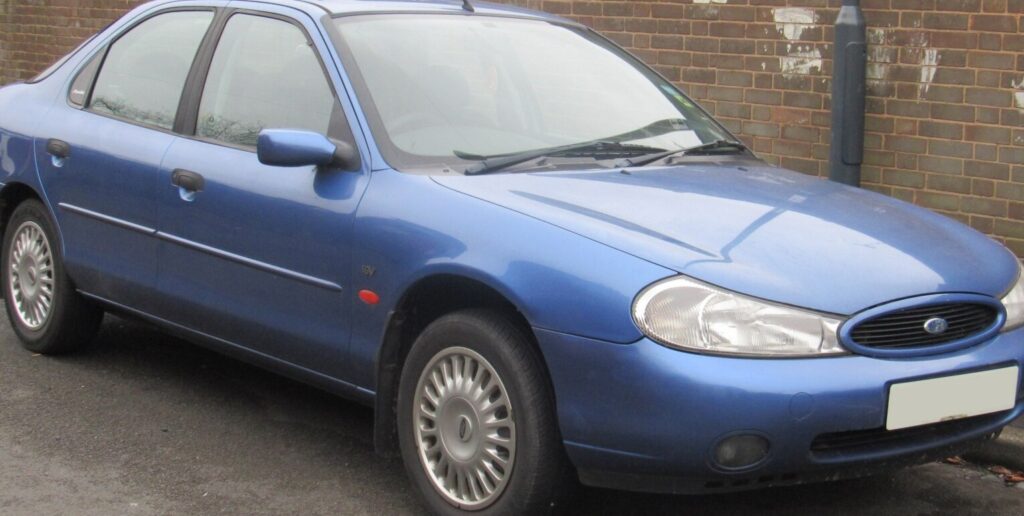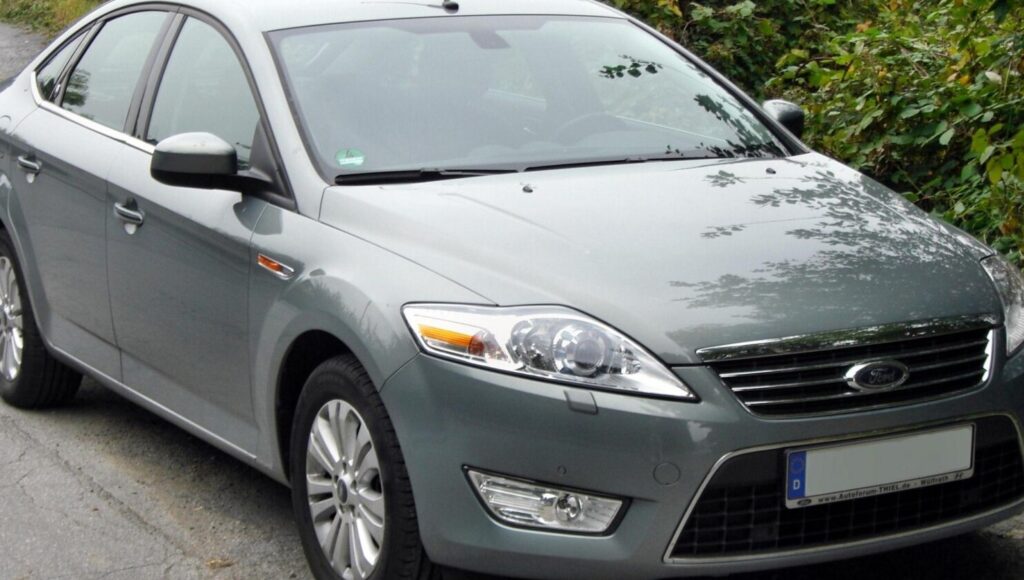
The Ford Mondeo III Hatchback 1.8 Duratorq TDCi, produced between 2007 and 2010, represented a significant offering in the European D-segment (mid-size) market. Positioned as a fuel-efficient and practical option within the Mondeo range, this variant utilized a 1.8-liter turbocharged diesel engine paired with a six-speed manual transmission. It was aimed at buyers prioritizing economy and usability over outright performance, serving as a key model in Ford’s lineup during a period of increasing diesel popularity in Europe. The Mondeo III, built on the B72 platform, aimed to improve upon its predecessor with enhanced refinement and a more modern interior.
Technical Specifications
| Brand | Ford |
| Model | Mondeo |
| Generation | Mondeo III Hatchback |
| Type (Engine) | 1.8 Duratorq TDCi (125 Hp) |
| Start of production | 2007 |
| End of production | 2010 |
| Powertrain Architecture | Internal Combustion engine |
| Body type | Hatchback |
| Seats | 5 |
| Doors | 5 |
| Fuel consumption (urban) | 7.5 l/100 km (31.4 US mpg) |
| Fuel consumption (extra urban) | 4.8 l/100 km (49 US mpg) |
| Fuel consumption (combined) | 5.8 l/100 km (40.6 US mpg) |
| CO2 emissions | 154 g/km |
| Fuel Type | Diesel |
| Acceleration 0 – 60 mph | 10.2 sec |
| Maximum speed | 200 km/h (124.27 mph) |
| Emission standard | Euro 4 |
| Weight-to-power ratio | 11.8 kg/Hp |
| Weight-to-torque ratio | 4.6 kg/Nm |
| Power | 125 Hp @ 3700 rpm |
| Torque | 320 Nm @ 1800 rpm (236.02 lb.-ft. @ 1800 rpm) |
| Engine layout | Front, Transverse |
| Engine Model/Code | QYBA |
| Engine displacement | 1753 cm3 (106.97 cu. in.) |
| Number of cylinders | 4 |
| Engine configuration | Inline |
| Cylinder Bore | 82.5 mm (3.25 in.) |
| Piston Stroke | 82 mm (3.23 in.) |
| Compression ratio | 18.5:1 |
| Number of valves per cylinder | 2 |
| Fuel injection system | Diesel Commonrail |
| Engine aspiration | Turbocharger, Intercooler |
| Valvetrain | SOHC |
| Engine oil capacity | 5.6 l (5.92 US qt | 4.93 UK qt) |
| Coolant capacity | 7.9 l (8.35 US qt | 6.95 UK qt) |
| Kerb Weight | 1471 kg (3243 lbs.) |
| Max. weight | 2155 kg (4750.96 lbs.) |
| Max load | 684 kg (1507.96 lbs.) |
| Trunk (boot) space – minimum | 528 l (18.65 cu. ft.) |
| Trunk (boot) space – maximum | 1448 l (51.14 cu. ft.) |
| Fuel tank capacity | 70 l (18.49 US gal | 15.4 UK gal) |
| Length | 4778 mm (188.11 in.) |
| Width | 1886 mm (74.25 in.) |
| Width with mirrors folded | 1937 mm (76.26 in.) |
| Width including mirrors | 2078 mm (81.81 in.) |
| Height | 1500 mm (59.06 in.) |
| Wheelbase | 2850 mm (112.2 in.) |
| Ride height (ground clearance) | 110 mm (4.33 in.) |
| Minimum turning circle | 11.8 m (38.71 ft.) |
| Drivetrain Architecture | Front wheel drive |
| Number of gears | 6 |
| Type of gearbox | Manual transmission |
| Front suspension | Independent type McPherson, Transverse stabilizer |
| Rear suspension | Independent multi-link suspension, Transverse stabilizer |
| Front brakes | Ventilated discs |
| Rear brakes | Disc |
| Assisting systems | ABS (Anti-lock braking system) |
| Steering type | Steering rack and pinion |
| Power steering | Hydraulic Steering |
| Tires size | 205/55 R16 |
| Wheel rims size | 6.5J x 16 |
Powertrain & Engine Architecture
The heart of the Mondeo III 1.8 Duratorq TDCi is the QYBA engine code, a 1.8-liter inline-four cylinder diesel. This engine belongs to Ford’s Duratorq family, known for its robust construction and relatively simple design. It features a single overhead camshaft (SOHC) valvetrain operating two valves per cylinder. The engine utilizes a turbocharger with an intercooler to boost power and efficiency. Crucially, it employs a common rail direct injection system, delivering fuel directly into the combustion chamber at extremely high pressure. This system, supplied by Bosch, allowed for precise fuel metering and improved combustion efficiency, contributing to the engine’s relatively low emissions and good fuel economy. The six-speed manual transmission, a Getrag M66, was chosen for its smooth shifting and ability to efficiently transfer the engine’s torque to the front wheels. The gear ratios were tuned for a balance between acceleration and fuel economy, prioritizing the latter.
Driving Characteristics
The 1.8 Duratorq TDCi-equipped Mondeo offered a comfortable and refined driving experience, though not a particularly sporty one. With 125 horsepower and 320 Nm (236 lb-ft) of torque, acceleration was adequate for everyday driving, with a 0-60 mph time of around 10.2 seconds. The engine’s peak torque was available from a low 1800 rpm, providing good responsiveness in most driving situations. However, compared to the higher-output 2.0-liter TDCi or the petrol-powered variants, the 1.8 felt noticeably less powerful, especially when fully loaded or tackling steep inclines. The six-speed manual transmission helped to keep the engine in its optimal power band, but required frequent shifting to maintain momentum. The ride quality was generally good, thanks to the independent suspension setup, absorbing bumps and imperfections in the road surface effectively.
Equipment & Trim Levels
The 1.8 Duratorq TDCi typically occupied a mid-range position in the Mondeo III lineup. Standard equipment generally included air conditioning, power windows, power mirrors, a CD player, and ABS brakes. Higher trim levels, such as Titanium, added features like alloy wheels, upgraded upholstery, automatic climate control, and a trip computer. Optional extras included a sunroof, leather seats, and a premium sound system. Interior upholstery was typically cloth, with a functional and durable design. The dashboard layout was straightforward and easy to use, with clearly labeled controls.
Chassis & Braking
The Mondeo III featured a McPherson strut front suspension and a multi-link rear suspension, providing a good balance of ride comfort and handling. The front suspension incorporated a transverse stabilizer bar to reduce body roll. Braking duties were handled by ventilated discs at the front and solid discs at the rear. ABS (Anti-lock Braking System) was standard, enhancing safety and stability during emergency braking. The steering was a hydraulic rack and pinion system, offering precise and responsive control.
Market Reception & Comparison
The Mondeo III 1.8 Duratorq TDCi was generally well-received by automotive critics as a practical and economical family car. It was praised for its fuel efficiency, comfortable ride, and spacious interior. However, some reviewers noted its lack of outright performance compared to other engines in the range. Compared to the 2.0-liter TDCi, the 1.8 offered lower running costs but sacrificed some power and refinement. Against petrol-powered Mondeos, the 1.8 TDCi provided significantly better fuel economy, but could be noisier and less responsive. Reliability was generally good, although some owners reported issues with the diesel particulate filter (DPF) and the common rail injection system.
Legacy
The Ford Mondeo III 1.8 Duratorq TDCi remains a popular choice in the used car market, particularly for buyers seeking an affordable and fuel-efficient family car. The Duratorq engine, while not without its potential issues, is generally considered to be durable and reliable if properly maintained. Regular servicing, including oil changes and DPF regeneration, is crucial to ensure long-term reliability. The Mondeo III’s spacious interior, comfortable ride, and practical hatchback body style continue to appeal to a wide range of buyers. While newer models offer more advanced technology and features, the Mondeo III 1.8 Duratorq TDCi represents a solid and dependable option for those seeking a value-for-money vehicle.