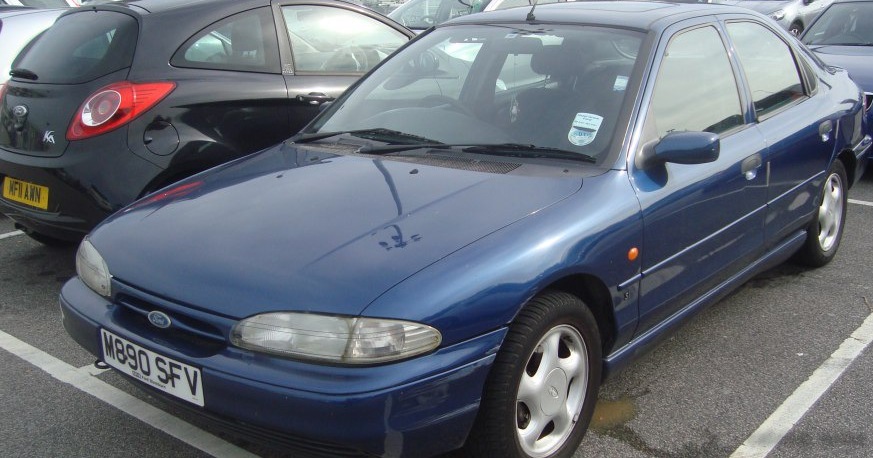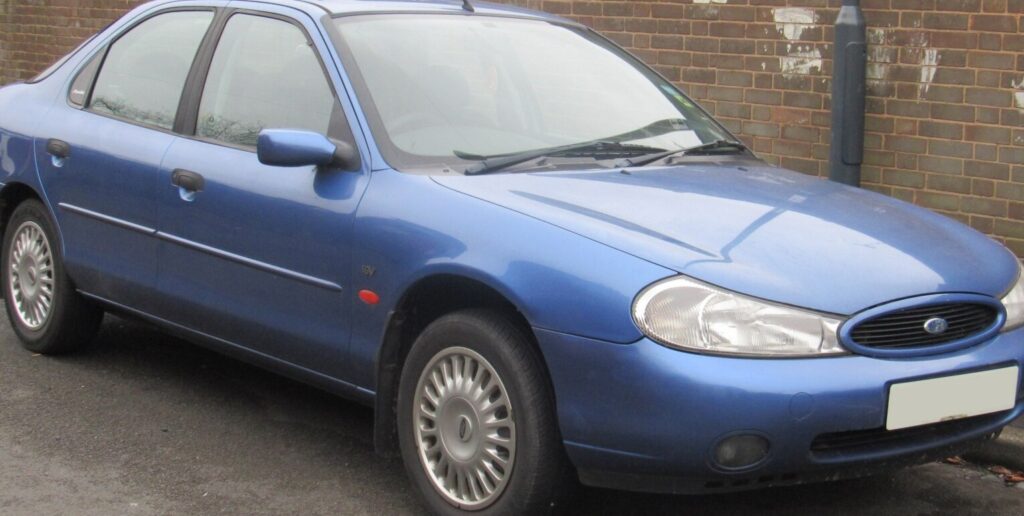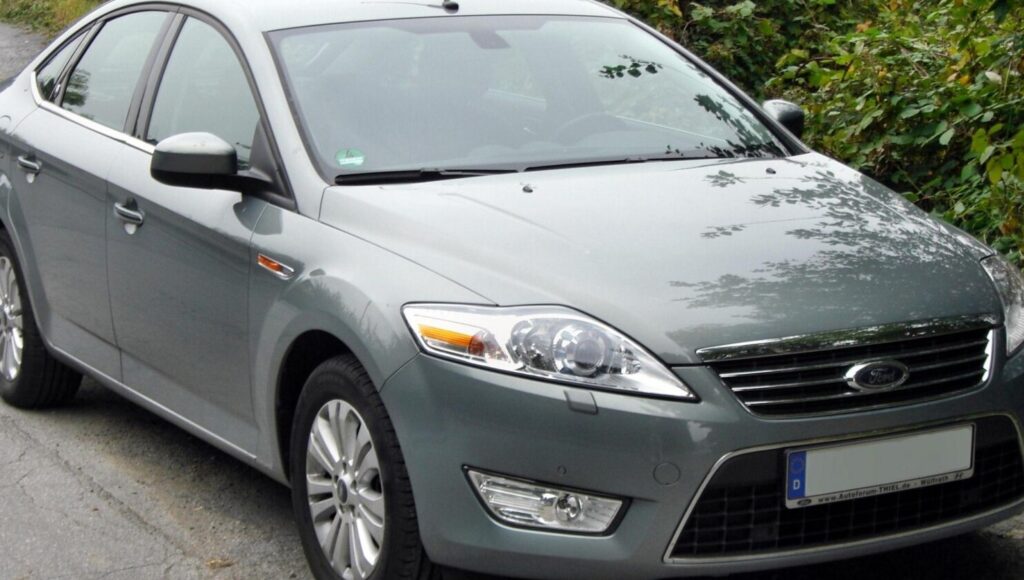
The Ford Mondeo III, produced from 2007 to 2010, represented a significant evolution of Ford’s mid-size family car. The 2.0i 16V variant, generating 145 horsepower, occupied a key position within the Mondeo III hatchback lineup, offering a balance between performance and affordability. This model was primarily aimed at the European market, where the Mondeo competed with vehicles like the Volkswagen Passat, Opel Vectra, and Peugeot 407. It built upon the success of the previous generation, offering improved refinement, technology, and a more contemporary design. The Mondeo III utilized Ford’s global CD270 platform, also known as the 1HX0 platform for the hatchback.
Technical Specifications
| Brand | Ford |
| Model | Mondeo |
| Generation | Mondeo III Hatchback |
| Type (Engine) | 2.0 i 16V (145 Hp) |
| Start of production | 2007 |
| End of production | 2010 |
| Powertrain Architecture | Internal Combustion engine |
| Body type | Hatchback |
| Seats | 5 |
| Doors | 5 |
| Fuel consumption (urban) | 11.2 l/100 km (21 US mpg, 25.2 UK mpg) |
| Fuel consumption (extra urban) | 6 l/100 km (39.2 US mpg, 47.1 UK mpg) |
| Fuel consumption (combined) | 7.9 l/100 km (29.8 US mpg, 35.8 UK mpg) |
| Fuel Type | Petrol (Gasoline) |
| Acceleration 0 – 100 km/h | 9.9 sec |
| Acceleration 0 – 62 mph | 9.9 sec |
| Acceleration 0 – 60 mph | 9.4 sec |
| Maximum speed | 210 km/h (130.49 mph) |
| Emission standard | Euro 4 |
| Weight-to-power ratio | 10.2 kg/Hp |
| Weight-to-torque ratio | 7.8 kg/Nm |
| Power | 145 Hp @ 6000 rpm |
| Torque | 190 Nm @ 4500 rpm (140.14 lb.-ft. @ 4500 rpm) |
| Engine layout | Front, Transverse |
| Engine Model/Code | AOBA, TBBA |
| Engine displacement | 1999 cm3 (121.99 cu. in.) |
| Number of cylinders | 4 |
| Engine configuration | Inline |
| Cylinder Bore | 87.5 mm (3.44 in.) |
| Piston Stroke | 83.1 mm (3.27 in.) |
| Compression ratio | 10.8:1 |
| Number of valves per cylinder | 4 |
| Fuel injection system | Multi-port manifold injection |
| Engine aspiration | Naturally aspirated engine |
| Valvetrain | DOHC |
| Engine oil capacity | 4.3 l (4.54 US qt | 3.78 UK qt) |
| Coolant capacity | 6.2 l (6.55 US qt | 5.46 UK qt) |
| Kerb Weight | 1477 kg (3256.23 lbs.) |
| Max. weight | 2090 kg (4607.66 lbs.) |
| Max load | 613 kg (1351.43 lbs.) |
| Trunk (boot) space – minimum | 486 l (17.16 cu. ft.) |
| Trunk (boot) space – maximum | 1460 l (51.56 cu. ft.) |
| Fuel tank capacity | 70 l (18.49 US gal | 15.4 UK gal) |
| Length | 4778 mm (188.11 in.) |
| Width | 1886 mm (74.25 in.) |
| Height | 1500 mm (59.06 in.) |
| Wheelbase | 2850 mm (112.2 in.) |
| Front track | 1522 mm (59.92 in.) |
| Rear track | 1537 mm (60.51 in.) |
| Minimum turning circle | 11.1 m (36.42 ft.) |
| Drivetrain Architecture | Front wheel drive |
| Number of gears | 5 |
| Gearbox type | Manual transmission |
| Front suspension | Coil spring |
| Rear suspension | Coil spring |
| Front brakes | Ventilated discs |
| Rear brakes | Disc |
| Assisting systems | ABS (Anti-lock braking system) |
| Steering type | Steering rack and pinion |
| Tires size | 205/55 R16 |
Powertrain & Engine Architecture
The 2.0i 16V engine, identified by engine codes AOBA and TBBA, was a naturally aspirated, inline-four cylinder petrol engine. It featured a dual overhead camshaft (DOHC) valvetrain with four valves per cylinder, contributing to its relatively high power output for its displacement. The engine utilized multi-port fuel injection, a common technology at the time, delivering fuel directly into the intake ports. This system, while not as advanced as direct injection, provided good fuel economy and acceptable performance. The 1999cc engine produced 145 horsepower at 6000 rpm and 190 Nm (140 lb-ft) of torque at 4500 rpm. The engine was transversely mounted in the front of the vehicle, driving the front wheels. The standard transmission for this variant was a five-speed manual gearbox, although a four-speed automatic transmission was also available, albeit less common. The automatic transmission, while offering convenience, generally resulted in slightly reduced fuel economy and acceleration compared to the manual.
Driving Characteristics
The 2.0i 16V Mondeo offered a reasonably engaging driving experience. With 145 hp, acceleration from 0-60 mph took around 9.4 seconds, making it competitive within its class. The engine felt responsive in the mid-range, providing adequate power for everyday driving and overtaking maneuvers. The five-speed manual transmission allowed drivers to effectively utilize the engine’s powerband, while the optional automatic, though smooth, felt somewhat less connected. The Mondeo’s suspension provided a comfortable ride, absorbing bumps and imperfections in the road well. Steering was precise and well-weighted, contributing to a confident feel behind the wheel. Compared to the higher-performance 2.5L variant, the 2.0i offered less outright speed, but it was more fuel-efficient and generally more affordable to run. Compared to diesel variants like the 2.0 TDCi, the 2.0i provided a smoother, quieter driving experience, but with higher fuel consumption.
Equipment & Trim Levels
The 2.0i 16V Mondeo typically came equipped with a respectable level of standard features. These included air conditioning, power windows, power steering, an audio system with CD player, and ABS brakes. Higher trim levels, such as Zetec and Titanium, added features like alloy wheels, upgraded upholstery, climate control, and parking sensors. Interior upholstery was typically cloth, with leather options available on higher-spec models. The dashboard layout was functional and well-designed, with clear instrumentation and intuitive controls. Optional extras included a sunroof, satellite navigation, and a premium sound system.
Chassis & Braking
The Mondeo III utilized a MacPherson strut front suspension and a multi-link rear suspension, providing a good balance between ride comfort and handling. The front brakes were ventilated discs, offering good stopping power, while the rear brakes were typically solid discs. ABS (Anti-lock Braking System) was standard, enhancing safety and stability during braking. The chassis was designed to provide a stable and predictable driving experience, with minimal body roll in corners. The 2.0i variant typically featured a slightly softer suspension setup compared to the higher-performance models, prioritizing ride comfort over ultimate handling.
Market Reception & Comparison
The Ford Mondeo III 2.0i 16V was generally well-received by automotive critics. It was praised for its comfortable ride, spacious interior, and good value for money. However, some critics noted that the engine could feel a little underpowered when fully loaded or driving uphill. Fuel economy was considered average for its class, with combined figures around 29.8 US mpg. Compared to the 2.5L variant, the 2.0i offered a more affordable entry point into the Mondeo range, appealing to buyers who prioritized fuel efficiency and practicality over outright performance. The diesel variants offered superior fuel economy, but the 2.0i provided a smoother and quieter driving experience.
Legacy
The 2.0i 16V Mondeo III has proven to be a relatively reliable vehicle, with many examples still on the road today. The engine is generally durable, although regular maintenance is essential to prevent issues. Common problems include oil leaks and occasional sensor failures. The automatic transmission, while generally reliable, can be prone to wear and tear with high mileage. In the used car market, the 2.0i 16V Mondeo III represents a good value proposition, offering a comfortable and practical family car at an affordable price. Its blend of practicality, comfort, and reasonable running costs has ensured its continued popularity among used car buyers.