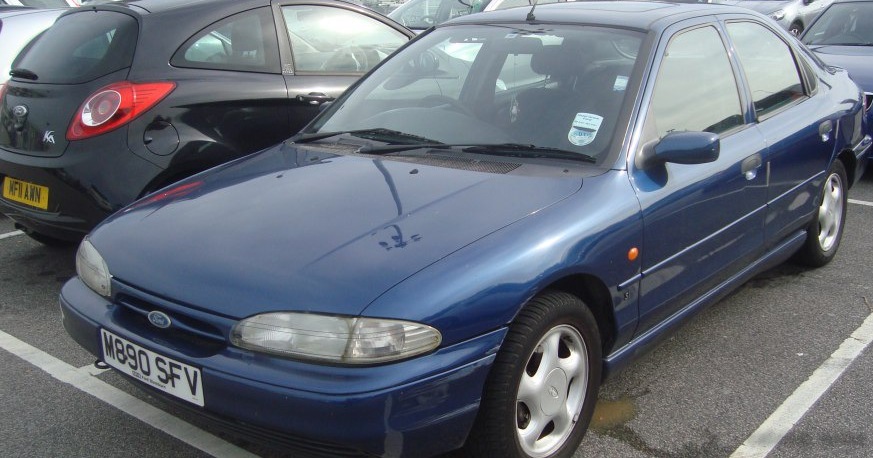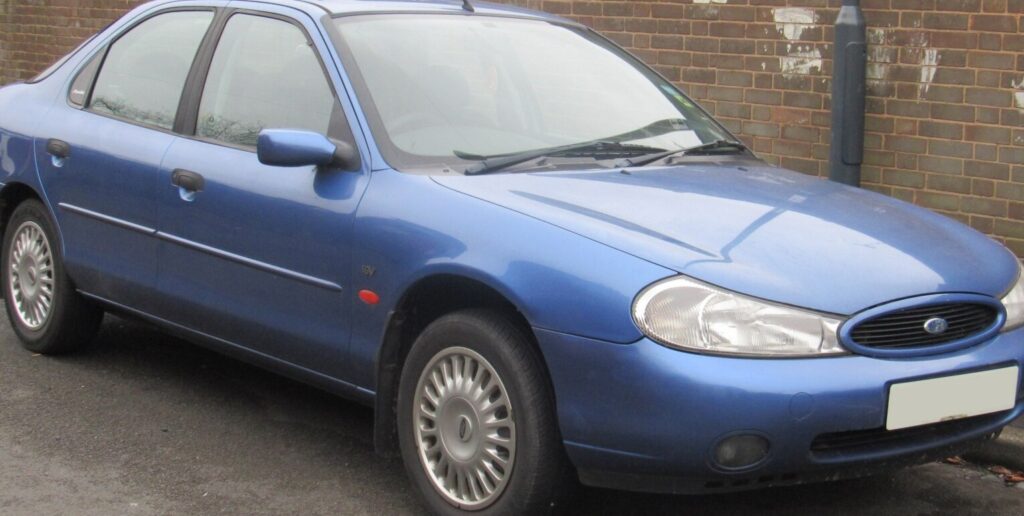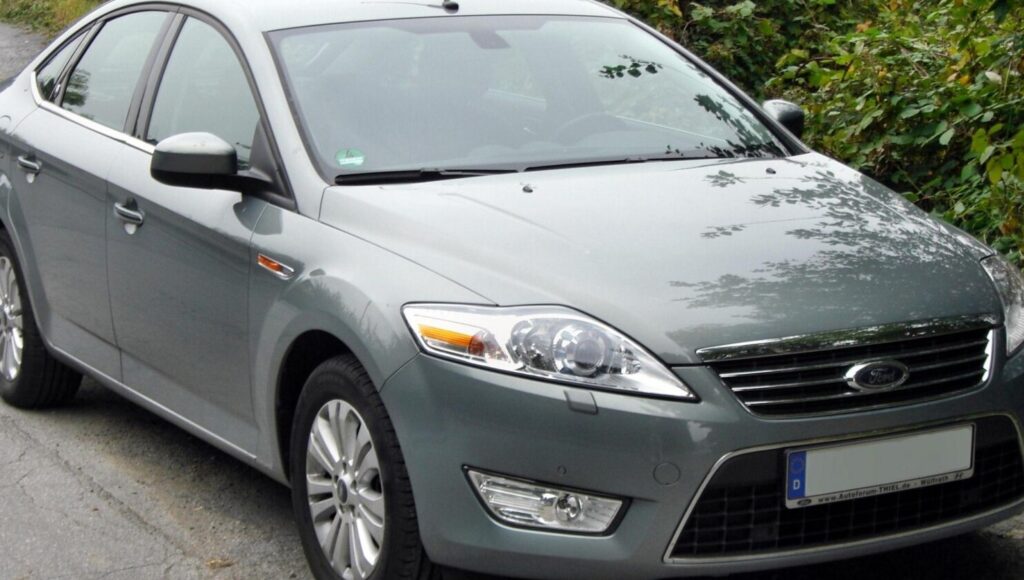
The Ford Mondeo III Hatchback 2.2 TDCi, producing 175 horsepower, represented a significant offering in the mid-size family car segment during its production run from 2007 to 2010. Positioned as a higher-performance variant within the third-generation Mondeo (internally designated as the B5Y platform), it catered to drivers seeking a blend of practicality, fuel efficiency, and spirited driving dynamics. This model was primarily aimed at the European market, where the Mondeo competed with rivals like the Volkswagen Passat, Opel Vectra, and Peugeot 407. The 2.2 TDCi engine offered a compelling alternative to the gasoline engines available, providing increased torque and improved fuel economy.
Technical Specifications
| Brand | Ford |
| Model | Mondeo |
| Generation | Mondeo III Hatchback |
| Type (Engine) | 2.2 TDCi (175 Hp) |
| Start of production | 2007 |
| End of production | 2010 |
| Powertrain Architecture | Internal Combustion engine |
| Body type | Hatchback |
| Seats | 5 |
| Doors | 5 |
| Fuel consumption (urban) | 8.4 l/100 km (28 US mpg, 33.6 UK mpg, 11.9 km/l) |
| Fuel consumption (extra urban) | 4.9 l/100 km (48 US mpg, 57.6 UK mpg, 20.4 km/l) |
| Fuel consumption (combined) | 6.2 l/100 km (37.9 US mpg, 45.6 UK mpg, 16.1 km/l) |
| Fuel Type | Diesel |
| Acceleration 0 – 100 km/h | 8.7 sec |
| Acceleration 0 – 62 mph | 8.7 sec |
| Acceleration 0 – 60 mph | 8.3 sec |
| Maximum speed | 223 km/h (138.57 mph) |
| Emission standard | Euro 4 |
| Weight-to-power ratio | 8.5 kg/Hp, 118.2 Hp/tonne |
| Weight-to-torque ratio | 3.7 kg/Nm, 270.1 Nm/tonne |
| Power | 175 Hp @ 4000 rpm |
| Power per litre | 80.3 Hp/l |
| Torque | 400 Nm @ 1750 rpm (295.02 lb.-ft. @ 1750 rpm) |
| Engine layout | Front, Transverse |
| Engine Model/Code | Q4BA |
| Engine displacement | 2179 cm3 (132.97 cu. in.) |
| Number of cylinders | 4 |
| Engine configuration | Inline |
| Cylinder Bore | 85 mm (3.35 in.) |
| Piston Stroke | 96 mm (3.78 in.) |
| Number of valves per cylinder | 4 |
| Fuel injection system | Diesel Commonrail |
| Engine aspiration | Turbocharger, Intercooler |
| Engine oil capacity | 5.9 l (6.23 US qt | 5.19 UK qt) |
| Coolant capacity | 8.1 l (8.56 US qt | 7.13 UK qt) |
| Kerb Weight | 1481 kg (3265.05 lbs.) |
| Max. weight | 2170 kg (4784.03 lbs.) |
| Max load | 689 kg (1518.98 lbs.) |
| Trunk (boot) space – minimum | 486 l (17.16 cu. ft.) |
| Trunk (boot) space – maximum | 1460 l (51.56 cu. ft.) |
| Fuel tank capacity | 70 l (18.49 US gal | 15.4 UK gal) |
| Length | 4778 mm (188.11 in.) |
| Width | 1886 mm (74.25 in.) |
| Height | 1500 mm (59.06 in.) |
| Wheelbase | 2850 mm (112.2 in.) |
| Front track | 1522 mm (59.92 in.) |
| Rear track | 1537 mm (60.51 in.) |
| Minimum turning circle | 11.1 m (36.42 ft.) |
| Drivetrain Architecture | Front wheel drive |
| Number of gears | 6 gears, manual transmission |
| Front suspension | Coil spring |
| Rear suspension | Coil spring |
| Front brakes | Ventilated discs |
| Rear brakes | Disc |
| Assisting systems | ABS (Anti-lock braking system) |
| Steering type | Steering rack and pinion |
| Tires size | 205/55 R16 |
INTRODUCTION
The Ford Mondeo III Hatchback 2.2 TDCi (175 Hp) was introduced as part of the facelifted Mondeo range in 2007. Building upon the success of the original Mondeo III launched in 2000, this update brought revised styling, improved interior materials, and a range of more efficient and powerful engines. The 2.2-liter turbodiesel engine, part of Ford’s Duratorq family, was a key component of this refresh, offering a balance between performance and economy. The hatchback body style was particularly popular in Europe, offering a more compact and versatile alternative to the traditional saloon (sedan) and estate (wagon) versions.
Powertrain & Engine Architecture
The heart of this Mondeo variant is the Q4BA 2.2-liter inline-four cylinder turbodiesel engine. This engine utilizes a common rail direct injection system, delivering fuel at extremely high pressure for optimized combustion. The engine benefits from a variable geometry turbocharger (VGT) and an intercooler, which enhance power output and reduce turbo lag. The engine produces 175 horsepower at 4000 rpm and a substantial 400 Nm (295 lb-ft) of torque at just 1750 rpm. This high torque output, available from low engine speeds, contributes to strong acceleration and effortless cruising. The engine features four valves per cylinder and a robust engine block designed for durability. The 6-speed manual transmission was the standard offering, providing well-spaced gear ratios to maximize both performance and fuel efficiency.
Driving Characteristics
The 2.2 TDCi 175 hp Mondeo Hatchback delivers a refined and capable driving experience. The abundant torque allows for brisk acceleration, with a 0-60 mph time of around 8.3 seconds. In real-world driving, the engine feels responsive and provides ample power for overtaking and highway cruising. The 6-speed manual transmission allows the driver to keep the engine in its optimal power band. Compared to the lower-powered 1.8 TDCi versions, the 2.2 TDCi offers a noticeable performance improvement, while remaining more economical than the petrol (gasoline) engines. The suspension provides a comfortable ride, absorbing bumps and imperfections in the road surface effectively. The steering is precise and well-weighted, providing good feedback to the driver.
Equipment & Trim Levels
The 2.2 TDCi 175 hp model typically came equipped with a generous level of standard equipment. This often included air conditioning, power windows, power mirrors, a CD stereo system, and alloy wheels. Higher trim levels, such as Titanium, added features like leather upholstery, automatic climate control, a premium sound system, and parking sensors. Optional extras included a sunroof, satellite navigation, and heated front seats. The interior design was functional and well-built, with a focus on ergonomics and practicality. The hatchback body style offered a versatile cargo area, with a minimum capacity of 486 liters (17.16 cu ft) expanding to 1460 liters (51.56 cu ft) with the rear seats folded down.
Chassis & Braking
The Mondeo III Hatchback utilizes a front-wheel-drive layout with independent suspension at all four corners. The front suspension consists of MacPherson struts, while the rear features a multi-link setup. This configuration provides a good balance between ride comfort and handling. The braking system consists of ventilated discs at the front and solid discs at the rear. Anti-lock Braking System (ABS) was standard, enhancing safety and stability during emergency braking. The steering is a rack and pinion system, providing precise and responsive control.
Market Reception & Comparison
The Ford Mondeo III 2.2 TDCi 175 hp was generally well-received by automotive critics. It was praised for its strong performance, good fuel economy, and comfortable ride. Compared to the lower-powered diesel variants, the 2.2 TDCi offered a significant performance upgrade, making it a more appealing option for drivers who frequently travel long distances or carry passengers. Fuel economy was a strong point, with combined figures of around 6.2 l/100 km (37.9 US mpg). Reliability was generally good, although some owners reported issues with the diesel particulate filter (DPF) and the dual-mass flywheel.
Legacy
The Ford Mondeo III 2.2 TDCi 175 hp remains a popular choice in the used car market today. Its combination of practicality, performance, and fuel efficiency makes it a compelling option for buyers seeking a well-rounded family car. The Duratorq engine, while requiring regular maintenance, is generally considered to be durable and reliable. However, potential buyers should be aware of the potential for DPF and dual-mass flywheel issues. The Mondeo III, and particularly this 2.2 TDCi variant, helped solidify Ford’s reputation for building capable and well-equipped family cars in the European market.