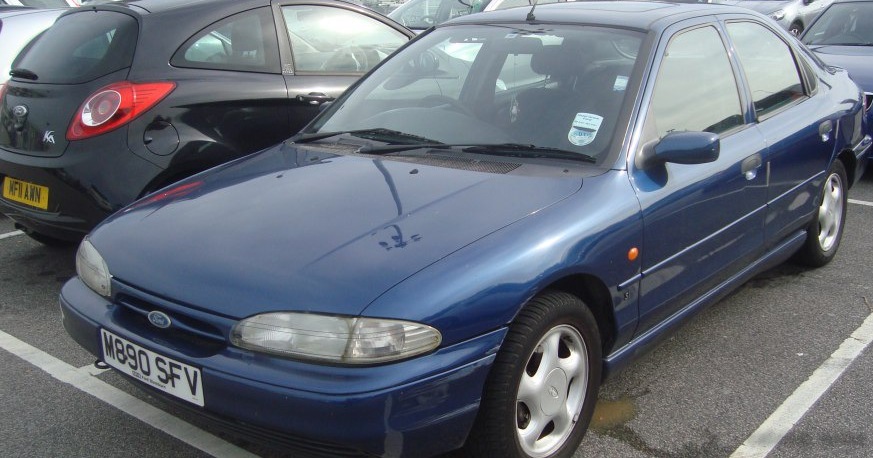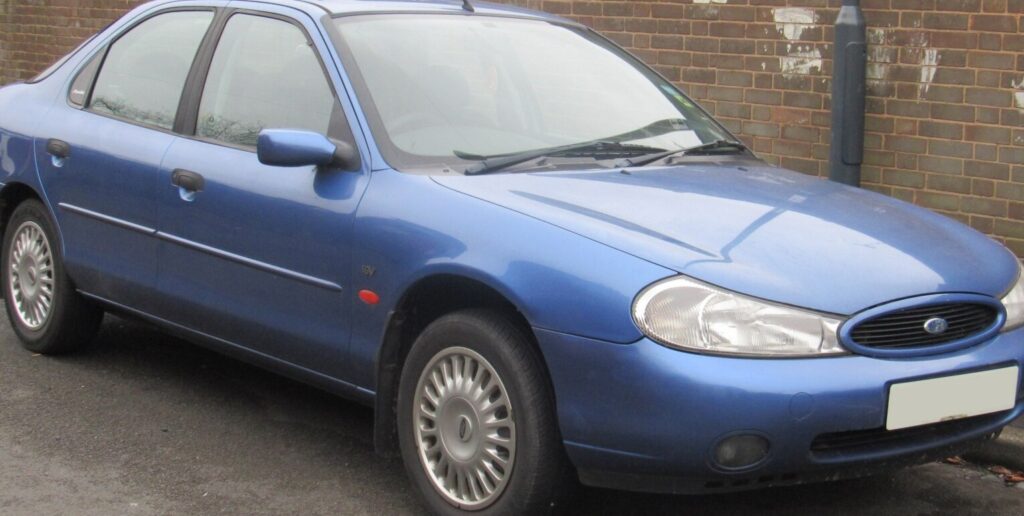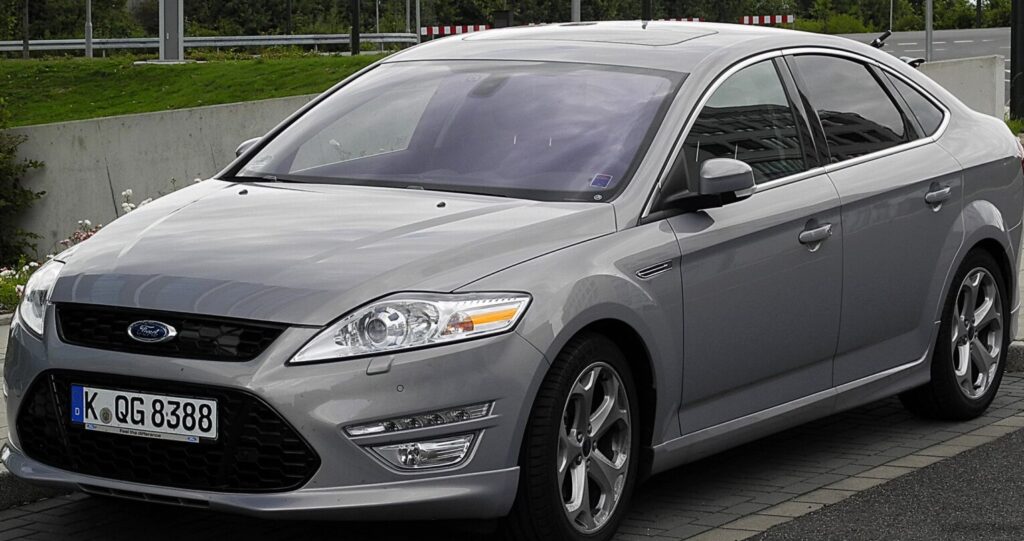
The Ford Mondeo III, particularly the facelifted version introduced in 2010, represented a significant evolution of Ford’s mid-size family car. Produced from 2010 to 2014, the 1.6 16V (120 hp) Duratec hatchback variant occupied an important position in the Mondeo lineup as an entry-level offering, aimed at buyers prioritizing fuel efficiency and affordability. This model was primarily sold in the European market, where the Mondeo competed with vehicles like the Volkswagen Passat, Opel/Vauxhall Insignia, and Peugeot 508. It built upon the success of the earlier Mondeo III (introduced in 2007) and benefited from styling updates and revised engine options.
Technical Specifications
| Brand | Ford |
| Model | Mondeo |
| Generation | Mondeo III Hatchback (facelift 2010) |
| Type (Engine) | 1.6 16V (120 Hp) Duratec |
| Start of production | 2010 |
| End of production | 2014 |
| Powertrain Architecture | Internal Combustion engine |
| Body type | Hatchback |
| Seats | 5 |
| Doors | 5 |
| Fuel consumption (urban) | 9.2 l/100 km (25.6 US mpg, 30.7 UK mpg, 10.9 km/l) |
| Fuel consumption (extra urban) | 5.4 l/100 km (43.6 US mpg, 52.3 UK mpg, 18.5 km/l) |
| Fuel consumption (combined) | 6.8 l/100 km (34.6 US mpg, 41.5 UK mpg, 14.7 km/l) |
| CO2 emissions | 159 g/km |
| Fuel Type | Petrol (Gasoline) |
| Acceleration 0 – 100 km/h | 12.3 sec |
| Acceleration 0 – 62 mph | 12.3 sec |
| Acceleration 0 – 60 mph | 11.7 sec |
| Maximum speed | 195 km/h (121.17 mph) |
| Emission standard | Euro 5 |
| Weight-to-power ratio | 12 kg/Hp, 83.6 Hp/tonne |
| Weight-to-torque ratio | 9 kg/Nm, 111.5 Nm/tonne |
| Power | 120 Hp @ 6300 rpm |
| Power per litre | 75.2 Hp/l |
| Torque | 160 Nm @ 4100 rpm (118.01 lb.-ft. @ 4100 rpm) |
| Engine layout | Front, Transverse |
| Engine Model/Code | KGBA |
| Engine displacement | 1596 cm3 (97.39 cu. in.) |
| Number of cylinders | 4 |
| Engine configuration | Inline |
| Cylinder Bore | 79 mm (3.11 in.) |
| Piston Stroke | 81.4 mm (3.2 in.) |
| Compression ratio | 11:1 |
| Number of valves per cylinder | 4 |
| Fuel injection system | Multi-port manifold injection |
| Engine aspiration | Naturally aspirated engine |
| Engine oil capacity | 4.1 l (4.33 US qt | 3.61 UK qt) |
| Coolant | 6 l (6.34 US qt | 5.28 UK qt) |
| Kerb Weight | 1435 kg (3163.63 lbs.) |
| Max. weight | 2050 kg (4519.48 lbs.) |
| Max load | 615 kg (1355.84 lbs.) |
| Trunk (boot) space – minimum | 486 l (17.16 cu. ft.) |
| Trunk (boot) space – maximum | 1390 l (49.09 cu. ft.) |
| Length | 4784 mm (188.35 in.) |
| Width | 1886 mm (74.25 in.) |
| Height | 1500 mm (59.06 in.) |
| Wheelbase | 2850 mm (112.2 in.) |
| Front track | 1588 mm (62.52 in.) |
| Rear (Back) track | 1605 mm (63.19 in.) |
| Minimum turning circle | 11.6 m (38.06 ft.) |
| Drivetrain Architecture | The Internal combustion engine (ICE) drives the front wheels of the vehicle. |
| Drive wheel | Front wheel drive |
| Number of gears and type of gearbox | 5 gears, manual transmission |
| Front suspension | Independent, type McPherson with coil spring and anti-roll bar |
| Rear suspension | Independent multi-link spring suspension with stabilizer |
| Front brakes | Ventilated discs |
| Rear brakes | Disc |
| Assisting systems | ABS (Anti-lock braking system) |
| Steering type | Steering rack and pinion |
| Tires size | 205/55 R16 |
| Wheel rims size | 6.5J x 16 |
Powertrain & Engine Architecture
The 1.6-liter Duratec engine, designated KGBA, is a naturally aspirated, inline-four cylinder petrol engine. It features a double overhead camshaft (DOHC) design with four valves per cylinder, contributing to its relatively efficient breathing. The engine utilizes multi-point fuel injection, delivering fuel directly into the intake ports. This engine is part of the Duratec family, known for its relatively simple design and reasonable reliability. The 120 hp output is achieved at 6300 rpm, while peak torque of 160 Nm (118 lb-ft) arrives at 4100 rpm. The engine’s compression ratio is 11:1. Paired with this engine was a five-speed manual transmission, which was the standard offering for this trim level. While an automatic transmission was available on other Mondeo variants, it wasn’t typically offered with the 1.6L engine due to the powertrain’s performance characteristics.
Driving Characteristics
The 1.6-liter Mondeo Hatchback, with its 120 hp output and five-speed manual transmission, offered a comfortable and economical driving experience. Acceleration was adequate for everyday driving, with a 0-60 mph time of around 11.7 seconds. However, it wasn’t particularly sporty. The engine required frequent downshifts to maintain momentum when overtaking or climbing hills. Compared to the more powerful 2.0-liter or 2.3-liter versions of the Mondeo, the 1.6L felt noticeably less responsive. The gear ratios were tuned for fuel efficiency rather than outright performance. The manual transmission provided a more engaging driving experience than an automatic would have, allowing drivers to better utilize the engine’s limited power band. The suspension provided a good balance between comfort and handling, making it suitable for both city driving and longer journeys.
Equipment & Trim Levels
The 1.6 16V Mondeo typically came with a reasonable level of standard equipment, positioning it as a well-equipped entry-level model. Standard features generally included air conditioning, power windows, power mirrors, a basic audio system (usually with CD player and auxiliary input), and ABS brakes. Higher trim levels, such as Titanium, offered additional features like alloy wheels, upgraded audio systems, climate control, and parking sensors. Interior upholstery was typically cloth, with a functional and durable design. Optional extras included a sunroof, leather upholstery, and a navigation system.
Chassis & Braking
The Mondeo III utilized an independent front suspension with McPherson struts and a multi-link independent rear suspension. This setup provided a comfortable ride and decent handling characteristics. The front brakes were ventilated discs, while the rear brakes were solid discs. ABS (Anti-lock Braking System) was standard, enhancing safety. The suspension was tuned to prioritize comfort, but it still offered reasonable body control. Stabilizer bars were fitted to both the front and rear axles to reduce body roll during cornering.
Market Reception & Comparison
The 1.6-liter Mondeo Hatchback was generally well-received as a practical and affordable family car. Critics praised its fuel efficiency and comfortable ride, but noted its lack of outright performance. Compared to the higher-powered Mondeo variants, the 1.6L offered significantly better fuel economy, making it an attractive option for drivers who prioritized running costs. The 1.9 TDI diesel version, for example, offered superior fuel economy and more torque, but at a higher purchase price. The 1.6L was often seen as a sensible choice for those who primarily used their car for commuting and everyday errands.
Legacy
The 1.6 Duratec engine, while not known for being particularly exciting, proved to be a relatively reliable unit. Common issues were generally minor and related to routine maintenance items. Today, used examples of the 1.6 Mondeo Hatchback are readily available and represent a very affordable entry point into Mondeo ownership. The car’s simplicity and relatively low running costs continue to appeal to budget-conscious buyers. While it may not offer the performance or prestige of higher-spec Mondeo models, the 1.6 16V remains a practical and dependable choice for those seeking a comfortable and economical family car.