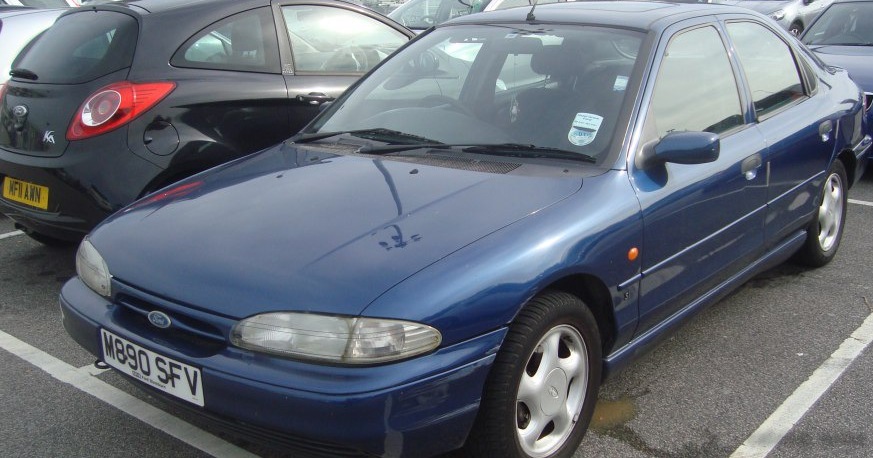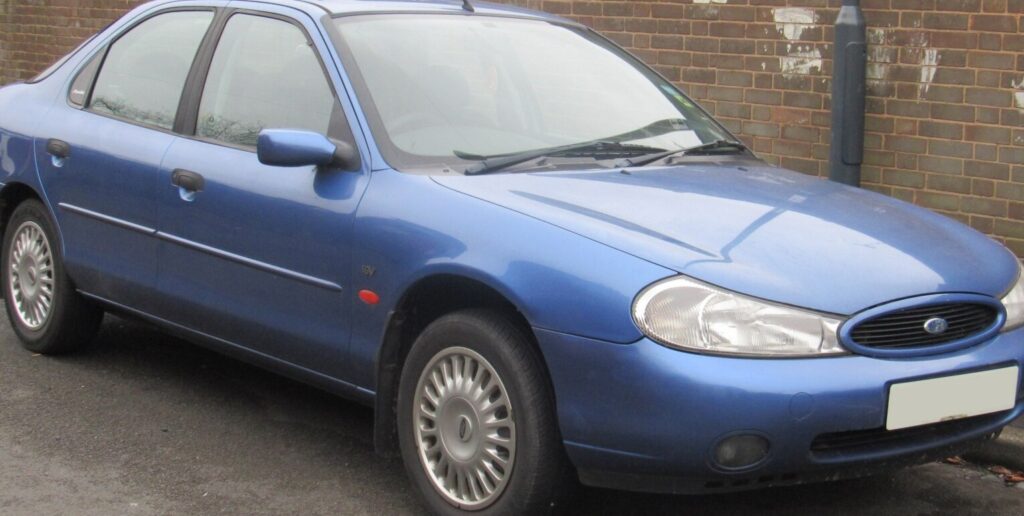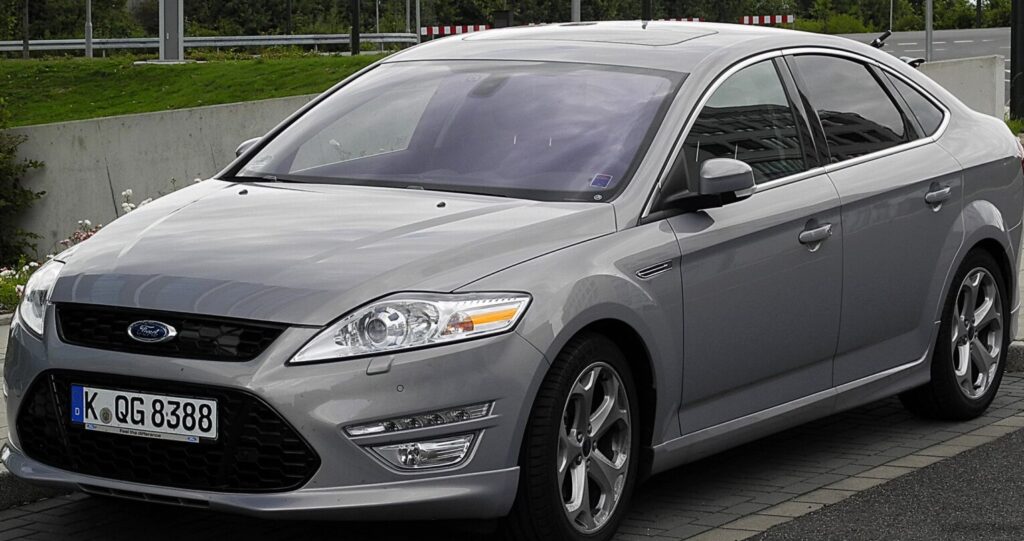
The Ford Mondeo III Hatchback, specifically the 1.6 Duratorq TDCi variant introduced in February 2011 and continuing through August 2014, represented an entry-level diesel option within the facelifted third generation Mondeo range. Positioned as a fuel-efficient and practical choice, this model aimed to broaden the Mondeo’s appeal to buyers prioritizing economy over outright performance. It was a key offering in the European market, where diesel engines held significant popularity, and offered a balance between running costs and family car practicality. This variant utilized a front-wheel-drive layout and was available exclusively with a six-speed manual transmission during its production run.
Technical Specifications
| Brand | Ford |
| Model | Mondeo |
| Generation | Mondeo III Hatchback (facelift 2010) |
| Type (Engine) | 1.6 Duratorq TDCi (115 Hp) |
| Start of production | February, 2011 |
| End of production | August, 2014 |
| Powertrain Architecture | Internal Combustion engine |
| Body type | Hatchback |
| Seats | 5 |
| Doors | 5 |
| Fuel consumption (urban) | 6 l/100 km (39.2 US mpg, 47.1 UK mpg, 16.7 km/l) |
| Fuel consumption (extra urban) | 4.2 l/100 km (56 US mpg, 67.3 UK mpg, 23.8 km/l) |
| Fuel consumption (combined) | 4.9 l/100 km (48 US mpg, 57.6 UK mpg, 20.4 km/l) |
| CO2 emissions | 129 g/km |
| Fuel Type | Diesel |
| Acceleration 0 – 100 km/h | 11.9 sec |
| Acceleration 0 – 62 mph | 11.9 sec |
| Acceleration 0 – 60 mph | 11.3 sec |
| Maximum speed | 190 km/h (118.06 mph) |
| Emission standard | Euro 5 |
| Weight-to-power ratio | 12.4 kg/Hp, 80.9 Hp/tonne |
| Weight-to-torque ratio | 5.3 kg/Nm, 190 Nm/tonne |
| Power | 115 Hp @ 3600 rpm |
| Power per litre | 73.7 Hp/l |
| Torque | 270 Nm @ 1750-2500 rpm (199.14 lb.-ft. @ 1750-2500 rpm) |
| Engine layout | Front, Transverse |
| Engine Model/Code | DV6 |
| Engine displacement | 1560 cm3 (95.2 cu. in.) |
| Number of cylinders | 4 |
| Engine configuration | Inline |
| Cylinder Bore | 75 mm (2.95 in.) |
| Piston Stroke | 88.3 mm (3.48 in.) |
| Compression ratio | 16:1 |
| Number of valves per cylinder | 2 |
| Fuel injection system | Diesel Commonrail |
| Engine aspiration | Turbocharger, Intercooler |
| Valvetrain | SOHC |
| Engine oil capacity | 3.8 l (4.02 US qt | 3.34 UK qt) |
| Coolant capacity | 7.3 l (7.71 US qt | 6.42 UK qt) |
| Kerb Weight | 1421 kg (3132.77 lbs.) |
| Max. weight | 2155 kg (4750.96 lbs.) |
| Max load | 734 kg (1618.19 lbs.) |
| Trunk (boot) space – minimum | 540 l (19.07 cu. ft.) |
| Trunk (boot) space – maximum | 1460 l (51.56 cu. ft.) |
| Fuel tank capacity | 70 l (18.49 US gal | 15.4 UK gal) |
| Permitted trailer load with brakes (8%) | 1800 kg (3968.32 lbs.) |
| Permitted trailer load with brakes (12%) | 1600 kg (3527.4 lbs.) |
| Permitted trailer load without brakes | 745 kg (1642.44 lbs.) |
| Length | 4784 mm (188.35 in.) |
| Width | 1886 mm (74.25 in.) |
| Width with mirrors folded | 1940 mm (76.38 in.) |
| Width including mirrors | 2092 mm (82.36 in.) |
| Height | 1500 mm (59.06 in.) |
| Minimum turning circle | 11.6 m (38.06 ft.) |
| Drivetrain | Front wheel drive |
| Number of gears | 6 |
| Gearbox type | Manual transmission |
| Front suspension | Independent type McPherson, Transverse stabilizer |
| Rear suspension | Independent multi-link suspension, Transverse stabilizer |
| Front brakes | Ventilated discs |
| Rear brakes | Disc |
| Assisting systems | ABS (Anti-lock braking system) |
| Steering type | Steering rack and pinion |
| Power steering | Electric Steering |
| Tires size | 205/55 R16; 215/50 R17 |
| Wheel rims size | 6.5J x 16; 7J x 17 |
Powertrain & Engine Architecture
The heart of this Mondeo variant is the 1.6-liter Duratorq TDCi engine, identified by the DV6 engine code. This engine is a four-cylinder, inline diesel utilizing a common-rail direct injection system. The DV6 family of engines were widely used across the Ford and PSA Peugeot Citroën lineups, known for their relatively compact size and fuel efficiency. The engine features a single overhead camshaft (SOHC) valvetrain operating two valves per cylinder. A turbocharger with an intercooler is employed to boost power and torque, delivering 115 horsepower at 3600 rpm and 270 Nm (199 lb-ft) of torque between 1750 and 2500 rpm. The six-speed manual transmission was the sole gearbox option, providing a good balance between fuel economy and drivability. The gear ratios were tuned for maximizing fuel efficiency, with a relatively long final drive.
Driving Characteristics
The 1.6 Duratorq TDCi-equipped Mondeo offered a comfortable and economical driving experience. Acceleration was adequate for everyday driving, with a 0-60 mph time of around 11.3 seconds, but it wasn’t particularly sporty. The engine’s torque delivery provided sufficient pulling power for overtaking maneuvers, but it lacked the responsiveness of higher-output versions like the 2.0-liter TDCi. Compared to the petrol-powered Mondeos, the 1.6 TDCi offered significantly better fuel economy, making it a popular choice for high-mileage drivers. The manual transmission allowed for greater driver control compared to an automatic, but required more driver involvement. The long gear ratios contributed to the fuel efficiency but could feel somewhat sluggish during quick acceleration.
Equipment & Trim Levels
The 1.6 Duratorq TDCi typically came in lower to mid-range trim levels, such as LX, Zetec, and Titanium. Standard equipment generally included air conditioning, electric front windows, a basic audio system, and ABS brakes. Higher trim levels added features like alloy wheels, cruise control, automatic headlights and wipers, and upgraded interior trim. Optional extras included a sunroof, leather upholstery, and a more advanced navigation system. Interior upholstery was typically cloth, with a functional and durable design. The dashboard layout was consistent across the Mondeo range, featuring a clear instrument cluster and logically arranged controls.
Chassis & Braking
The Mondeo III Hatchback utilized an independent front suspension with McPherson struts and a transverse stabilizer, providing a comfortable ride and decent handling. The rear suspension employed an independent multi-link setup, also with a transverse stabilizer, further enhancing ride quality and stability. Front brakes were ventilated discs, while rear brakes were solid discs. ABS (Anti-lock Braking System) was standard, providing enhanced braking performance and safety. The suspension tuning was geared towards comfort, prioritizing ride quality over sporty handling. Stabilizer bar thickness was moderate, providing a good balance between body roll control and ride comfort.
Market Reception & Comparison
The 1.6 Duratorq TDCi Mondeo was generally well-received by critics as a practical and economical family car. It was praised for its fuel efficiency and comfortable ride, but criticized for its relatively modest performance. Compared to the 2.0-liter TDCi variants, the 1.6 offered lower running costs but sacrificed some performance. Against petrol-powered Mondeos, it provided superior fuel economy but a less refined engine note. Reliability was generally good, although some owners reported issues with the diesel particulate filter (DPF) system, particularly on vehicles used primarily for short journeys.
Legacy
The 1.6 Duratorq TDCi engine, while not the most powerful option in the Mondeo lineup, proved to be a reliable and fuel-efficient powerplant. In the used car market, these models represent a good value proposition for buyers seeking an economical and practical family car. The DV6 engine is known for its durability, but regular maintenance, including oil changes and DPF servicing, is crucial for long-term reliability. The Mondeo III Hatchback, in general, remains a popular choice for its spacious interior, comfortable ride, and affordable price point.