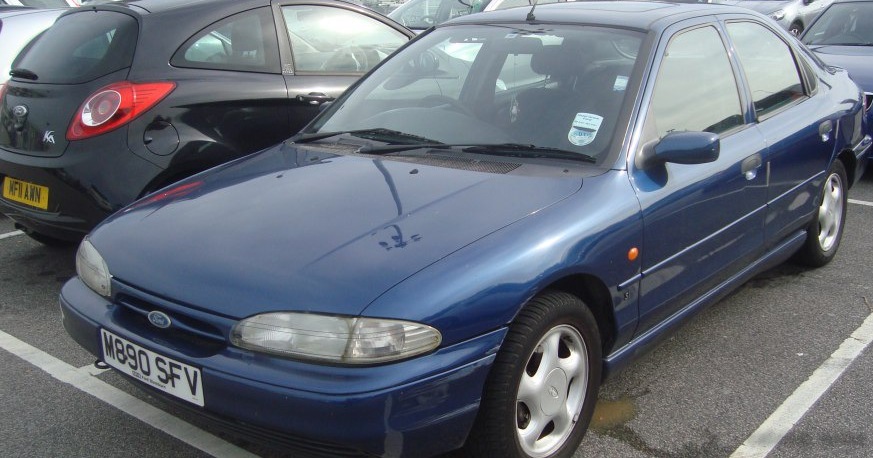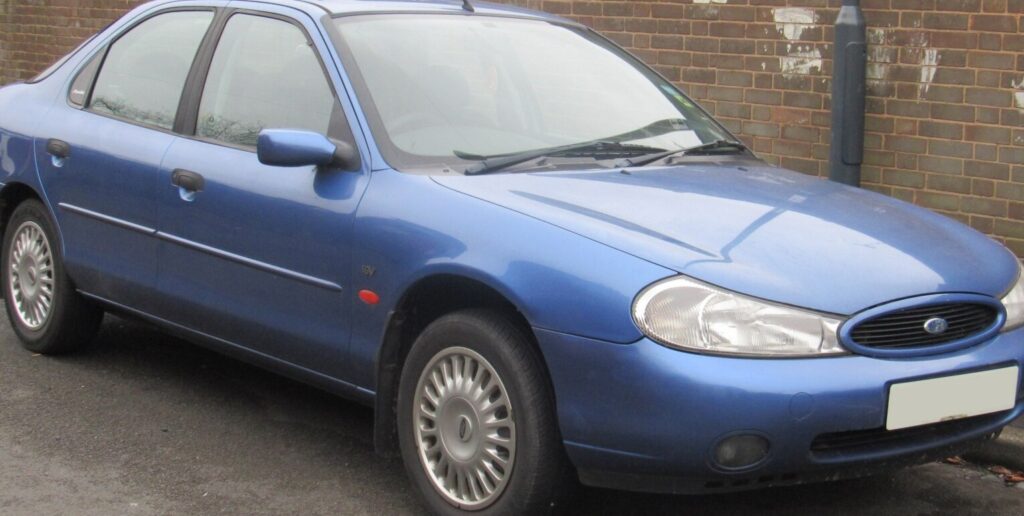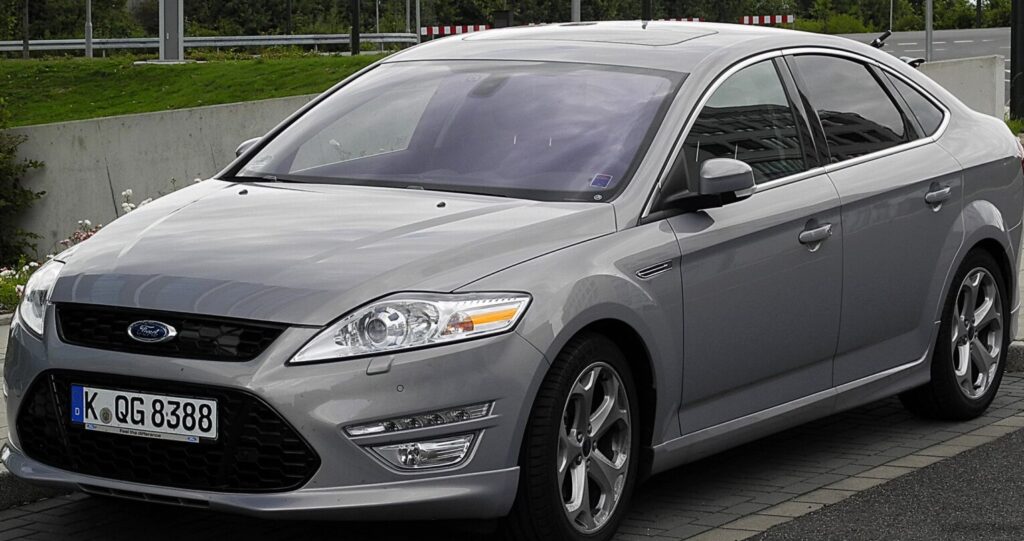
The Ford Mondeo III, specifically the facelifted version introduced in December 2010 and continuing through August 2014, represented a significant evolution of Ford’s mid-size family car. Within this generation, the 1.6 EcoBoost variant, producing 160 horsepower, occupied a key position in the lineup, offering a balance between fuel efficiency and respectable performance. This model aimed to appeal to buyers seeking a modern, well-equipped hatchback without the higher costs associated with the more powerful engine options. It was primarily marketed in Europe, where the Mondeo competed with rivals like the Volkswagen Passat, Opel/Vauxhall Insignia, and Peugeot 508.
Technical Specifications
| Brand | Ford |
| Model | Mondeo |
| Generation | Mondeo III Hatchback (facelift 2010) |
| Type (Engine) | 1.6 EcoBoost (160 Hp) |
| Start of production | December, 2010 |
| End of production | August, 2014 |
| Powertrain Architecture | Internal Combustion engine |
| Body type | Hatchback |
| Seats | 5 |
| Doors | 5 |
| Fuel consumption (urban) | 8.2 l/100 km (28.7 US mpg, 34.4 UK mpg, 12.2 km/l) |
| Fuel consumption (extra urban) | 5.4 l/100 km (43.6 US mpg, 52.3 UK mpg, 18.5 km/l) |
| Fuel consumption (combined) | 6.4 l/100 km (36.8 US mpg, 44.1 UK mpg, 15.6 km/l) |
| CO2 emissions | 149 g/km |
| Fuel Type | Petrol (Gasoline) |
| Acceleration 0 – 100 km/h | 9.3 sec |
| Acceleration 0 – 62 mph | 9.3 sec |
| Acceleration 0 – 60 mph | 8.8 sec |
| Maximum speed | 216 km/h (134.22 mph) |
| Emission standard | Euro 5 |
| Weight-to-power ratio | 8.9 kg/Hp, 112.4 Hp/tonne |
| Weight-to-torque ratio | 5.9 kg/Nm, 168.7 Nm/tonne |
| Power | 160 Hp @ 5700 rpm |
| Power per litre | 100.3 Hp/l |
| Torque | 240 Nm @ 1600-4000 rpm (177.01 lb.-ft. @ 1600-4000 rpm) |
| Engine layout | Front, Transverse |
| Engine Model/Code | JTBB |
| Engine displacement | 1596 cm3 (97.39 cu. in.) |
| Number of cylinders | 4 |
| Engine configuration | Inline |
| Number of valves per cylinder | 4 |
| Fuel injection system | Direct injection |
| Engine aspiration | Turbocharger, Intercooler |
| Engine oil capacity | 4.7 l (4.97 US qt | 4.14 UK qt) |
| Coolant capacity | 6.5 l (6.87 US qt | 5.72 UK qt) |
| Kerb Weight | 1423 kg (3137.18 lbs.) |
| Max. weight | 2150 kg (4739.94 lbs.) |
| Max load | 727 kg (1602.76 lbs.) |
| Trunk (boot) space – minimum | 486 l (17.16 cu. ft.) |
| Trunk (boot) space – maximum | 1390 l (49.09 cu. ft.) |
| Fuel tank capacity | 70 l (18.49 US gal | 15.4 UK gal) |
| Permitted trailer load with brakes (8%) | 1800 kg (3968.32 lbs.) |
| Permitted trailer load with brakes (12%) | 1600 kg (3527.4 lbs.) |
| Permitted trailer load without brakes | 745 kg (1642.44 lbs.) |
| Length | 4784 mm (188.35 in.) |
| Width | 1886 mm (74.25 in.) |
| Width with mirrors folded | 1940 mm (76.38 in.) |
| Width including mirrors | 2092 mm (82.36 in.) |
| Height | 1500 mm (59.06 in.) |
| Wheelbase | 2850 mm (112.2 in.) |
| Minimum turning circle | 11.6 m (38.06 ft.) |
| Drivetrain Architecture | ICE, Front wheel drive |
| Drive wheel | Front wheel drive |
| Number of gears | 6 gears, manual transmission |
| Front suspension | Independent, McPherson with coil spring and anti-roll bar |
| Rear suspension | Independent multi-link spring suspension with stabilizer |
| Front brakes | Ventilated discs |
| Rear brakes | Disc |
| Assisting systems | ABS (Anti-lock braking system) |
| Steering type | Steering rack and pinion |
| Power steering | Electric Steering |
| Tires size | 205/55 R16; 215/50 R17 |
| Wheel rims size | 6.5J x 16; 7J x 17 |
INTRODUCTION
The Ford Mondeo III facelift, launched in late 2010, brought with it a new range of EcoBoost engines, including the 1.6-liter turbocharged unit producing 160 horsepower. This variant was positioned as a mid-range offering, slotting between the lower-powered 1.6 Ti-VCT and the more potent 2.0-liter EcoBoost and diesel options. Built on the Ford C/D platform (1HX0/A3), the Mondeo aimed to provide a spacious, comfortable, and technologically advanced package for families and business users alike. The hatchback body style was particularly popular in Europe, offering a practical alternative to traditional sedans and wagons.
Powertrain & Engine Architecture
The heart of this Mondeo variant is the JTBB 1.6-liter EcoBoost engine. This engine utilizes direct fuel injection and a single turbocharger with an intercooler to deliver a good balance of power and efficiency. The engine code ‘JTBB’ signifies a specific calibration and component set for this output level. The direct injection system allows for precise fuel delivery, optimizing combustion and reducing emissions. The four-cylinder engine features a dual overhead camshaft (DOHC) valvetrain with four valves per cylinder, enhancing breathing and contributing to the engine’s power output. The 1.6 EcoBoost engine was paired with a six-speed manual transmission in this configuration, offering precise gear changes and contributing to the car’s overall driving experience. The transmission’s gear ratios were tuned to maximize fuel economy while still providing adequate acceleration.
Driving Characteristics
The 160 horsepower and 240 Nm (177 lb-ft) of torque provided by the 1.6 EcoBoost engine offered a reasonably spirited driving experience. While not as quick as the higher-powered versions, the 1.6 EcoBoost Mondeo could achieve 0-60 mph in around 8.8 seconds and a top speed of 134 mph. The turbocharger provides a noticeable boost in power from around 1600 rpm, offering good mid-range acceleration for overtaking and merging onto highways. Compared to the naturally aspirated 1.6 Ti-VCT, the EcoBoost engine felt significantly more responsive. However, it lacked the outright punch of the 2.0-liter EcoBoost. The six-speed manual transmission allowed drivers to keep the engine in its optimal power band, maximizing performance and efficiency. The car’s handling was generally considered safe and predictable, with well-weighted steering and a comfortable ride.
Equipment & Trim Levels
The 1.6 EcoBoost Mondeo typically came equipped with a respectable level of standard features. These included air conditioning, power windows, power mirrors, a CD/radio system with auxiliary input, and alloy wheels. Higher trim levels, such as Titanium, added features like dual-zone climate control, heated front seats, a premium audio system, and parking sensors. Optional extras included leather upholstery, a sunroof, and a navigation system. Interior upholstery was typically cloth in the base trims, with leather options available on higher-spec models. The dashboard layout was functional and well-designed, with clear instrumentation and intuitive controls.
Chassis & Braking
The Mondeo III utilized an independent front suspension with McPherson struts and a multi-link independent rear suspension, providing a comfortable and controlled ride. The suspension was tuned to balance handling and comfort, making it suitable for both city driving and long-distance journeys. Front brakes were ventilated discs, while rear brakes were solid discs, providing adequate stopping power for the car’s weight and performance. Anti-lock Braking System (ABS) was standard, enhancing safety during emergency braking situations. Stabilizer bars were fitted to both the front and rear axles to reduce body roll during cornering.
Market Reception & Comparison
The 1.6 EcoBoost Mondeo was generally well-received by automotive critics. It was praised for its fuel efficiency, comfortable ride, and spacious interior. However, some reviewers noted that the engine could feel a little strained when fully loaded or driving uphill. Compared to the 1.6 Ti-VCT, the EcoBoost offered a significant performance improvement with only a slight increase in fuel consumption. The 2.0-liter EcoBoost provided even more power but came at a higher price and with slightly lower fuel economy. In terms of reliability, the 1.6 EcoBoost engine proved to be generally reliable, although some owners reported issues with the turbocharger and fuel injectors over the long term.
Legacy
The 1.6 EcoBoost engine became a popular choice in the Mondeo range, offering a compelling blend of performance and economy. While the Mondeo has since been replaced by newer generations, the III facelift models, particularly those with the 1.6 EcoBoost engine, remain a popular choice on the used car market. They offer a good value proposition for buyers seeking a spacious, comfortable, and well-equipped family car. The powertrain, when properly maintained, can provide years of reliable service, making it a practical and affordable option for those looking for a used mid-size hatchback.