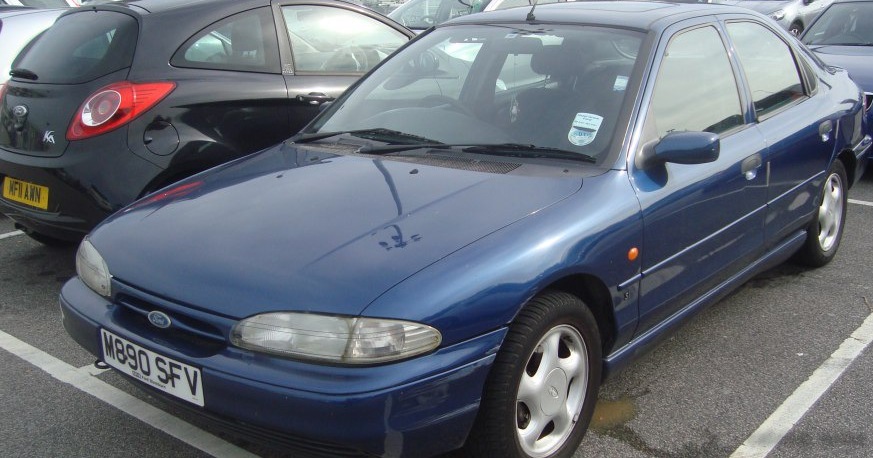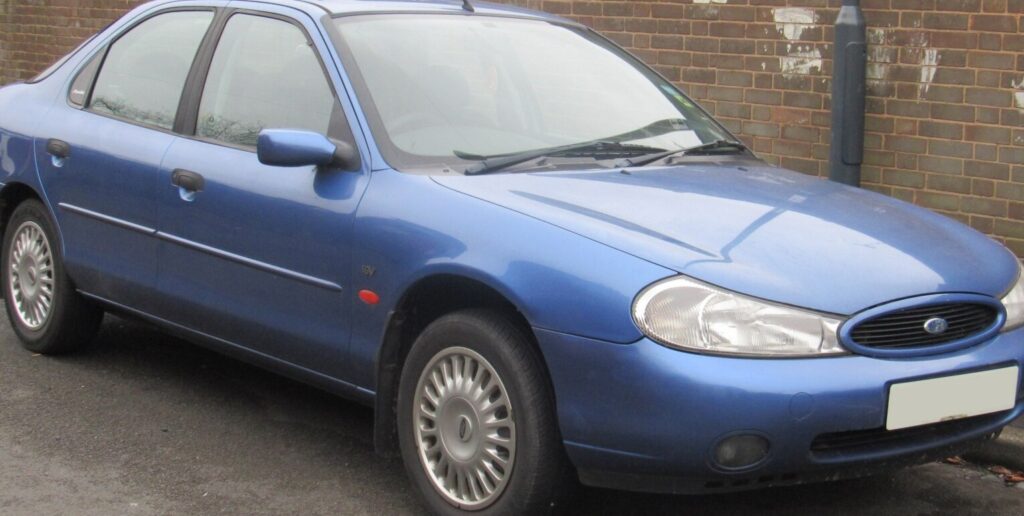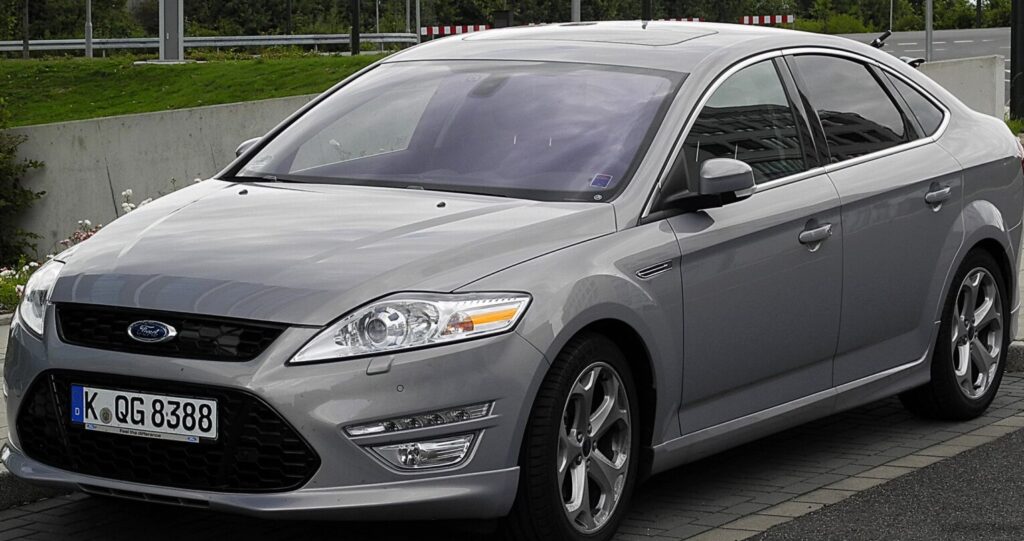
The Ford Mondeo III, particularly the facelifted version introduced in 2010, represented a significant evolution of Ford’s mid-size family car. Produced from 2010 through 2014, this generation Mondeo aimed to blend practicality, comfort, and a degree of driving enjoyment. The 2.0-liter 16V Duratec engine producing 145 horsepower was a mainstay of the lineup, offering a balance between performance and fuel economy. This specific configuration, typically paired with a five-speed manual transmission, positioned itself as a popular choice for drivers seeking a well-rounded vehicle without the expense of higher-spec models. It served as a crucial volume seller in European markets, where the Mondeo competed directly with vehicles like the Volkswagen Passat, Opel/Vauxhall Insignia, and Peugeot 508.
Technical Specifications
| Brand | Ford |
| Model | Mondeo |
| Generation | Mondeo III Hatchback (facelift 2010) |
| Type (Engine) | 2.0 16V (145 Hp) Duratec |
| Start of production | 2010 |
| End of production | 2014 |
| Powertrain Architecture | Internal Combustion engine |
| Body type | Hatchback |
| Seats | 5 |
| Doors | 5 |
| Fuel consumption (urban) | 11.2 l/100 km (21 US mpg, 25.2 UK mpg, 8.9 km/l) |
| Fuel consumption (extra urban) | 6 l/100 km (39.2 US mpg, 47.1 UK mpg, 16.7 km/l) |
| Fuel consumption (combined) | 7.9 l/100 km (29.8 US mpg, 35.8 UK mpg, 12.7 km/l) |
| CO2 emissions | 184 g/km |
| Fuel Type | Petrol (Gasoline) |
| Acceleration 0 – 100 km/h | 9.9 sec |
| Acceleration 0 – 62 mph | 9.9 sec |
| Acceleration 0 – 60 mph | 9.4 sec |
| Maximum speed | 210 km/h (130.49 mph) |
| Emission standard | Euro 5 |
| Weight-to-power ratio | 10.2 kg/Hp, 98.2 Hp/tonne |
| Weight-to-torque ratio | 7.8 kg/Nm, 128.6 Nm/tonne |
| Power | 145 Hp @ 6000 rpm |
| Power per litre | 72.5 Hp/l |
| Torque | 190 Nm @ 4500 rpm (140.14 lb.-ft. @ 4500 rpm) |
| Engine layout | Front, Transverse |
| Engine Model/Code | AOBC, TBBB |
| Engine displacement | 1999 cm3 (121.99 cu. in.) |
| Number of cylinders | 4 |
| Engine configuration | Inline |
| Cylinder Bore | 87.5 mm (3.44 in.) |
| Piston Stroke | 83.1 mm (3.27 in.) |
| Compression ratio | 10.8:1 |
| Number of valves per cylinder | 4 |
| Fuel injection system | Multi-port manifold injection |
| Engine aspiration | Naturally aspirated engine |
| Valvetrain | DOHC |
| Engine oil capacity | 4.3 l (4.54 US qt | 3.78 UK qt) |
| Coolant | 6.2 l (6.55 US qt | 5.46 UK qt) |
| Kerb Weight | 1477 kg (3256.23 lbs.) |
| Max. weight | 2090 kg (4607.66 lbs.) |
| Max load | 613 kg (1351.43 lbs.) |
| Trunk (boot) space – minimum | 486 l (17.16 cu. ft.) |
| Trunk (boot) space – maximum | 1390 l (49.09 cu. ft.) |
| Length | 4784 mm (188.35 in.) |
| Width | 1886 mm (74.25 in.) |
| Height | 1500 mm (59.06 in.) |
| Wheelbase | 2850 mm (112.2 in.) |
| Front track | 1588 mm (62.52 in.) |
| Rear (Back) track | 1605 mm (63.19 in.) |
| Minimum turning circle | 11.6 m (38.06 ft.) |
| Drivetrain Architecture | Front wheel drive |
| Drive wheel | Front wheel drive |
| Number of gears | 5 gears, manual transmission |
| Front suspension | Independent, type McPherson with coil spring and anti-roll bar |
| Rear suspension | Independent multi-link spring suspension with stabilizer |
| Front brakes | Ventilated discs |
| Rear brakes | Disc |
| Assisting systems | ABS (Anti-lock braking system) |
| Steering type | Steering rack and pinion |
| Tires size | 205/55 R16 |
| Wheel rims size | 6.5J x 16 |
Powertrain & Engine Architecture
The 2.0-liter Duratec engine, identified by codes such as AOBC and TBBB, is a naturally aspirated inline-four cylinder powerplant. It features a double overhead camshaft (DOHC) valvetrain with four valves per cylinder, contributing to its relatively efficient breathing. Fuel delivery is managed by a multi-port fuel injection system. This engine is known for its robustness and relatively simple design, making it easier to maintain compared to more complex, turbocharged alternatives. The five-speed manual transmission offered smooth shifts, although its gear ratios were tuned more for fuel efficiency than outright performance. The transmission’s first gear was relatively tall, prioritizing smooth take-offs over rapid acceleration.
Driving Characteristics
The 145 hp 2.0-liter Mondeo offered adequate performance for everyday driving. Acceleration from 0-60 mph took around 9.4 seconds, which was competitive within its class but noticeably slower than the more powerful 2.3-liter or turbocharged variants. The engine delivered a usable amount of torque at lower RPMs, making it suitable for city driving and overtaking maneuvers. However, it required downshifting to access its full potential, particularly when fully loaded or tackling inclines. Compared to the higher-output engines, this version prioritized fuel economy and a more relaxed driving experience. The manual transmission provided a more engaging driving experience than the optional automatic, offering greater control and responsiveness.
Equipment & Trim Levels
The 2.0-liter Mondeo typically came equipped with a reasonable level of standard features. Base models included air conditioning, power windows, power steering, and an integrated audio system. Higher trim levels, such as Zetec and Titanium, added features like alloy wheels, upgraded upholstery, automatic headlights and rain-sensing wipers, and a more sophisticated infotainment system. Optional extras included a sunroof, leather seats, and a premium sound system. Interior materials were generally durable and well-assembled, reflecting Ford’s commitment to quality at the time.
Chassis & Braking
The Mondeo III utilized an independent front suspension with McPherson struts and a multi-link independent rear suspension, providing a comfortable and controlled ride. Front brakes were ventilated discs, while rear brakes were solid discs. Anti-lock Braking System (ABS) was standard, enhancing safety. The suspension was tuned to prioritize comfort over sporty handling, resulting in a relatively soft ride quality. Stabilizer bars were fitted to both the front and rear axles to reduce body roll during cornering.
Market Reception & Comparison
The 2.0-liter Mondeo was well-received by critics as a practical and affordable family car. It offered a good balance of space, comfort, and fuel economy. However, some reviewers noted that the engine lacked the punch of its turbocharged counterparts. Compared to the 2.3-liter version, the 2.0-liter offered slightly better fuel economy but significantly less performance. The 1.6-liter EcoBoost engine, introduced later in the Mondeo III’s lifecycle, provided a more fuel-efficient alternative, but with similar power output. The 2.0-liter diesel variants were popular for their superior fuel economy and torque, but they came with a higher purchase price and potentially higher maintenance costs.
Legacy
The 2.0-liter Duratec engine in the Mondeo III is generally considered to be a reliable and durable unit. With proper maintenance, these engines can accumulate high mileage without major issues. Common issues include occasional oil leaks and sensor failures, but these are typically relatively inexpensive to repair. On the used car market, the 2.0-liter Mondeo represents a good value proposition, offering a comfortable and practical vehicle at an affordable price. Its simplicity and relatively low running costs make it an attractive option for budget-conscious buyers. The Mondeo III, in general, helped solidify Ford’s reputation for building well-rounded and dependable family cars in Europe.