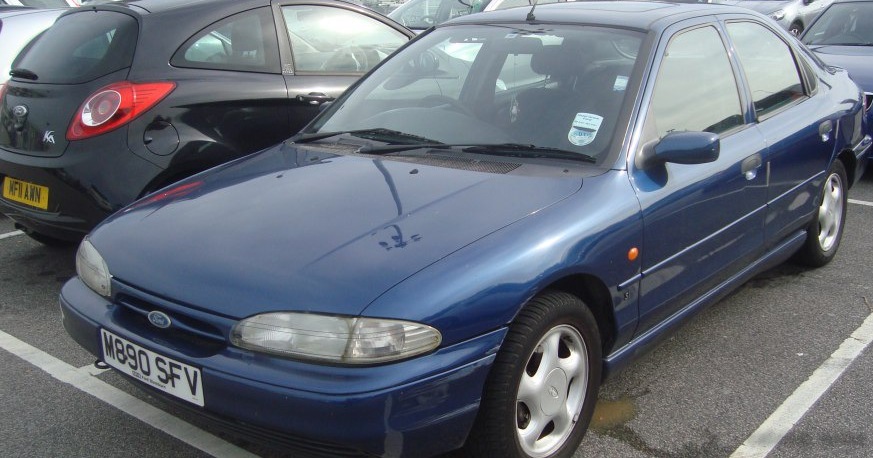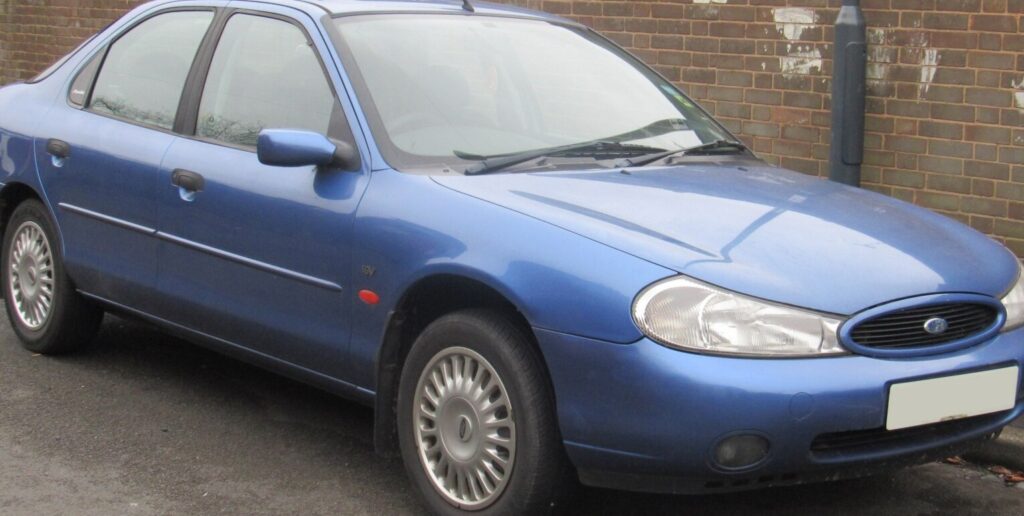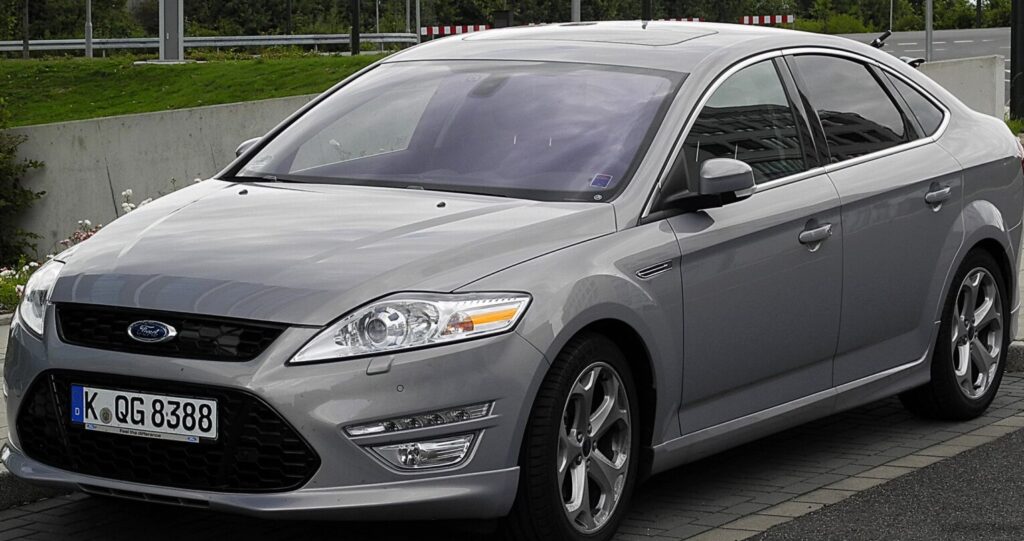
The Ford Mondeo III, particularly the facelifted version introduced in 2010, represented a significant evolution of Ford’s mid-size family car. The 2.0 TDCI variant, producing 163 horsepower, was a popular choice in European markets, offering a balance of fuel efficiency and performance. Produced from 2010 through 2014, this model year sat within the third generation of the Mondeo (internally designated as the B5Y platform), which aimed to elevate Ford’s presence in the competitive segment dominated by vehicles like the Volkswagen Passat and Opel/Vauxhall Insignia. This specific engine and power output positioned itself as a mid-range offering, appealing to drivers seeking more than the base engine but not requiring the performance of higher-spec models.
Technical Specifications
| Brand | Ford |
| Model | Mondeo |
| Generation | Mondeo III Hatchback (facelift 2010) |
| Type (Engine) | 2.0 TDCI (163 Hp) Duratorq |
| Start of production | 2010 |
| End of production | 2014 |
| Powertrain Architecture | Internal Combustion engine |
| Body type | Hatchback |
| Seats | 5 |
| Doors | 5 |
| Fuel consumption (urban) | 6.4 l/100 km (36.8 US mpg, 44.1 UK mpg, 15.6 km/l) |
| Fuel consumption (extra urban) | 4.6 l/100 km (51.1 US mpg, 61.4 UK mpg, 21.7 km/l) |
| Fuel consumption (combined) | 5.3 l/100 km (44.4 US mpg, 53.3 UK mpg, 18.9 km/l) |
| CO2 emissions | 139 g/km |
| Fuel Type | Diesel |
| Acceleration 0 – 100 km/h | 8.9 sec |
| Acceleration 0 – 62 mph | 8.9 sec |
| Acceleration 0 – 60 mph | 8.5 sec |
| Maximum speed | 220 km/h (136.7 mph) |
| Emission standard | Euro 5 |
| Weight-to-power ratio | 9.6 kg/Hp, 104.7 Hp/tonne |
| Weight-to-torque ratio | 4.6 kg/Nm, 218.4 Nm/tonne |
| Power | 163 Hp @ 3750 rpm |
| Power per litre | 81.6 Hp/l |
| Torque | 340 Nm @ 2000-3250 rpm (250.77 lb.-ft. @ 2000-3250 rpm) |
| Engine layout | Front, Transverse |
| Engine Model/Code | TXBA |
| Engine displacement | 1997 cm3 (121.86 cu. in.) |
| Number of cylinders | 4 |
| Engine configuration | Inline |
| Cylinder Bore | 85 mm (3.35 in.) |
| Piston Stroke | 88 mm (3.46 in.) |
| Compression ratio | 17.9:1 |
| Number of valves per cylinder | 4 |
| Fuel injection system | Diesel Commonrail |
| Engine aspiration | Turbocharger, Intercooler |
| Engine oil capacity | 5.5 l (5.81 US qt | 4.84 UK qt) |
| Coolant capacity | 8.1 l (8.56 US qt | 7.13 UK qt) |
| Kerb Weight | 1557 kg (3432.6 lbs.) |
| Max. weight | 2180 kg (4806.08 lbs.) |
| Max load | 623 kg (1373.48 lbs.) |
| Trunk (boot) space – minimum | 486 l (17.16 cu. ft.) |
| Trunk (boot) space – maximum | 1390 l (49.09 cu. ft.) |
| Length | 4784 mm (188.35 in.) |
| Width | 1886 mm (74.25 in.) |
| Height | 1500 mm (59.06 in.) |
| Wheelbase | 2850 mm (112.2 in.) |
| Front track | 1588 mm (62.52 in.) |
| Rear track | 1605 mm (63.19 in.) |
| Minimum turning circle | 11.6 m (38.06 ft.) |
| Drivetrain Architecture | Front wheel drive |
| Number of gears | 6 gears, manual transmission |
| Front suspension | Independent, type McPherson with coil spring and anti-roll bar |
| Rear suspension | Independent multi-link spring suspension with stabilizer |
| Front brakes | Ventilated discs |
| Rear brakes | Disc |
| Assisting systems | ABS (Anti-lock braking system) |
| Steering type | Steering rack and pinion |
| Tires size | 205/55 R16 |
| Wheel rims size | 6.5J x 16 |
Powertrain & Engine Architecture
The heart of this Mondeo variant is the 2.0-liter Duratorq TDCi diesel engine, specifically the TXBA engine code. This engine is a four-cylinder, inline configuration, utilizing a common-rail direct fuel injection system. The Duratorq engines were known for their robust construction and relatively simple design, contributing to their longevity. The turbocharger, coupled with an intercooler, significantly boosted power output, allowing for 163 horsepower at 3750 rpm and a substantial 340 Nm (250.77 lb.-ft.) of torque between 2000 and 3250 rpm. This broad torque curve provided good responsiveness in everyday driving situations. The engine featured a compression ratio of 17.9:1, typical for a modern diesel, and four valves per cylinder to optimize breathing. The 6-speed manual transmission was the standard offering, providing a good balance between fuel economy and driver control.
Driving Characteristics
The 2.0 TDCI 163 hp Mondeo offered a comfortable and refined driving experience. While not a sports car, the engine provided ample power for overtaking and highway cruising. The 6-speed manual transmission allowed drivers to keep the engine in its optimal torque band, resulting in strong acceleration. Compared to the lower-powered 1.6 TDCI versions, the 2.0 TDCI felt noticeably more responsive, especially when fully loaded. Against higher-output variants like the 2.2 TDCI, it lacked the outright punch, but offered a more economical and accessible option. The gear ratios were well-chosen for both urban and motorway driving, providing a good balance between acceleration and fuel efficiency.
Equipment & Trim Levels
The 2.0 TDCI Mondeo typically came equipped with a reasonable level of standard features. Depending on the specific trim level (often designated as LX, Zetec, or Titanium), standard equipment included air conditioning, power windows, power mirrors, a CD/radio system, and alloy wheels. Higher trim levels, like the Titanium, added features such as automatic climate control, rain-sensing wipers, rear parking sensors, and upgraded interior trim. Optional extras included a sunroof, leather upholstery, and a premium sound system. Interior upholstery was typically cloth on the lower trims, with leather available as an upgrade. The dashboard layout was functional and well-designed, with clear instrumentation.
Chassis & Braking
The Mondeo III utilized an independent suspension setup on both the front and rear axles. The front suspension employed McPherson struts with coil springs and an anti-roll bar, while the rear featured a multi-link setup, also with a stabilizer bar. This configuration provided a comfortable ride and good handling characteristics. Braking duties were handled by ventilated discs on the front wheels and solid discs on the rear. Anti-lock Braking System (ABS) was standard, enhancing safety. The chassis was designed to provide a good balance between ride comfort and handling precision, making it a capable all-rounder.
Market Reception & Comparison
The 2.0 TDCI Mondeo was generally well-received by automotive critics. It was praised for its fuel efficiency, comfortable ride, and spacious interior. Critics noted that while the engine wasn’t particularly exciting, it provided adequate performance for most drivers. Compared to the 1.6 TDCI, the 2.0 TDCI offered a noticeable improvement in performance, making it a more suitable choice for those who frequently carried passengers or drove on the highway. In terms of reliability, the Duratorq engine proved to be relatively robust, although regular maintenance was essential. Fuel economy figures of around 44.4 US mpg combined were considered competitive for its class.
Legacy
The Ford Mondeo III 2.0 TDCI remains a popular choice in the used car market. The Duratorq engine, when properly maintained, is known for its longevity and relatively low running costs. However, potential buyers should be aware of common diesel engine issues, such as injector problems and turbocharger wear. The Mondeo’s spacious interior, comfortable ride, and good fuel economy continue to make it a practical and affordable option for families and commuters. Its reputation for reliability, combined with its reasonable price point, ensures that it remains a relevant contender in the used car landscape.