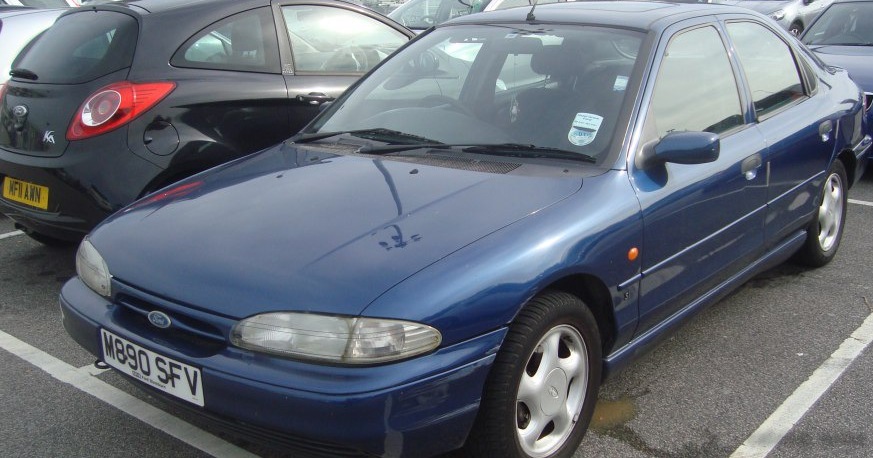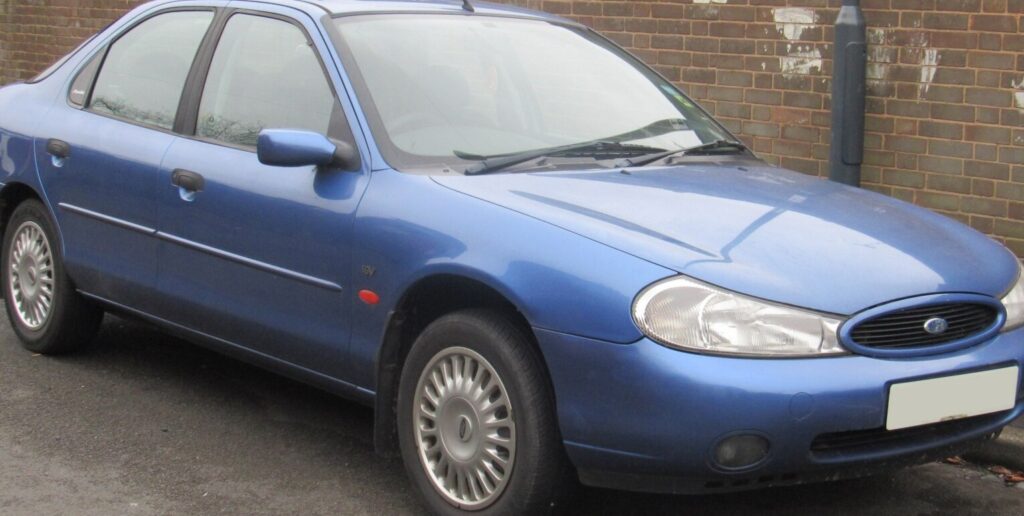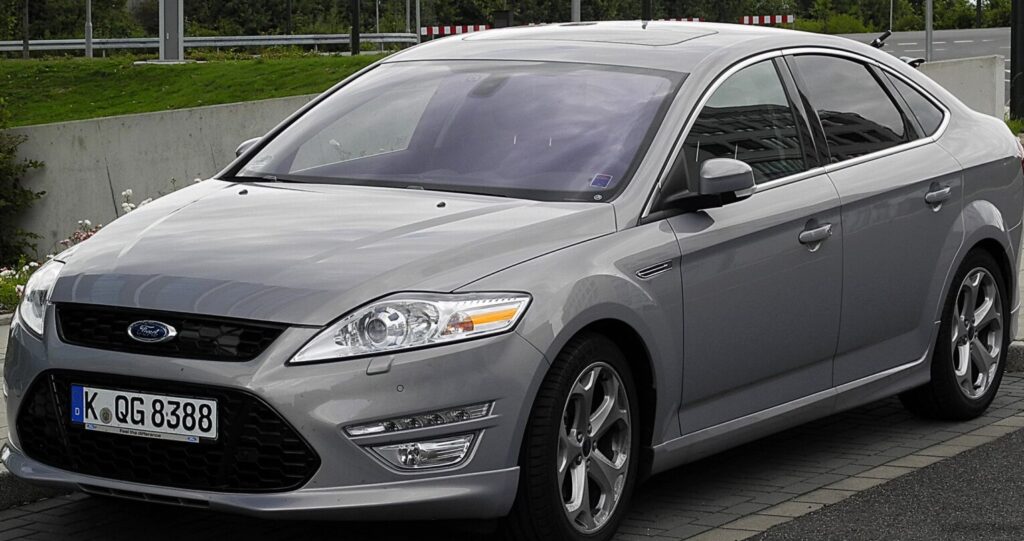
The Ford Mondeo III, particularly the facelifted version introduced in 2010, represented a significant evolution of Ford’s mid-size family car. Produced from 2010 to 2014, this generation Mondeo aimed to blend practicality, comfort, and a degree of driving enjoyment. Among the engine options available, the 2.2-liter TDCI Duratorq diesel engine, producing 200 horsepower, was a popular choice, especially in European markets. This variant offered a compelling balance between fuel efficiency and performance, positioning itself as a strong contender in the competitive D-segment. The Mondeo III, built on the Ford EUCD platform, was a key model for Ford in Europe, offering a spacious interior and a well-equipped package.
Technical Specifications
| Brand | Ford |
| Model | Mondeo |
| Generation | Mondeo III Hatchback (facelift 2010) |
| Type (Engine) | 2.2 TDCI (200 Hp) Duratorq |
| Start of production | 2010 |
| End of production | 2014 |
| Powertrain Architecture | Internal Combustion engine |
| Body type | Hatchback |
| Seats | 5 |
| Doors | 5 |
| Fuel consumption (urban) | 7.8 l/100 km (30.2 US mpg, 36.2 UK mpg, 12.8 km/l) |
| Fuel consumption (extra urban) | 5 l/100 km (47 US mpg, 56.5 UK mpg, 20 km/l) |
| Fuel consumption (combined) | 6 l/100 km (39.2 US mpg, 47.1 UK mpg, 16.7 km/l) |
| CO2 emissions | 159 g/km |
| Fuel Type | Diesel |
| Acceleration 0 – 100 km/h | 8.1 sec |
| Acceleration 0 – 62 mph | 8.1 sec |
| Acceleration 0 – 60 mph | 7.7 sec |
| Maximum speed | 230 km/h (142.92 mph) |
| Emission standard | Euro 5 |
| Weight-to-power ratio | 8 kg/Hp, 125.1 Hp/tonne |
| Weight-to-torque ratio | 3.8 kg/Nm, 262.7 Nm/tonne |
| Power | 200 Hp @ 3500 rpm |
| Power per litre | 91.8 Hp/l |
| Torque | 420 Nm @ 1750-3000 rpm (309.78 lb.-ft. @ 1750-3000 rpm) |
| Engine layout | Front, Transverse |
| Engine Model/Code | KNBA |
| Engine displacement | 2179 cm3 (132.97 cu. in.) |
| Number of cylinders | 4 |
| Engine configuration | Inline |
| Cylinder Bore | 85 mm (3.35 in.) |
| Piston Stroke | 96 mm (3.78 in.) |
| Compression ratio | 15.8:1 |
| Number of valves per cylinder | 4 |
| Fuel injection system | Diesel Commonrail |
| Engine aspiration | Turbocharger, Intercooler |
| Engine oil capacity | 6 l (6.34 US qt | 5.28 UK qt) |
| Coolant | 8.4 l (8.88 US qt | 7.39 UK qt) |
| Kerb Weight | 1599 kg (3525.19 lbs.) |
| Max. weight | 2210 kg (4872.22 lbs.) |
| Max load | 611 kg (1347.02 lbs.) |
| Trunk (boot) space – minimum | 486 l (17.16 cu. ft.) |
| Trunk (boot) space – maximum | 1390 l (49.09 cu. ft.) |
| Length | 4784 mm (188.35 in.) |
| Width | 1886 mm (74.25 in.) |
| Height | 1500 mm (59.06 in.) |
| Wheelbase | 2850 mm (112.2 in.) |
| Front track | 1588 mm (62.52 in.) |
| Rear (Back) track | 1605 mm (63.19 in.) |
| Minimum turning circle | 11.6 m (38.06 ft.) |
| Drivetrain Architecture | The Internal combustion engine (ICE) drives the front wheels of the vehicle. |
| Drive wheel | Front wheel drive |
| Number of gears and type of gearbox | 6 gears, manual transmission |
| Front suspension | Independent, type McPherson with coil spring and anti-roll bar |
| Rear suspension | Independent multi-link spring suspension with stabilizer |
| Front brakes | Ventilated discs |
| Rear brakes | Disc |
| Assisting systems | ABS (Anti-lock braking system) |
| Steering type | Steering rack and pinion |
| Tires size | 205/55 R16 |
| Wheel rims size | 6.5J x 16 |
Powertrain & Engine Architecture
The heart of this Mondeo variant is the 2.2-liter Duratorq TDCi diesel engine, identified by the KNBA engine code. This engine is an inline-four cylinder unit featuring common-rail direct injection and a variable geometry turbocharger. The common-rail system, supplied by Bosch, operates at extremely high pressures (up to 1600 bar) to ensure fine atomization of the fuel, leading to efficient combustion and reduced emissions. The variable geometry turbocharger (VGT) adjusts the turbine vanes to optimize boost pressure across the engine’s rev range, enhancing both low-end torque and high-end power. The engine also incorporates an intercooler to further cool the intake air, increasing its density and improving performance. The 200 horsepower output was achieved through careful calibration of the engine management system, balancing power delivery with fuel economy and durability. This engine was known for its relatively quiet operation compared to some of its competitors.
Driving Characteristics
The 2.2 TDCI Mondeo offered a refined driving experience. The 420 Nm (309.78 lb-ft) of torque, available from 1750-3000 rpm, provided strong acceleration in everyday driving situations. While not a sports car, the 8.1-second 0-62 mph acceleration time was respectable for a family hatchback. The six-speed manual transmission was well-matched to the engine’s characteristics, offering smooth gear changes and allowing the driver to keep the engine in its optimal power band. Compared to the lower-powered 1.6 TDCI versions, the 2.2 TDCI provided significantly more effortless performance, particularly when fully loaded or on inclines. It also felt less strained at higher speeds than the smaller engine. While the 2.0-liter petrol versions offered similar acceleration, the diesel provided superior fuel economy.
Equipment & Trim Levels
The 2.2 TDCI engine was typically offered in higher trim levels of the Mondeo III, such as Titanium and Zetec. Standard equipment generally included air conditioning, alloy wheels, a CD stereo system, electric windows, and ABS brakes. Higher-spec models added features like leather upholstery, a sunroof, automatic climate control, and a navigation system. Optional extras included parking sensors, heated seats, and a premium sound system. The interior design was functional and well-built, with a focus on ergonomics and practicality. The hatchback body style offered good versatility, with a spacious boot that could be expanded by folding down the rear seats.
Chassis & Braking
The Mondeo III featured independent suspension all around, with McPherson struts at the front and a multi-link setup at the rear. This configuration provided a comfortable ride and good handling characteristics. The steering was precise and well-weighted, offering a good level of feedback to the driver. The braking system consisted of ventilated discs at the front and solid discs at the rear, providing ample stopping power. ABS (Anti-lock Braking System) was standard, enhancing safety in emergency braking situations. The suspension was tuned to prioritize comfort, but it also offered a reasonable degree of body control in corners.
Market Reception & Comparison
The Ford Mondeo III 2.2 TDCI was generally well-received by automotive critics. It was praised for its spacious interior, comfortable ride, and strong performance. The fuel economy was also a major selling point, making it an attractive option for drivers who covered long distances. Compared to rivals like the Volkswagen Passat and Vauxhall/Opel Insignia, the Mondeo offered a compelling combination of value, practicality, and driving enjoyment. Some critics noted that the interior styling was not as modern or premium as some of its competitors, but the overall package was considered highly competitive.
Legacy
The 2.2-liter Duratorq engine proved to be a reliable and durable unit, and many examples are still on the road today. While diesel engines in general have faced increased scrutiny in recent years due to emissions concerns, the Duratorq engine remains a popular choice for those seeking a fuel-efficient and capable family car. The Mondeo III, particularly the 2.2 TDCI variant, has established a reputation as a practical, comfortable, and well-rounded vehicle. In the used car market, these models represent good value for money, offering a lot of car for the price. Regular maintenance, including oil changes and filter replacements, is crucial to ensure the long-term reliability of this powertrain.