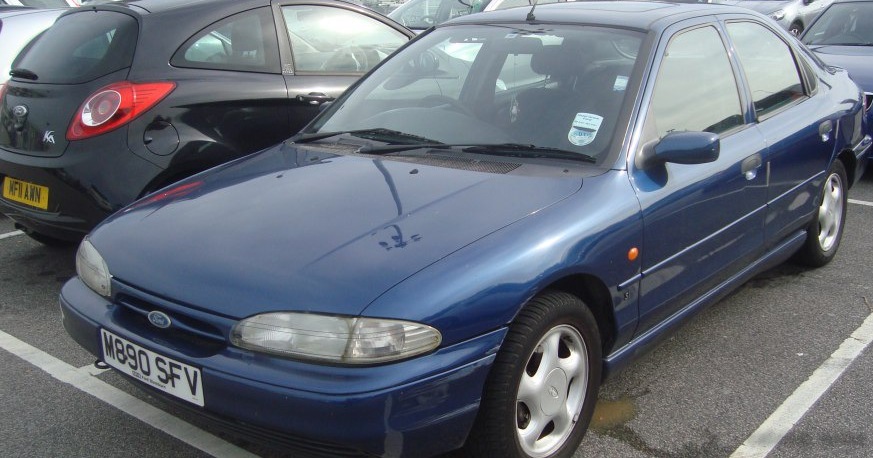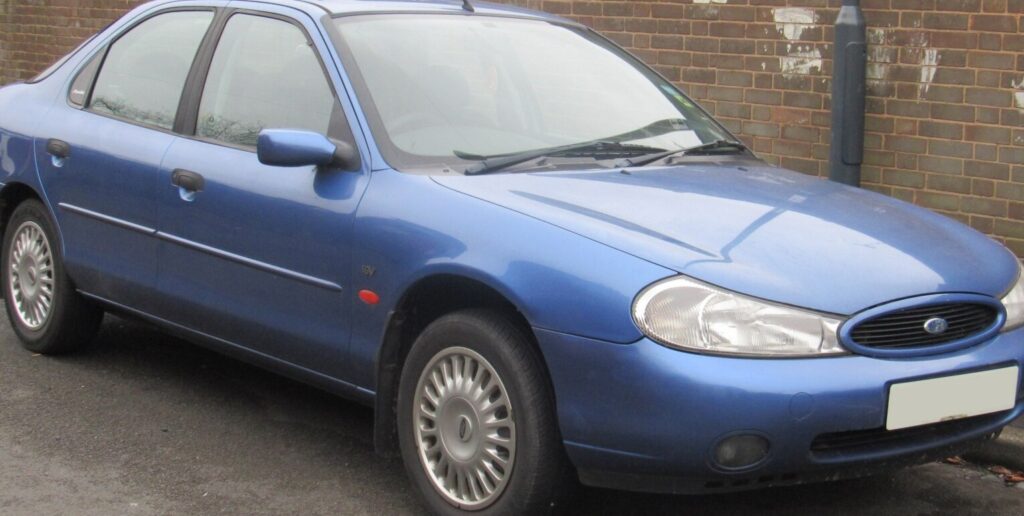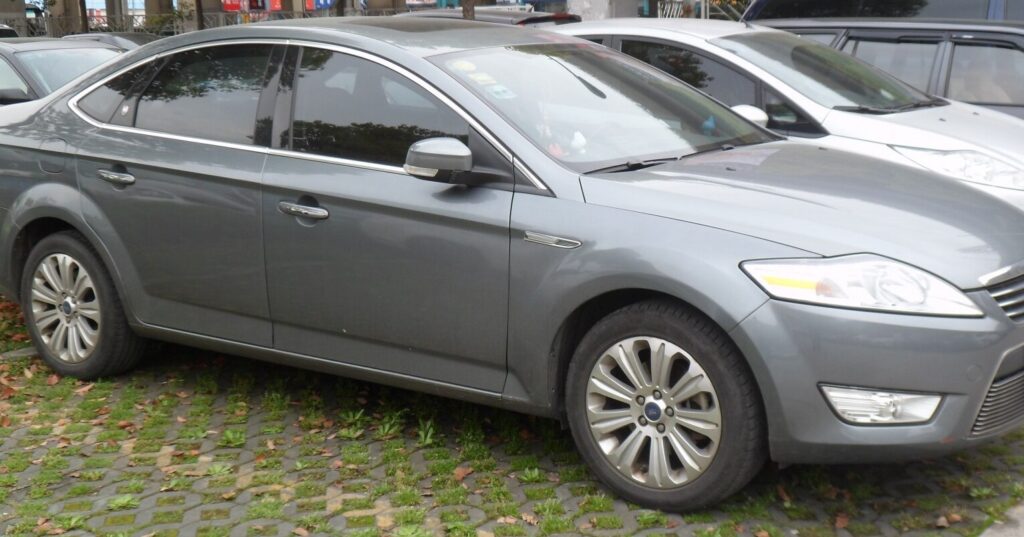
The Ford Mondeo III Sedan 2.0 TDCi, producing 130 horsepower, was a significant offering in the European and, to a lesser extent, North American mid-size sedan market between 2007 and 2008. Positioned as a fuel-efficient and practical option within the Mondeo III range, it aimed to balance performance with economy, appealing to drivers seeking a comfortable and capable family car. This variant utilized the common rail diesel injection technology becoming increasingly prevalent at the time, and was offered with a six-speed automatic transmission, a relatively uncommon pairing in the US market but popular in Europe.
Technical Specifications
| Brand | Ford |
| Model | Mondeo |
| Generation | Mondeo III Sedan |
| Type (Engine) | 2.0 TDCi (130 Hp) |
| Start of production | 2007 |
| End of production | 2008 |
| Powertrain Architecture | Internal Combustion engine |
| Body type | Sedan |
| Seats | 5 |
| Doors | 4 |
| Fuel consumption (urban) | 9.8 l/100 km (24 US mpg, 28.8 UK mpg, 10.2 km/l) |
| Fuel consumption (extra urban) | 5.6 l/100 km (42 US mpg, 50.4 UK mpg, 17.9 km/l) |
| Fuel consumption (combined) | 7.1 l/100 km (33.1 US mpg, 39.8 UK mpg, 14.1 km/l) |
| Fuel Type | Diesel |
| Acceleration 0 – 100 km/h | 10.9 sec |
| Acceleration 0 – 62 mph | 10.9 sec |
| Acceleration 0 – 60 mph | 10.4 sec |
| Maximum speed | 200 km/h (124.27 mph) |
| Emission standard | Euro 4 |
| Weight-to-power ratio | 11.6 kg/Hp, 86.5 Hp/tonne |
| Weight-to-torque ratio | 4.7 kg/Nm, 212.9 Nm/tonne |
| Power | 130 Hp @ 4000 rpm |
| Power per litre | 65.1 Hp/l |
| Torque | 320 Nm @ 1750 rpm (236.02 lb.-ft. @ 1750 rpm) |
| Engine layout | Front, Transverse |
| Engine Model/Code | AZBA, AZWA |
| Engine displacement | 1997 cm3 (121.86 cu. in.) |
| Number of cylinders | 4 |
| Engine configuration | Inline |
| Cylinder Bore | 85 mm (3.35 in.) |
| Piston Stroke | 88 mm (3.46 in.) |
| Compression ratio | 17.9:1 |
| Number of valves per cylinder | 4 |
| Fuel injection system | Diesel Commonrail |
| Engine aspiration | Turbocharger, Intercooler |
| Engine oil capacity | 5.5 l (5.81 US qt | 4.84 UK qt) |
| Coolant | 8.1 l (8.56 US qt | 7.13 UK qt) |
| Kerb Weight | 1503 kg (3313.55 lbs.) |
| Max. weight | 2190 kg (4828.12 lbs.) |
| Max load | 687 kg (1514.58 lbs.) |
| Trunk (boot) space – minimum | 550 l (19.42 cu. ft.) |
| Fuel tank capacity | 70 l (18.49 US gal | 15.4 UK gal) |
| Length | 4844 mm (190.71 in.) |
| Width | 1886 mm (74.25 in.) |
| Height | 1500 mm (59.06 in.) |
| Wheelbase | 2850 mm (112.2 in.) |
| Front track | 1522 mm (59.92 in.) |
| Rear (Back) track | 1537 mm (60.51 in.) |
| Minimum turning circle | 11.1 m (36.42 ft.) |
| Drivetrain Architecture | Front wheel drive |
| Number of gears | 6 |
| Gearbox type | Automatic transmission |
| Front suspension | Coil spring |
| Rear suspension | Coil spring |
| Front brakes | Ventilated discs |
| Rear brakes | Disc |
| Assisting systems | ABS (Anti-lock braking system) |
| Steering type | Steering rack and pinion |
| Tires size | 205/55 R16 |
INTRODUCTION
The Ford Mondeo III, launched in 2007, represented a significant evolution of Ford’s mid-size offering. Built on the 1HX0/A3 platform, it shared components with other Ford and Mazda vehicles. The 2.0 TDCi 130 hp variant was a key model in many European markets, offering a balance between fuel efficiency and acceptable performance. While not widely sold in the United States, the Mondeo was a popular choice for fleet buyers and private customers seeking a spacious and well-equipped sedan. The combination of a diesel engine and an automatic transmission was specifically tailored to European driving preferences, where manual transmissions were traditionally favored, but automatics were gaining traction, particularly with diesel engines for ease of use in city driving.
Powertrain & Engine Architecture
The heart of the Mondeo III 2.0 TDCi was the Ford AZBA or AZWA engine, a 1997cc inline-four cylinder diesel. This engine utilized a common rail direct injection system, delivering fuel at extremely high pressure for improved combustion efficiency and reduced emissions. The turbocharger, coupled with an intercooler, boosted power output to 130 hp at 4000 rpm and a respectable 320 Nm (236 lb-ft) of torque at just 1750 rpm. This torque curve provided good low-end responsiveness, making it suitable for everyday driving. The six-speed automatic transmission, typically a Durashift 6DCT450, was designed to work in harmony with the engine’s characteristics. It featured a torque converter and electronic control for smooth and efficient gear changes. The transmission’s gear ratios were optimized for both fuel economy and acceleration, with a relatively tall final drive to aid highway cruising.
Driving Characteristics
The 2.0 TDCi automatic Mondeo offered a comfortable and refined driving experience. While not a performance-oriented model, the engine’s torque provided adequate acceleration for most situations. The automatic transmission shifted smoothly, although it could sometimes feel hesitant during quick overtaking maneuvers. Compared to the higher-output 2.2 TDCi versions, the 2.0 TDCi felt less powerful, particularly at higher speeds. However, it offered significantly better fuel economy. Against manual transmission versions of the 2.0 TDCi, the automatic traded some responsiveness for convenience. The automatic’s gear changes could sometimes rob the engine of power, especially on uphill climbs. The suspension, tuned for comfort, provided a compliant ride, absorbing bumps and imperfections in the road surface effectively.
Equipment & Trim Levels
The 2.0 TDCi automatic typically came in mid-range trim levels, such as LX or Zetec. Standard equipment often included air conditioning, power windows, power mirrors, a CD player, and ABS brakes. Higher trim levels added features like alloy wheels, a multi-function steering wheel, cruise control, and upgraded upholstery. Optional extras included a sunroof, leather seats, and a premium sound system. Interior materials were generally of good quality, providing a comfortable and durable cabin environment. The dashboard layout was functional and user-friendly, with clearly labeled controls.
Chassis & Braking
The Mondeo III utilized a MacPherson strut front suspension and a multi-link rear suspension, providing a good balance between ride comfort and handling. The front brakes were ventilated discs, while the rear brakes were typically solid discs, although some earlier models may have featured drum brakes depending on the specific trim level and market. ABS (Anti-lock Braking System) was standard, enhancing braking performance and stability. The steering was a rack and pinion system, providing precise and responsive steering feel. Stabilizer bars were fitted to both the front and rear axles to reduce body roll during cornering.
Market Reception & Comparison
The Ford Mondeo III 2.0 TDCi automatic was generally well-received by automotive critics. It was praised for its fuel efficiency, comfortable ride, and spacious interior. However, some critics noted that the engine could feel underpowered, particularly when fully loaded or driving uphill. Compared to the more powerful 2.2 TDCi models, the 2.0 TDCi offered better fuel economy but less performance. Against competitors like the Volkswagen Passat and Opel/Vauxhall Vectra, the Mondeo offered a competitive package in terms of price, features, and fuel efficiency. The automatic transmission was seen as a positive feature for drivers seeking convenience, but some preferred the greater control offered by a manual gearbox.
Legacy
The Ford Mondeo III 2.0 TDCi automatic has proven to be a relatively reliable powertrain in the long term. The AZBA/AZWA engine is known for its durability, provided it is properly maintained. Common issues include turbocharger failure and injector problems, but these are not widespread. In the used car market, these models represent a good value proposition, offering a comfortable and fuel-efficient driving experience at an affordable price. However, potential buyers should be aware of the age-related wear and tear that is common with older vehicles, and a thorough inspection is recommended before purchase. The Mondeo III, and this variant in particular, helped solidify Ford’s reputation for building practical and well-engineered family cars in Europe.