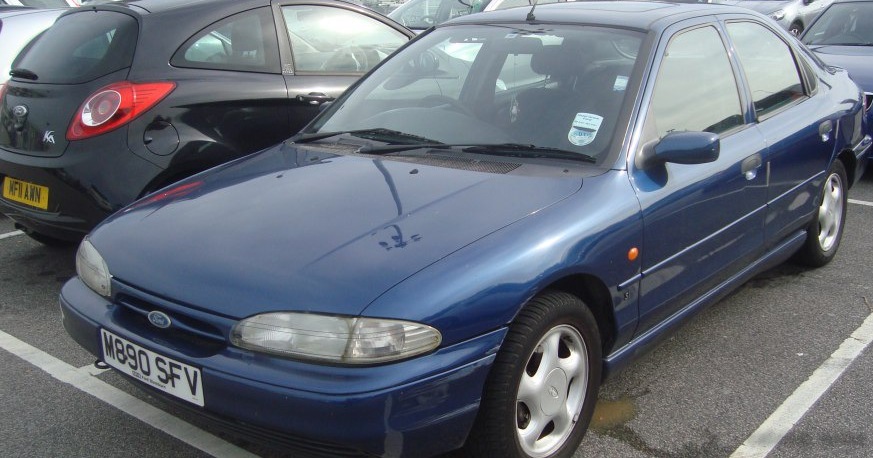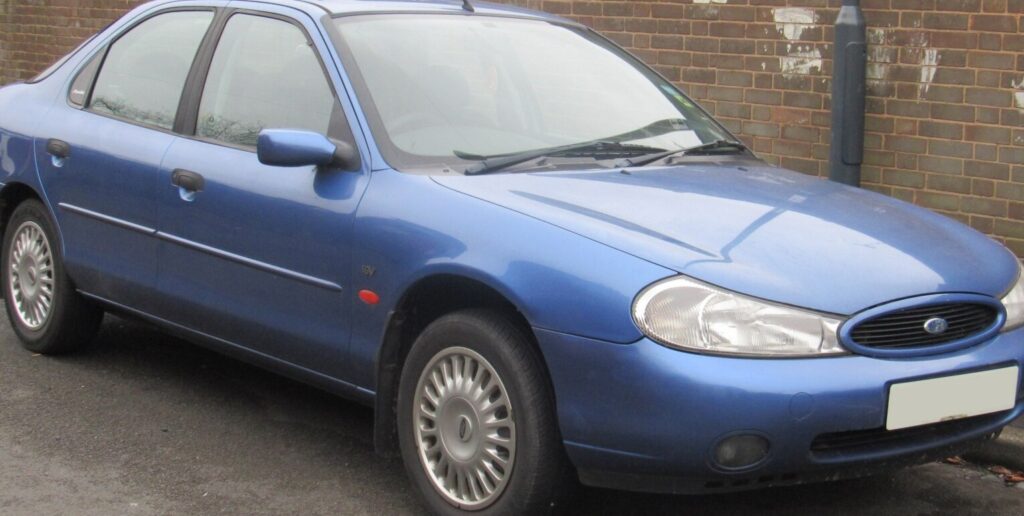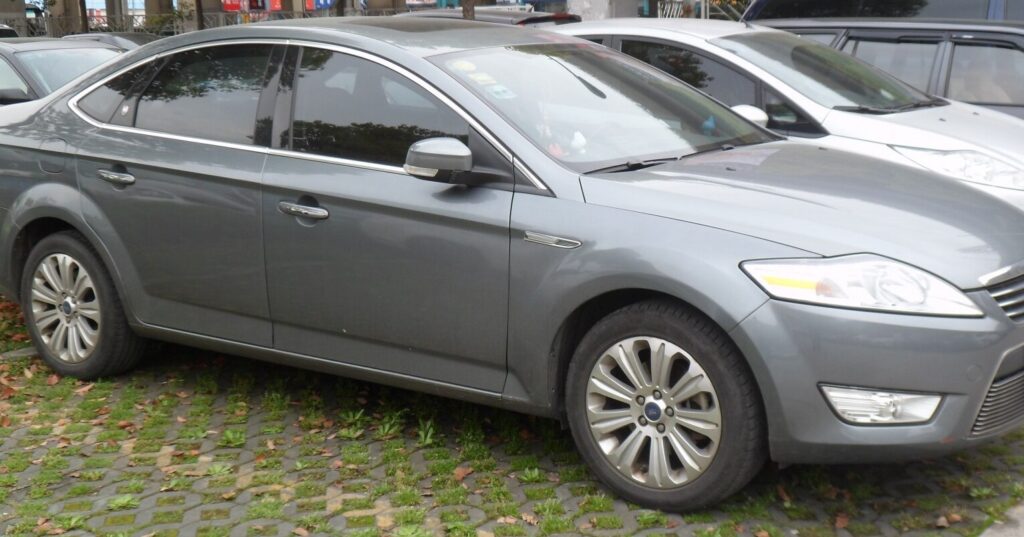
The Ford Mondeo III Sedan 2.0 TDCi, producing 140 horsepower, was a significant offering in the European and, to a lesser extent, North American mid-size sedan market from 2006 to 2010. Positioned as a practical and efficient option within the Mondeo III range, it aimed to balance fuel economy with reasonable performance. This variant occupied a middle ground in the lineup, offering a step up from the base petrol engines while remaining more affordable than the higher-powered TDCi models or the sporty ST variants. It was part of the third generation of the Mondeo (internally designated B5Y), which built upon the success of its predecessors by offering improved refinement, safety features, and a more contemporary design.
Technical Specifications
| Brand | Ford |
| Model | Mondeo |
| Generation | Mondeo III Sedan |
| Type (Engine) | 2.0 TDCi (140 Hp) |
| Start of production | 2006 |
| End of production | 2010 |
| Powertrain Architecture | Internal Combustion engine |
| Body type | Sedan |
| Seats | 5 |
| Doors | 4 |
| Fuel consumption (urban) | 7.6 l/100 km (30.9 US mpg) |
| Fuel consumption (extra urban) | 4.9 l/100 km (48 US mpg) |
| Fuel consumption (combined) | 5.9 l/100 km (39.9 US mpg) |
| Fuel Type | Diesel |
| Acceleration 0 – 100 km/h | 9.5 sec |
| Acceleration 0 – 62 mph | 9.5 sec |
| Acceleration 0 – 60 mph | 9 sec |
| Maximum speed | 210 km/h (130.49 mph) |
| Emission standard | Euro 4 |
| Weight-to-power ratio | 10.6 kg/Hp |
| Weight-to-torque ratio | 4.6 kg/Nm |
| Power | 140 Hp @ 4000 rpm |
| Torque | 320 Nm @ 1750 rpm (236.02 lb.-ft. @ 1750 rpm) |
| Engine layout | Front, Transverse |
| Engine Model/Code | QXBA |
| Engine displacement | 1997 cm3 (121.86 cu. in.) |
| Number of cylinders | 4 |
| Engine configuration | Inline |
| Cylinder Bore | 85 mm (3.35 in.) |
| Piston Stroke | 88 mm (3.46 in.) |
| Compression ratio | 17.9:1 |
| Number of valves per cylinder | 4 |
| Fuel injection system | Diesel Commonrail |
| Engine aspiration | Turbocharger, Intercooler |
| Engine oil capacity | 5.5 l (5.81 US qt | 4.84 UK qt) |
| Coolant capacity | 8.1 l (8.56 US qt | 7.13 UK qt) |
| Kerb Weight | 1481 kg (3265.05 lbs.) |
| Max. weight | 2170 kg (4784.03 lbs.) |
| Max load | 689 kg (1518.98 lbs.) |
| Trunk (boot) space – minimum | 550 l (19.42 cu. ft.) |
| Fuel tank capacity | 70 l (18.49 US gal | 15.4 UK gal) |
| Length | 4844 mm (190.71 in.) |
| Width | 1886 mm (74.25 in.) |
| Height | 1500 mm (59.06 in.) |
| Wheelbase | 2850 mm (112.2 in.) |
| Front track | 1522 mm (59.92 in.) |
| Rear track | 1537 mm (60.51 in.) |
| Minimum turning circle | 11.1 m (36.42 ft.) |
| Drivetrain Architecture | Front wheel drive |
| Number of gears | 6 |
| Gearbox type | Manual transmission |
| Front suspension | Coil spring |
| Rear suspension | Coil spring |
| Front brakes | Ventilated discs |
| Rear brakes | Disc |
| Assisting systems | ABS (Anti-lock braking system) |
| Steering type | Steering rack and pinion |
| Tires size | 205/55 R16 |
Powertrain & Engine Architecture
The heart of the Mondeo III 2.0 TDCi was the QXBA engine, a four-cylinder, inline diesel engine displacing 1997cc. This engine was part of Ford’s Duratorq family, known for its robust construction and relatively good fuel efficiency. The QXBA utilized a common rail direct injection system, delivering fuel at extremely high pressure for optimized combustion. A turbocharger with an intercooler was employed to boost power output and improve torque across a wider rev range. The engine featured four valves per cylinder, contributing to its breathing efficiency. The 6-speed manual transmission was the standard offering, providing a good balance between fuel economy and driver control. The engine’s design prioritized low-end torque, making it well-suited for everyday driving and overtaking maneuvers.
Driving Characteristics
The 140 hp 2.0 TDCi with the 6-speed manual transmission offered a competent, if not particularly exhilarating, driving experience. Acceleration from 0-60 mph took around 9 seconds, which was adequate for most situations. The engine’s strong low-end torque meant that it felt responsive in city driving and provided ample power for highway cruising. The gear ratios were well-chosen, allowing for comfortable and efficient long-distance travel. Compared to the higher-output 163 hp TDCi version, the 140 hp model felt noticeably less powerful, especially at higher speeds. However, it also offered slightly better fuel economy. The manual transmission provided a more engaging driving experience than the optional automatic, offering greater control over gear selection and engine braking.
Equipment & Trim Levels
The 2.0 TDCi typically came equipped with a reasonable level of standard features. These included air conditioning, power windows, power mirrors, a CD player with basic audio controls, and ABS brakes. Higher trim levels, such as Titanium, added features like alloy wheels, upgraded interior trim, automatic climate control, and a more sophisticated audio system. Optional extras included a sunroof, leather upholstery, and parking sensors. The interior design was functional and well-built, although it lacked the premium feel of some of its competitors. Safety features were a strong point, with the Mondeo III receiving good crash test ratings.
Chassis & Braking
The Mondeo III utilized a MacPherson strut front suspension and a multi-link rear suspension, providing a comfortable and controlled ride. The suspension was tuned to prioritize comfort over outright sportiness, but it still offered decent handling characteristics. Front brakes were ventilated discs, while rear brakes were solid discs. ABS was standard, providing enhanced braking performance in emergency situations. The steering was precise and well-weighted, offering good feedback to the driver. The chassis was relatively lightweight, contributing to the car’s agility and fuel efficiency.
Market Reception & Comparison
The Ford Mondeo III 2.0 TDCi was generally well-received by automotive critics. It was praised for its fuel efficiency, comfortable ride, and spacious interior. However, some critics found the engine to be somewhat noisy and lacking in refinement compared to some of its rivals. Compared to other engines in the Mondeo III lineup, the 2.0 TDCi offered a good balance between performance and economy. The 1.8-liter petrol engine was less powerful but more affordable, while the 2.2-liter TDCi offered more power but at the expense of fuel economy. Against competitors like the Volkswagen Passat and Opel/Vauxhall Vectra, the Mondeo III offered a compelling package with a strong emphasis on practicality and value.
Legacy
The Ford Mondeo III 2.0 TDCi has proven to be a relatively reliable vehicle, with many examples still on the road today. The Duratorq engine is known for its durability, although regular maintenance is essential to prevent issues. Common problems include turbocharger failure and issues with the fuel injection system. In the used car market, the Mondeo III 2.0 TDCi represents a good value proposition, offering a comfortable and efficient driving experience at an affordable price. Its reputation for reliability and practicality has made it a popular choice among budget-conscious buyers.