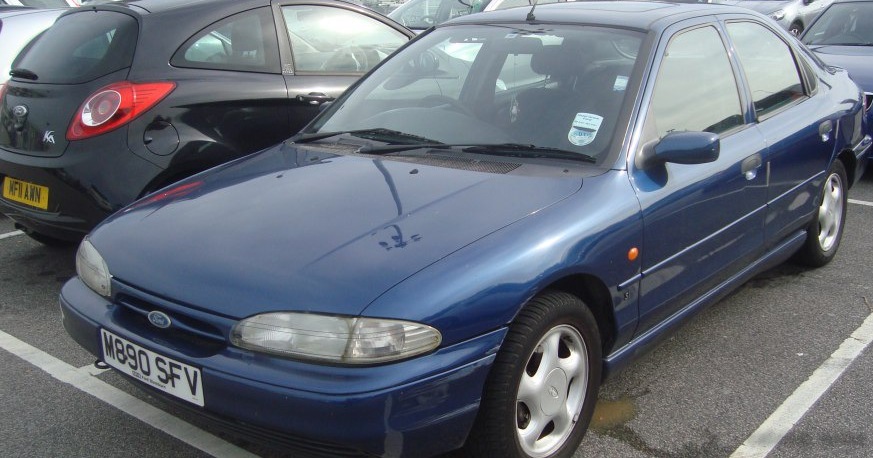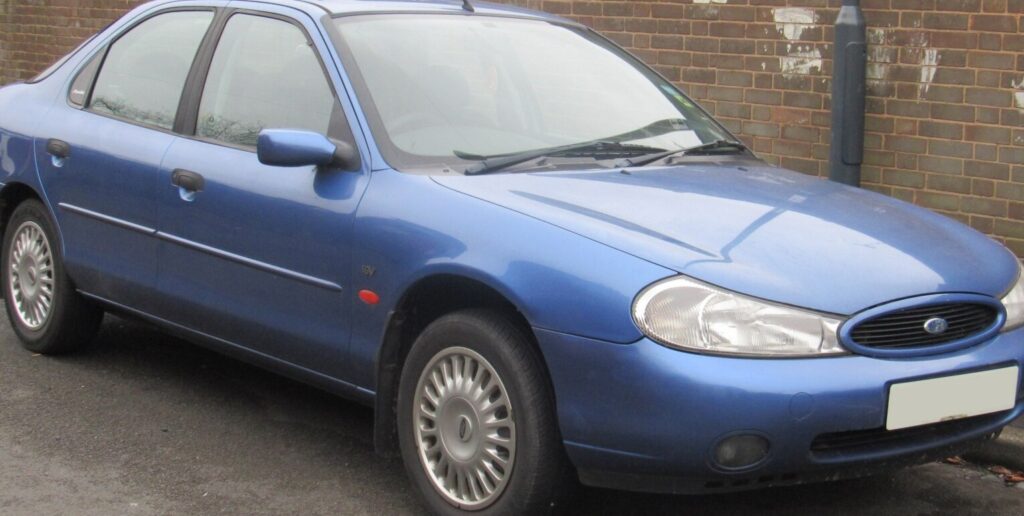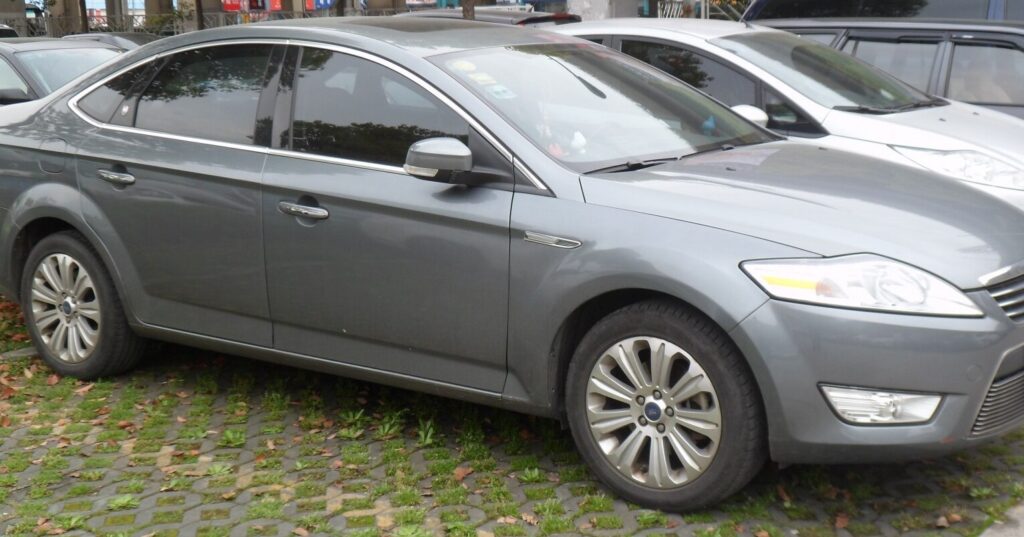
The Ford Mondeo III Sedan 2.3i 16V, produced between 2006 and 2010, represented a significant offering in Ford’s mid-size sedan lineup. Positioned as a step up from the base models, the 2.3-liter engine and six-speed automatic transmission combination aimed to provide a balance of performance and convenience for buyers in the European and, to a lesser extent, North American markets. This variant was part of the third generation Mondeo (code-named B5Y), which built upon the success of its predecessors by offering improved refinement, technology, and a more contemporary design. The Mondeo III competed directly with vehicles like the Volkswagen Passat, Opel Vectra, and Honda Accord.
Technical Specifications
| Brand | Ford |
| Model | Mondeo |
| Generation | Mondeo III Sedan |
| Type (Engine) | 2.3 i 16V (160 Hp) |
| Start of production | 2006 |
| End of production | 2010 |
| Powertrain Architecture | Internal Combustion engine |
| Body type | Sedan |
| Seats | 5 |
| Doors | 4 |
| Fuel consumption (urban) | 13.8 l/100 km (17 US mpg, 20.5 UK mpg) |
| Fuel consumption (extra urban) | 6.7 l/100 km (35.1 US mpg, 42.2 UK mpg) |
| Fuel consumption (combined) | 9.3 l/100 km (25.3 US mpg, 30.4 UK mpg) |
| Fuel Type | Petrol (Gasoline) |
| Emission standard | Euro 4 |
| Weight-to-power ratio | 9.2 kg/Hp, 109.1 Hp/tonne |
| Weight-to-torque ratio | 7 kg/Nm, 141.9 Nm/tonne |
| Power | 160 Hp @ 6500 rpm |
| Power per litre | 70.8 Hp/l |
| Torque | 208 Nm @ 4200 rpm (153.41 lb.-ft. @ 4200 rpm) |
| Engine layout | Front, Transverse |
| Engine Model/Code | SEBA |
| Engine displacement | 2261 cm3 (137.97 cu. in.) |
| Number of cylinders | 4 |
| Engine configuration | Inline |
| Cylinder Bore | 87.5 mm (3.44 in.) |
| Piston Stroke | 94 mm (3.7 in.) |
| Compression ratio | 10.6:1 |
| Number of valves per cylinder | 4 |
| Fuel injection system | Multi-port manifold injection |
| Engine aspiration | Naturally aspirated engine |
| Valvetrain | DOHC |
| Engine oil capacity | 4.3 l (4.54 US qt | 3.78 UK qt) |
| Coolant capacity | 6.2 l (6.55 US qt | 5.46 UK qt) |
| Kerb Weight | 1466 kg (3231.98 lbs.) |
| Max. weight | 2165 kg (4773.01 lbs.) |
| Max load | 699 kg (1541.03 lbs.) |
| Trunk (boot) space – minimum | 550 l (19.42 cu. ft.) |
| Fuel tank capacity | 70 l (18.49 US gal | 15.4 UK gal) |
| Length | 4844 mm (190.71 in.) |
| Width | 1886 mm (74.25 in.) |
| Height | 1500 mm (59.06 in.) |
| Wheelbase | 2850 mm (112.2 in.) |
| Front track | 1522 mm (59.92 in.) |
| Rear track | 1537 mm (60.51 in.) |
| Minimum turning circle | 11.1 m (36.42 ft.) |
| Drivetrain | Front wheel drive |
| Number of gears | 6 |
| Gearbox type | Automatic transmission |
| Front suspension | Coil spring |
| Rear suspension | Coil spring |
| Front brakes | Ventilated discs |
| Rear brakes | Disc |
| Assisting systems | ABS (Anti-lock braking system) |
| Steering type | Steering rack and pinion |
| Tires size | 205/55 R16 |
Powertrain & Engine Architecture
The heart of the Mondeo III 2.3i was the SEBA engine, a 2.3-liter inline-four cylinder gasoline engine. This engine featured a double overhead camshaft (DOHC) valvetrain with four valves per cylinder, contributing to its respectable power output. Fuel delivery was handled by a multi-port fuel injection system, a common setup for engines of this era. The SEBA engine was known for its relatively smooth operation and decent reliability, though it wasn’t considered a particularly high-performance unit. Paired with this engine was a six-speed automatic transmission, designed to provide comfortable and efficient shifting. This transmission, while offering convenience, wasn’t known for its particularly sporty character, prioritizing smooth transitions over aggressive downshifts.
Driving Characteristics
The 2.3i automatic Mondeo offered a comfortable and refined driving experience. With 160 horsepower and 208 Nm (153 lb-ft) of torque, acceleration was adequate for everyday driving, but it wasn’t a particularly quick car. The automatic transmission, while smooth, did detract somewhat from the engine’s performance, resulting in a slightly less responsive feel compared to the available manual transmission options. Gear ratios were tuned for fuel efficiency and comfort, rather than outright speed. Compared to the higher-performance 2.5-liter V6 variant, the 2.3i felt noticeably less powerful, but it offered better fuel economy. Against the diesel options, like the 2.0 TDCi, the 2.3i provided a smoother, quieter ride, but lacked the low-end torque and fuel efficiency of the diesel.
Equipment & Trim Levels
The 2.3i trim typically included features such as air conditioning, power windows, power mirrors, a CD player, and alloy wheels. Higher trim levels, often denoted by “Titanium” or “Ghia” badges, added features like leather upholstery, heated seats, a sunroof, and upgraded audio systems. Optional extras included satellite navigation, parking sensors, and automatic headlights. The interior design was generally functional and well-built, though it lacked the premium feel of some of its competitors. Safety features included ABS brakes, front airbags, and side airbags.
Chassis & Braking
The Mondeo III utilized a MacPherson strut front suspension and a multi-link rear suspension, providing a good balance of ride comfort and handling. The front brakes were ventilated discs, while the rear brakes were solid discs. ABS (Anti-lock Braking System) was standard. The suspension was tuned for comfort, resulting in a relatively soft ride, but it still offered decent body control in corners. Stabilizer bars were fitted front and rear to reduce body roll.
Market Reception & Comparison
The Mondeo III 2.3i automatic was generally well-received by automotive critics as a practical and comfortable family sedan. However, it wasn’t often praised for its performance or driving dynamics. Critics noted that the automatic transmission could feel sluggish at times, and that the engine lacked the punch of some of its rivals. Fuel economy was considered average for its class. Compared to the diesel variants, the 2.3i offered a more refined driving experience, but at the cost of fuel efficiency. Compared to the V6 model, it was more affordable and fuel-efficient, but less powerful.
Legacy
The Ford Mondeo III 2.3i automatic, while not a standout performer, remains a reasonably reliable and affordable used car option. The SEBA engine is generally considered durable, though regular maintenance is crucial. Common issues include oil leaks and occasional problems with the automatic transmission. Parts availability is generally good, and repair costs are relatively low. Today, these vehicles are often sought after by buyers looking for a comfortable and practical family sedan at a budget-friendly price. The Mondeo III, in general, helped solidify Ford’s reputation for building well-rounded and dependable mid-size cars.