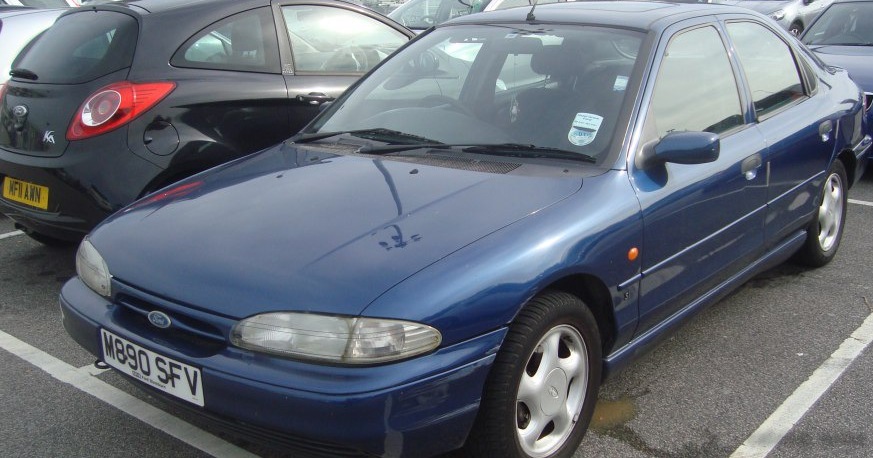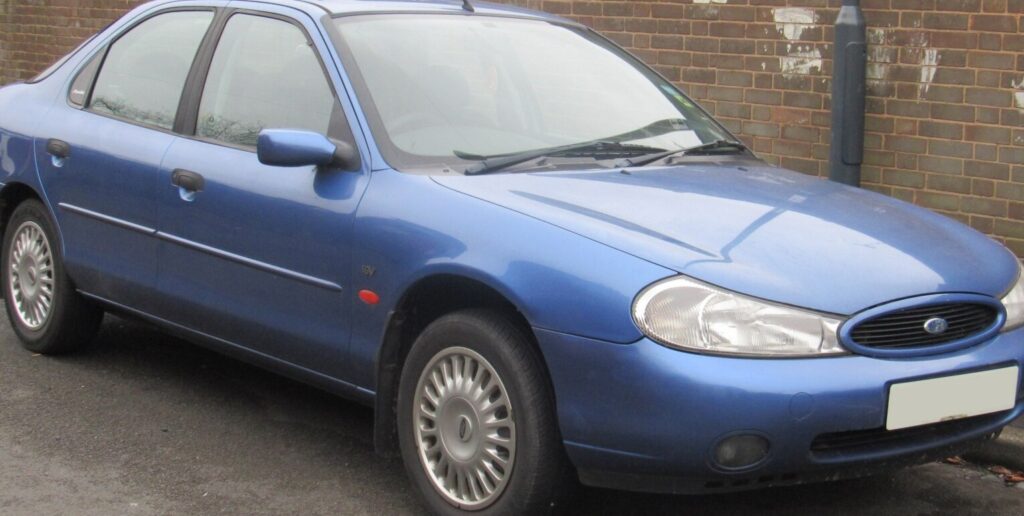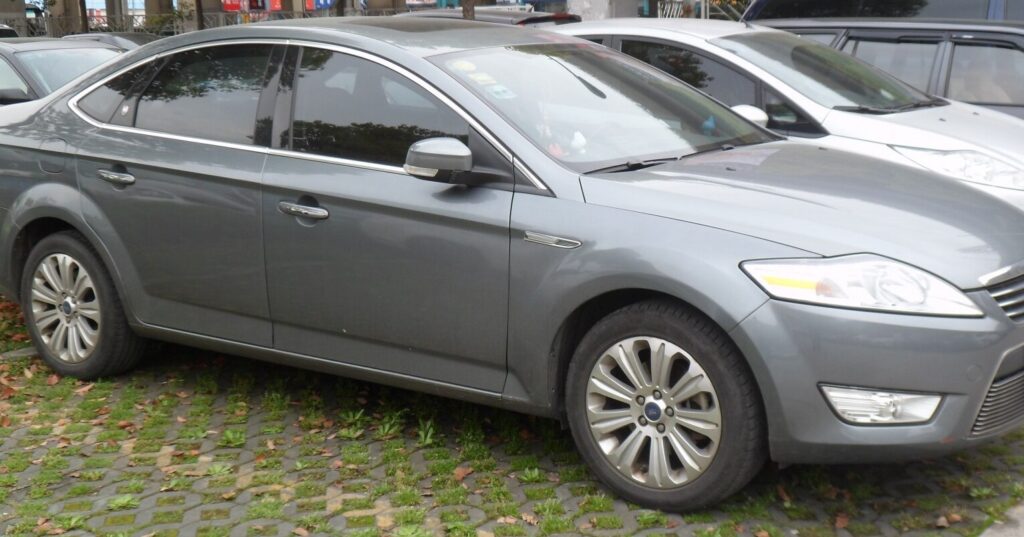
The Ford Mondeo III Sedan 2.5i 20V, produced between 2006 and 2010, represented a performance-oriented variant within the third generation Mondeo lineup. Positioned as a near-top-of-the-range model, it offered a significant step up in power compared to the more common 1.8 and 2.0 liter engines. Built on the Ford EUCD platform (shared with the contemporary Ford Focus and Volvo S40/V50), the Mondeo III aimed to provide a comfortable and spacious family sedan with a touch of sporting character, particularly in this 220 horsepower guise. This model was primarily sold in Europe and other international markets, not offered in the North American market where the Mondeo was not sold.
Technical Specifications
| Brand | Ford |
| Model | Mondeo |
| Generation | Mondeo III Sedan |
| Type (Engine) | 2.5 i 20V (220 Hp) |
| Start of production | 2006 |
| End of production | 2010 |
| Powertrain Architecture | Internal Combustion engine |
| Body type | Sedan |
| Seats | 5 |
| Doors | 4 |
| Fuel consumption (urban) | 13.6 l/100 km (17.3 US mpg) |
| Fuel consumption (extra urban) | 6.8 l/100 km (34.6 US mpg) |
| Fuel consumption (combined) | 9.3 l/100 km (25.3 US mpg) |
| Fuel Type | Petrol (Gasoline) |
| Acceleration 0 – 100 km/h | 7.5 sec |
| Acceleration 0 – 62 mph | 7.5 sec |
| Acceleration 0 – 60 mph | 7.1 sec |
| Maximum speed | 245 km/h (152.24 mph) |
| Emission standard | Euro 4 |
| Weight-to-power ratio | 6.8 kg/Hp |
| Weight-to-torque ratio | 4.7 kg/Nm |
| Power | 220 Hp @ 5000 rpm |
| Torque | 320 Nm @ 1500-4800 rpm (236.02 lb.-ft.) |
| Engine layout | Front, Transverse |
| Engine Model/Code | HUBA |
| Engine displacement | 2522 cm3 (153.9 cu. in.) |
| Number of cylinders | 5 |
| Engine configuration | Inline |
| Cylinder Bore | 83 mm (3.27 in.) |
| Piston Stroke | 93.2 mm (3.67 in.) |
| Compression ratio | 9:1 |
| Number of valves per cylinder | 4 |
| Fuel injection system | Multi-port manifold injection |
| Engine aspiration | Turbocharger, Intercooler |
| Valvetrain | DOHC |
| Engine oil capacity | 6.4 l (6.76 US qt | 5.63 UK qt) |
| Coolant capacity | 7.1 l (7.5 US qt | 6.25 UK qt) |
| Kerb Weight | 1492 kg (3289.3 lbs.) |
| Max. weight | 2185 kg (4817.1 lbs.) |
| Max load | 693 kg (1527.8 lbs.) |
| Trunk (boot) space – minimum | 550 l (19.42 cu. ft.) |
| Fuel tank capacity | 70 l (18.49 US gal | 15.4 UK gal) |
| Length | 4844 mm (190.71 in.) |
| Width | 1886 mm (74.25 in.) |
| Height | 1500 mm (59.06 in.) |
| Wheelbase | 2850 mm (112.2 in.) |
| Front track | 1522 mm (59.92 in.) |
| Rear track | 1537 mm (60.51 in.) |
| Minimum turning circle | 11.1 m (36.42 ft.) |
| Drivetrain Architecture | Front wheel drive |
| Number of gears | 6 |
| Gearbox type | Manual transmission |
| Front suspension | Coil spring |
| Rear suspension | Coil spring |
| Front brakes | Ventilated discs |
| Rear brakes | Disc |
| Assisting systems | ABS (Anti-lock braking system) |
| Steering type | Steering rack and pinion |
| Tires size | 205/55 R16 |
INTRODUCTION
The Ford Mondeo III Sedan 2.5i 20V, launched in 2006, was a significant offering in the mid-size sedan segment, particularly in Europe. It represented a move towards more powerful and engaging options within the Mondeo range. The 2.5-liter engine, designated HUBA, was a five-cylinder turbocharged unit, offering a substantial performance boost over the naturally aspirated 1.8 and 2.0-liter alternatives. This variant aimed to attract drivers seeking a blend of practicality, comfort, and spirited driving dynamics. It was positioned as a premium trim level, often featuring enhanced equipment and a more refined interior compared to the base models.
Powertrain & Engine Architecture
The heart of the Mondeo III 2.5i is the HUBA engine, a 2.5-liter inline-five cylinder powerplant. This engine utilizes a single turbocharger with an intercooler to boost power output to 220 horsepower. The engine employs multi-port fuel injection and a double overhead camshaft (DOHC) valvetrain, contributing to its responsive performance. The turbocharger provides increased air intake, resulting in higher torque figures – 320 Nm (236 lb-ft) – available across a broad rev range (1500-4800 rpm). The engine’s 9:1 compression ratio strikes a balance between performance and fuel efficiency. The standard transmission for this model was a six-speed manual gearbox, designed to handle the engine’s output and provide precise gear changes. While an automatic transmission was available in some markets, the manual was favored by enthusiasts for its more engaging driving experience.
Driving Characteristics
The 2.5i variant of the Mondeo III Sedan offered a noticeably more engaging driving experience than its lower-powered siblings. The turbocharger provides a surge of power, resulting in brisk acceleration – 0-60 mph in approximately 7.1 seconds. The six-speed manual transmission allows drivers to keep the engine in its optimal power band, maximizing performance. The gear ratios are well-spaced, providing both strong acceleration and comfortable cruising. Compared to the 1.8-liter models, the 2.5i feels significantly more responsive and capable, particularly when overtaking or tackling winding roads. While not a dedicated sports sedan, the 2.5i Mondeo offered a compelling blend of performance and practicality. The increased power did come with a slight trade-off in fuel economy compared to the smaller engines.
Equipment & Trim Levels
The 2.5i Mondeo typically came equipped with a generous level of standard features. Interior appointments often included premium cloth or leather upholstery, depending on the specific trim package. Standard equipment generally included air conditioning, power windows and mirrors, a CD stereo system, and alloy wheels. Optional extras could include a sunroof, upgraded audio system, parking sensors, and heated front seats. The higher trim levels often featured automatic headlights and rain-sensing wipers. The dashboard layout was functional and well-designed, with clear instrumentation and intuitive controls. The Mondeo III Sedan prioritized passenger comfort, offering ample space for five adults and a reasonably sized trunk.
Chassis & Braking
The Mondeo III Sedan utilized a MacPherson strut front suspension and a multi-link rear suspension, providing a comfortable ride and good handling characteristics. The suspension was tuned to balance ride comfort with body control. The 2.5i variant typically featured slightly stiffer springs and dampers compared to the lower-powered models to manage the increased power and weight. Braking duties were handled by ventilated disc brakes at the front and solid disc brakes at the rear. Anti-lock Braking System (ABS) was standard, enhancing safety and stability during hard braking. The steering was a rack and pinion system, providing precise and responsive steering feel.
Market Reception & Comparison
The Ford Mondeo III 2.5i was generally well-received by automotive critics. Reviewers praised its powerful engine, comfortable ride, and spacious interior. However, some noted that the turbocharged engine could be slightly thirsty compared to the naturally aspirated alternatives. Compared to rivals like the Volkswagen Passat and Opel/Vauxhall Vectra, the Mondeo offered a compelling combination of value, performance, and practicality. The 2.5i variant stood out as a more engaging and rewarding driving experience than the base models, appealing to drivers who prioritized performance. Fuel economy was comparable to other turbocharged engines in the segment, but slightly lower than the naturally aspirated options.
Legacy
The Ford Mondeo III 2.5i remains a popular choice in the used car market, particularly among enthusiasts who appreciate its performance and practicality. The HUBA engine, while generally reliable, requires regular maintenance, including oil changes and timing belt replacements. The turbocharger can be a potential point of failure if not properly maintained. Overall, the Mondeo III 2.5i is considered a well-built and durable vehicle, offering a good balance of performance, comfort, and value. Its five-cylinder turbocharged engine provides a unique and enjoyable driving experience that sets it apart from the more common four-cylinder alternatives.