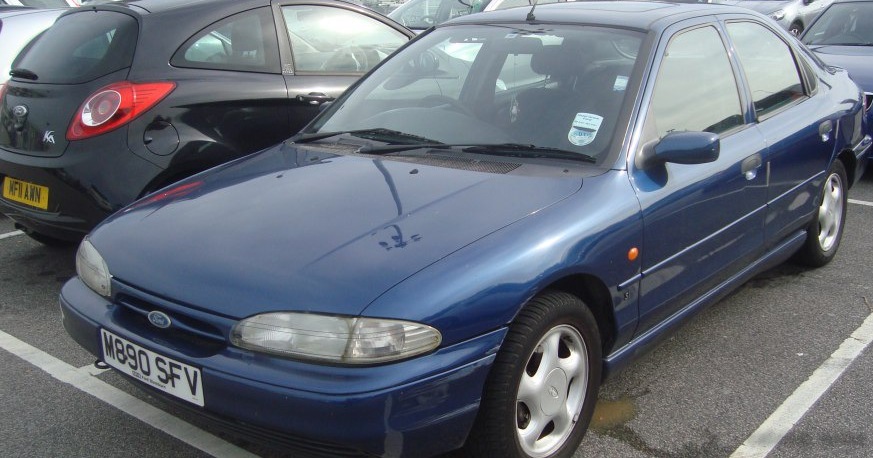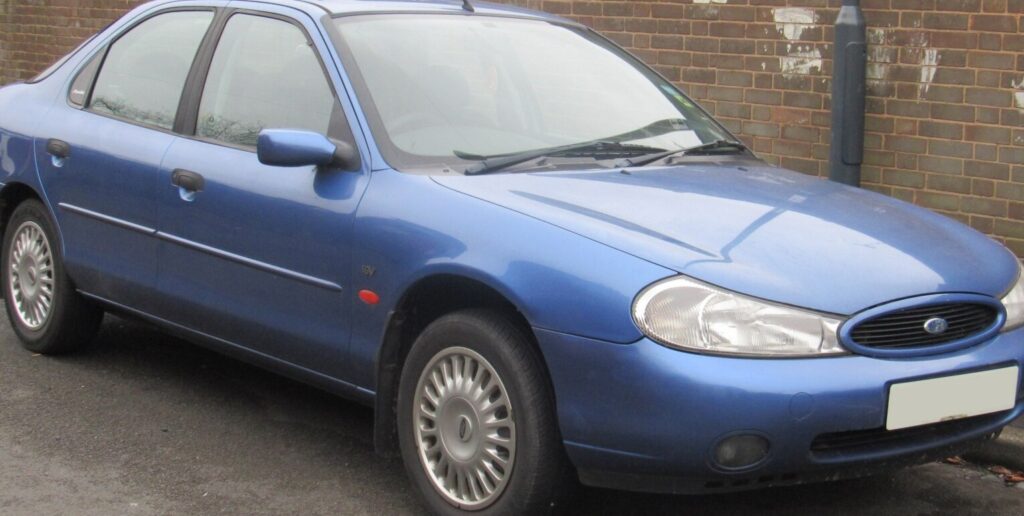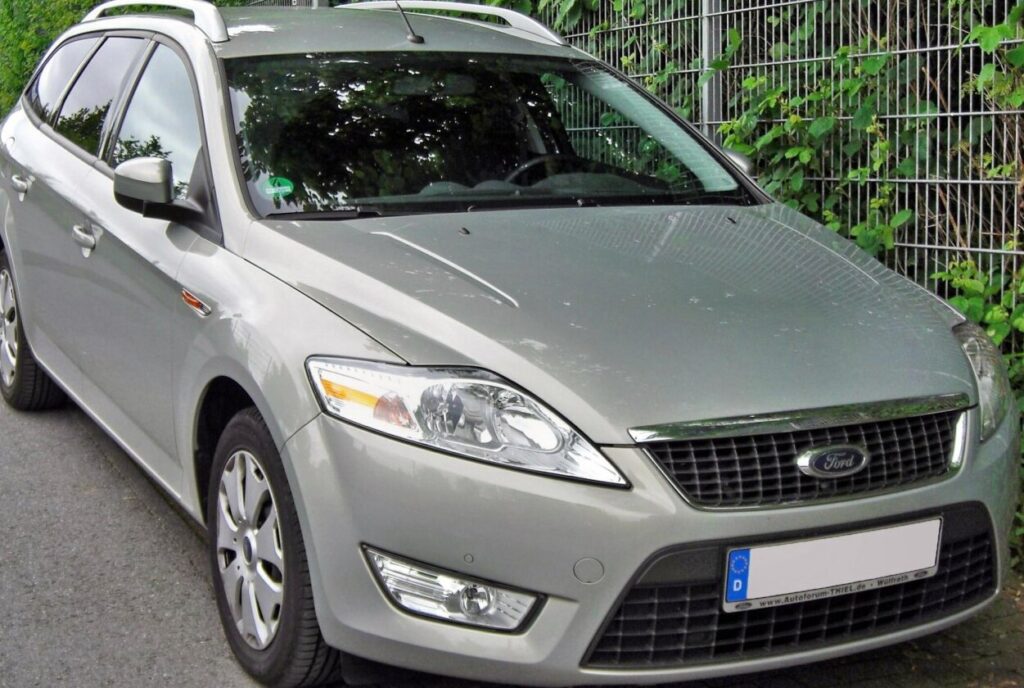
The Ford Mondeo III Wagon 1.6i 16V, produced between 2007 and 2010, represented an entry-level offering within the third-generation Mondeo (Mk3) lineup. Positioned as a practical and affordable family vehicle, this variant catered to buyers prioritizing fuel efficiency and everyday usability over outright performance. It was a key component of Ford of Europe’s strategy to offer a broad range of Mondeo models to suit diverse customer needs, leveraging the global 1HX0/A3 platform. The wagon body style, popular in Europe, provided increased cargo capacity, making it a versatile choice for families and those requiring ample space.
Technical Specifications
| Brand | Ford |
| Model | Mondeo |
| Generation | Mondeo III Wagon |
| Type (Engine) | 1.6 i 16V (110 Hp) |
| Start of production | 2007 |
| End of production | 2010 |
| Powertrain Architecture | Internal Combustion engine |
| Body type | Station wagon (estate) |
| Seats | 5 |
| Doors | 5 |
| Fuel consumption (urban) | 10 l/100 km (23.5 US mpg) |
| Fuel consumption (extra urban) | 5.6 l/100 km (42 US mpg) |
| Fuel consumption (combined) | 7.2 l/100 km (32.7 US mpg) |
| Fuel Type | Petrol (Gasoline) |
| Acceleration 0 – 100 km/h | 12.9 sec |
| Acceleration 0 – 62 mph | 12.9 sec |
| Acceleration 0 – 60 mph | 12.3 sec |
| Maximum speed | 185 km/h (114.95 mph) |
| Emission standard | Euro 4 |
| Weight-to-power ratio | 12.7 kg/Hp |
| Weight-to-torque ratio | 8.8 kg/Nm |
| Power | 110 Hp @ 6300 rpm |
| Torque | 160 Nm @ 4100 rpm (118.01 lb.-ft. @ 4100 rpm) |
| Engine layout | Front, Transverse |
| Engine Model/Code | RHBA |
| Engine displacement | 1596 cm3 (97.39 cu. in.) |
| Number of cylinders | 4 |
| Engine configuration | Inline |
| Cylinder Bore | 79 mm (3.11 in.) |
| Piston Stroke | 81.4 mm (3.2 in.) |
| Compression ratio | 11:1 |
| Number of valves per cylinder | 4 |
| Fuel injection system | Multi-port manifold injection |
| Engine aspiration | Naturally aspirated engine |
| Valvetrain | DOHC |
| Engine oil capacity | 4.1 l (4.33 US qt | 3.61 UK qt) |
| Coolant capacity | 6 l (6.34 US qt | 5.28 UK qt) |
| Kerb Weight | 1402 kg (3090.88 lbs.) |
| Max. weight | 2090 kg (4607.66 lbs.) |
| Max load | 688 kg (1516.78 lbs.) |
| Trunk (boot) space – minimum | 550 l (19.42 cu. ft.) |
| Fuel tank capacity | 70 l (18.49 US gal | 15.4 UK gal) |
| Length | 4830 mm (190.16 in.) |
| Width | 1886 mm (74.25 in.) |
| Height | 1500 mm (59.06 in.) |
| Wheelbase | 2850 mm (112.2 in.) |
| Front track | 1522 mm (59.92 in.) |
| Rear track | 1537 mm (60.51 in.) |
| Minimum turning circle | 11.1 m (36.42 ft.) |
| Drivetrain Architecture | Front wheel drive |
| Number of gears | 5 |
| Gearbox type | Manual transmission |
| Front suspension | Coil spring |
| Rear suspension | Coil spring |
| Front brakes | Ventilated discs |
| Rear brakes | Disc |
| Assisting systems | ABS (Anti-lock braking system) |
| Steering type | Steering rack and pinion |
| Tires size | 205/55 R16 |
Powertrain & Engine Architecture
The Mondeo III Wagon 1.6i 16V utilized the Ford RHBA engine, a 1.6-liter inline-four cylinder gasoline engine. This engine featured a Duratec design, known for its relatively simple and robust construction. The RHBA employed multi-port fuel injection, delivering fuel directly into the intake ports, and a double overhead camshaft (DOHC) valvetrain, optimizing airflow for improved efficiency and power output. The 16 valves (four per cylinder) further contributed to the engine’s breathing capabilities. Paired with this engine was a five-speed manual transmission, providing a balance between fuel economy and driver control. The transmission’s gear ratios were tuned for everyday driving, prioritizing smooth acceleration and comfortable cruising rather than sporty performance. This engine code was a common sight in Ford’s European lineup during this period, known for its reliability and affordability.
Driving Characteristics
The 1.6-liter engine, producing 110 horsepower, delivered adequate performance for typical driving scenarios. Acceleration from 0-60 mph took approximately 12.3 seconds, and top speed was around 115 mph. While not particularly quick, the engine provided sufficient power for highway merging and overtaking, especially when the transmission was utilized effectively. Compared to the higher-output 2.0-liter or 2.3-liter versions of the Mondeo, the 1.6i felt noticeably less powerful, particularly when fully loaded with passengers and cargo. However, the 1.6’s lighter weight and more relaxed engine characteristics resulted in better fuel economy. The five-speed manual transmission offered a decent spread of gears, allowing drivers to keep the engine in its optimal power band. The gear ratios were spaced to prioritize fuel efficiency, meaning the engine could feel strained when pushed hard.
Equipment & Trim Levels
The 1.6i 16V typically represented the entry-level trim in the Mondeo Wagon range. Standard equipment generally included air conditioning, power steering, electric front windows, and a basic audio system. Safety features such as ABS and front airbags were also standard. Interior upholstery was typically cloth, and the dashboard featured a functional, if somewhat basic, design. Optional extras included alloy wheels, upgraded audio systems, rear parking sensors, and cruise control. Higher trim levels, such as the Titanium, offered more luxurious features like leather upholstery, automatic climate control, and premium audio systems. The 1.6i trim was aimed at buyers seeking a practical and affordable family car, prioritizing value for money over luxury appointments.
Chassis & Braking
The Mondeo III Wagon featured independent suspension on all four wheels, utilizing coil springs and MacPherson struts at the front and a multi-link setup at the rear. This suspension configuration provided a comfortable ride quality and decent handling characteristics. The 1.6i variant typically featured ventilated disc brakes at the front and solid disc brakes at the rear. ABS (Anti-lock Braking System) was standard, enhancing braking performance and stability, particularly in adverse conditions. Stabilizer bars were fitted to both the front and rear axles to reduce body roll during cornering. The suspension setup was tuned for comfort and practicality, rather than outright sportiness, reflecting the target audience for this particular trim level.
Market Reception & Comparison
The Mondeo III Wagon 1.6i 16V was generally well-received by automotive critics as a sensible and economical choice. It was praised for its spacious interior, comfortable ride, and reasonable fuel economy. However, it was often criticized for its lack of outright performance compared to higher-powered variants. Compared to the 2.0-liter or 2.3-liter models, the 1.6i offered significantly lower running costs but at the expense of acceleration and overall driving enjoyment. The 1.6i also offered a more affordable entry point into the Mondeo range, making it attractive to budget-conscious buyers. Its fuel economy figures of around 32.7 US mpg combined were competitive for its class at the time.
Legacy
The Ford Mondeo III Wagon 1.6i 16V has proven to be a relatively reliable vehicle in the used car market. The RHBA engine is known for its durability, and routine maintenance is generally straightforward and affordable. While not a particularly exciting car to drive, it offers a practical and dependable transportation solution. Common issues reported by owners include occasional problems with the cooling system and minor electrical glitches. However, these are typically easily addressed with regular maintenance and preventative care. Today, these vehicles represent a cost-effective option for those seeking a spacious and reliable family wagon.