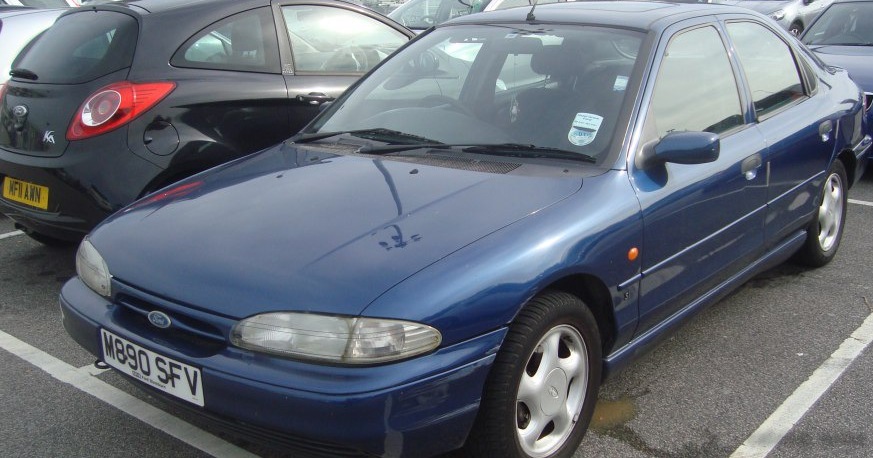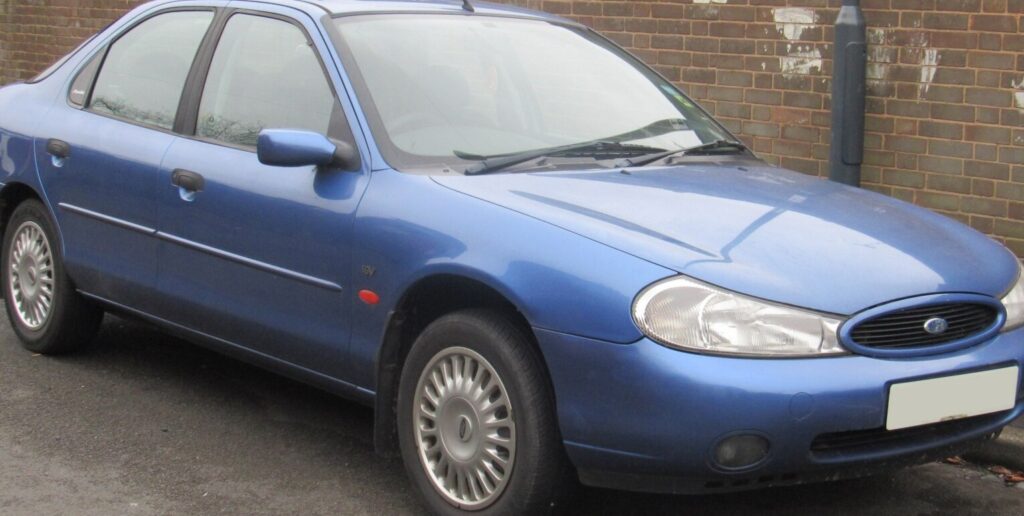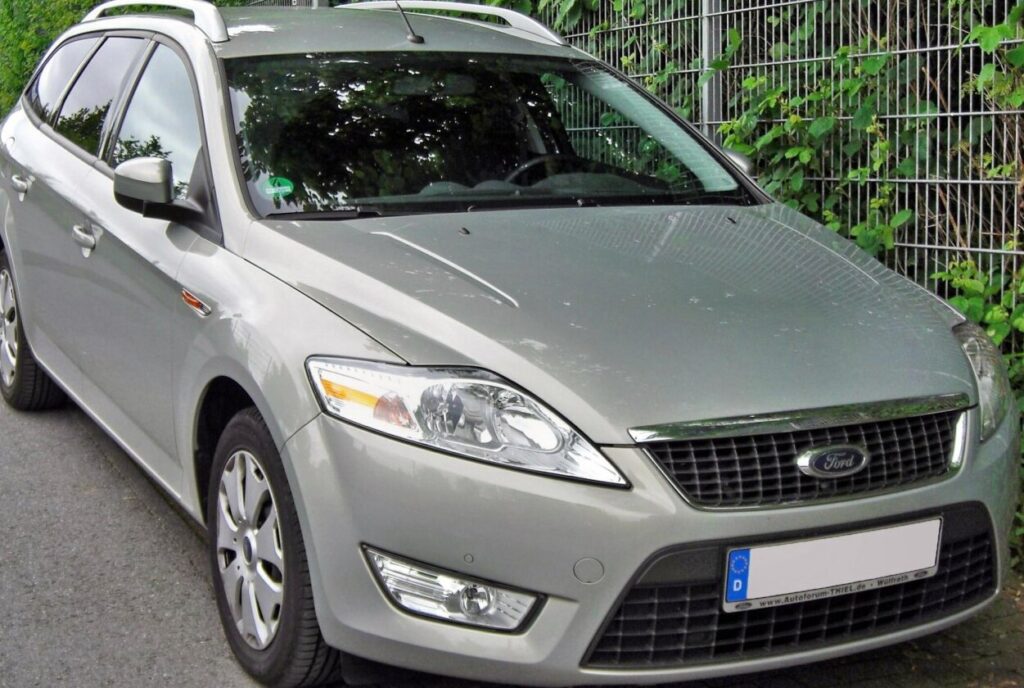
The Ford Mondeo III Wagon 2.0i 16V, produced between 2007 and 2010, represented a significant offering in the mid-size station wagon segment. Part of the Mk3 Mondeo generation (internally designated as B5Y), this variant aimed to provide a balance of practicality, reasonable performance, and affordability within the Mondeo lineup. It served as a popular choice for families and individuals needing a versatile vehicle with ample cargo space. The 2.0i 16V engine, paired with a five-speed manual transmission, positioned this model as a mainstream option, sitting below the more powerful 2.5-liter variants and above the fuel-efficient, though slower, 1.6-liter models.
Technical Specifications
| Brand | Ford |
| Model | Mondeo |
| Generation | Mondeo III Wagon |
| Type (Engine) | 2.0 i 16V (145 Hp) |
| Start of production | 2007 |
| End of production | 2010 |
| Powertrain Architecture | Internal Combustion engine |
| Body type | Station wagon (estate) |
| Seats | 5 |
| Doors | 5 |
| Fuel consumption (urban) | 11.2 l/100 km (21 US mpg, 25.2 UK mpg, 8.9 km/l) |
| Fuel consumption (extra urban) | 6 l/100 km (39.2 US mpg, 47.1 UK mpg, 16.7 km/l) |
| Fuel consumption (combined) | 7.9 l/100 km (29.8 US mpg, 35.8 UK mpg, 12.7 km/l) |
| Fuel Type | Petrol (Gasoline) |
| Acceleration 0 – 100 km/h | 9.9 sec |
| Acceleration 0 – 62 mph | 9.9 sec |
| Acceleration 0 – 60 mph | 9.4 sec |
| Maximum speed | 210 km/h (130.49 mph) |
| Emission standard | Euro 4 |
| Weight-to-power ratio | 9.7 kg/Hp, 103.4 Hp/tonne |
| Weight-to-torque ratio | 7.4 kg/Nm, 135.5 Nm/tonne |
| Power | 145 Hp @ 6000 rpm |
| Power per litre | 72.5 Hp/l |
| Torque | 190 Nm @ 4500 rpm (140.14 lb.-ft. @ 4500 rpm) |
| Engine layout | Front, Transverse |
| Engine Model/Code | AOBA, TBBA |
| Engine displacement | 1999 cm3 (121.99 cu. in.) |
| Number of cylinders | 4 |
| Engine configuration | Inline |
| Cylinder Bore | 87.5 mm (3.44 in.) |
| Piston Stroke | 83.1 mm (3.27 in.) |
| Compression ratio | 10.8:1 |
| Number of valves per cylinder | 4 |
| Fuel injection system | Multi-port manifold injection |
| Engine aspiration | Naturally aspirated engine |
| Valvetrain | DOHC |
| Engine oil capacity | 4.3 l (4.54 US qt | 3.78 UK qt) |
| Coolant | 6 l (6.34 US qt | 5.28 UK qt) |
| Kerb Weight | 1402 kg (3090.88 lbs.) |
| Max. weight | 2090 kg (4607.66 lbs.) |
| Max load | 688 kg (1516.78 lbs.) |
| Trunk (boot) space – minimum | 550 l (19.42 cu. ft.) |
| Fuel tank capacity | 70 l (18.49 US gal | 15.4 UK gal) |
| Length | 4830 mm (190.16 in.) |
| Width | 1886 mm (74.25 in.) |
| Height | 1500 mm (59.06 in.) |
| Wheelbase | 2850 mm (112.2 in.) |
| Front track | 1522 mm (59.92 in.) |
| Rear (Back) track | 1537 mm (60.51 in.) |
| Minimum turning circle | 11.1 m (36.42 ft.) |
| Drivetrain Architecture | ICE, Front wheel drive |
| Drive wheel | Front wheel drive |
| Number of gears | 5 gears, manual transmission |
| Front suspension | Coil spring |
| Rear suspension | Coil spring |
| Front brakes | Ventilated discs |
| Rear brakes | Disc |
| Assisting systems | ABS (Anti-lock braking system) |
| Steering type | Steering rack and pinion |
| Tires size | 205/55 R16 |
INTRODUCTION
The Ford Mondeo III Wagon 2.0i 16V, launched in 2007 as part of the facelifted Mk3 Mondeo range, built upon the success of its predecessors. The Mk3 Mondeo, based on the Ford EUCD platform (also known as the 1HX0/A3 platform), aimed to offer a more refined and sophisticated driving experience compared to the Mk2. The wagon (estate) body style was particularly popular in Europe, catering to buyers who prioritized cargo capacity and practicality. This 2.0-liter variant was a core model, designed to appeal to a broad customer base seeking a well-rounded family vehicle.
Powertrain & Engine Architecture
The heart of the Mondeo III Wagon 2.0i 16V is the Ford Duratec 2.0-liter inline-four cylinder engine. Engine codes AOBA and TBBA were commonly used for this configuration. This engine featured a dual overhead camshaft (DOHC) valvetrain with four valves per cylinder, contributing to its respectable power output. Fuel delivery was managed by a multi-port fuel injection system. The engine’s design emphasized smooth operation and reasonable fuel efficiency. The five-speed manual transmission provided a balance between performance and economy. Gear ratios were fairly conventional, optimized for everyday driving rather than outright acceleration. The transmission was known for its relatively light shift action, though not particularly sporty feel.
Driving Characteristics
The 2.0i 16V Mondeo Wagon offered a competent, if not thrilling, driving experience. With 145 horsepower and 190 Nm (140 lb-ft) of torque, acceleration from 0-60 mph took around 9.4 seconds. While not a sports car, the engine provided sufficient power for overtaking and highway cruising. Compared to the higher-output 2.5-liter V6, the 2.0i felt noticeably less powerful, particularly at higher engine speeds. However, it offered better fuel economy and lower running costs. The manual transmission allowed for greater driver control compared to the optional automatic, and the gear ratios were well-suited to the engine’s torque curve. The suspension provided a comfortable ride, absorbing bumps and imperfections in the road effectively, though it wasn’t particularly engaging for enthusiastic drivers.
Equipment & Trim Levels
The 2.0i 16V Mondeo Wagon typically came equipped with a reasonable level of standard features. These included air conditioning, power windows, power mirrors, a CD player, and ABS brakes. Higher trim levels, such as Ghia and Titanium, added features like alloy wheels, upgraded upholstery, a multi-function steering wheel, and climate control. Optional extras included a sunroof, parking sensors, and a premium sound system. Interior upholstery was typically cloth, with leather options available on higher-spec models. The dashboard layout was functional and user-friendly, with clear instrumentation and logically placed controls.
Chassis & Braking
The Mondeo III Wagon featured independent suspension at all four wheels, utilizing coil springs and MacPherson struts at the front and a multi-link setup at the rear. This configuration provided a good balance of ride comfort and handling. Front brakes were ventilated discs, offering good stopping power, while rear brakes were solid discs. ABS (Anti-lock Braking System) was standard, enhancing safety in emergency braking situations. The chassis was relatively lightweight for its size, contributing to its agility and fuel efficiency. Stabilizer bars were fitted front and rear to reduce body roll during cornering.
Market Reception & Comparison
The Ford Mondeo III Wagon 2.0i 16V was generally well-received by automotive critics. It was praised for its spacious interior, comfortable ride, and reasonable fuel economy. However, some critics noted that the engine lacked the refinement and performance of some of its rivals. Compared to other trims in the Mondeo lineup, the 2.0i offered a compelling value proposition, providing a good balance of features and performance at a competitive price point. The 1.6-liter models were more economical but significantly slower, while the 2.5-liter V6 offered more power but at the expense of fuel efficiency.
Legacy
The Ford Mondeo III Wagon 2.0i 16V has proven to be a relatively reliable vehicle in the used car market. The Duratec 2.0-liter engine is known for its durability, provided it has been properly maintained. Common issues include occasional oil leaks and wear on the timing belt, which should be replaced at recommended intervals. The manual transmission is also generally reliable. Today, these Mondeos represent an affordable and practical option for buyers seeking a spacious and versatile family vehicle. While not a collector’s item, they remain a popular choice for those prioritizing functionality and value.