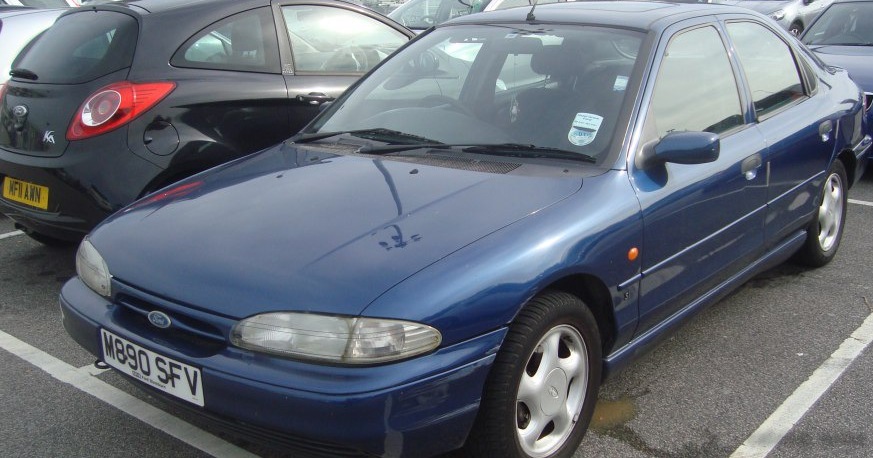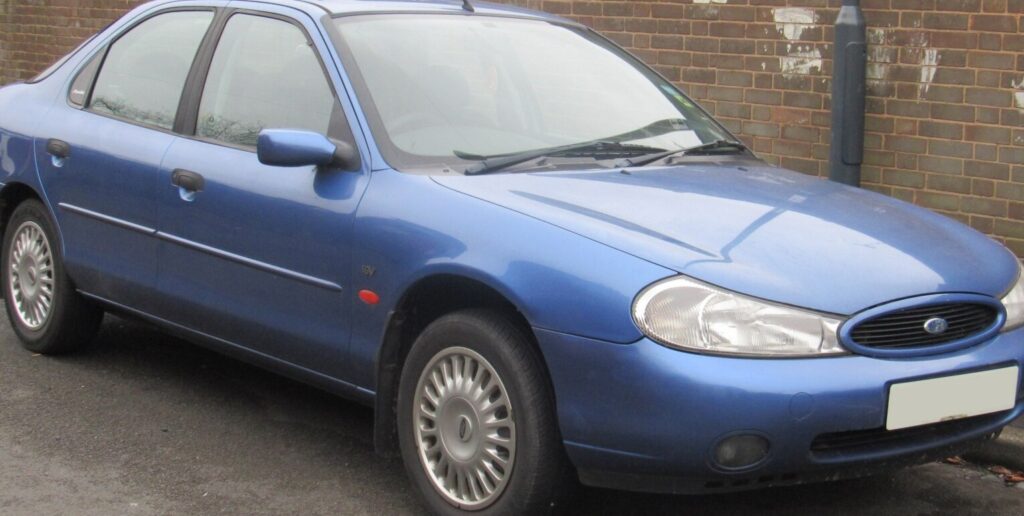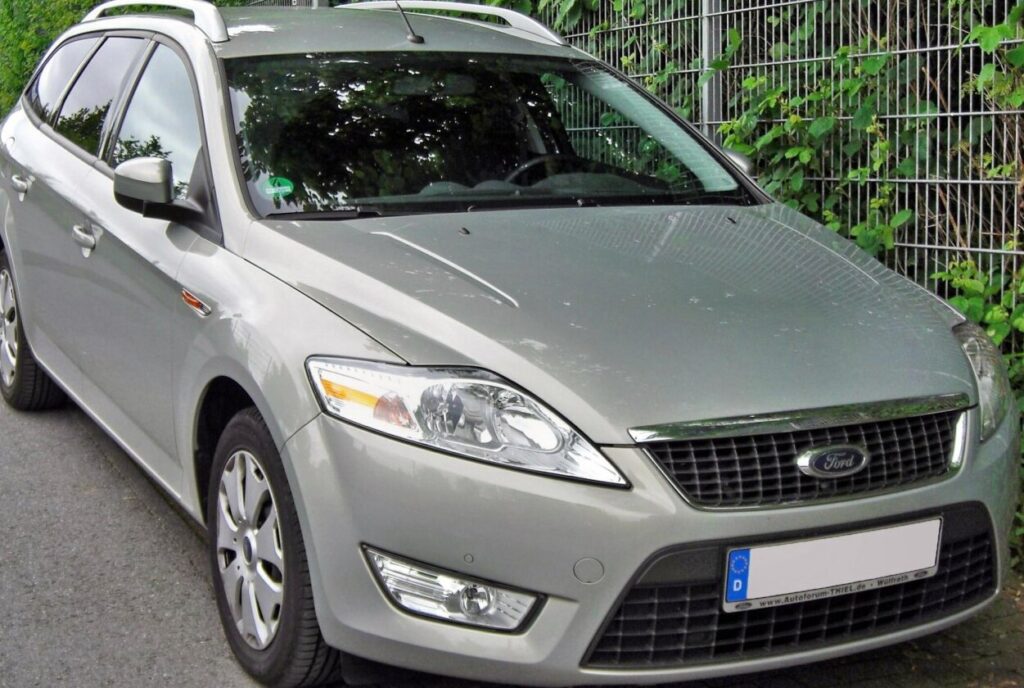
The Ford Mondeo III Wagon 2.0 TDCi, producing 130 horsepower, was a significant variant within the third-generation Mondeo (Mk3) lineup, manufactured between 2007 and 2008. Positioned as a practical and fuel-efficient option, it catered to families and drivers prioritizing economy without sacrificing space or comfort. This model occupied a middle ground in the Mondeo range, offering a step up from the lower-powered engine options while remaining more accessible than the higher-performance variants. The Mondeo Mk3, launched in 2007, represented a substantial evolution over its predecessor, building upon the success of the Mk2 while incorporating updated styling, improved interior quality, and a range of modern technologies.
Technical Specifications
| Brand | Ford |
| Model | Mondeo |
| Generation | Mondeo III Wagon |
| Type (Engine) | 2.0 TDCi (130 Hp) |
| Start of production | 2007 |
| End of production | 2008 |
| Powertrain Architecture | Internal Combustion engine |
| Body type | Station wagon (estate) |
| Seats | 5 |
| Doors | 5 |
| Fuel consumption (urban) | 9.8 l/100 km (24 US mpg, 28.8 UK mpg, 10.2 km/l) |
| Fuel consumption (extra urban) | 5.6 l/100 km (42 US mpg, 50.4 UK mpg, 17.9 km/l) |
| Fuel consumption (combined) | 7.1 l/100 km (33.1 US mpg, 39.8 UK mpg, 14.1 km/l) |
| Fuel Type | Diesel |
| Acceleration 0 – 100 km/h | 10.9 sec |
| Acceleration 0 – 62 mph | 10.9 sec |
| Acceleration 0 – 60 mph | 10.4 sec |
| Maximum speed | 200 km/h (124.27 mph) |
| Emission standard | Euro 4 |
| Weight-to-power ratio | 11.6 kg/Hp, 86.5 Hp/tonne |
| Weight-to-torque ratio | 4.7 kg/Nm, 212.9 Nm/tonne |
| Power | 130 Hp @ 4000 rpm |
| Power per litre | 65.1 Hp/l |
| Torque | 320 Nm @ 1750 rpm (236.02 lb.-ft. @ 1750 rpm) |
| Engine layout | Front, Transverse |
| Engine Model/Code | AZBA, AZWA |
| Engine displacement | 1997 cm3 (121.86 cu. in.) |
| Number of cylinders | 4 |
| Engine configuration | Inline |
| Cylinder Bore | 85 mm (3.35 in.) |
| Piston Stroke | 88 mm (3.46 in.) |
| Compression ratio | 17.9:1 |
| Number of valves per cylinder | 4 |
| Fuel injection system | Diesel Commonrail |
| Engine aspiration | Turbocharger, Intercooler |
| Engine oil capacity | 5.5 l (5.81 US qt | 4.84 UK qt) |
| Coolant | 8.1 l (8.56 US qt | 7.13 UK qt) |
| Kerb Weight | 1503 kg (3313.55 lbs.) |
| Max. weight | 2190 kg (4828.12 lbs.) |
| Max load | 687 kg (1514.58 lbs.) |
| Trunk (boot) space – minimum | 494 l (17.45 cu. ft.) |
| Trunk (boot) space – maximum | 1745 l (61.62 cu. ft.) |
| Fuel tank capacity | 70 l (18.49 US gal | 15.4 UK gal) |
| Length | 4830 mm (190.16 in.) |
| Width | 1886 mm (74.25 in.) |
| Height | 1500 mm (59.06 in.) |
| Wheelbase | 2850 mm (112.2 in.) |
| Front track | 1522 mm (59.92 in.) |
| Rear (Back) track | 1537 mm (60.51 in.) |
| Minimum turning circle | 11.1 m (36.42 ft.) |
| Drivetrain Architecture | Front wheel drive |
| Number of gears | 6 |
| Gearbox type | Automatic transmission |
| Front suspension | Coil spring |
| Rear suspension | Coil spring |
| Front brakes | Ventilated discs |
| Rear brakes | Disc |
| Assisting systems | ABS (Anti-lock braking system) |
| Steering type | Steering rack and pinion |
| Tires size | 205/55 R16 |
Powertrain & Engine Architecture
The heart of the Mondeo III Wagon 2.0 TDCi was the AZBA or AZWA engine code, a 1997cc four-cylinder diesel engine. This engine utilized a common rail direct injection system, delivering fuel at extremely high pressure for improved combustion efficiency and reduced emissions. A turbocharger with an intercooler was employed to boost power output and enhance torque across a wider rev range. The engine featured four valves per cylinder and a robust engine block designed for durability. The six-speed automatic transmission, a crucial component of this variant, was designed to provide smooth gear changes and optimize fuel economy. While not known for being particularly sporty, the transmission was reliable and well-suited to the engine’s torque characteristics.
Driving Characteristics
The 130 hp 2.0 TDCi automatic Mondeo Wagon offered a comfortable and relaxed driving experience. Acceleration was adequate for everyday driving, with the 0-60 mph sprint taking around 10.4 seconds. However, it wasn’t a particularly quick vehicle, especially when compared to the higher-powered 2.2 TDCi or petrol-powered versions. The automatic transmission, while smooth, could sometimes feel hesitant during quick overtaking maneuvers. The engine delivered strong low-end torque, making it well-suited for hauling passengers and cargo. The gear ratios were optimized for fuel efficiency, resulting in a relatively low engine speed at highway cruising speeds. Compared to the manual transmission versions, the automatic offered less driver engagement but greater convenience.
Equipment & Trim Levels
The 2.0 TDCi automatic Mondeo Wagon typically came equipped with a reasonable level of standard features. These included air conditioning, power windows, power mirrors, a CD player, and ABS brakes. Higher trim levels, such as Titanium, added features like alloy wheels, upgraded upholstery, a multi-function steering wheel, and parking sensors. Optional extras included a sunroof, leather seats, and a premium sound system. The interior design was functional and well-built, with a focus on practicality and comfort. The wagon body style provided ample cargo space, making it ideal for families and those needing to transport large items.
Chassis & Braking
The Mondeo III Wagon featured a MacPherson strut front suspension and a multi-link rear suspension, providing a comfortable ride and good handling characteristics. The front brakes were ventilated discs, while the rear brakes were solid discs. ABS (Anti-lock Braking System) was standard, enhancing safety and stability during braking. The steering was a rack and pinion system, offering precise and responsive control. The suspension was tuned to prioritize comfort over outright sportiness, but it still provided a stable and predictable driving experience. Stabilizer bars were fitted to both the front and rear axles to reduce body roll during cornering.
Market Reception & Comparison
The Ford Mondeo III Wagon 2.0 TDCi automatic was generally well-received by critics and consumers alike. It was praised for its fuel efficiency, spacious interior, and comfortable ride. However, some reviewers noted that the automatic transmission could feel sluggish at times and that the engine lacked the punch of the higher-powered alternatives. Compared to the 2.2 TDCi, the 2.0 TDCi offered lower running costs but less performance. The petrol-powered versions provided a more engaging driving experience but were less fuel-efficient. In terms of reliability, the 2.0 TDCi engine proved to be generally robust, although common rail injector issues could occasionally occur.
Legacy
The Ford Mondeo III Wagon 2.0 TDCi automatic remains a popular choice in the used car market today. Its combination of practicality, fuel efficiency, and affordability makes it an attractive option for budget-conscious buyers. While not a performance car, it offers a comfortable and reliable driving experience. The 2.0 TDCi engine, when properly maintained, can provide many years of trouble-free service. However, potential buyers should be aware of the possibility of common rail injector problems and ensure that the vehicle has been regularly serviced. The Mondeo Mk3, and this variant in particular, helped solidify Ford’s reputation for building well-rounded and practical family cars.