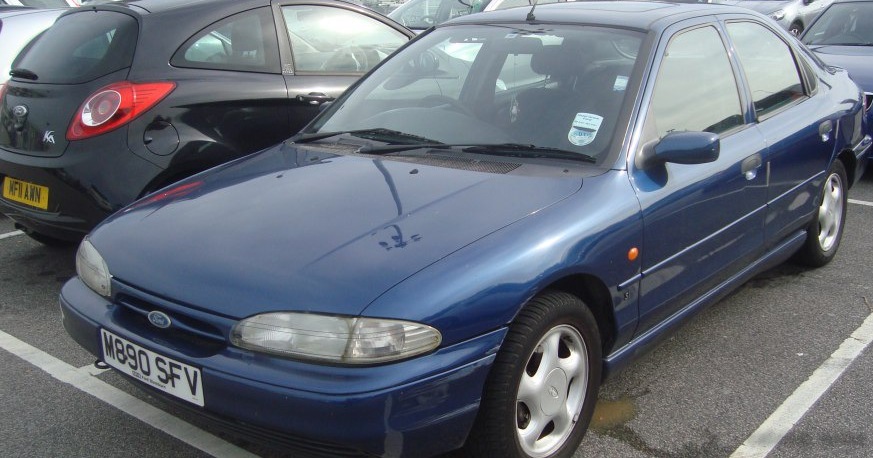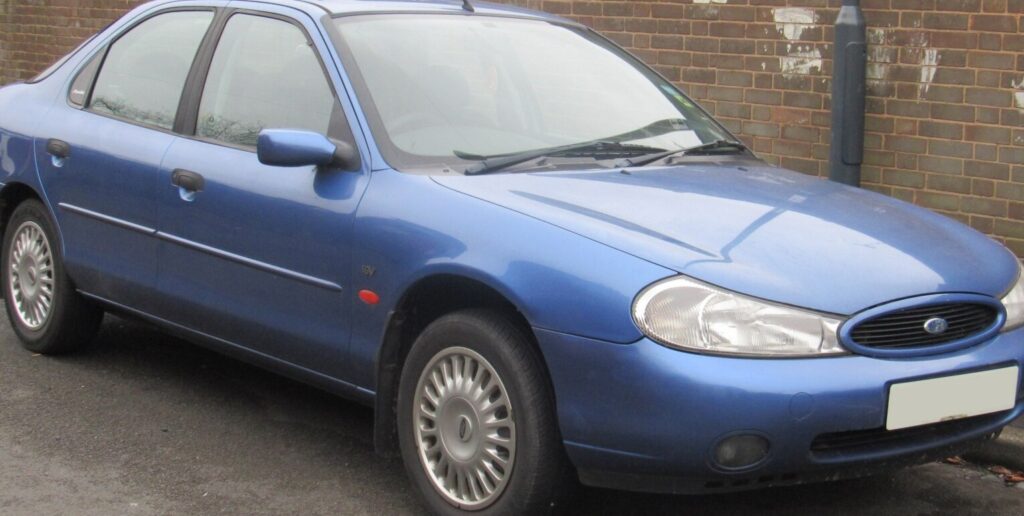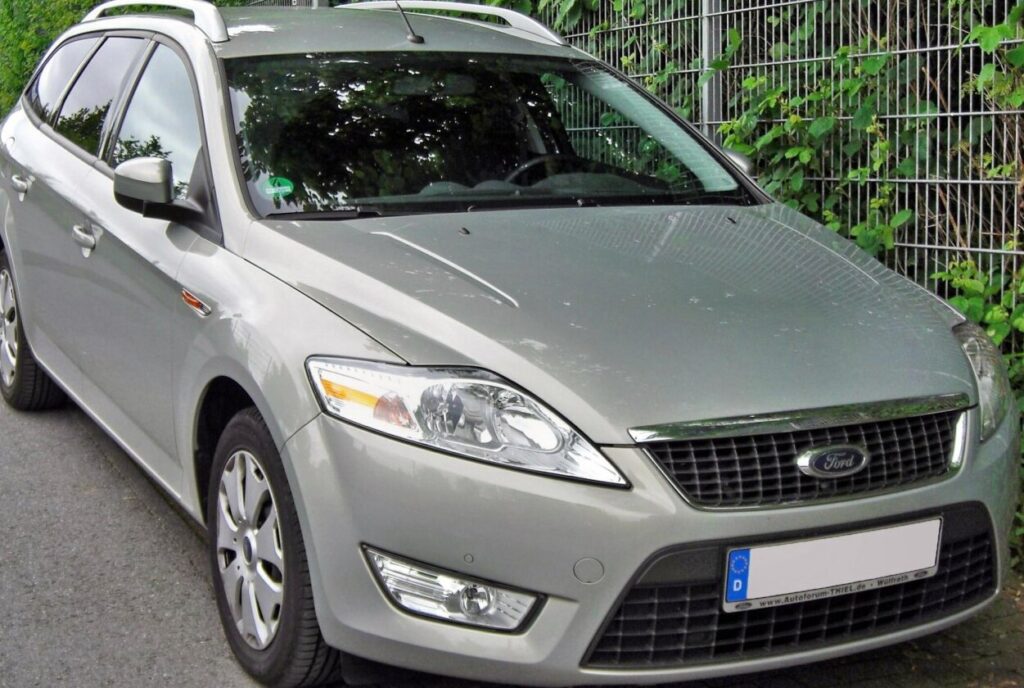
The Ford Mondeo III Wagon 2.0 TDCi, producing 140 horsepower, was a significant variant within the third-generation Mondeo (Mk3) lineup, manufactured between 2007 and 2010. Positioned as a practical and efficient option, it catered to buyers seeking a spacious estate car with reasonable performance and fuel economy. This model played a key role in Ford’s European strategy, offering a compelling alternative to rivals like the Volkswagen Passat Wagon and Opel/Vauxhall Vectra Estate. The Mondeo Mk3, built on the Ford EUCD platform, aimed to elevate Ford’s image with improved build quality and a more sophisticated driving experience.
Technical Specifications
| Brand | Ford |
| Model | Mondeo |
| Generation | Mondeo III Wagon |
| Type (Engine) | 2.0 TDCi (140 Hp) |
| Start of production | 2007 |
| End of production | 2010 |
| Powertrain Architecture | Internal Combustion engine |
| Body type | Station wagon (estate) |
| Seats | 5 |
| Doors | 5 |
| Fuel consumption (urban) | 7.6 l/100 km (30.9 US mpg, 37.2 UK mpg, 13.2 km/l) |
| Fuel consumption (extra urban) | 4.9 l/100 km (48 US mpg, 57.6 UK mpg, 20.4 km/l) |
| Fuel consumption (combined) | 5.9 l/100 km (39.9 US mpg, 47.9 UK mpg, 16.9 km/l) |
| Fuel Type | Diesel |
| Acceleration 0 – 100 km/h | 9.5 sec |
| Acceleration 0 – 62 mph | 9.5 sec |
| Acceleration 0 – 60 mph | 9 sec |
| Maximum speed | 210 km/h (130.49 mph) |
| Emission standard | Euro 4 |
| Weight-to-power ratio | 10.6 kg/Hp, 94.5 Hp/tonne |
| Weight-to-torque ratio | 4.6 kg/Nm, 216.1 Nm/tonne |
| Power | 140 Hp @ 4000 rpm |
| Power per litre | 70.1 Hp/l |
| Torque | 320 Nm @ 1750 rpm (236.02 lb.-ft. @ 1750 rpm) |
| Engine layout | Front, Transverse |
| Engine Model/Code | QXBA |
| Engine displacement | 1997 cm3 (121.86 cu. in.) |
| Number of cylinders | 4 |
| Engine configuration | Inline |
| Cylinder Bore | 85 mm (3.35 in.) |
| Piston Stroke | 88 mm (3.46 in.) |
| Compression ratio | 17.9:1 |
| Number of valves per cylinder | 4 |
| Fuel injection system | Diesel Commonrail |
| Engine aspiration | Turbocharger, Intercooler |
| Engine oil capacity | 5.5 l (5.81 US qt | 4.84 UK qt) |
| Coolant capacity | 8.1 l (8.56 US qt | 7.13 UK qt) |
| Kerb Weight | 1481 kg (3265.05 lbs.) |
| Max. weight | 2170 kg (4784.03 lbs.) |
| Max load | 689 kg (1518.98 lbs.) |
| Trunk (boot) space – minimum | 494 l (17.45 cu. ft.) |
| Trunk (boot) space – maximum | 1745 l (61.62 cu. ft.) |
| Fuel tank capacity | 70 l (18.49 US gal | 15.4 UK gal) |
| Length | 4844 mm (190.71 in.) |
| Width | 1886 mm (74.25 in.) |
| Height | 1500 mm (59.06 in.) |
| Wheelbase | 2850 mm (112.2 in.) |
| Front track | 1522 mm (59.92 in.) |
| Rear track | 1537 mm (60.51 in.) |
| Minimum turning circle | 11.1 m (36.42 ft.) |
| Drivetrain Architecture | Front wheel drive |
| Number of gears | 6 gears, manual transmission |
| Front suspension | Coil spring |
| Rear suspension | Coil spring |
| Front brakes | Ventilated discs |
| Rear brakes | Disc |
| Assisting systems | ABS (Anti-lock braking system) |
| Steering type | Steering rack and pinion |
| Tires size | 205/55 R16 |
Powertrain & Engine Architecture
The heart of the Mondeo III Wagon 2.0 TDCi was the QXBA engine, a four-cylinder diesel utilizing common rail direct injection. This engine was part of Ford’s Duratorq family, known for its robustness and relatively good fuel efficiency. The 1997cc engine featured a single overhead camshaft (SOHC) valvetrain with four valves per cylinder. A turbocharger with an intercooler was employed to boost power output, delivering 140 horsepower at 4000 rpm and a substantial 320 Nm (236 lb-ft) of torque at just 1750 rpm. The six-speed manual transmission was the standard offering, providing a good balance between fuel economy and drivability. The engine’s design prioritized low-end torque, making it well-suited for hauling loads and providing effortless cruising.
Driving Characteristics
The 2.0 TDCi 140 hp engine in the Mondeo Wagon offered a comfortable and capable driving experience. Acceleration to 60 mph took around 9.5 seconds, which was adequate for everyday driving but didn’t offer particularly sporty performance. The strength of this engine lay in its mid-range torque, allowing for easy overtaking and relaxed cruising on highways. Compared to the higher-output 2.2-liter TDCi variants, the 2.0 TDCi felt less strained at higher speeds, but lacked the outright punch of its larger sibling. The six-speed manual transmission was well-matched to the engine, providing smooth gear changes and helping to maximize fuel efficiency. The wagon’s suspension provided a comfortable ride, absorbing bumps and imperfections in the road well, although it wasn’t as dynamically engaging as some of its rivals.
Equipment & Trim Levels
The 2.0 TDCi variant of the Mondeo Wagon typically came equipped with a respectable level of standard features. These included air conditioning, power windows, power mirrors, a CD player, and ABS brakes. Higher trim levels, such as Titanium, added features like alloy wheels, automatic climate control, a trip computer, and upgraded interior trim. Optional extras included a sunroof, leather upholstery, and a premium sound system. The interior design was functional and well-built, with a focus on practicality and ergonomics. The wagon’s spacious interior and large boot (494-1745 liters) made it an ideal choice for families and those needing to transport large items.
Chassis & Braking
The Mondeo III Wagon featured a MacPherson strut front suspension and a multi-link rear suspension, providing a good balance of ride comfort and handling. The front brakes were ventilated discs, while the rear brakes were solid discs. ABS (Anti-lock Braking System) was standard, enhancing safety and stability during braking. The steering was a rack and pinion system, offering precise and responsive control. The chassis was designed to provide a stable and predictable driving experience, even when fully loaded. The suspension setup was tuned to prioritize comfort, but still offered reasonable body control in corners.
Market Reception & Comparison
The Ford Mondeo III Wagon 2.0 TDCi was generally well-received by automotive critics. It was praised for its spacious interior, comfortable ride, and fuel efficiency. However, some critics noted that the engine lacked the refinement and performance of some of its rivals. Compared to the 2.2-liter TDCi variants, the 2.0 TDCi offered better fuel economy but less power. It also represented a more affordable entry point into the Mondeo Wagon range. In terms of reliability, the Duratorq engine proved to be generally robust, although regular maintenance was essential to prevent issues with the fuel injection system and turbocharger.
Legacy
The Ford Mondeo III Wagon 2.0 TDCi remains a popular choice in the used car market today. Its combination of practicality, fuel efficiency, and affordability makes it an attractive option for buyers seeking a spacious and reliable estate car. While older examples may require some maintenance, the Duratorq engine is generally known for its longevity. The Mondeo III Wagon helped to solidify Ford’s reputation as a manufacturer of well-rounded and practical family cars, and the 2.0 TDCi variant played a significant role in its success.