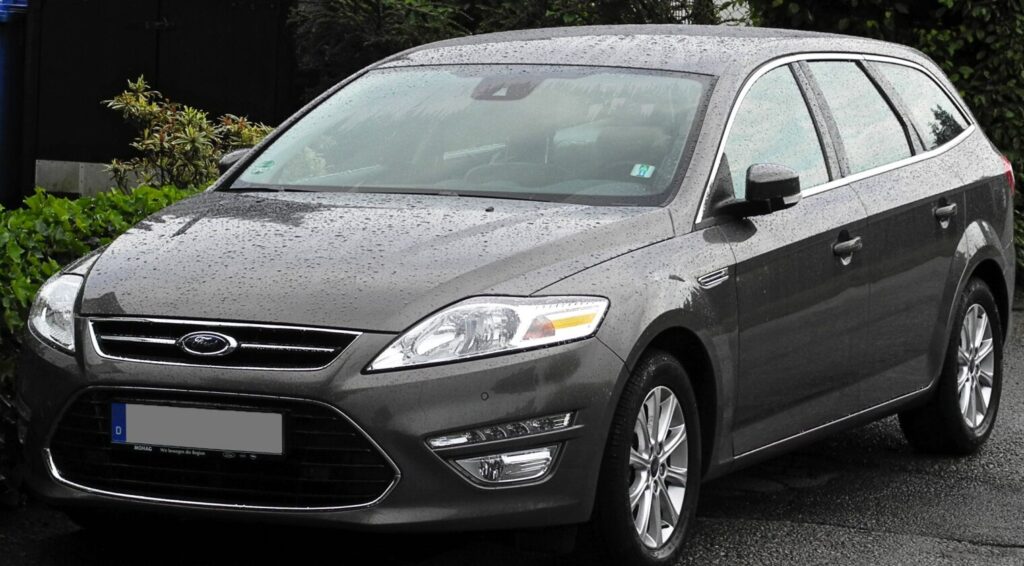
The Ford Mondeo III Wagon, specifically the facelifted version produced from 2010 to 2014, represented a significant evolution of Ford’s mid-size family car. Within the Mondeo III range (internally designated as the B5Y platform), the 2.2 TDCI 200 horsepower variant occupied a position as a premium offering, bridging the gap between the more economical engine options and the flagship petrol models. This station wagon (estate) body style, with its five doors and five-seat configuration, was designed to appeal to buyers seeking a blend of practicality, performance, and refinement. The 2010 facelift brought revised styling, improved interior materials, and updated technology, enhancing the Mondeo’s competitiveness in the European market.
2.2 TDCI Duratorq Powertrain & Engine Architecture
The heart of this Mondeo variant is the 2.2-liter Duratorq TDCi diesel engine, bearing the engine code KNBA. This engine is a four-cylinder, inline configuration, utilizing a common-rail direct fuel injection system. The Duratorq engine family was known for its robust construction and relatively straightforward maintenance. The 2.2-liter version featured a turbocharger with an intercooler, boosting power output to 200 hp at 3500 rpm and a substantial 420 Nm (309.78 lb-ft) of torque available between 1750 and 3000 rpm. This torque curve provided strong acceleration and effortless cruising. The engine’s bore and stroke measured 85 mm (3.35 in) and 96 mm (3.78 in) respectively, resulting in a displacement of 2179 cm³ (132.97 cu. in). A compression ratio of 15.8:1 contributed to the engine’s efficiency and power. The engine also incorporated a diesel particulate filter (DPF) to meet stringent Euro 5 emission standards.
While a six-speed manual transmission was standard on this model, an optional six-speed automatic transmission was also available, though less common. The manual gearbox provided precise shifts and allowed drivers to fully exploit the engine’s power. The automatic transmission, while offering convenience, was sometimes criticized for being slightly less responsive than the manual counterpart. The engine is transversely mounted in the front of the vehicle, driving the front wheels.
Fuel Injection and Valvetrain
The 2.2 TDCI engine utilizes a high-pressure common rail fuel injection system, delivering fuel directly into the cylinders at extremely high pressures. This system, supplied by Bosch, allowed for precise control over fuel delivery, optimizing combustion efficiency and reducing emissions. The engine features four valves per cylinder (16 valves total), operated by a double overhead camshaft (DOHC) configuration. This valvetrain design enhances volumetric efficiency and contributes to the engine’s broad torque curve.
Driving Characteristics
The 2.2 TDCI 200 hp Mondeo Wagon offered a compelling driving experience. The substantial torque output meant strong acceleration in everyday driving situations, making overtaking maneuvers effortless. The 0-100 km/h (0-62 mph) sprint took approximately 8.3 seconds, while 0-60 mph was achieved in around 7.9 seconds. Top speed was electronically limited to 225 km/h (139.81 mph). Compared to lower-powered Mondeo variants, such as the 1.6 TDCi, the 2.2 TDCI provided a significantly more responsive and engaging driving experience. While not as sporty as the petrol-powered Mondeo models, it offered a good balance between performance and fuel economy. The six-speed manual transmission allowed for precise gear selection, maximizing the engine’s potential. The automatic transmission, when equipped, provided smooth shifts but could sometimes feel hesitant during quick acceleration.
Equipment & Trim Levels
The 2.2 TDCI Mondeo Wagon typically came equipped with a generous level of standard features. These included air conditioning, power windows, power mirrors, a CD/radio system, and alloy wheels. Higher trim levels, such as Titanium, added features like leather upholstery, heated front seats, a premium sound system, automatic climate control, and parking sensors. Optional extras included a sunroof, satellite navigation, and advanced safety features like adaptive cruise control and lane departure warning. Interior upholstery was typically cloth on lower trims, with leather options available on higher-spec models. The dashboard layout was functional and well-designed, with clear instrumentation and intuitive controls.
Chassis & Braking
The Mondeo III Wagon featured an independent suspension system on both the front and rear axles. The front suspension utilized a McPherson strut design with coil springs and an anti-roll bar, while the rear suspension employed a multi-link setup, also with a stabilizer bar. This suspension configuration provided a comfortable ride and good handling characteristics. The braking system consisted of ventilated discs on the front wheels and solid discs on the rear. Anti-lock Braking System (ABS) was standard, enhancing braking performance and stability. The steering system was a rack and pinion type, providing precise and responsive steering feel. Standard tire size was 205/55 R16, mounted on 6.5J x 16 inch alloy wheels.
Market Reception & Comparison
The Ford Mondeo III Wagon 2.2 TDCI 200 hp received generally positive reviews from automotive critics. It was praised for its strong performance, comfortable ride, spacious interior, and practical estate car body style. Fuel economy was also a strong point, with combined fuel consumption figures of around 6 l/100 km (39.2 US mpg, 47.1 UK mpg). Compared to other diesel-powered estate cars in its class, such as the Volkswagen Passat Variant and the Opel/Vauxhall Insignia Sports Tourer, the Mondeo offered a competitive package in terms of price, performance, and equipment. However, some critics noted that the interior materials, while improved in the facelifted model, still didn’t quite match the quality of some of its rivals. Reliability was generally good, although some owners reported issues with the DPF system, a common problem with modern diesel engines.
Technical Specifications
| Brand | Ford |
| Model | Mondeo |
| Generation | Mondeo III Wagon (facelift 2010) |
| Type (Engine) | 2.2 TDCI (200 Hp) Duratorq |
| Start of production | 2010 |
| End of production | 2014 |
| Fuel consumption (urban) | 7.8 l/100 km (30.2 US mpg, 36.2 UK mpg) |
| Fuel consumption (extra urban) | 5 l/100 km (47 US mpg, 56.5 UK mpg) |
| Fuel consumption (combined) | 6 l/100 km (39.2 US mpg, 47.1 UK mpg) |
| CO2 emissions | 159 g/km |
| Fuel Type | Diesel |
| Acceleration 0-100 km/h | 8.3 sec |
| Acceleration 0-62 mph | 8.3 sec |
| Acceleration 0-60 mph | 7.9 sec |
| Maximum speed | 225 km/h (139.81 mph) |
| Emission standard | Euro 5 |
| Power | 200 Hp @ 3500 rpm |
| Torque | 420 Nm @ 1750-3000 rpm (309.78 lb.-ft.) |
| Engine layout | Front, Transverse |
| Engine displacement | 2179 cm3 (132.97 cu. in.) |
| Number of cylinders | 4 |
| Engine configuration | Inline |
| Cylinder Bore | 85 mm (3.35 in.) |
| Piston Stroke | 96 mm (3.78 in.) |
| Compression ratio | 15.8:1 |
| Kerb Weight | 1615 kg (3560.47 lbs.) |
| Max. weight | 2320 kg (5114.72 lbs.) |
| Trunk (boot) space – minimum | 489 l (17.27 cu. ft.) |
| Trunk (boot) space – maximum | 1680 l (59.33 cu. ft.) |
| Length | 4837 mm (190.43 in.) |
| Width | 1886 mm (74.25 in.) |
| Height | 1512 mm (59.53 in.) |
Legacy
The Ford Mondeo III Wagon 2.2 TDCI 200 hp remains a popular choice in the used car market. The Duratorq engine, while requiring regular maintenance (particularly regarding the DPF), is generally considered to be reliable. These models offer a good balance of practicality, performance, and affordability. The availability of spare parts is good, and the Mondeo’s relatively simple mechanical design makes it accessible to independent mechanics. While newer Mondeo generations have been introduced, the Mk3, particularly this 2.2 TDCI variant, continues to be appreciated by those seeking a spacious, comfortable, and capable family estate car.