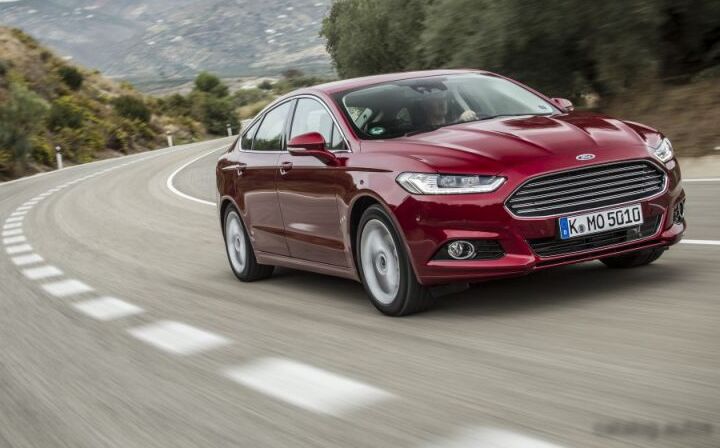
The Ford Mondeo IV Hatchback 2.0 EcoBoost (203 hp) Automatic, produced between 2014 and 2018, represented a mid-to-upper trim level within the fourth generation Mondeo (Mk4) range. Positioned above the lower-powered EcoBoost variants and the diesel options, it offered a blend of performance and comfort aimed at drivers seeking a more engaging experience without sacrificing practicality. This model was part of the larger 1HX0/A3 platform family, sharing its core architecture with other Ford and potentially partner-brand vehicles. The hatchback body style provided increased versatility compared to the traditional sedan, appealing to a broader range of buyers.
Powertrain & Engine Architecture
At the heart of the Mondeo IV 2.0 EcoBoost Automatic lies the Ford TNCD or TNCF engine code, a 1.999-liter (121.99 cubic inches) inline-four cylinder gasoline engine. This engine is a key member of Ford’s EcoBoost family, characterized by its combination of direct fuel injection, turbocharging, and variable valve timing. Direct injection, operating at pressures up to 200 bar, ensures precise fuel delivery for optimized combustion and efficiency. The engine utilizes a twin-scroll turbocharger with an intercooler to minimize turbo lag and maximize boost across the rev range. The valvetrain employs a Double Overhead Camshaft (DOHC) configuration with four valves per cylinder, contributing to improved breathing and power output.
The 2.0 EcoBoost engine produces 203 horsepower at 5300 rpm and 345 Nm (254.46 lb-ft) of torque between 2700 and 3500 rpm. This power is delivered to the front wheels via a six-speed automatic transmission. This transmission, a conventional torque-converter automatic, was chosen for its smoothness and ease of use, catering to drivers prioritizing comfort over ultimate performance. While not a dual-clutch transmission, it featured selectable shift modes, allowing for some degree of driver control.
Fuel Injection and Valvetrain Details
The direct injection system is crucial to the engine’s performance. Unlike port fuel injection, direct injection sprays fuel directly into the combustion chamber, allowing for more precise control over the air-fuel mixture and enabling higher compression ratios. This contributes to both increased power and improved fuel economy. The DOHC valvetrain, coupled with variable valve timing on both intake and exhaust camshafts, further optimizes engine performance by adjusting valve timing to suit different engine speeds and loads. This technology enhances low-end torque and high-end horsepower.
Driving Characteristics
The 203 hp EcoBoost engine paired with the six-speed automatic transmission provided a noticeably more spirited driving experience compared to the lower-powered EcoBoost or diesel variants of the Mondeo IV. Acceleration from 0 to 100 km/h (0-62 mph) took approximately 8.7 seconds, and 0-60 mph was achieved in around 8.3 seconds. While not a sports car, the combination offered ample power for overtaking and comfortable highway cruising. The automatic transmission generally shifted smoothly, although it could occasionally feel hesitant during quick downshifts. The gear ratios were tuned for a balance between acceleration and fuel efficiency, with a relatively tall sixth gear for relaxed motorway driving.
Compared to the manual transmission versions of the 2.0 EcoBoost, the automatic offered less driver engagement but greater convenience. The manual transmission allowed for more precise control over gear selection, potentially extracting slightly more performance, but the automatic’s ease of use made it a more appealing option for many drivers. The 2.0 EcoBoost also significantly outperformed the lower-powered 1.6 EcoBoost engines, offering a substantial increase in both horsepower and torque.
Equipment & Trim Levels
The 2.0 EcoBoost Automatic trim typically included a generous level of standard equipment. Features commonly found on this variant included air conditioning, power windows and mirrors, a touchscreen infotainment system with Bluetooth connectivity, alloy wheels (typically 17 or 18 inch), and a comprehensive suite of safety features including ABS, Electronic Stability Control (ESC), and multiple airbags. Interior upholstery was generally cloth, although leather options were available as upgrades. Higher sub-trims within the 2.0 EcoBoost range often added features such as heated front seats, a sunroof, and a premium sound system.
Optional extras frequently included navigation systems, parking sensors, a rear-view camera, and advanced driver-assistance systems (ADAS) like lane departure warning and adaptive cruise control. The dashboard configuration was generally consistent across the Mondeo IV range, featuring a modern and functional design. Trim levels like Titanium and Titanium X offered progressively more luxurious appointments and technology.
Chassis & Braking
The Mondeo IV Hatchback 2.0 EcoBoost Automatic utilized an independent McPherson strut front suspension with a coil spring and anti-roll bar. The rear suspension employed an independent multi-link setup, also with a stabilizer bar. This suspension configuration provided a good balance between ride comfort and handling. The 2.0 EcoBoost models generally featured slightly stiffer suspension components compared to the lower-powered variants to better manage the increased power and torque.
Braking duties were handled by ventilated discs at the front and solid discs at the rear. The braking system was equipped with ABS (Anti-lock Braking System) and Electronic Brakeforce Distribution (EBD) to enhance safety and stability during braking. Tire sizes varied depending on the wheel size, ranging from 215/60 R16 to 235/40 R19.
Market Reception & Comparison
The Ford Mondeo IV 2.0 EcoBoost Automatic was generally well-received by automotive critics. It was praised for its strong performance, comfortable ride, and spacious interior. Fuel economy was considered reasonable for a vehicle of its size and performance, averaging around 7.3 l/100 km (32.2 US mpg) in combined driving. However, some reviewers noted that the automatic transmission could occasionally feel sluggish, and the ride could become firm on rough road surfaces.
Compared to other trims in the Mondeo lineup, the 2.0 EcoBoost Automatic offered a significant performance advantage over the 1.6 EcoBoost and diesel models. It provided a more engaging driving experience while still maintaining a good level of fuel efficiency. In terms of reliability, the 2.0 EcoBoost engine was generally considered to be reasonably reliable, although some owners reported issues with the timing chain and fuel injectors. The automatic transmission also proved to be generally durable, but regular maintenance was essential.
Technical Specifications
| Brand | Ford |
| Model | Mondeo |
| Generation | Mondeo IV Hatchback |
| Type (Engine) | 2.0 EcoBoost (203 Hp) Automatic |
| Start of production | 2014 |
| End of production | 2018 |
| Fuel consumption (urban) | 10.2 l/100 km (23.1 US mpg) |
| Fuel consumption (extra urban) | 5.6 l/100 km (42 US mpg) |
| Fuel consumption (combined) | 7.3 l/100 km (32.2 US mpg) |
| CO2 emissions | 169 g/km |
| Fuel Type | Petrol (Gasoline) |
| Acceleration 0 – 100 km/h | 8.7 sec |
| Acceleration 0 – 62 mph | 8.7 sec |
| Maximum speed | 232 km/h (144.16 mph) |
| Engine Displacement | 1999 cm3 (121.99 cu. in.) |
| Power | 203 Hp @ 5300 rpm |
| Torque | 345 Nm @ 2700-3500 rpm (254.46 lb.-ft.) |
| Engine Layout | Front, Transverse |
| Number of cylinders | 4 |
| Compression ratio | 10:1 |
| Fuel injection system | Direct injection |
| Engine oil capacity | 5.4 l (5.71 US qt | 4.75 UK qt) |
| Kerb Weight | 1564 kg (3448.03 lbs.) |
| Max. weight | 2230 kg (4916.31 lbs.) |
| Trunk (boot) space – minimum | 458 l (16.17 cu. ft.) |
| Trunk (boot) space – maximum | 1356 l (47.89 cu. ft.) |
| Fuel tank capacity | 62.5 l (16.51 US gal | 13.75 UK gal) |
| Length | 4871 mm (191.77 in.) |
| Width | 1852 mm (72.91 in.) |
| Height | 1482 mm (58.35 in.) |
| Number of gears | 6 |
| Gearbox type | Automatic transmission |
Legacy
The 2.0 EcoBoost engine, in both manual and automatic forms, proved to be a popular choice for Mondeo IV buyers. While not without its potential issues (such as timing chain wear), the engine generally offered a good balance of performance, efficiency, and reliability. On the used car market, Mondeo IV 2.0 EcoBoost Automatic models tend to command a slightly higher price than the lower-powered variants. Regular maintenance, including oil changes and timing chain inspections, is crucial for ensuring the long-term health of this powertrain. The combination of a spacious interior, comfortable ride, and strong performance continues to make the Mondeo IV 2.0 EcoBoost Automatic a viable option for buyers seeking a practical and enjoyable family hatchback.