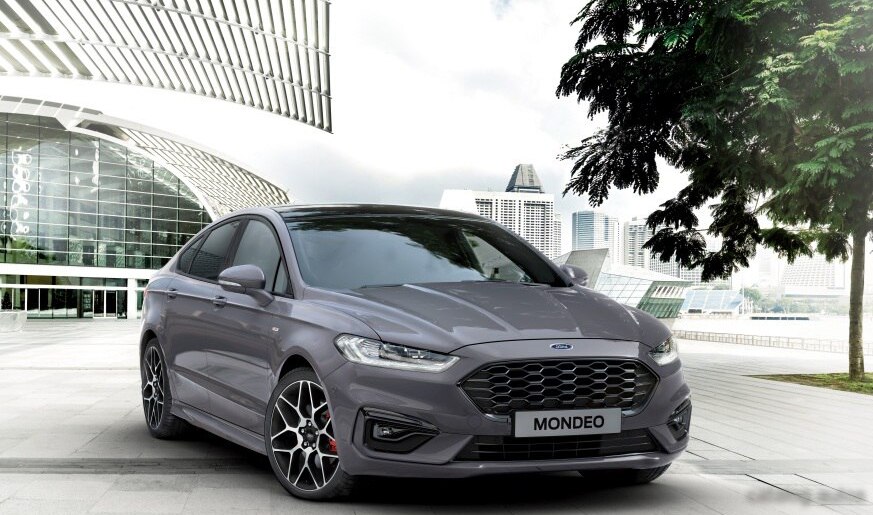
The Ford Mondeo IV Hatchback, specifically the 1.5 EcoBoost variant producing 165 horsepower, represented a key offering in Ford of Europe’s lineup from February 2019 until its discontinuation in September 2019. This model was part of the fourth generation of the Mondeo (Mk4), which debuted in 2007 and received a significant facelift in 2019. The 1.5 EcoBoost 165 hp model occupied a mid-range position within the Mondeo Hatchback range, offering a balance between fuel efficiency, performance, and affordability. It was positioned above the lower-powered 1.0 EcoBoost models and below the higher-performance 2.0-liter EcoBoost and diesel options.
1.5 EcoBoost Engine and Transmission
The heart of this Mondeo variant is the Ford 1.5 EcoBoost inline-four cylinder gasoline engine. This engine, utilizing Ford’s EcoBoost technology, is characterized by direct fuel injection and a single turbocharger with an intercooler. Engine codes for this specific engine included UNCA, UNCB, UNCE, UNCF, and UNCM, depending on the specific calibration and market. The 1.5 EcoBoost engine delivers a peak power output of 165 hp at 5500 rpm and 242 Nm (178.49 lb-ft) of torque available from 1600 to 4000 rpm. This broad torque curve aimed to provide responsive performance in everyday driving situations.
Unlike some Mondeo variants offered with a manual transmission, the 1.5 EcoBoost 165 hp model was primarily paired with a six-speed automatic transmission. This automatic transmission was chosen to appeal to buyers prioritizing comfort and ease of use. The transmission’s gear ratios were tuned to balance acceleration with fuel economy, with a focus on providing smooth shifts during normal driving conditions. While not a performance-oriented transmission, it offered a ‘Sport’ mode for more aggressive shifting when desired.
Powertrain Architecture Details
The engine is transversely mounted at the front of the vehicle, driving the front wheels. The direct injection system precisely meters fuel into the cylinders, optimizing combustion efficiency and reducing emissions. The turbocharger boosts intake air pressure, increasing power output without significantly increasing engine displacement. The engine’s oil capacity is 4.1 liters (4.33 US quarts / 3.61 UK quarts), and it requires coolant totaling 10.5 liters (11.1 US quarts / 9.24 UK quarts). The engine meets Euro 6d-Temp emission standards, reflecting Ford’s commitment to reducing environmental impact.
Driving Characteristics
The 1.5 EcoBoost 165 hp Mondeo Hatchback offered a comfortable and refined driving experience. Acceleration from 0 to 100 km/h (0-62 mph) took approximately 10.3 seconds, while 0-60 mph was achieved in around 9.8 seconds. While not exceptionally quick, this performance was adequate for most daily driving scenarios. The engine’s torque delivery provided sufficient power for overtaking maneuvers and maintaining highway speeds. The automatic transmission contributed to a relaxed driving experience, particularly in urban traffic. Compared to the more powerful 2.0-liter EcoBoost models, the 1.5 EcoBoost offered less outright performance, but it compensated with improved fuel economy.
The six-speed automatic transmission’s gear ratios were optimized for fuel efficiency, with taller gearing in higher gears to reduce engine speed at cruising speeds. This contributed to combined fuel consumption figures of 6.3-6.6 l/100 km (37.3-35.6 US mpg / 44.8-42.8 UK mpg). The steering was light and precise, making the Mondeo easy to maneuver in tight spaces. Overall, the driving experience was geared towards comfort and practicality rather than outright sportiness.
Equipment and Trim Levels
The 1.5 EcoBoost 165 hp Mondeo Hatchback typically came equipped with a reasonable level of standard features. These included air conditioning, power windows, power mirrors, a basic audio system with Bluetooth connectivity, and alloy wheels. Higher trim levels, such as Titanium and ST-Line, added features like a larger touchscreen infotainment system with navigation, leather upholstery, heated front seats, a rear-view camera, and advanced driver-assistance systems (ADAS) such as lane-keeping assist and adaptive cruise control. Interior upholstery was typically cloth on lower trims, with leather options available on higher-spec models. The dashboard layout was consistent across the range, with a focus on ergonomics and ease of use.
Chassis and Braking
The Mondeo IV Hatchback utilized a front-wheel-drive chassis with independent suspension at the front and a multi-link suspension at the rear. This suspension setup provided a comfortable ride quality and good handling characteristics. The front brakes were typically ventilated discs, while the rear brakes were solid discs. Anti-lock Braking System (ABS) was standard equipment. Steering was provided by an electric power steering system, offering a light and responsive feel. Tire sizes varied depending on the trim level, ranging from 215/60 R16 to 235/50 R17 and 235/45 R18. Wheel rim sizes corresponded to the tire sizes, with 6.5J x 16, 7.5J x 17, and 8J x 18 inch options available.
Market Reception and Comparison
The 1.5 EcoBoost 165 hp Mondeo Hatchback was generally well-received by automotive critics as a practical and fuel-efficient family car. It was praised for its comfortable ride, spacious interior, and reasonable performance. However, some critics noted that the engine lacked the punch of the larger 2.0-liter EcoBoost models. In terms of fuel economy, the 1.5 EcoBoost offered a significant improvement over the more powerful engines, making it an attractive option for buyers prioritizing running costs. Compared to diesel-powered Mondeos, the 1.5 EcoBoost offered a lower initial purchase price but potentially higher fuel costs depending on driving patterns. Reliability reports generally indicated good reliability for the 1.5 EcoBoost engine and automatic transmission, although regular maintenance was essential.
Technical Specifications
| Brand | Ford |
| Model | Mondeo |
| Generation | Mondeo IV Hatchback (facelift 2019) |
| Type (Engine) | 1.5 EcoBoost (165 Hp) |
| Start of production | February, 2019 |
| End of production | September, 2019 |
| Fuel consumption (urban) | 8.0-8.3 l/100 km (29.4 – 28.3 US mpg) |
| Fuel consumption (extra urban) | 5.3-5.6 l/100 km (44.4 – 42 US mpg) |
| Fuel consumption (combined) | 6.3-6.6 l/100 km (37.3 – 35.6 US mpg) |
| CO2 emissions | 144-150 g/km |
| Fuel Type | Petrol (Gasoline) |
| Acceleration 0 – 100 km/h | 10.3 sec |
| Acceleration 0 – 62 mph | 10.3 sec |
| Acceleration 0 – 60 mph | 9.8 sec |
| Maximum speed | 214 km/h (132.97 mph) |
| Emission standard | Euro 6d-Temp |
| Weight-to-power ratio | 9.6 kg/Hp |
| Weight-to-torque ratio | 6.6 kg/Nm |
| Power | 165 Hp @ 5500 rpm |
| Torque | 242 Nm @ 1600-4000 rpm (178.49 lb.-ft. @ 1600-4000 rpm) |
| Engine layout | Front, Transverse |
| Engine Model/Code | UNCA, UNCB, UNCE, UNCF, UNCM |
| Engine configuration | Inline |
| Fuel injection system | Direct injection |
| Engine aspiration | Turbocharger, Intercooler |
| Engine oil capacity | 4.1 l (4.33 US qt | 3.61 UK qt) |
| Coolant | 10.5 l (11.1 US qt | 9.24 UK qt) |
| Kerb Weight | 1586 kg (3496.53 lbs.) |
| Max. weight | 2160 kg (4761.98 lbs.) |
| Max load | 574 kg (1265.45 lbs.) |
| Trunk (boot) space – minimum | 645 l (22.78 cu. ft.) |
| Trunk (boot) space – maximum | 1437 l (50.75 cu. ft.) |
| Fuel tank capacity | 60 l (15.85 US gal | 13.2 UK gal) |
| Length | 4871 mm (191.77 in.) |
| Width with mirrors folded | 1911 mm (75.24 in.) |
| Height | 1482 mm (58.35 in.) |
| Drive wheel | Front wheel drive |
| Number of gears and type of gearbox | 6 gears, automatic transmission |
Legacy
The 1.5 EcoBoost 165 hp engine and six-speed automatic transmission combination proved to be a reliable and durable powertrain in the Mondeo IV Hatchback. While the Mondeo itself has been discontinued in many markets, including Europe, examples of this variant remain relatively common on the used car market. These vehicles are generally considered to be a good value for money, offering a comfortable and practical driving experience with reasonable fuel economy. Regular maintenance, including oil changes and timing belt replacements (where applicable), is crucial to ensure the long-term reliability of this powertrain. The 1.5 EcoBoost engine has also been used in other Ford models, further establishing its reputation as a dependable and efficient engine.