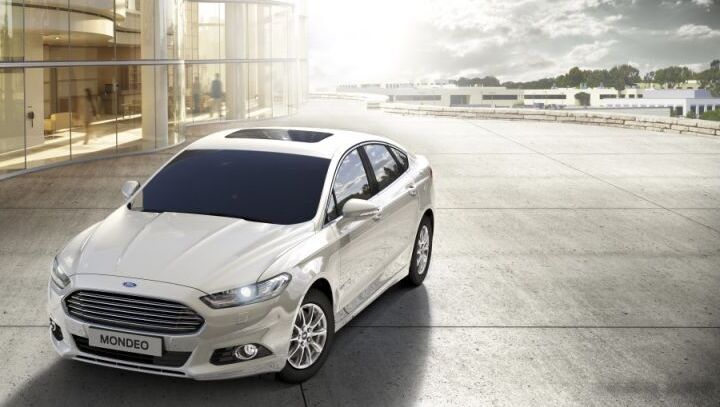
The Ford Mondeo IV Sedan 1.6 TDCi (115 hp) was a mainstream offering within the fourth generation of the globally successful Mondeo line, produced between 2014 and 2015. Positioned as an economy-focused variant, it aimed to provide a balance of practicality, fuel efficiency, and affordability within the Mondeo range. This model was part of the larger Mondeo IV program (code-named CD348), which represented a significant update to Ford’s mid-size family car, building upon the success of its predecessors and competing directly with vehicles like the Volkswagen Passat, Opel/Vauxhall Insignia, and Toyota Camry. The 1.6 TDCi variant specifically targeted buyers prioritizing low running costs and reasonable comfort over outright performance.
Powertrain & Engine Architecture
The heart of the Mondeo 1.6 TDCi was the Ford Duratorq TDCi engine, specifically the U3CA/NGCA engine code. This was a 1.6-liter inline-four cylinder diesel engine utilizing common-rail direct fuel injection. The engine featured a turbocharger with an intercooler to enhance power and efficiency. Peak power output was rated at 115 horsepower (86 kW) at 3600 rpm, and torque peaked at 270 Nm (199.14 lb-ft) between 1750 and 2000 rpm. The engine employed a double overhead camshaft (DOHC) valvetrain with two valves per cylinder. Compression ratio was relatively high at 16:1, contributing to the engine’s thermal efficiency.
Unlike some higher-performance Mondeo variants that offered automatic transmission options, the 1.6 TDCi was primarily equipped with a six-speed manual transmission. This choice further emphasized the model’s focus on fuel economy. The transmission was a standard front-wheel-drive configuration, typical for vehicles in this segment. The gearbox ratios were tuned to maximize fuel efficiency and provide adequate acceleration for everyday driving conditions. The engine also incorporated a diesel particulate filter (DPF) to meet stringent Euro 5 emission standards.
Engine Specifications
The Duratorq engine was known for its relatively robust construction and decent reliability, although the DPF system could be a potential source of maintenance issues if the vehicle was primarily used for short trips. Engine oil capacity was 3.85 liters (4.07 US quarts / 3.39 UK quarts), and coolant capacity was 7.3 liters (7.71 US quarts / 6.42 UK quarts). Ford specified particular oil grades for this engine to ensure optimal performance and longevity.
Driving Characteristics
The Mondeo 1.6 TDCi offered a comfortable, if not particularly exciting, driving experience. Acceleration from 0 to 100 km/h (0-62 mph) took approximately 12.1 seconds, and 0-60 mph was achieved in around 11.5 seconds. Maximum speed was rated at 192 km/h (119.3 mph). The engine’s torque delivery was relatively flat, providing adequate pulling power for overtaking and highway cruising. However, it lacked the responsiveness of the higher-output engines available in the Mondeo range, such as the 2.0-liter TDCi or the gasoline EcoBoost variants.
The six-speed manual transmission was well-matched to the engine’s characteristics, offering smooth gear changes and allowing the driver to keep the engine within its optimal operating range. The gear ratios were spaced to prioritize fuel efficiency, meaning that the engine could feel somewhat strained when accelerating hard or climbing steep hills. Compared to automatic transmission equipped Mondeos, the 1.6 TDCi offered a more engaging driving experience, but required more driver involvement.
Equipment & Trim Levels
The 1.6 TDCi Mondeo typically came equipped with a reasonable level of standard features, reflecting its position as a mainstream model. Standard equipment generally included air conditioning, power windows, power mirrors, a basic audio system with USB connectivity, and alloy wheels (typically 16 or 17 inch). Safety features such as ABS (Anti-lock Braking System), electronic stability control, and multiple airbags were also standard. Interior upholstery was typically cloth, with a functional and durable design.
Optional extras available for the 1.6 TDCi included features like a more advanced audio system with navigation, leather upholstery, heated front seats, parking sensors, and automatic headlights and wipers. Higher trim levels, such as Zetec or Titanium, added more standard equipment and offered a wider range of optional extras. The dashboard configuration was generally consistent across the Mondeo IV range, featuring a clear and intuitive layout.
Chassis & Braking
The Mondeo 1.6 TDCi utilized an independent front suspension system based on a McPherson strut design, coupled with a multi-link independent rear suspension. This setup provided a good balance of ride comfort and handling. A stabilizer bar was fitted to both the front and rear axles to reduce body roll during cornering. The braking system consisted of ventilated discs on the front wheels and solid discs on the rear wheels. ABS was standard, providing enhanced braking performance and stability. The suspension tuning was generally softer than that of the higher-performance Mondeo variants, prioritizing comfort over sporty handling.
Market Reception & Comparison
The Ford Mondeo 1.6 TDCi was generally well-received by automotive critics as a practical and fuel-efficient family car. It was praised for its comfortable ride, spacious interior, and competitive fuel economy. Fuel consumption figures were typically around 4.2 l/100 km (56 US mpg / 67.3 UK mpg) on the combined cycle, and CO2 emissions were rated at 109 g/km. However, it was also criticized for its relatively modest performance and lack of driving excitement compared to some of its rivals.
Compared to other trims in the Mondeo lineup, the 1.6 TDCi offered the lowest running costs but also the least amount of power. The 2.0-liter TDCi variants provided significantly more performance, while the EcoBoost gasoline engines offered a more refined driving experience. In terms of reliability, the 1.6 TDCi engine was generally considered to be reasonably reliable, but the DPF system could be prone to issues if the vehicle was not regularly driven on longer journeys.
Technical Specifications
| Body Type | Sedan, 4 Doors, 5 Seats |
| Fuel Economy (Combined) | 4.2 l/100 km (56 US mpg, 67.3 UK mpg, 23.8 km/l) |
| CO2 Emissions | 109 g/km |
| Maximum Speed | 192 km/h (119.3 mph) |
| 0-100 km/h | 12.1 sec |
| 0-60 mph | 11.5 sec |
| Power | 115 Hp @ 3600 rpm |
| Torque | 270 Nm @ 1750-2000 rpm (199.14 lb.-ft.) |
| Engine Layout | Front, Transverse |
| Engine Displacement | 1560 cm3 (95.2 cu. in.) |
| Number of Cylinders | 4, Inline |
| Cylinder Bore | 75 mm (2.95 in.) |
| Piston Stroke | 88.3 mm (3.48 in.) |
| Compression Ratio | 16:1 |
| Fuel Injection System | Diesel Commonrail |
| Engine Aspiration | Turbocharger, Intercooler |
| Kerb Weight | 1493 kg (3291.5 lbs.) |
| Max. Weight | 2160 kg (4761.98 lbs.) |
| Trunk Space (Minimum) | 429 l (15.15 cu. ft.) |
| Fuel Tank Capacity | 62.5 l (16.51 US gal, 13.75 UK gal) |
| Length | 4871 mm (191.77 in.) |
| Width | 1852 mm (72.91 in.) |
| Height | 1482 mm (58.35 in.) |
| Wheelbase | 2850 mm (112.2 in.) |
| Gearbox | 6 gears, manual transmission |
Legacy
The Ford Mondeo IV 1.6 TDCi remains a relatively common sight on used car markets. Its reputation for fuel efficiency and practicality continues to appeal to budget-conscious buyers. However, potential buyers should be aware of the potential for DPF-related issues, particularly if the vehicle has been primarily used for short journeys. Regular servicing and maintenance are crucial to ensure the longevity of the engine and other components. While not the most exciting Mondeo variant, the 1.6 TDCi represents a sensible and economical choice for those seeking a reliable and spacious family car.