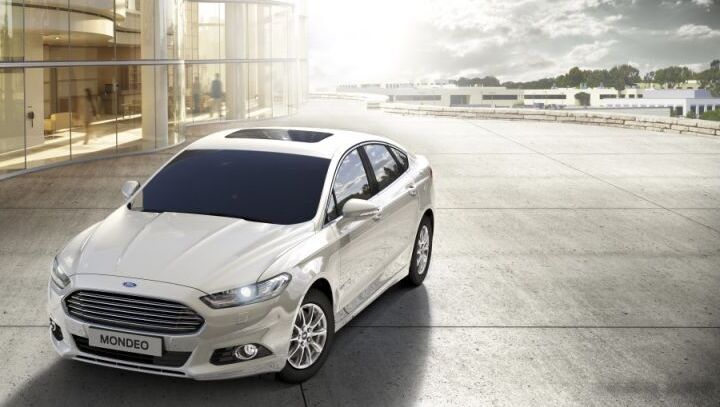
The Ford Mondeo IV Sedan 2.0 TDCi ECOnetic, produced between 2014 and 2018, represented a fuel-efficient and refined offering within the fourth generation of the Mondeo (Mk4) lineup. Positioned as a premium trim level, the ECOnetic variant focused on maximizing fuel economy through aerodynamic enhancements and optimized powertrain tuning. This model was part of the broader Mondeo IV range, which utilized the Ford CD2 platform, also known internally as the 1HX0 platform for the sedan body style. The 2.0 TDCi ECOnetic aimed to appeal to drivers prioritizing low running costs without sacrificing comfort or practicality.
Powertrain & Engine Architecture
The heart of the Mondeo IV Sedan 2.0 TDCi ECOnetic is the Ford T8CC engine, a 1997 cc (121.86 cu. in.) inline four-cylinder diesel engine. This engine falls under the Duratorq family, known for its robust construction and relatively straightforward maintenance. The T8CC features a common-rail direct fuel injection system, delivering fuel at extremely high pressure for optimized combustion. This system, supplied by Bosch, allowed for precise fuel metering and contributed significantly to the engine’s efficiency and reduced emissions. The engine utilizes a variable geometry turbocharger (VGT) with an intercooler, enhancing both low-end torque and peak power. The valvetrain employs a double overhead camshaft (DOHC) configuration with four valves per cylinder, maximizing volumetric efficiency.
The ECOnetic variant was exclusively offered with a six-speed manual transmission. This gearbox was chosen specifically to enhance fuel economy, offering precise gear selection and minimizing power loss. The transmission’s gear ratios were tuned to complement the engine’s torque curve, providing strong acceleration in lower gears and efficient cruising at highway speeds. The final drive ratio was optimized for fuel efficiency, contributing to the impressive combined fuel consumption figures.
Engine Specifications
Key engine specifications include a compression ratio of 16.7:1, a bore of 85 mm (3.35 in.), and a stroke of 88 mm (3.46 in.). The engine produces 180 horsepower (hp) at 3500 rpm and 400 Newton-meters (295.02 lb-ft) of torque between 2000 and 2500 rpm. The engine oil capacity is 6.1 liters (6.45 US qt | 5.37 UK qt), and the coolant capacity is 9 liters (9.51 US qt | 7.92 UK qt). The engine is equipped with a diesel particulate filter (DPF) to reduce particulate matter emissions, complying with Euro 6 emission standards.
Driving Characteristics
The Mondeo IV Sedan 2.0 TDCi ECOnetic offered a refined and comfortable driving experience. The 180 hp output, combined with the 400 Nm of torque, provided ample power for everyday driving and overtaking maneuvers. Acceleration from 0 to 100 km/h (0-62 mph) took approximately 8.4 seconds, while 0-60 mph was achieved in around 8 seconds. The maximum speed was electronically limited to 225 km/h (139.81 mph). The six-speed manual transmission allowed for precise control over the engine’s power delivery.
Compared to other Mondeo IV trims, such as those with the 2.0-liter gasoline engine, the 2.0 TDCi ECOnetic prioritized torque over outright horsepower. This resulted in stronger low-end and mid-range acceleration, making it well-suited for real-world driving conditions. While not as sporty as some of the higher-powered gasoline variants, the ECOnetic offered a more relaxed and efficient driving experience. The long gearing, designed for fuel economy, meant that the engine was rarely stressed at highway speeds.
Equipment & Trim Levels
The ECOnetic trim level of the Mondeo IV Sedan was generally well-equipped, focusing on comfort and technology. Standard features typically included air conditioning, power windows, power mirrors, a CD/MP3 stereo system, and alloy wheels. Higher-spec ECOnetic models often included features such as a touchscreen infotainment system with navigation, Bluetooth connectivity, automatic headlights and rain-sensing wipers, and parking sensors. Interior upholstery was typically cloth, although leather options were available as upgrades. The dashboard layout was consistent across the Mondeo IV range, featuring a clear and intuitive design. Optional extras included a panoramic sunroof, heated seats, and a premium sound system.
Chassis & Braking
The Mondeo IV Sedan 2.0 TDCi ECOnetic utilized an independent front suspension with McPherson struts, coil springs, and an anti-roll bar. The rear suspension employed an independent multi-link setup, also with coil springs and a stabilizer bar. This suspension configuration provided a comfortable ride and good handling characteristics. The front brakes were ventilated discs, while the rear brakes were solid discs. The car was equipped with an Anti-lock Braking System (ABS) as standard, enhancing safety during emergency braking. Steering was provided by a rack and pinion system, offering precise and responsive control. Standard tire sizes ranged from 215/60 R16 to 235/40 R19, depending on the wheel size and trim level.
Market Reception & Comparison
The Ford Mondeo IV Sedan 2.0 TDCi ECOnetic was generally well-received by automotive critics. It was praised for its fuel efficiency, comfortable ride, and spacious interior. The ECOnetic variant consistently achieved impressive fuel economy figures, with a combined consumption of 4.1 l/100 km (57.4 US mpg, 68.9 UK mpg). Compared to other Mondeo IV trims, the 2.0 TDCi ECOnetic offered the best fuel economy, making it an attractive option for drivers covering long distances. However, some critics noted that the engine could be slightly noisy compared to the gasoline variants. Reliability was generally good, with the Duratorq engine proving to be durable and dependable.
Compared to competitors such as the Volkswagen Passat and Opel/Vauxhall Insignia, the Mondeo IV Sedan 2.0 TDCi ECOnetic offered a compelling combination of fuel efficiency, practicality, and value for money.
Technical Specifications
| Brand | Ford |
| Model | Mondeo |
| Generation | Mondeo IV Sedan |
| Type (Engine) | 2.0 TDCi (180 Hp) ECOnetic |
| Start of production | 2014 year |
| End of production | 2018 year |
| Powertrain Architecture | Internal Combustion engine |
| Body type | Sedan |
| Seats | 5 |
| Doors | 4 |
| Fuel consumption (urban) | 4.6 l/100 km (51.1 US mpg, 61.4 UK mpg) |
| Fuel consumption (extra urban) | 3.7 l/100 km (63.6 US mpg, 76.3 UK mpg) |
| Fuel consumption (combined) | 4.1 l/100 km (57.4 US mpg, 68.9 UK mpg) |
| CO2 emissions | 107 g/km |
| Fuel Type | Diesel |
| Acceleration 0 – 100 km/h | 8.4 sec |
| Acceleration 0 – 62 mph | 8.4 sec |
| Acceleration 0 – 60 mph | 8 sec |
| Maximum speed | 225 km/h (139.81 mph) |
| Emission standard | Euro 6 |
| Weight-to-power ratio | 8.8 kg/Hp |
| Weight-to-torque ratio | 3.9 kg/Nm |
| Power | 180 Hp @ 3500 rpm |
| Torque | 400 Nm @ 2000-2500 rpm (295.02 lb.-ft.) |
| Engine layout | Front, Transverse |
| Engine Model/Code | T8CC |
| Engine displacement | 1997 cm3 (121.86 cu. in.) |
| Number of cylinders | 4 |
| Engine configuration | Inline |
| Cylinder Bore | 85 mm (3.35 in.) |
| Piston Stroke | 88 mm (3.46 in.) |
| Compression ratio | 16.7:1 |
| Number of valves per cylinder | 4 |
| Fuel injection system | Diesel Commonrail |
| Engine aspiration | Turbocharger, Intercooler |
| Valvetrain | DOHC |
| Engine oil capacity | 6.1 l (6.45 US qt | 5.37 UK qt) |
| Coolant | 9 l (9.51 US qt | 7.92 UK qt) |
| Kerb Weight | 1579 kg (3481.1 lbs.) |
| Max. weight | 2250 kg (4960.4 lbs.) |
| Trunk (boot) space – minimum | 429 l (15.15 cu. ft.) |
| Fuel tank capacity | 62.5 l (16.51 US gal | 13.75 UK gal) |
| Length | 4871 mm (191.77 in.) |
| Width | 1852 mm (72.91 in.) |
| Height | 1482 mm (58.35 in.) |
| Wheelbase | 2850 mm (112.2 in.) |
| Number of gears and type of gearbox | 6 gears, manual transmission |
Legacy
The Ford Mondeo IV Sedan 2.0 TDCi ECOnetic remains a popular choice in the used car market, particularly for those seeking a fuel-efficient and reliable family sedan. The Duratorq engine has proven to be durable, and with regular maintenance, can provide many years of trouble-free service. While the DPF can require attention over time, particularly on vehicles primarily used for short journeys, the overall reliability of the powertrain is generally considered good. The ECOnetic variant’s focus on fuel economy continues to appeal to buyers conscious of running costs, making it a practical and sensible option in the used car segment.