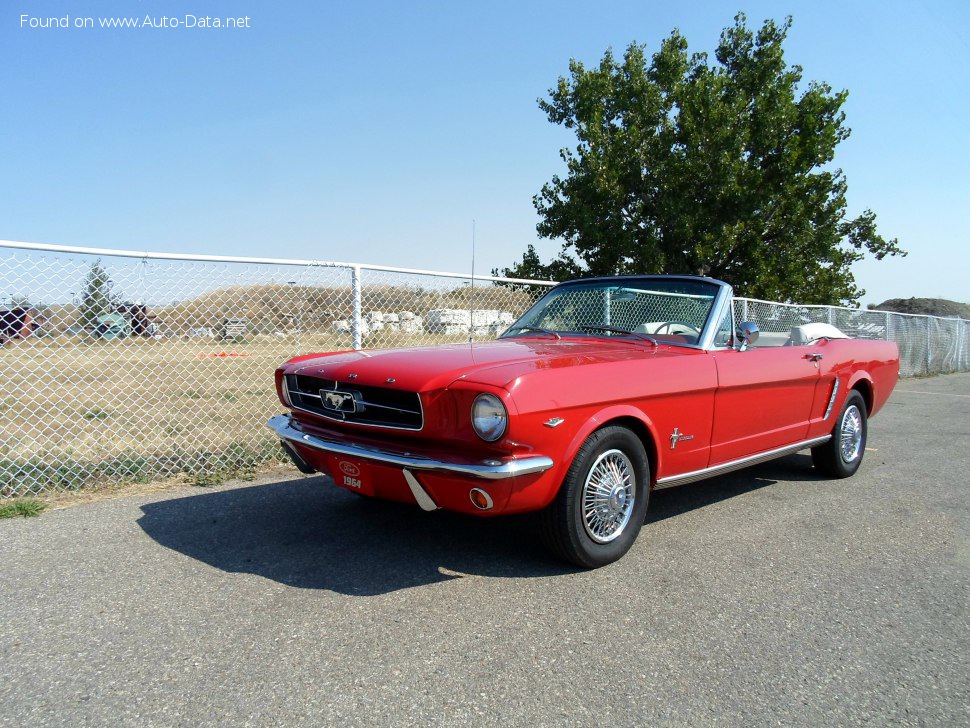
The Ford Mustang Convertible I, powered by a 4.3-liter V8 engine producing 164 horsepower, represents the initial offering of Ford’s iconic pony car with open-top capability. Introduced in April 1964 alongside the fastback and coupe models, the convertible was an immediate success, capitalizing on the growing demand for stylish and affordable personal vehicles. This first-generation Mustang, built on the Ford Falcon platform, quickly became a cultural phenomenon, and the 4.3L V8 convertible occupied a significant position in the early Mustang lineup, offering a blend of performance and open-air enjoyment. Production of this specific configuration lasted only for the 1964 model year, making it a particularly sought-after vehicle among collectors.
The 4.3L V8 in the First-Generation Mustang
The 1964 Mustang Convertible I with the 4.3L V8 engine was positioned as a mid-range offering within the initial Mustang lineup. While the six-cylinder engine represented the entry-level option, and the 289 cubic inch (4.7L) V8 offered more substantial performance, the 4.3L V8 struck a balance between affordability and power. It appealed to buyers who desired the V8 experience without the higher cost associated with the larger displacement engine. This configuration was aimed at drivers who wanted a sporty, enjoyable driving experience, particularly suited for cruising and weekend enjoyment.
Powertrain & Engine Architecture
The heart of the 1964 Mustang Convertible I was the Ford 4.3-liter (260 cubic inch) V8 engine. Designated as the 260 cubic inch Ford Windsor engine, it featured a 96.52 mm (3.8 inch) bore and a 72.9 mm (2.87 inch) stroke, resulting in a displacement of 4261 cm3 (260.02 cu. in.). The engine utilized a cast iron block and cylinder heads, with a two-valve per cylinder OHV (Overhead Valve) valvetrain. Fuel delivery was managed by a two-barrel carburetor, a common setup for the time. The compression ratio was 8.8:1. The engine produced 164 horsepower at 4400 rpm and 239 lb-ft of torque. The engine oil capacity was 4.7 liters (4.97 US quarts / 4.14 UK quarts), and the cooling system held 13.7 liters (14.48 US quarts / 12.05 UK quarts). The engine was mounted longitudinally in the front of the vehicle.
The 1964 Mustang Convertible I was equipped with a three-speed manual transmission as standard. While an automatic transmission (a two-speed Ford-O-Matic) was available as an option, the manual transmission was more common in this configuration, particularly among enthusiasts. The manual transmission provided a more direct connection to the engine, enhancing the driving experience. The rear wheels were driven via a conventional driveshaft and rear axle.
Driving Characteristics
The 1964 Mustang Convertible I with the 4.3L V8 and manual transmission offered a respectable, though not overwhelming, level of performance for its time. The 164 horsepower engine provided adequate acceleration for everyday driving, and the relatively light weight of the vehicle (1243 kg / 2740.35 lbs) contributed to a lively feel. The power delivery was smooth and predictable, making it easy to control. Compared to the 289 V8 Mustangs, the 4.3L version felt less powerful, particularly at higher speeds. However, it offered a more manageable and fuel-efficient driving experience. The three-speed manual transmission provided reasonable gear spacing, allowing the driver to keep the engine in its optimal power band. The steering, utilizing a cone worm and recirculation balls system, was relatively heavy but provided good feedback.
Equipment & Trim Levels
The 1964 Mustang Convertible I came standard with a basic but functional interior. Standard features included vinyl upholstery, a simple dashboard layout with basic instrumentation (speedometer, fuel gauge, and temperature gauge), and a steering wheel. The convertible top was manually operated. Optional extras included a center console, upgraded upholstery, a radio, and whitewall tires. Interior color options were limited but allowed for some personalization. The exterior was typically finished in a range of solid colors, with two-tone paint schemes available as an option. The trim level was relatively basic, focusing on providing a stylish and affordable open-air experience.
Chassis & Braking
The Mustang Convertible I utilized a unibody construction, providing a good balance of strength and weight. The front suspension consisted of double wishbones, while the rear suspension employed a rigid axle with leaf springs. This setup was typical for American cars of the era and provided a comfortable ride, although it wasn’t particularly sophisticated in terms of handling. The braking system consisted of drum brakes on all four wheels, with a diameter of 228.6 mm. While adequate for the car’s performance capabilities, the drum brakes lacked the stopping power and fade resistance of disc brakes. Power steering was available as an option, making the car easier to maneuver at low speeds.
Market Reception & Comparison
The 1964 Mustang Convertible I was exceptionally well-received by the public and automotive press. Its stylish design, affordable price, and available options made it a runaway success. Critics praised the car’s overall package, but some noted that the 4.3L V8 engine, while adequate, lacked the punch of the larger 289 V8. Fuel economy was reasonable for the time, averaging around 18-22 mpg. Reliability was generally good, although the carburetor could require occasional adjustment. Compared to other convertibles on the market in 1964, the Mustang offered a compelling combination of style, performance, and value. It quickly became a symbol of American youth culture and remains a highly collectible vehicle today.
Technical Specifications
| Brand | Ford |
| Model | Mustang |
| Generation | Mustang Convertible I |
| Engine Type | 4.3 V8 (164 Hp) |
| Production Years | 1964 |
| Body Type | Cabriolet |
| Seats | 4 |
| Doors | 2 |
| Fuel Type | Petrol (Gasoline) |
| Weight-to-power ratio | 7.6 kg/Hp |
| Power | 164 Hp @ 4400 rpm |
| Power per litre | 38.5 Hp/l |
| Engine Displacement | 4261 cm3 / 260.02 cu. in. |
| Number of Cylinders | 8 |
| Engine Configuration | V-engine |
| Cylinder Bore | 96.52 mm / 3.8 in. |
| Piston Stroke | 72.9 mm / 2.87 in. |
| Compression Ratio | 8.8:1 |
| Number of Valves per Cylinder | 2 |
| Fuel Injection System | Carburettor |
| Engine Aspiration | Naturally Aspirated |
| Kerb Weight | 1243 kg / 2740.35 lbs |
| Trunk Space (minimum) | 218 l / 7.7 cu. ft. |
| Fuel Tank Capacity | 61 l / 16.11 US gal |
| Length | 4613 mm / 181.61 in. |
| Width | 1732 mm / 68.19 in. |
| Height | 1298 mm / 51.1 in. |
| Wheelbase | 2763 mm / 108.78 in. |
| Number of Gears | 3 |
| Gearbox Type | Manual Transmission |
Legacy
The 1964 Mustang Convertible I with the 4.3L V8 engine holds a significant place in automotive history. While not the most powerful Mustang variant, it represents the beginning of a legend. The 260 cubic inch V8 proved to be a reasonably reliable engine, although it is susceptible to the common issues associated with older carbureted engines, such as fuel leaks and carburetor rebuilds. Today, these Mustangs are highly sought after by collectors and enthusiasts. Well-maintained examples command premium prices. The 4.3L V8 version is often seen as a more affordable entry point into Mustang ownership compared to the more desirable 289 V8 models. Its enduring appeal lies in its classic styling, open-air driving experience, and historical significance as the first generation of Ford’s iconic pony car.