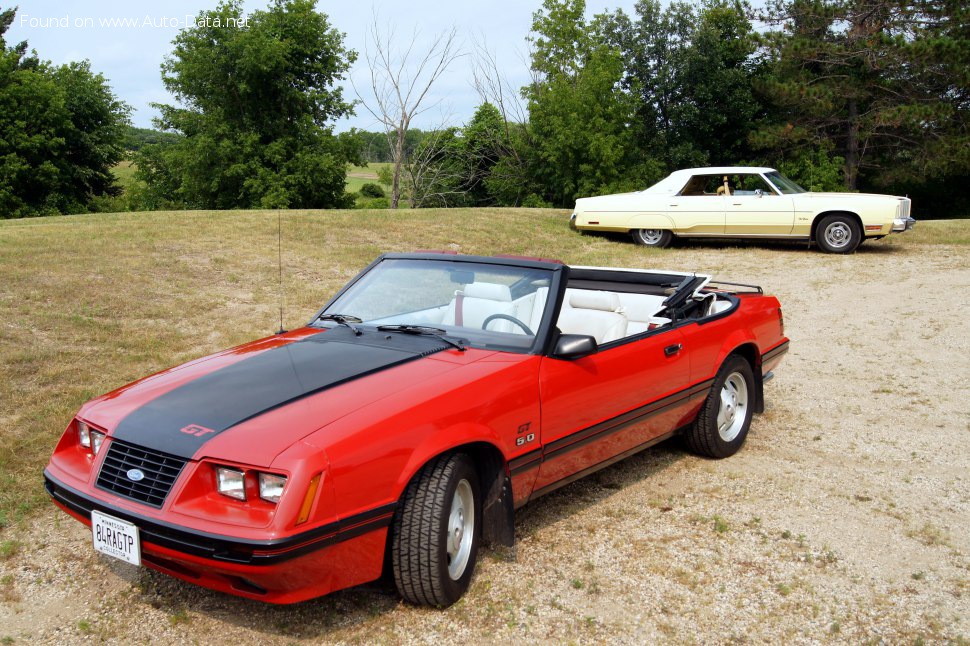
The Ford Mustang Convertible III 2.3i, produced from 1978 to 1993, represented the entry-level offering in the third-generation Mustang lineup. This variant, powered by a 2.3-liter inline-four engine producing 106 horsepower, was designed to provide affordable open-air motoring. It occupied the lower end of the performance spectrum for the Fox-body Mustang, appealing to buyers prioritizing style and fuel economy over outright speed. The 2.3i convertible served as a gateway into the Mustang family, offering a more accessible price point than the V8-powered models or the higher-trim four-cylinder options.
Powertrain & Engine Architecture
The heart of the Mustang Convertible III 2.3i was the Ford 2.3-liter inline-four engine, internally designated as the 2300cc. This engine, while sharing some basic architecture with larger Ford four-cylinders of the era, was specifically tuned for economy and smooth operation. It featured a cast iron block and an aluminum cylinder head. The engine utilized a multi-port fuel injection system, a significant upgrade from the carburetors used in earlier Mustang generations, contributing to improved fuel efficiency and reduced emissions. The valvetrain employed a single overhead camshaft (SOHC) design with two valves per cylinder.
The 2.3i was typically paired with a 5-speed manual transmission, however, a 3-speed automatic transmission was also available, and frequently chosen by buyers seeking convenience. The automatic transmission, a Ford C3 unit, featured a torque converter and provided smooth, albeit less engaging, shifts. Gear ratios were optimized for fuel economy and everyday driving, rather than aggressive acceleration. The automatic’s first gear was relatively tall, prioritizing smooth take-off, while the higher gears were geared for comfortable highway cruising. The engine’s 183 lb-ft of torque at 2600 rpm provided adequate, though not overwhelming, power for typical driving situations.
Engine Specifications
Key engine specifications included a 9.5:1 compression ratio and a bore and stroke of 96.04 mm (3.78 in) and 79.4 mm (3.13 in) respectively. The engine’s naturally aspirated design meant it relied solely on atmospheric pressure for intake, resulting in a relatively linear power delivery. The 106 hp peak was achieved at 4600 rpm, and the engine was capable of revving to a reasonable, though not particularly high, redline.
Driving Characteristics
The driving experience in a Mustang Convertible III 2.3i was characterized by comfortable cruising and adequate, but not sporty, performance. Acceleration was modest, with 0-60 mph times typically falling in the 10-12 second range. Compared to the V8-powered Mustangs, the 2.3i felt significantly less powerful, particularly when accelerating from highway speeds. The automatic transmission, while convenient, further diminished the sense of urgency. The manual transmission offered a more engaging driving experience, allowing the driver to better utilize the engine’s available power.
Handling was typical of Fox-body Mustangs – reasonably competent, but not particularly refined. The relatively lightweight four-cylinder engine contributed to a more balanced feel compared to the heavier V8 models. However, the convertible body structure lacked the rigidity of the coupe, resulting in some noticeable chassis flex during spirited driving. The steering, utilizing a hydraulic rack and pinion system, provided adequate feedback, but lacked the precision of more modern systems.
Equipment & Trim Levels
The Mustang Convertible III 2.3i was generally equipped with basic features, reflecting its entry-level positioning. Standard equipment typically included cloth upholstery, a basic AM/FM radio, and manual windows and locks. Air conditioning was a popular optional extra, as was a cruise control system. Interior trim was relatively simple, with a focus on durability rather than luxury. Dashboard configurations were consistent across the Mustang range, featuring a straightforward layout with clearly marked gauges.
Optional extras included upgraded sound systems, power windows and locks, and a tilt steering wheel. Buyers could also choose from a limited range of exterior color options. The convertible top was typically made of vinyl, with a manual folding mechanism. Later models saw the introduction of some minor cosmetic upgrades, such as revised wheel designs and interior trim materials.
Chassis & Braking
The Mustang Convertible III 2.3i utilized a relatively simple chassis design. Front suspension consisted of coil springs and a stabilizer bar, while the rear suspension also employed coil springs. The suspension was tuned for a comfortable ride, prioritizing smoothness over handling precision. Braking duties were handled by disc brakes on all four wheels, providing adequate stopping power for the vehicle’s weight and performance. An Anti-lock Braking System (ABS) was available as an option, enhancing safety in slippery conditions.
The 2.3i’s lighter weight compared to the V8 models meant it required less aggressive braking components. Tire size was typically 195/75 R14, providing a good balance of ride comfort and grip. The rear track was slightly wider than the front track, contributing to improved stability.
Market Reception & Comparison
The Mustang Convertible III 2.3i received mixed reviews from automotive critics. While praised for its affordability and fuel economy, it was often criticized for its lack of performance. Compared to the V8-powered Mustangs, the 2.3i felt underpowered and lacked the visceral driving experience that Mustang enthusiasts craved. However, it offered a more economical alternative for buyers who prioritized style and open-air motoring over outright speed.
Fuel economy was a key selling point for the 2.3i, with EPA estimates ranging from 16.8 US mpg (14 l/100 km) in the city to 26.1 US mpg (9 l/100 km) on the highway. This made it a more attractive option for buyers concerned about rising fuel prices. Reliability was generally good, although the automatic transmission could be prone to issues if not properly maintained. The 2.3i’s simpler engine design also meant that maintenance costs were typically lower than those of the more complex V8 engines.
Technical Specifications
| Brand | Ford |
| Model | Mustang |
| Generation | Mustang Convertible III |
| Type (Engine) | 2.3i (106 Hp) |
| Start of production | 1978 |
| End of production | 1993 |
| Body type | Cabriolet |
| Seats | 4 |
| Doors | 2 |
| Fuel consumption (urban) | 14 l/100 km (16.8 US mpg) |
| Fuel consumption (extra urban) | 9 l/100 km (26.1 US mpg) |
| Fuel Type | Petrol (Gasoline) |
| Maximum speed | 165 km/h (102.53 mph) |
| Kerb Weight | 1340 kg (2954.19 lbs) |
| Trunk (boot) space (minimum) | 180 l (6.36 cu. ft.) |
| Fuel tank capacity | 58 l (15.32 US gal) |
| Length | 4560 mm (179.53 in) |
| Width | 1735 mm (68.31 in) |
| Height | 1320 mm (51.97 in) |
| Wheelbase | 2555 mm (100.59 in) |
| Engine Displacement | 2301 cm3 (140.42 cu. in.) |
| Number of cylinders | 4 |
| Engine configuration | Inline |
| Power | 106 Hp @ 4600 rpm |
| Torque | 183 Nm @ 2600 rpm (134.97 lb.-ft. @ 2600 rpm) |
| Number of gears | 5 (manual) / 3 (automatic) |
| Drive wheel | Rear wheel drive |
Legacy
The Mustang Convertible III 2.3i, while not the most sought-after variant of the Fox-body Mustang, remains a popular choice among enthusiasts seeking an affordable and stylish classic. The 2.3-liter engine, while not particularly powerful, proved to be relatively reliable and easy to maintain. Today, these Mustangs can be found in reasonable condition at relatively low prices, making them an accessible entry point into the world of classic Mustang ownership. The automatic transmission models, while less desirable to some, offer a comfortable and convenient driving experience. The 2.3i’s enduring appeal lies in its combination of classic Mustang styling, open-air enjoyment, and relatively low running costs.