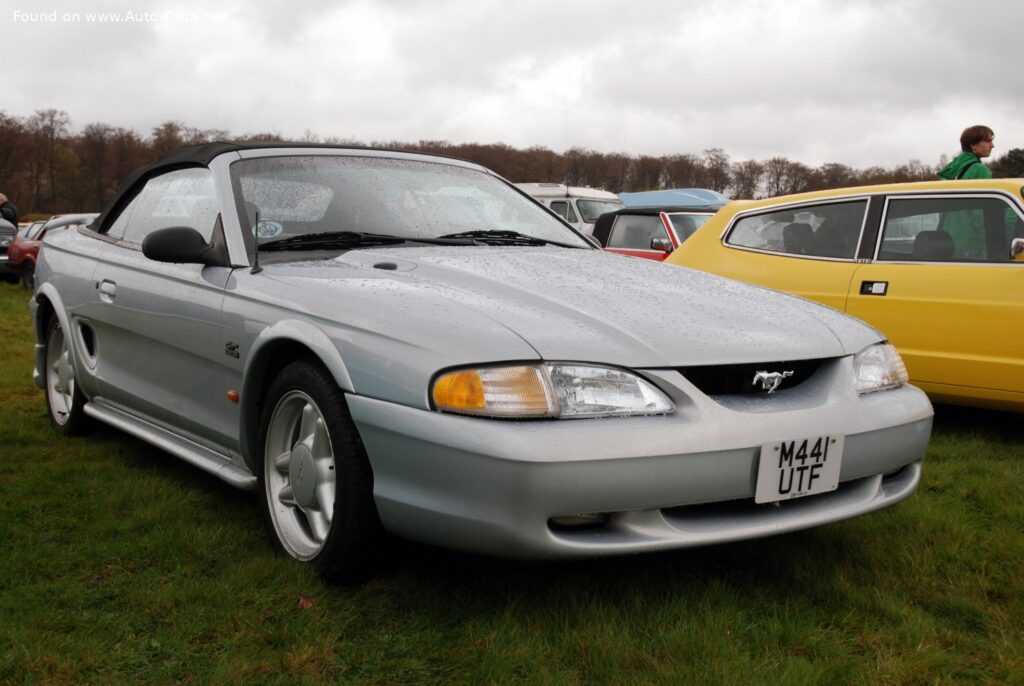
The Ford Mustang Convertible IV, produced from 1998 to 2005, represented the fourth generation (SN-95) of Ford’s iconic pony car. Within this generation, the 3.8 V6 190 hp variant occupied a crucial position as the entry-level model, offering open-air motoring at a more accessible price point than its V8-powered siblings. This configuration aimed to broaden the Mustang’s appeal, attracting buyers who prioritized style and affordability over outright performance. The Convertible IV chassis was based on a modified version of the Fox platform, often referred to as the SN-95 platform, which underwent significant updates during its production run.
The 3.8L V6 Mustang Convertible: Positioning and Overview
The 3.8L V6 Mustang Convertible was designed to be the most affordable way to experience Mustang ownership with the added appeal of a drop-top. It served as the gateway into the Mustang lineup, targeting a demographic that desired a stylish and sporty vehicle for cruising and everyday driving. Compared to the GT models equipped with the 4.6L V8, the 3.8L offered a more fuel-efficient and less expensive alternative, albeit with considerably less power. It also differed from the later addition of the supercharged 3.8L variants, which aimed for a performance boost while retaining the V6’s relative affordability. The 1998 model year marked a significant refresh for the SN-95 Mustang, with updated interior and exterior styling.
Powertrain & Engine Architecture
The heart of the 3.8L Mustang Convertible was the Ford Essex engine, specifically the 994 code variant. This 3.8-liter (3813 cc / 232.68 cu. in.) V6 engine featured a 90-degree V configuration with an overhead valve (OHV) valvetrain – two valves per cylinder. The engine utilized a multi-port fuel injection system, delivering fuel directly into each intake port for improved efficiency and responsiveness. The 994 engine produced 190 horsepower at 5250 rpm and 298 Nm (219.79 lb-ft) of torque at 2750 rpm. This torque output, while lower than the V8, was sufficient for comfortable cruising and everyday driving. The engine’s compression ratio was 9.36:1. Engine oil capacity was 4.7 liters (4.97 US quarts / 4.14 UK quarts), and it required coolant totaling 11.2 liters (11.83 US quarts / 9.85 UK quarts).
The 3.8L engine was typically paired with a 5-speed manual transmission, but the majority of 3.8L Convertibles were equipped with a 4-speed automatic transmission (4R70W). This automatic transmission was chosen by many buyers for its convenience and ease of use, particularly in a convertible application. The 4R70W is a hydraulically controlled, electronically shifted transmission known for its durability, though it can be prone to issues with age and high mileage. The transmission’s gear ratios were optimized for fuel economy and smooth acceleration, rather than aggressive performance.
Driving Characteristics
The 190 hp 3.8L V6 automatic Mustang Convertible delivered a driving experience focused on comfort and accessibility. Acceleration was adequate for merging onto highways and passing slower traffic, but it lacked the punch of the V8 models. The automatic transmission provided smooth shifts, but it wasn’t particularly quick or responsive. The 0-60 mph time was typically in the 8-9 second range, depending on conditions and vehicle weight. The gear ratios of the 4R70W transmission were geared towards maximizing fuel efficiency, with a relatively tall final drive ratio. This resulted in a relaxed cruising experience but limited the car’s ability to accelerate quickly. Compared to the manual transmission version, the automatic offered less driver engagement but greater convenience. The V6 engine’s power delivery was linear, with a broad torque curve that made it easy to drive in various situations.
Equipment & Trim Levels
The 3.8L Mustang Convertible typically came standard with features such as air conditioning, power windows and locks, a basic audio system, and cloth upholstery. The interior featured a relatively simple dashboard layout with analog gauges. Optional extras included leather upholstery, a premium sound system, power driver’s seat, and alloy wheels. The Convertible IV trim also offered various appearance packages, allowing buyers to customize the exterior with features like a color-matched hardtop (optional), different wheel designs, and unique body side moldings. The standard wheels were typically 15-inch steel wheels with wheel covers, while optional alloy wheels were available in various designs and sizes.
Chassis & Braking
The Mustang Convertible IV utilized an independent front suspension with McPherson struts and a multi-link independent rear suspension. This suspension setup provided a comfortable ride quality, although it wasn’t as sporty or precise as the suspension found in some other sports cars. The front suspension featured coil springs and stabilizer bar, while the rear suspension also utilized coil springs. The braking system consisted of ventilated discs at the front and solid discs at the rear. Anti-lock brakes (ABS) were standard equipment, enhancing safety and control during emergency braking situations. The steering system was a rack-and-pinion setup with hydraulic power steering, providing responsive and easy steering feel. The standard tire size was 205/65 R15.
Market Reception & Comparison
The 3.8L Mustang Convertible was generally well-received by critics as an affordable and stylish entry into the Mustang lineup. It was praised for its comfortable ride, ease of use, and attractive styling. However, it was often criticized for its lack of power compared to the V8 models. Fuel economy was a strong point, with EPA estimates ranging from 19.9 US mpg (11.8 l/100 km) in the city to 29.8 US mpg (7.9 l/100 km) on the highway. In terms of reliability, the 3.8L engine and 4R70W transmission were generally considered to be durable, but they were not without their potential issues. Common problems included oil leaks, transmission slippage, and sensor failures. Compared to other convertibles in its price range, the Mustang offered a unique combination of style, performance, and affordability.
Technical Specifications
| Brand | Ford |
| Model | Mustang |
| Generation | Mustang Convertible IV |
| Type (Engine) | 3.8 V6 (190 Hp) |
| Start of production | 1998 year |
| End of production | 2005 year |
| Fuel consumption (economy) – urban | 11.8 l/100 km (19.9 US mpg) |
| Fuel consumption (economy) – extra urban | 7.9 l/100 km (29.8 US mpg) |
| Fuel Type | Petrol (Gasoline) |
| Maximum speed | 180 km/h (111.85 mph) |
| Power | 190 Hp @ 5250 rpm |
| Torque | 298 Nm @ 2750 rpm (219.79 lb.-ft. @ 2750 rpm) |
| Engine layout | Front, Longitudinal |
| Engine Model/Code | Essex / 994 |
| Engine displacement | 3813 cm3 (232.68 cu. in.) |
| Number of cylinders | 6 |
| Cylinder Bore | 96.77 mm (3.81 in.) |
| Piston Stroke | 86.4 mm (3.4 in.) |
| Compression ratio | 9.36:1 |
| Engine oil capacity | 4.7 l (4.97 US qt | 4.14 UK qt) |
| Kerb Weight | 1453 kg (3203.32 lbs.) |
| Trunk (boot) space – minimum | 218 l (7.7 cu. ft.) |
| Fuel tank capacity | 59 l (15.59 US gal | 12.98 UK gal) |
| Length | 4653 mm (183.19 in.) |
| Width | 1857 mm (73.11 in.) |
| Height | 1351 mm (53.19 in.) |
| Wheelbase | 2573 mm (101.3 in.) |
| Number of gears and type of gearbox | 4 gears, automatic transmission |
Legacy
The 3.8L V6 Mustang Convertible remains a popular choice in the used car market, particularly for buyers seeking an affordable and stylish convertible. While not as collectible as the V8 models, the 3.8L offers a reliable and enjoyable driving experience. The Essex 3.8L engine is known for its durability, and with proper maintenance, it can provide many years of service. The 4R70W automatic transmission, while potentially requiring some maintenance, is also generally considered to be a robust unit. Today, these Mustangs represent a relatively inexpensive way to enjoy classic American open-air motoring, and they continue to be appreciated by enthusiasts for their unique blend of style, affordability, and accessibility.