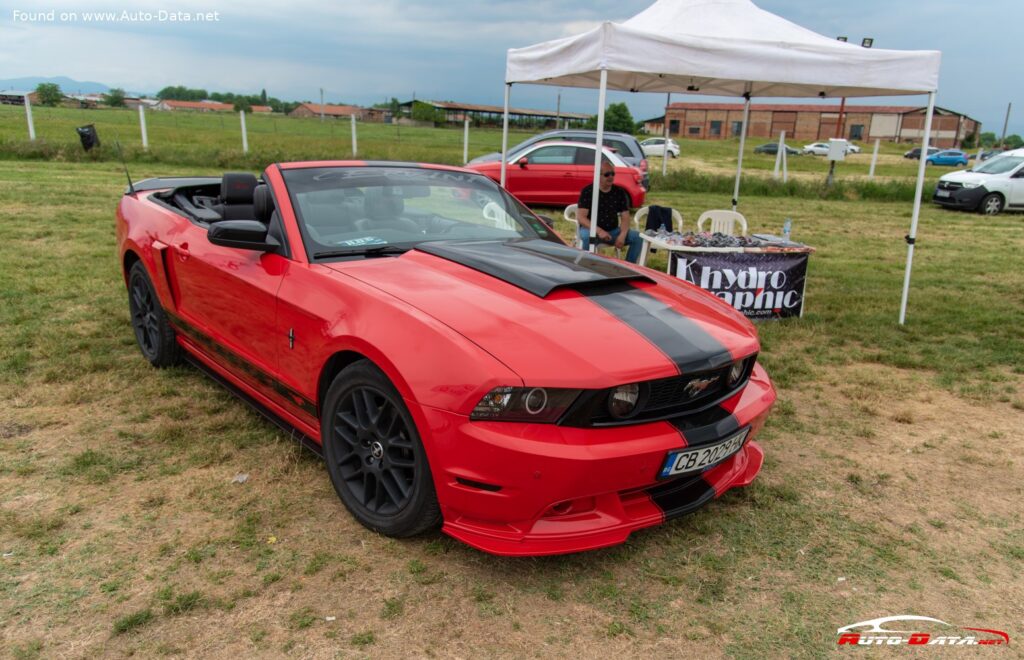
The Ford Mustang, an enduring icon of American automotive culture, entered its fifth generation (S197) in 2005, ushering in a retro-futuristic design that paid homage to its legendary forebears. By 2009, Ford introduced a significant facelift to this generation, refining both its aesthetics and mechanicals. Among the most popular and evocative variants was the Ford Mustang Convertible V (facelift 2009) GT 4.6 V8 Automatic, a vehicle that perfectly encapsulated the spirit of open-air American performance. This refreshed model, produced from 2009 to 2010, continued the Mustang’s legacy as an accessible yet potent pony car, offering a compelling blend of classic styling, modern amenities, and a roaring V8 soundtrack.
Designed primarily for the North American market, this Mustang Convertible GT variant represented the pinnacle of mainstream performance for the S197 at the time. It combined the visceral thrill of a naturally aspirated V8 engine with the convenience of an automatic transmission and the undeniable appeal of a convertible body style. The 2009 facelift brought subtle yet impactful changes, ensuring the Mustang remained competitive and visually fresh, cementing its position as a beloved choice for enthusiasts and casual drivers alike seeking a slice of American motoring heritage.
Powertrain and Engine Architecture of the 4.6L V8
At the heart of the Ford Mustang Convertible V (facelift 2009) GT 4.6 V8 Automatic was Ford’s venerable 4.6-liter “Modular” V8 engine. This powerplant, known for its robust construction and smooth power delivery, was a staple in many Ford vehicles. For the 2009 GT, it produced a healthy 315 horsepower at 6000 rpm and a substantial 325.26 lb-ft (441 Nm) of torque peaking at 4250 rpm. This naturally aspirated, SOHC (Single Overhead Camshaft) engine featured three valves per cylinder and a multi-port fuel injection system, allowing for efficient fuel delivery and a broad power band.
With an engine displacement of 4601 cm3 (280.77 cu. in.) and a compression ratio of 9.8:1, the V8 delivered a satisfying surge of power, characteristic of American muscle cars. The engine’s layout was front, longitudinal, driving the rear wheels, a classic configuration that provided balanced handling dynamics and a traditional performance feel. Mated to this robust V8 was a 5-speed automatic transmission, specifically the 5R55E. This transmission was known for its smooth and responsive shifts, catering to both spirited driving and comfortable cruising. The 5R55E featured electronic control and overdrive, contributing to both performance and fuel efficiency. While some purists might prefer a manual, the automatic option broadened the Mustang’s appeal, making its performance accessible to a wider audience.
The 4.6L Modular V8 utilized a cast iron block with aluminum cylinder heads. The intake manifold was constructed from composite plastic, contributing to weight reduction. The engine also featured sequential electronic fuel injection, optimizing fuel delivery based on engine load and speed. The valvetrain employed roller rocker arms, reducing friction and improving engine efficiency. The engine’s design prioritized reliability and ease of maintenance, making it a popular choice for both factory installations and aftermarket modifications.
Driving Characteristics
The 2009 Mustang GT Convertible with the 4.6L V8 and 5-speed automatic offered a distinct driving experience. Compared to the manual transmission equipped models, the automatic provided a more relaxed and convenient driving style, particularly in city traffic. However, it didn’t sacrifice all performance. The 5R55E transmission allowed for manual gear selection, giving drivers some control over the engine’s power delivery.
The automatic transmission’s gear ratios were optimized for both acceleration and highway cruising. First gear provided strong off-the-line acceleration, while the overdrive fifth gear helped to reduce engine speed and improve fuel economy at higher speeds. The torque converter played a crucial role in smoothing out shifts and providing a comfortable driving experience. While not as quick as the manual transmission in terms of 0-60 mph times, the automatic offered a more accessible and user-friendly performance experience. The convertible body style added a slight weight penalty compared to the coupe, but the impact on performance was minimal. The overall driving experience was characterized by a smooth ride, responsive steering, and the unmistakable rumble of the V8 engine.
Equipment & Trim Levels
The 2009 Ford Mustang Convertible GT, as a mid-range performance trim, came standard with a number of features designed to enhance both comfort and convenience. Standard interior features included air conditioning, power windows and locks, a tilt steering wheel, and a basic audio system. Upholstery typically consisted of cloth seats, although leather upholstery was available as an option. The dashboard featured a traditional analog gauge cluster, providing information on speed, engine rpm, fuel level, and coolant temperature.
Optional extras for the Mustang GT Convertible included a premium audio system with CD player and MP3 compatibility, leather-trimmed seats, automatic climate control, and a power-operated convertible top. Appearance packages were also available, offering features such as unique wheels, body-colored side mirrors, and upgraded interior trim. Safety features included anti-lock brakes (ABS) and front airbags. The Mustang GT Convertible was positioned as a step up from the base V6 models, offering a more powerful engine, upgraded suspension components, and a more luxurious interior.
Chassis & Braking
The 2009 Mustang GT Convertible utilized a robust chassis designed to handle the power of the 4.6L V8 engine. The front suspension featured an independent McPherson strut design with coil springs and a stabilizer bar, providing precise steering and good road holding. The rear suspension employed a solid axle design with coil springs and a stabilizer bar, a traditional Mustang setup known for its durability and ability to handle significant power. The solid rear axle, while not as sophisticated as independent rear suspension, contributed to the Mustang’s characteristic muscle car feel.
Braking duties were handled by ventilated disc brakes on all four wheels, providing ample stopping power. The front brakes measured 316×30 mm, while the rear brakes measured 300×19 mm. An Anti-lock Braking System (ABS) was standard, enhancing control during emergency braking situations. The hydraulic power steering system, a rack-and-pinion design, offered direct feedback and a connected feel to the road. The standard wheel size was 18 inches, with tire sizes of 235/50R18. Optional 19-inch wheels with 245/45R19 tires were also available, providing improved grip and a more aggressive appearance.
Market Reception & Comparison
Critics generally viewed the 2009 Ford Mustang GT Convertible favorably, praising its classic styling, powerful V8 engine, and accessible performance. The facelifted design was well-received, and the car was considered a worthy competitor to the Chevrolet Camaro and Dodge Challenger. Fuel economy was a common point of discussion, with reviewers acknowledging that the V8 engine consumed a significant amount of fuel, particularly in city driving. However, they also noted that the Mustang offered a compelling value proposition, providing a lot of performance for the price.
Compared to the V6-powered Mustang models, the GT offered a substantial performance upgrade, with significantly more horsepower and torque. The GT also featured upgraded suspension components and brakes, providing improved handling and stopping power. Compared to the Camaro and Challenger, the Mustang was often praised for its more refined ride quality and user-friendly driving experience. The Mustang GT Convertible offered a unique combination of performance, style, and open-air enjoyment, making it a popular choice for enthusiasts and casual drivers alike.
Technical Specifications
| Category | Specification |
| Brand | Ford |
| Model | Mustang |
| Generation | Mustang Convertible V (facelift 2009) |
| Type (Engine) | GT 4.6 V8 (315 Hp) Automatic |
| Start of Production | 2009 year |
| End of Production | 2010 year |
| Powertrain Architecture | Internal Combustion engine |
| Body type | Cabriolet |
| Seats | 4 |
| Doors | 2 |
| Fuel Consumption (Economy) – Urban | 13.8 l/100 km (17 US mpg) |
| Fuel Consumption (Economy) – Extra Urban | 10.2 l/100 km (23.1 US mpg) |
| Fuel Type | Gasoline |
| Power | 315 Hp @ 6000 rpm |
| Torque | 441 Nm @ 4250 rpm (325.26 lb.-ft. @ 4250 rpm) |
| Engine Displacement | 4601 cm3 (280.77 cu. in.) |
| Number of Cylinders | 8 |
| Compression Ratio | 9.8:1 |
| Transmission | 5-speed automatic (5R55E) |
| Front Brakes | Ventilated discs, 316×30 mm |
| Rear Brakes | Ventilated discs, 300×19 mm |
| Tires Size | 235/50 R18; 245/45 R19 |
Legacy
The Ford Mustang Convertible V (facelift 2009) GT 4.6 V8 Automatic has proven to be a relatively reliable vehicle, with the 4.6L Modular V8 engine known for its durability. Common maintenance items include regular oil changes, spark plug replacements, and coolant flushes. The 5R55E automatic transmission is generally reliable, but may require fluid changes and occasional servicing. The convertible top mechanism should be inspected and maintained to ensure proper operation.
In the used car market today, these models remain popular among Mustang enthusiasts and those seeking a classic American convertible. Prices vary depending on condition, mileage, and options, but well-maintained examples can command a premium. The 2009 facelift models are often considered more desirable than earlier S197 cars due to their refined styling and improved features. The enduring appeal of the Mustang nameplate, combined with the visceral thrill of the V8 engine and the open-air driving experience, ensures that the 2009 GT Convertible will continue to be a sought-after vehicle for years to come.