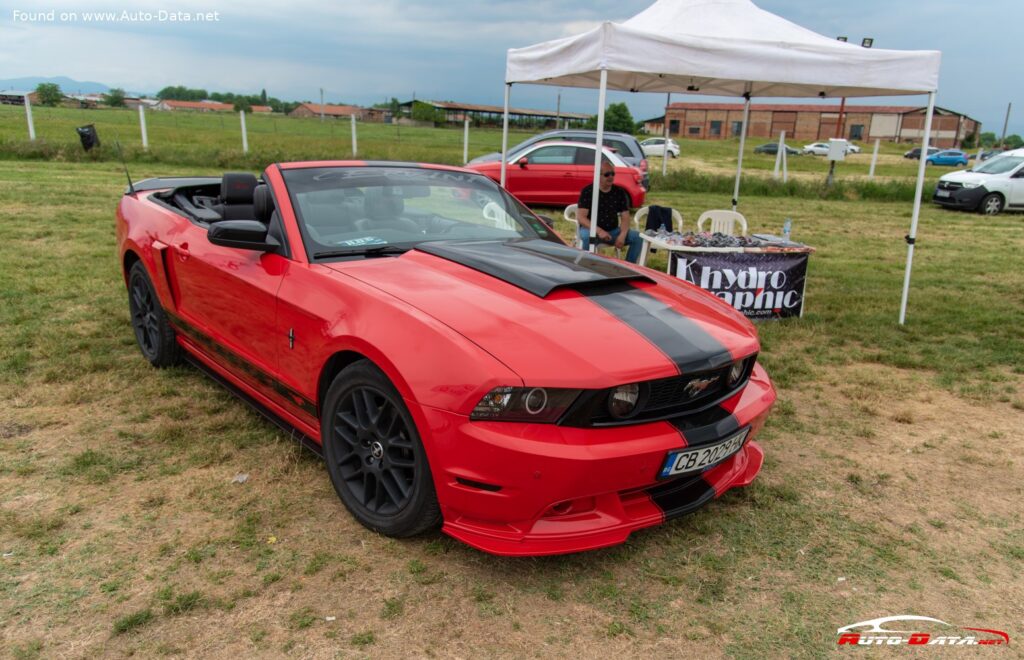
The Ford Mustang stands as an enduring symbol of American automotive prowess and freedom, a legacy that was powerfully reinvigorated with the introduction of the fifth generation (S197) in 2005. Following a significant refresh for the 2009 model year, the Ford Mustang Convertible V (facelift 2009) GT 5.0 V8 (412 Hp) Automatic emerged as a particularly potent and desirable variant. Produced from 2010 to 2012, this iteration brought back the legendary “5.0” designation, pairing it with a sophisticated new engine and a sharp, modernized design, all while retaining the classic rear-wheel-drive, V8-powered muscle car formula that defines the Mustang experience. This model represented a pivotal moment, blending heritage styling with contemporary performance and technology, cementing its status as a quintessential American pony car for a new era.
The Return of the Coyote: Powertrain & Engine Architecture
At the heart of the Ford Mustang Convertible V (facelift 2009) GT 5.0 V8 (412 Hp) Automatic was the much-anticipated “Coyote” 5.0-liter V8 engine. This wasn’t merely a nostalgic nod to the past; it was a thoroughly modern powerplant designed to compete with contemporary rivals. Featuring Dual Overhead Camshafts (DOHC) and Twin Independent Variable Cam Timing (Ti-VCT), the Coyote engine delivered a robust 412 horsepower at 6500 rpm and a formidable 390.17 lb-ft of torque at 4250 rpm. Its impressive power-per-liter ratio of 83.2 Hp/l showcased its advanced engineering, allowing for a thrilling redline of 7000 rpm.
The engine block itself was constructed from cast iron, providing a robust foundation for the high-output V8. The cylinder heads were aluminum alloy, contributing to weight reduction and improved heat dissipation. Fuel delivery was handled by multi-port fuel injection, precisely metering fuel into each intake port for optimal combustion. The valvetrain, utilizing roller rocker arms and hydraulic lash adjusters, ensured efficient valve operation and reduced maintenance. The Coyote engine was a significant departure from the previous 4.6-liter modular V8, representing a complete redesign focused on performance and efficiency.
Power was channeled to the rear wheels via a smooth and responsive 6-speed automatic transmission, offering a balance of spirited acceleration and comfortable cruising. This transmission, designated the 6R80E, was a robust unit designed to handle the Coyote engine’s substantial torque output. It featured a wide gear ratio spread, optimizing both acceleration and highway fuel economy. The transmission included a torque converter lock-up clutch, further enhancing efficiency at cruising speeds. This powertrain architecture, with its front-longitudinal engine layout and rear-wheel drive, remained true to the Mustang’s performance heritage, providing the engaging driving dynamics expected of an American muscle car.
Driving Characteristics
The 2010-2012 Mustang GT Convertible with the 5.0L V8 and automatic transmission offered a distinct driving experience. Compared to the manual transmission equipped GT, the automatic provided smoother shifts and reduced driver fatigue, making it a more comfortable choice for daily driving and long road trips. However, it did introduce a slight performance deficit, with 0-60 mph times typically around 4.6-4.8 seconds, compared to the manual’s 4.4-4.6 seconds. The 6R80E transmission was programmed for relatively quick shifts in “Sport” mode, but it lacked the direct control and engagement offered by a manual gearbox.
The Coyote engine’s broad torque curve meant that strong acceleration was available across a wide range of engine speeds. The automatic transmission’s gear ratios were optimized to keep the engine within its peak power band during acceleration. The car felt responsive and eager, delivering a satisfying surge of power when called upon. While not as track-focused as some competitors, the Mustang GT Convertible provided a thrilling and enjoyable driving experience, particularly with the top down.
The weight distribution, while not ideal, was manageable. The solid rear axle, while a traditional Mustang component, could exhibit some axle hop under hard acceleration, but was generally well-controlled. Overall, the driving experience was characterized by a blend of raw power, comfortable cruising, and classic American muscle car feel.
Equipment & Trim Levels
The Ford Mustang Convertible V (facelift 2009) GT 5.0 V8 (412 Hp) Automatic sat as the premium performance trim within the Mustang Convertible lineup. Standard features included leather upholstery, air conditioning, power windows and locks, a premium sound system, and alloy wheels. The interior featured a driver-focused cockpit with clear instrumentation and a comfortable seating position.
Optional extras were plentiful, allowing buyers to customize their Mustang to their preferences. Popular options included the Premium Package, which added features such as automatic climate control, upgraded interior trim, and a navigation system. Other available options included a glass roof, heated seats, and a Shaker audio system. Exterior options included various wheel designs, stripes, and paint colors. The convertible top was available in several colors to complement the exterior paint.
The GT trim also included performance-enhancing features such as a limited-slip differential, upgraded brakes, and a sport-tuned suspension. These features further enhanced the driving experience and set the GT apart from the base Mustang models.
Chassis & Braking
The Mustang GT Convertible utilized a traditional front-engine, rear-wheel-drive layout. The front suspension consisted of an independent MacPherson strut design with coil springs and a stabilizer bar. The rear suspension employed a solid axle configuration with coil springs and a stabilizer bar. While the solid rear axle was a cost-effective solution, it was tuned to provide acceptable handling characteristics for a performance car of this type.
Braking duties were handled by ventilated disc brakes on all four wheels. The front brakes featured larger rotors (336×36 mm) than the rear brakes (300×19 mm), providing increased stopping power. Anti-lock Braking System (ABS) was standard, enhancing safety and control during emergency braking situations. The braking system was generally considered adequate for the car’s performance capabilities, but lacked the sophistication of some competitors.
Steering was provided by an electric power steering system, offering precise control and reduced driver effort. The Mustang GT Convertible rode on 18-inch or 19-inch alloy wheels, typically fitted with performance tires to maximize grip and handling.
Market Reception & Comparison
The 2010-2012 Mustang GT Convertible 5.0 V8 Automatic was generally well-received by automotive critics. The return of the 5.0-liter engine was widely praised, and the Coyote V8 was lauded for its performance, responsiveness, and sound. The automatic transmission was considered smooth and capable, although some reviewers preferred the engagement of the manual gearbox. The car’s styling was also praised, with its blend of classic and modern design elements appealing to a wide range of buyers.
Compared to other trims in the Mustang lineup, the GT 5.0 Automatic offered a significant performance upgrade over the V6 models. It also provided a more luxurious and well-equipped interior. Fuel economy was comparable to other V8-powered muscle cars, with a combined rating of 21 US mpg (11.2 l/100 km). Reliability was generally good, although some owners reported minor issues with the transmission and electrical systems.
In comparison to its rivals, the Chevrolet Camaro and Dodge Challenger, the Mustang GT Convertible offered a unique combination of performance, style, and affordability. The Camaro was often praised for its handling and track performance, while the Challenger offered a more spacious interior and retro styling. The Mustang GT Convertible struck a balance between these two, appealing to a broader range of buyers.
Technical Specifications
| Category | Specification |
| Brand | Ford |
| Model | Mustang Convertible V (facelift 2009) |
| Engine Type | GT 5.0 V8 (412 Hp) Automatic |
| Production Start | 2010 |
| Production End | 2012 |
| Powertrain Architecture | Internal Combustion Engine |
| Body Type | Cabriolet (2 Doors, 4 Seats) |
| Fuel Consumption (Urban) | 13.1 l/100 km (18 US mpg) |
| Fuel Consumption (Extra Urban) | 9.4 l/100 km (25 US mpg) |
| Fuel Consumption (Combined) | 11.2 l/100 km (21 US mpg) |
| Fuel Type | Petrol (Gasoline) |
| Weight-to-Power Ratio | 4.2 kg/Hp (240.9 Hp/tonne) |
| Weight-to-Torque Ratio | 3.2 kg/Nm (309.4 Nm/tonne) |
| Power | 412 Hp @ 6500 rpm |
| Power per liter | 83.2 Hp/l |
| Torque | 529 Nm (390.17 lb.-ft.) @ 4250 rpm |
| Maximum Engine Speed | 7000 rpm |
| Engine Layout | Front, Longitudinal |
| Engine Model/Code | Coyote |
| Engine Displacement | 4951 cm3 (302.13 cu. in.) |
| Number of Cylinders | 8 |
| Engine Configuration | V-engine |
| Cylinder Bore | 92.2 mm (3.63 in.) |
| Piston Stroke | 92.7 mm (3.65 in.) |
| Compression Ratio | 11:1 |
| Valves per Cylinder | 4 |
| Fuel Injection System | Multi-port manifold injection |
| Engine Aspiration | Naturally aspirated engine |
| Valvetrain | DOHC, Ti-VCT |
| Kerb Weight | 1710 kg (3769.9 lbs) |
| Length | 4778 mm (188.11 in.) |
| Width | 1877 mm (73.9 in.) |
| Height | 1417 mm (55.79 in.) |
| Wheelbase | 2720 mm (107.09 in.) |
| Gearbox | 6 gears, automatic transmission |
| Front Suspension | Independent type McPherson, Transverse stabilizer |
| Rear Suspension | Rigid axle suspension, Transverse stabilizer, Coil spring |
| Front Brakes | Ventilated discs, 336×36 mm |
| Rear Brakes | Ventilated discs, 300×19 mm |
Legacy
The Ford Mustang Convertible V (facelift 2009) GT 5.0 V8 (412 Hp) Automatic has proven to be a reliable and durable performance car. The Coyote engine is known for its longevity and ability to withstand significant modifications. The 6R80E transmission, while not without its occasional issues, is generally considered a robust unit. Today, these Mustangs are highly sought after in the used car market, commanding premium prices for well-maintained examples.
The Coyote engine’s continued use in subsequent Mustang generations is a testament to its engineering excellence. The 2010-2012 GT Convertible represents a sweet spot in the Mustang lineage, offering a blend of classic styling, modern performance, and relative affordability. It remains a popular choice for enthusiasts seeking a thrilling and engaging driving experience, solidifying its place as a modern American icon.