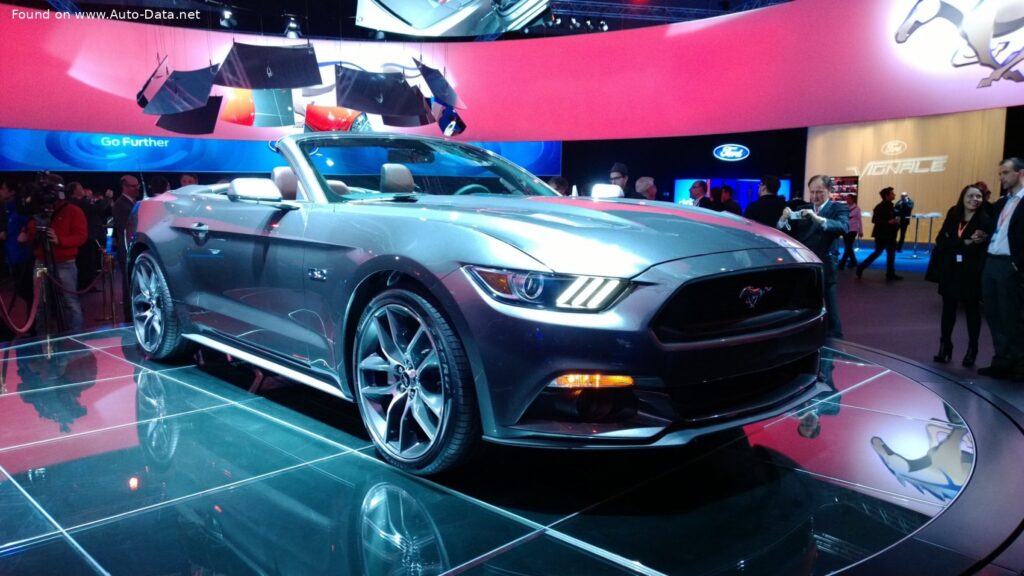
The Ford Mustang Convertible VI 2.3 EcoBoost (317 Hp) represents a significant chapter in the Mustang’s history, launched as part of the sixth generation (internally known as the S550) for the 2015 model year. This generation marked the first time the Mustang was engineered as a truly global vehicle, officially sold in right-hand-drive markets worldwide. The 2.3 EcoBoost Convertible, produced from 2015 to 2017, offered a modern, turbocharged four-cylinder engine that balanced performance with improved fuel efficiency, a departure from the traditional V8-centric image of the Mustang. This variant blended classic American muscle aesthetics with contemporary engineering and the open-air enjoyment of a convertible body style.
The S550 Generation and the 2.3 EcoBoost Position
The S550 Mustang generation was lauded for its introduction of an independent rear suspension (IRS), replacing the solid rear axle of previous generations. This upgrade dramatically improved ride quality, handling, and overall refinement. The 2.3-liter EcoBoost engine, initially met with some skepticism from Mustang purists, quickly proved its capabilities, delivering power and torque figures comparable to earlier naturally aspirated V8s. The Convertible variant further enhanced its appeal, allowing drivers to experience the exhilarating performance and distinctive styling with the added sensory experience of open-top motoring. This model broadened the Mustang’s market reach, attracting buyers who desired a combination of performance, style, and efficiency.
Powertrain & Engine Architecture
The heart of the Ford Mustang Convertible VI 2.3 EcoBoost (317 Hp) is a 2.3-liter (2264 cm3 or 138.16 cu. in.) inline-four engine. This powerplant, part of Ford’s EcoBoost family, utilizes direct fuel injection, a twin-scroll turbocharger, and an intercooler to achieve impressive output for its displacement. The engine features a DOHC (Double Overhead Camshaft) valvetrain with four valves per cylinder, designed for optimal breathing and efficiency. The engine code is generally recognized as the 2.3L EcoBoost, though specific variations exist depending on the model year and market.
This iteration of the 2.3 EcoBoost engine delivers 317 horsepower at 5500 rpm, translating to approximately 140 horsepower per liter. Torque output peaks at 318.63 lb.-ft. (432 Nm) at 3000 rpm. This broad torque band provides strong acceleration and responsiveness across a wide range of engine speeds. Power is transmitted to the rear wheels via a 6-speed automatic transmission, offering smooth and convenient shifting. The automatic transmission features a torque converter and multiple gear ratios optimized for both performance and fuel economy. The rear-wheel-drive architecture remains a hallmark of the Mustang, providing classic sports car dynamics.
Driving Characteristics
The 2.3L EcoBoost Automatic Mustang Convertible delivers a distinct driving experience compared to its V8 siblings and manual transmission counterparts. While lacking the raw, visceral power of the V8, the EcoBoost offers a more accessible and refined driving experience. The automatic transmission provides smooth gear changes, making it well-suited for daily commuting and relaxed cruising. The turbocharger provides a noticeable boost in power during acceleration, offering a responsive and engaging driving experience. Compared to the 6-speed manual, the automatic prioritizes ease of use over driver engagement, but still delivers respectable performance. The gear ratios are tuned to balance acceleration and fuel efficiency, with a focus on providing strong low-end torque for everyday driving situations. The IRS contributes to improved handling and stability, especially during cornering, compared to previous Mustang generations.
Equipment & Trim Levels
The 2.3 EcoBoost Convertible typically served as the entry-level or mid-range trim in the Mustang lineup. Standard features included air conditioning, power windows and locks, a basic audio system, and cloth upholstery. The Mustang Convertible VI 2.3 EcoBoost (317 Hp) offered several optional packages that could significantly enhance the vehicle’s features. These included the Premium Package, which added leather upholstery, upgraded audio systems (often by Sony or Shaker), automatic climate control, and additional interior trim upgrades. Other options included a navigation system, blind-spot monitoring, rear cross-traffic alert, and a power-adjustable driver’s seat. Exterior options included various wheel designs, paint colors, and a rear spoiler. The convertible top was typically available in cloth, with optional colors to choose from.
Chassis & Braking
The Mustang Convertible VI 2.3 EcoBoost (317 Hp) utilizes an independent front suspension with McPherson struts and an independent multi-link rear suspension, a significant upgrade over previous generations. This suspension setup provides improved ride quality and handling. The chassis is reinforced to compensate for the lack of a fixed roof, enhancing structural rigidity. Braking duties are handled by ventilated discs at all four corners, providing strong stopping power. An Anti-lock Braking System (ABS) is standard, enhancing safety and control during emergency braking situations. The steering system employs an electric power-assisted steering (EPAS) system, offering precise and responsive steering feel. Stabilizer bars are fitted at both the front and rear to reduce body roll during cornering.
Market Reception & Comparison
Critics generally praised the 2.3 EcoBoost Mustang Convertible for its blend of performance, fuel efficiency, and style. It was seen as a compelling alternative to more expensive European convertibles. The EcoBoost engine was lauded for its responsiveness and surprising power output. Fuel economy was a significant advantage over the V8 models, making it a more practical choice for daily driving. However, some critics noted that the engine lacked the emotional appeal of the V8. Compared to the V8-powered Mustang GT Convertible, the EcoBoost offered less raw power but superior fuel economy and a more refined driving experience. The EcoBoost also typically had a lower price point, making it more accessible to a wider range of buyers. Reliability reports generally indicate that the 2.3 EcoBoost engine is relatively reliable, with few major issues reported.
Technical Specifications
| Category | Specification |
| Brand | Ford |
| Model | Mustang |
| Generation | Mustang Convertible VI |
| Type (Engine) | 2.3 EcoBoost (317 Hp) |
| Start of Production | 2015 |
| End of Production | 2017 |
| Powertrain Architecture | Internal Combustion engine |
| Body type | Cabriolet |
| Seats | 4 |
| Doors | 2 |
| Fuel consumption (economy) – combined | 8.2 l/100 km (28.7 US mpg, 34.4 UK mpg) |
| CO2 emissions | 184 g/km |
| Fuel Type | Petrol (Gasoline) |
| Power | 317 Hp @ 5500 rpm |
| Torque | 432 Nm @ 3000 rpm (318.63 lb.-ft. @ 3000 rpm) |
| Engine displacement | 2264 cm3 (138.16 cu. in.) |
| Number of cylinders | 4 |
| Engine configuration | Inline |
| Fuel injection system | Direct injection |
| Engine aspiration | Turbocharger, Intercooler |
| Transmission | 6-speed automatic |
| Kerb Weight | 1715 kg (3780.93 lbs) |
| Length | 4784 mm (188.35 in.) |
| Width | 1916 mm (75.43 in.) |
| Height | 1394 mm (54.88 in.) |
Legacy
The Ford Mustang Convertible VI 2.3 EcoBoost (317 Hp) played a pivotal role in the Mustang’s transformation into a global vehicle. It demonstrated that a Mustang could be more than just a powerful V8 muscle car; it could be a refined, efficient, and technologically advanced sports car. The 2.3 EcoBoost engine proved to be a reliable and capable powerplant, and the S550 generation Mustang as a whole established a new benchmark for quality and performance. In the used car market today, these models are generally well-regarded and hold their value reasonably well, particularly those in good condition with low mileage and a well-maintained service history. The 2.3 EcoBoost Automatic Convertible remains a popular choice for buyers seeking a stylish, fun-to-drive, and relatively affordable sports car.