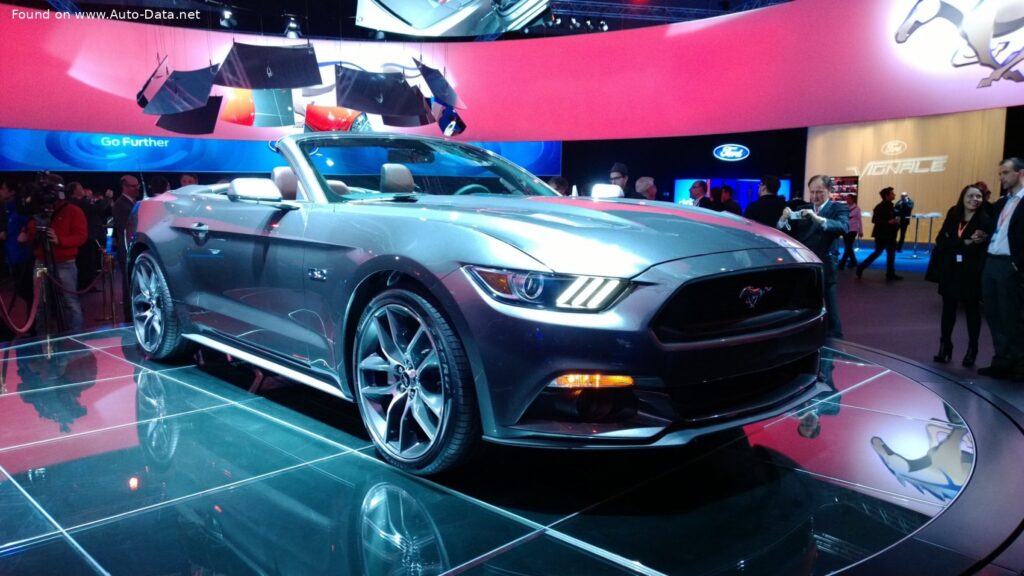
The Ford Mustang, an icon of American automotive culture, entered its sixth generation (S550) with significant fanfare, marking a pivotal moment in its illustrious history. Among its most celebrated variants was the Ford Mustang Convertible VI GT 5.0 Ti-VCT V8 (421 Hp), produced between 2015 and 2017. This particular model represented the quintessential modern pony car: a powerful, rear-wheel-drive convertible blending classic Mustang aesthetics with contemporary engineering and performance. The S550 generation was groundbreaking, being the first Mustang designed from the outset for global markets, thus introducing the legendary nameplate to a much wider international audience with both left-hand and right-hand drive configurations. This convertible GT variant, with its potent 5.0-liter V8 engine and traditional manual transmission, offered an exhilarating open-air driving experience, solidifying the Mustang’s position as an accessible performance machine with undeniable curb appeal.
Powertrain & Engine Architecture
At the core of the Ford Mustang Convertible VI GT 5.0 Ti-VCT V8 (421 Hp) lies the revered “Coyote” 5.0-liter V8 engine, a powerplant synonymous with modern Mustang performance. This naturally aspirated, all-aluminum engine, designated by its internal code, was meticulously engineered to deliver a thrilling driving experience. It produced a robust 421 horsepower at 6500 rpm and 390.91 lb-ft of torque at 4250 rpm, providing ample thrust for both spirited acceleration and effortless highway cruising. The engine’s high-revving nature and linear power delivery were characteristic of a performance-oriented V8, further enhanced by its DOHC (Dual Overhead Camshaft) valvetrain with four valves per cylinder.
A key technological highlight was Ford’s Twin Independent Variable Cam Timing (Ti-VCT) system. This advanced technology allowed for precise control over both intake and exhaust valve timing, optimizing engine performance across the entire rev range, improving fuel efficiency, and reducing emissions. Fuel delivery was handled by a multi-port manifold injection system, ensuring consistent and efficient combustion. With a compression ratio of 11:1, the Coyote V8 was designed for premium gasoline, extracting maximum power from every drop. The engine’s block was constructed from aluminum alloy, contributing to weight reduction and improved thermal management.
Power was channeled to the rear wheels via a crisp 6-speed manual transmission, offering enthusiasts a direct and engaging connection to the powertrain. This classic combination of a powerful V8 and a manual gearbox underscored the Mustang GT’s driver-centric philosophy. While an automatic transmission was available, the manual was favored by enthusiasts for its greater control and involvement. The engine’s design prioritized both performance and durability, with robust components designed to withstand the stresses of spirited driving.
Driving Characteristics
The 2015-2017 Mustang GT Convertible with the 5.0-liter V8 and 6-speed manual transmission delivered a distinctly visceral driving experience. Compared to the EcoBoost 2.3L turbocharged four-cylinder models, the GT offered significantly more power and torque throughout the rev range. The difference was particularly noticeable during acceleration and overtaking maneuvers. While the EcoBoost provided adequate performance for daily driving, the GT’s V8 provided a more engaging and rewarding experience for driving enthusiasts.
The 6-speed manual transmission featured relatively short gear ratios, optimized for acceleration. First gear was geared for quick launches, while the higher gears were designed for comfortable highway cruising. The clutch pedal was relatively light, making it easy to operate in traffic, but still provided a positive engagement feel. The steering was precise and responsive, offering good feedback to the driver. The independent rear suspension (IRS) significantly improved handling compared to previous Mustang generations, reducing body roll and providing a more stable and controlled ride. The IRS allowed the car to corner with greater confidence and maintain better traction on uneven surfaces.
Compared to the automatic transmission equipped GT models, the manual version offered a more direct connection to the engine and allowed the driver to fully exploit the V8’s power and torque. The automatic transmission, while convenient, tended to hunt for gears during spirited driving and didn’t provide the same level of control as the manual.
Equipment & Trim Levels
The Mustang GT Convertible occupied a mid-to-premium position within the S550 Mustang lineup. It sat above the base EcoBoost models and below any potential higher-performance variants (such as the Shelby GT350). Standard equipment included leather upholstery, air conditioning, power windows and locks, a rearview camera, and a basic sound system. The GT also featured unique exterior styling cues, such as a rear spoiler, larger wheels, and a more aggressive front fascia.
Optional extras were plentiful and allowed buyers to customize their Mustang GT to their liking. Popular options included the Premium Package, which added features such as heated and cooled front seats, upgraded leather upholstery, and a premium sound system. Other available options included navigation, blind-spot monitoring, and adaptive cruise control. A performance package was also available, which included upgraded brakes, a stiffer suspension, and a limited-slip differential. Interior color options typically included black, gray, and red, with various stitching and trim options available.
The convertible top was a power-operated soft top, available in several colors. The top could be raised or lowered in a matter of seconds, providing the flexibility of both open-air and enclosed driving. The interior dashboard configuration featured a blend of retro-inspired toggle switches and modern digital displays, creating a unique and stylish environment.
Chassis & Braking
The sixth-generation Mustang represented a significant leap forward in chassis technology, most notably with the introduction of an independent rear suspension (IRS). This replaced the solid rear axle found in previous generations, dramatically improving ride quality, handling, and stability. The IRS utilized a multi-link design with coil springs and stabilizer bar, providing a more controlled and predictable driving experience.
The front suspension utilized an independent McPherson strut design, with coil springs and a stabilizer bar. This setup provided good handling and ride comfort. The steering system was a precise rack and pinion setup, offering responsive feedback to the driver. The Mustang GT Convertible rode on distinctive 19-inch wheels, shod with staggered tire sizes: 255/40 R19 at the front and wider 275/40 R19 at the rear. This setup optimized grip and handling balance, especially given the car’s rear-wheel-drive architecture.
Stopping power was provided by robust ventilated disc brakes on both the front and rear axles, complemented by an Anti-lock Braking System (ABS) for enhanced safety and control. The front brakes featured larger rotors and calipers than the rear brakes, providing greater stopping power. The ABS system helped to prevent wheel lockup during hard braking, maintaining steering control. The curb weight of 3937.46 lbs reflected the structural reinforcements necessary for a convertible, ensuring body rigidity and safety.
Market Reception & Comparison
The 2015-2017 Ford Mustang GT Convertible received generally positive reviews from automotive critics. It was praised for its powerful V8 engine, improved handling, and stylish design. The IRS was widely lauded as a significant improvement over previous generations, transforming the Mustang from a straight-line performer into a capable all-around sports car. However, some critics noted that the interior quality was not quite up to par with some of its European competitors.
Compared to the EcoBoost Mustang, the GT offered significantly more performance, but at a higher price point and with slightly lower fuel economy. The GT recorded a combined fuel economy of 17.3 US mpg, while the EcoBoost achieved around 22 mpg. In terms of reliability, the Coyote V8 proved to be a robust and dependable engine, with relatively few reported issues. The convertible top mechanism was also generally reliable, although some owners reported minor issues with the hydraulic system.
Its main competitors included the Chevrolet Camaro SS Convertible and the Dodge Challenger R/T Scat Pack. The Camaro offered similar performance and handling, but with a more modern interior. The Challenger provided a more spacious interior and a more comfortable ride, but with less agile handling. The Mustang GT Convertible struck a balance between performance, handling, and style, making it a popular choice among enthusiasts.
Technical Specifications
| Category | Specification |
| Brand | Ford |
| Model | Mustang Convertible VI GT 5.0 Ti-VCT V8 (421 Hp) |
| Production Years | 2015 – 2017 |
| Body Type | Cabriolet (Convertible) |
| Seats | 4 |
| Doors | 2 |
| Power | 421 Hp @ 6500 rpm |
| Torque | 390.91 lb.-ft. (530 Nm) @ 4250 rpm |
| Fuel Consumption (Combined) | 17.3 US mpg (13.6 l/100 km) |
| CO2 Emissions | 306 g/km |
| Fuel Type | Petrol (Gasoline) |
| Weight-to-Power Ratio | 4.2 kg/Hp (235.7 Hp/tonne) |
| Weight-to-Torque Ratio | 3.4 kg/Nm (296.8 Nm/tonne) |
| Engine Layout | Front, Longitudinal |
| Engine Model/Code | Coyote |
| Engine Displacement | 302.13 cu. in. (4951 cm3) |
| Number of Cylinders | 8 |
| Engine Configuration | V-engine |
| Cylinder Bore | 3.63 in. (92.2 mm) |
| Piston Stroke | 3.65 in. (92.7 mm) |
| Compression Ratio | 11:1 |
| Valves per Cylinder | 4 |
| Fuel Injection System | Multi-port manifold injection |
| Engine Aspiration | Naturally aspirated engine |
| Valvetrain | DOHC |
| Kerb Weight | 3937.46 lbs (1786 kg) |
| Length | 188.35 in. (4784 mm) |
| Width | 75.43 in. (1916 mm) |
| Height | 54.88 in. (1394 mm) |
| Wheelbase | 107.09 in. (2720 mm) |
| Gearbox Type | 6 gears, manual transmission |
| Front Suspension | Independent type McPherson |
| Rear Suspension | Independent multi-link spring suspension with stabilizer |
| Front Brakes | Ventilated discs |
| Rear Brakes | Ventilated discs |
Legacy
The sixth-generation Ford Mustang, and particularly the GT Convertible with its 5.0-liter V8, carved out a significant legacy during its production run from 2015 to 2017. It continued the Mustang’s tradition of offering compelling performance and iconic styling at a relatively accessible price point, making it a strong contender in the American pony car segment. Its direct competitors included the Chevrolet Camaro SS Convertible and the Dodge Challenger R/T Scat Pack, each offering their own take on American muscle. However, the S550 Mustang distinguished itself with its more modern, globally-tuned chassis and the introduction of independent rear suspension, which elevated its handling prowess beyond previous generations.
The global launch of the S550 was arguably its most significant historical impact. For the first time, the Mustang was officially sold in numerous international markets, including Europe and Asia, where it garnered critical acclaim and strong sales. This expanded reach turned the Mustang from a purely American icon into a globally recognized sports car, admired for its blend of classic V8 charm and contemporary driving dynamics. The convertible GT, in particular, resonated with buyers looking for a visceral, open-air driving experience with the unmistakable rumble of a naturally aspirated V8.
On the used car market today, the 2015-2017 Mustang GT Convertible remains a desirable vehicle. The Coyote V8 engine is known for its reliability and durability, and the IRS chassis provides a comfortable and engaging driving experience. Prices vary depending on mileage, condition, and options, but well-maintained examples typically command a premium. The Mustang GT Convertible continues to be a popular choice among enthusiasts looking for a classic American sports car with modern performance and features.