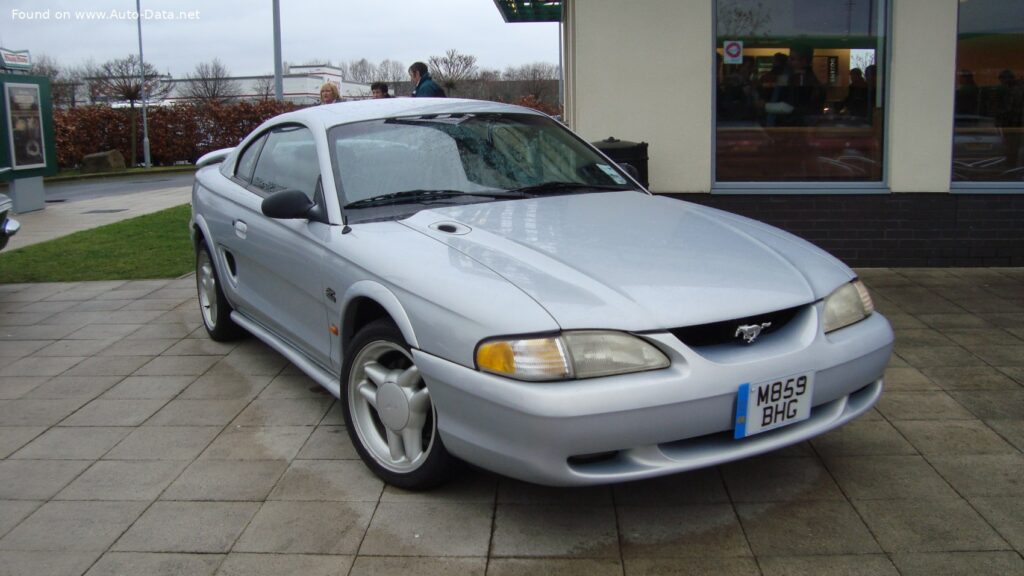
The Ford Mustang, an enduring symbol of American automotive prowess and freedom, entered its fourth generation, known internally as the SN95, with the 1994 model year. The specific variant, the Ford Mustang IV 4.6 V8 GT (215 Hp) produced between 1995 and 1997, represented a pivotal moment for the iconic pony car. Moving away from the long-running Fox Body platform, the SN95 Mustang presented a modernized design, enhanced chassis, and, crucially for the GT trim, a new powerplant that would define its character for years to come. This generation sought to blend the Mustang’s traditional muscle car appeal with contemporary styling and improved driving dynamics, solidifying its position in the fiercely competitive American performance car market.
Engine & Performance: The Dawn of the Modular V8 in the Ford Mustang IV
A significant shift for the Mustang GT occurred in 1996 with the introduction of the all-new 4.6-liter “Modular” V8 engine, replacing the venerable 5.0-liter (302 cubic inch) pushrod V8 that had powered the GT for decades. This change marked a modernization of Ford’s V8 engine architecture, moving to an overhead camshaft design. For the 1995-1997 GT, specifically the 4.6 V8 GT (215 Hp) variant, this naturally aspirated, multi-port manifold injected engine delivered a robust 215 horsepower at 4400 rpm. Torque output was equally impressive for its era, peaking at 284.7 lb.-ft. (386 Nm) at a relatively low 3500 rpm, ensuring strong off-the-line acceleration and ample mid-range grunt, characteristic of American V8s.
The engine, designated by the Modular / 99WSFI code, featured a V-engine configuration with eight cylinders, each with two valves. With a bore of 3.55 inches (90.2 mm) and a stroke of 3.54 inches (90 mm), the engine displacement totaled 280.77 cubic inches (4601 cm3). A compression ratio of 9:1 allowed for reliable performance on widely available gasoline. Power was efficiently channeled to the rear wheels via a standard 5-speed manual transmission, providing an engaging driving experience that enthusiasts craved. An optional 4-speed automatic transmission was also available, catering to buyers prioritizing convenience over outright performance. While its 0-60 mph times were respectable for the period, typically in the low to mid-6-second range with the manual, the automatic versions were slightly slower, generally achieving times in the mid-7 second range. The true appeal of the Ford Mustang IV 4.6 V8 GT (215 Hp) lay in its accessible power, distinctive V8 rumble, and the inherent fun of a rear-wheel-drive coupe. Fuel economy, while not a primary concern for muscle car buyers, was rated at a combined 20.8 US mpg (11.3 l/100 km), which was competitive for a V8-powered performance coupe of its size.
Design & Features: A Modern Interpretation of a Classic
The Ford Mustang IV, or SN95 generation, represented a bold step forward in design for the iconic pony car. While retaining familiar Mustang cues, the design was smoother, more aerodynamic, and more contemporary than its Fox Body predecessor. The 1995-1997 Ford Mustang IV 4.6 V8 GT (215 Hp) was offered exclusively as a two-door coupe, with a distinct fastback profile that subtly referenced earlier Mustang generations. Its dimensions included a length of 181.5 inches (4610 mm), a width of 71.81 inches (1824 mm), and a height of 53.39 inches (1356 mm), riding on a 101.3-inch (2573 mm) wheelbase. These proportions gave the Mustang a squat, aggressive stance, further accentuated by its 225/55 ZR16 tires.
Inside, the SN95 Mustang featured a “dual-cockpit” interior design, a nod to classic sports car layouts, with controls angled towards the driver. The four-seat cabin offered a more refined environment than previous generations, though rear passenger space remained typical for a 2+2 coupe. Standard features for the GT included power windows, power locks, air conditioning, and a premium sound system, all contributing to a more comfortable and feature-rich experience. Optional extras included leather upholstery, a power driver’s seat, and upgraded audio systems. In terms of safety, the 1995-1997 GT came equipped with disc brakes at all four corners and, importantly, an Anti-lock Braking System (ABS) as an assisting system, a crucial advancement for improved stopping power and control. The suspension setup, with a wishbone front and coil spring rear, provided a balance between ride comfort and handling capability, making the GT a capable performer on both the street and the occasional track day.
Positioning and Comparison within the SN95 Lineup
The 4.6 V8 GT occupied the mid-range position within the SN95 Mustang lineup. Below it sat the base model Mustang, powered by a 3.8-liter V6 engine, which prioritized fuel economy and affordability. The GT offered a significant performance upgrade over the V6, appealing to buyers seeking a more engaging driving experience. Above the GT was the high-performance SVT Cobra, which featured a more powerful version of the 4.6-liter V8, along with upgraded suspension components and unique styling cues. The Cobra was aimed at enthusiasts who demanded the ultimate in Mustang performance. Compared to the V6, the GT offered a substantial increase in horsepower and torque, resulting in quicker acceleration and a more satisfying exhaust note. Compared to the Cobra, the GT provided a more balanced combination of performance and affordability, making it a popular choice for a wider range of buyers.
Chassis & Braking
The SN95 Mustang represented a significant improvement in chassis rigidity over the outgoing Fox Body platform. The use of more robust construction techniques and a redesigned frame resulted in a stiffer and more stable platform. The GT models featured a slightly stiffer suspension tuning compared to the base V6 models, enhancing handling performance. The front suspension utilized a wishbone design, while the rear suspension employed a coil-spring setup. Braking duties were handled by disc brakes at all four corners, providing ample stopping power. The inclusion of ABS was a significant safety feature, particularly for a performance-oriented vehicle. Rear drum brakes were standard on the base V6 models, highlighting the GT’s performance advantage.
Market Reception & Comparison
Critics generally praised the 1995-1997 Mustang GT for its modern design, improved interior, and the introduction of the Modular V8 engine. However, some reviewers noted that the engine’s initial 215 horsepower output was somewhat underwhelming compared to competitors like the Chevrolet Camaro Z28 and Pontiac Firebird Trans Am. Fuel economy was considered respectable for a V8-powered performance car, averaging around 18 mpg city and 25 mpg highway. Reliability was generally good, although some owners reported minor issues with the early Modular V8 engines, such as oil leaks and timing chain tensioner problems. The Mustang GT’s combination of performance, styling, and affordability made it a popular choice among buyers, contributing to its continued sales success.
Technical Specifications
| Brand | Ford |
| Model | Mustang |
| Generation | Mustang IV |
| Type (Engine) | 4.6 V8 GT (215 Hp) |
| Start of Production | 1995 year |
| End of Production | 1997 year |
| Powertrain Architecture | Internal Combustion engine |
| Body Type | Coupe |
| Seats | 4 |
| Doors | 2 |
| Performance Specs | |
| Fuel Consumption (Combined) | 11.3 l/100 km (20.8 US mpg) |
| Fuel Type | Petrol (Gasoline) |
| Weight-to-Power Ratio | 6.9 kg/Hp (144 Hp/tonne) |
| Weight-to-Torque Ratio | 3.9 kg/Nm (258.5 Nm/tonne) |
| Engine Specs | |
| Power | 215 Hp @ 4400 rpm |
| Power per Liter | 46.7 Hp/l |
| Torque | 386 Nm (284.7 lb.-ft.) @ 3500 rpm |
| Engine Layout | Front, Longitudinal |
| Engine Model/Code | Modular / 99WSFI |
| Engine Displacement | 4601 cm3 (4.6 Liters / 280.77 cu. in.) |
| Number of Cylinders | 8 |
| Engine Configuration | V-engine |
| Cylinder Bore | 90.2 mm (3.55 in.) |
| Piston Stroke | 90 mm (3.54 in.) |
| Compression Ratio | 9:1 |
| Number of Valves per Cylinder | 2 |
| Fuel Injection System | Multi-port manifold injection |
| Engine Aspiration | Naturally aspirated engine |
| Engine Oil Capacity | 5.7 l (6.02 US qt) |
| Coolant Capacity | 13.3 l (14.05 US qt) |
| Space, Volume and Weights | |
| Kerb Weight | 1493 kg (3291.5 lbs.) |
| Trunk (Boot) Space – Minimum | 200 l (7.06 cu. ft.) |
| Fuel Tank Capacity | 58 l (15.32 US gal) |
| Dimensions | |
| Length | 4610 mm (181.5 in.) |
| Width | 1824 mm (71.81 in.) |
| Height | 1356 mm (53.39 in.) |
| Wheelbase | 2573 mm (101.3 in.) |
| Front Track | 1524 mm (60 in.) |
| Rear (Back) Track | 1491 mm (58.7 in.) |
| Drivetrain, Brakes and Suspension Specs | |
| Drivetrain Architecture | Internal combustion engine drives the rear wheels. |
| Drive Wheel | Rear wheel drive |
| Number of Gears and Type of Gearbox | 5 gears, manual transmission |
| Front Suspension | Wishbone |
| Rear Suspension | Coil spring |
| Front Brakes | Disc |
| Rear Brakes | Disc |
| Assisting Systems | ABS (Anti-lock braking system) |
| Steering Type | Steering rack and pinion |
| Power Steering | Hydraulic Steering |
| Tires Size | 225/55 ZR16 |
Legacy
The Ford Mustang IV 4.6 V8 GT (215 Hp) holds a significant place in the Mustang’s storied history, representing a crucial transition period. It was the model that successfully moved the Mustang beyond the aging Fox Body platform, ushering in a new era of design and engineering. While often overshadowed by its more potent SVT Cobra siblings or the later, more powerful New Edge GTs, the 1995-1997 GT was the mainstream performance offering that kept the Mustang relevant and competitive. Its introduction of the Modular V8 was a gamble that paid off in the long run, laying the groundwork for the highly tunable and powerful engines that would follow. Today, these Mustangs are relatively affordable and readily available on the used car market. The 4.6-liter Modular V8, while prone to some minor issues, is generally considered a durable and reliable engine, especially when properly maintained. The SN95 Mustang GT remains a popular choice for enthusiasts looking for a classic American muscle car experience without breaking the bank.