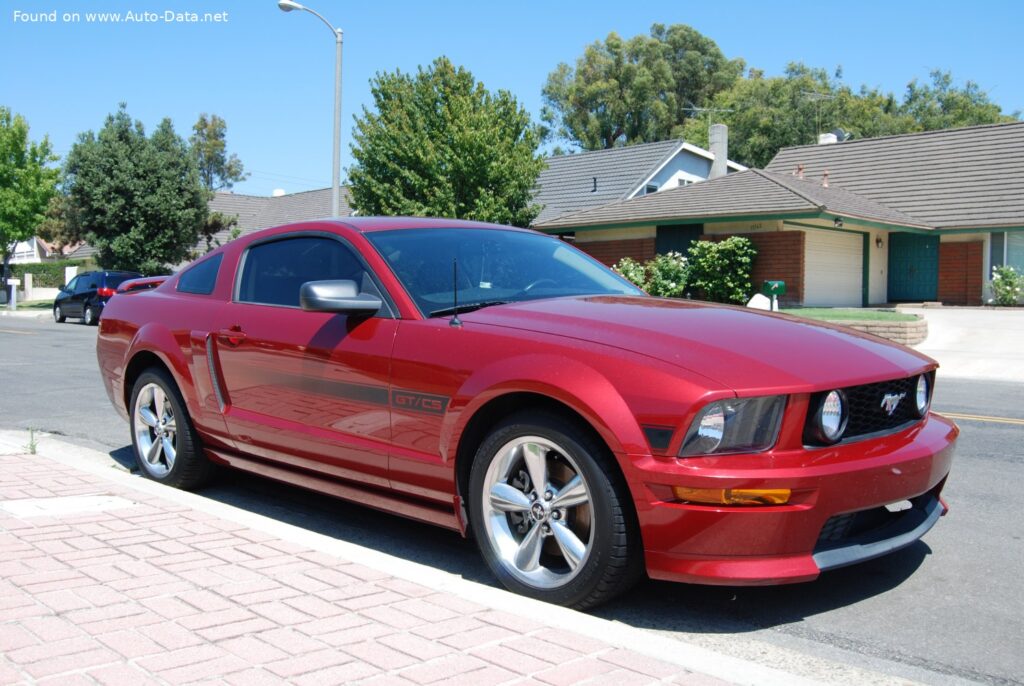
The Ford Mustang V, often referred to by its internal codename S197, represented a significant turning point in the history of this iconic American pony car. Introduced for the 2005 model year, this fifth-generation Mustang marked a departure from the preceding “New Edge” SN95 design, embracing a “retro-futuristic” aesthetic that evoked the classic Mustangs of the late 1960s. The Ford Mustang V 4.0i V6 12V (212 Hp) served as the entry-level model, offering a blend of classic Mustang styling, respectable performance, and everyday usability. Produced from 2005 to 2009, this generation was crucial in revitalizing the pony car segment and setting the stage for a renewed era of muscle car competition.
The 4.0L V6: Entry Point to the Mustang Experience
Designed and engineered primarily for the North American market, where the Mustang holds a unique cultural significance, the S197 aimed to reconnect with the brand’s heritage while incorporating modern engineering and safety features. The 4.0-liter V6 model provided an accessible entry point for enthusiasts, delivering a compelling driving experience that balanced power with reasonable fuel efficiency for its class. Its rear-wheel-drive powertrain, a hallmark of the Mustang, ensured an authentic driving experience.
Powertrain & Engine Architecture
At the heart of the entry-level Ford Mustang V was the 4.0-liter (4009 cm³ or 244.64 cubic inches) Cologne V6 engine. This naturally aspirated, 12-valve powerplant was configured in a 60-degree V-engine layout, mounted longitudinally in the front of the vehicle. The Cologne engine, while not a Ford-designed engine originally, had been used in various Ford vehicles globally for decades, known for its durability and relatively simple design. Delivering 212 horsepower at 5200 revolutions per minute (rpm), it represented a substantial improvement over the 3.8-liter V6 found in the previous SN95 generation. Torque output stood at 325 Nm (239.71 lb-ft) at 3500 rpm, providing a usable surge of power for daily driving and acceleration.
The engine utilized a multi-port fuel injection system, delivering fuel directly into each intake port. The valvetrain employed two valves per cylinder (12 valves total), operated by a single overhead camshaft. The compression ratio was 9.7:1, a compromise between performance and reliability, allowing the engine to run on regular unleaded gasoline. Power was transmitted to the rear wheels through either a standard 5-speed manual transmission or an optional 5-speed automatic transmission. The automatic transmission, a Ford 5R55E unit, was a common choice for buyers prioritizing convenience and ease of use. This transmission featured electronic control and overdrive for improved fuel economy at highway speeds.
Driving Characteristics
The Ford Mustang V 4.0i V6 12V (212 Hp) with the automatic transmission offered a comfortable and accessible driving experience. While not as exhilarating as the V8-powered Mustang GT, the V6 provided adequate power for everyday driving and occasional spirited runs. The automatic transmission’s gear ratios were tuned for a balance of acceleration and fuel efficiency. First gear provided brisk off-the-line acceleration, while the overdrive fifth gear helped to keep engine speeds low during highway cruising. Compared to the manual transmission version, the automatic resulted in slightly slower acceleration times (around 7.5 seconds to 60 mph versus 6.7 seconds for the manual), but offered a smoother and more relaxed driving experience. The automatic transmission also tended to slightly reduce fuel economy compared to the manual.
The V6 automatic Mustang’s handling was generally considered competent, but not particularly sporty. The suspension was tuned for comfort, resulting in a relatively soft ride. The steering was precise, but lacked the feedback found in more performance-oriented vehicles. Overall, the V6 automatic Mustang was a comfortable and practical coupe that offered a taste of the Mustang experience at a more affordable price point.
Equipment & Trim Levels
The Ford Mustang V 4.0i V6 12V (212 Hp) came standard with a range of features designed to appeal to a broad audience. Standard interior features included cloth upholstery, air conditioning, power windows and locks, and an AM/FM stereo with a CD player. Safety features included dual front airbags. Optional extras included leather upholstery, a premium sound system, and anti-lock brakes (ABS). The Mustang V was available in a variety of exterior colors, and could be optioned with various wheel designs. The trim level was relatively basic, focusing on providing essential features at an affordable price. It was positioned as the entry-level model, below the Mustang GT with its V8 engine and more extensive feature set.
Chassis & Braking
The S197 Mustang V utilized a traditional front suspension design consisting of a MacPherson strut setup with coil springs and stabilizer bar. The rear suspension employed a solid axle with coil springs and trailing arms. While the solid rear axle was a cost-effective solution, it was criticized by some for its less sophisticated ride and handling characteristics compared to independent rear suspensions. Braking duties were handled by ventilated disc brakes at all four corners. The V6 model typically featured smaller brake rotors than the V8-powered GT. ABS was available as an option, providing enhanced braking performance and control. The standard tire size was 215/65R16, mounted on 16-inch steel or alloy wheels.
Market Reception & Comparison
Critics generally viewed the Ford Mustang V 4.0i V6 12V (212 Hp) as a solid entry-level pony car. It was praised for its retro styling, respectable performance, and affordability. However, some critics noted that the V6 engine lacked the power and excitement of the V8-powered GT. Fuel economy was considered reasonable for its class, averaging around 19 mpg city and 28 mpg highway. Reliability was generally good, with the 4.0-liter V6 engine proving to be a durable and dependable powerplant. Compared to the Mustang GT, the V6 offered significantly better fuel economy and a lower purchase price, but lacked the GT’s performance and prestige. Compared to other sporty coupes in its price range, such as the Nissan 350Z and Mazda RX-8, the Mustang V offered a more spacious interior and a more comfortable ride, but lacked the same level of handling precision.
Technical Specifications
| Category | Specification |
| Brand | Ford |
| Model | Mustang |
| Generation | Mustang V (S197) |
| Type (Engine) | 4.0i V6 12V (212 Hp) |
| Start of Production | 2005 year |
| End of Production | 2009 year |
| Powertrain Architecture | Internal Combustion engine |
| Body Type | Coupe |
| Seats | 4 |
| Doors | 2 |
| Fuel Consumption (City) | 12.4 l/100 km (19 US mpg) |
| Fuel Consumption (Highway) | 8.4 l/100 km (28 US mpg) |
| Fuel Type | Petrol (Gasoline) |
| Acceleration 0 – 60 mph | 6.7 sec (Manual), 7.5 sec (Automatic) |
| Acceleration 0 – 100 km/h | 7 sec |
| Maximum Speed | 180 km/h (111.85 mph) |
| Power | 212 Hp @ 5200 rpm |
| Torque | 325 Nm (239.71 lb-ft) @ 3500 rpm |
| Engine Displacement | 4009 cm³ (244.64 cu. in.) |
| Number of Cylinders | 6 |
| Compression Ratio | 9.7:1 |
| Kerb Weight | 1530 kg (3373.07 lbs) |
| Fuel Tank Capacity | 61 l (16.11 US gal) |
| Length | 4765 mm (187.6 in.) |
| Width | 1875 mm (73.82 in.) |
| Height | 1385 mm (54.53 in.) |
Legacy
The 4.0-liter V6 engine and 5-speed automatic transmission combination in the S197 Mustang proved to be a reliable and durable powertrain. While not known for its high performance, it provided years of dependable service for many owners. In the used car market today, these Mustangs are often sought after as affordable and stylish transportation. The 4.0-liter V6 is generally considered to be a low-maintenance engine, and parts are readily available. The S197 Mustang V 4.0i V6 12V (212 Hp) remains a popular choice for enthusiasts looking for a classic American muscle car experience without breaking the bank. Its blend of retro styling, reasonable performance, and everyday usability ensures its continued appeal for years to come.