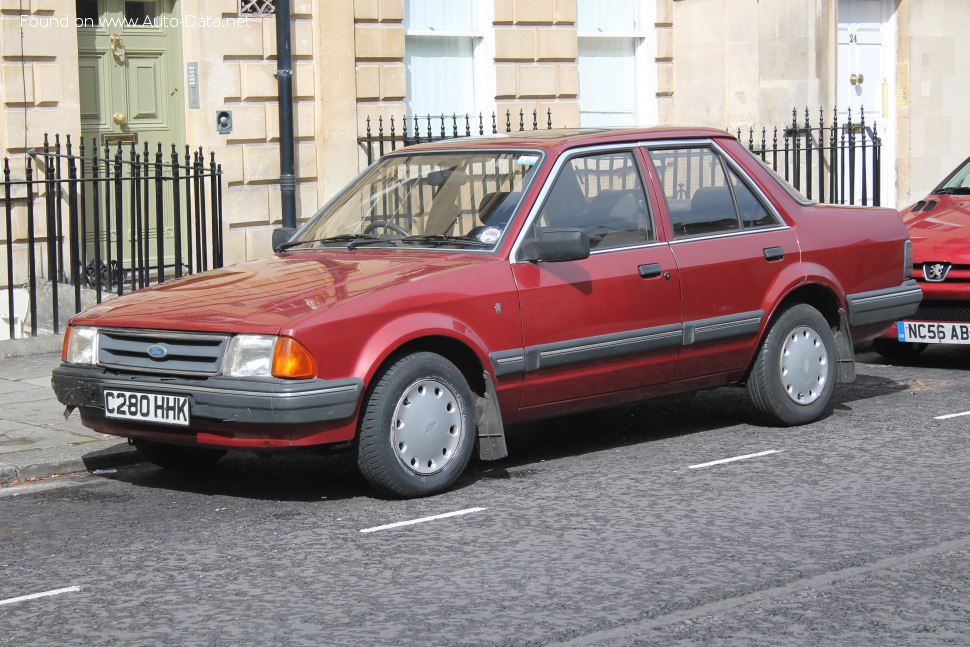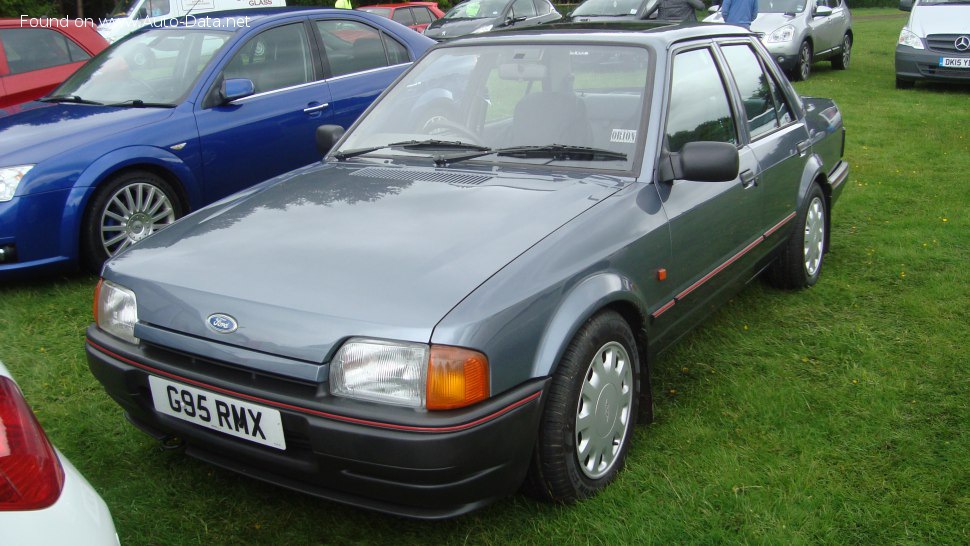
The Ford Orion II (AFF) 1.4 (72 Hp) represents a significant chapter in Ford Europe’s strategy to cater to diverse customer preferences within the compact car segment during the late 1980s. Launched in 1986 as the second generation of the Orion, this model was essentially a traditional three-box sedan variant of the highly successful Ford Escort Mark IV hatchback. While the Escort itself was a global phenomenon, with a distinct version sold in North America, the Orion was specifically tailored for European markets, appealing to buyers who desired the more formal styling, perceived security, and larger separate trunk space offered by a sedan body style over a hatchback.
The Orion II (AFF) continued the legacy of its predecessor, aiming to bridge the gap between the compact Escort and the larger Sierra family car. It offered a more upscale and mature image than the Escort, often appealing to slightly older or more conservative buyers, as well as fleet customers. The 1.4-liter (72 Hp) variant, produced from 1986 to 1990, stood as a popular and economical choice within the Orion lineup, embodying the pragmatic and reliable transport that Ford was renowned for in Europe.
The Ford Orion II (AFF) 1.4 (72 Hp): A Detailed Overview
The Ford Orion, unlike its Escort hatchback sibling, was never officially sold in the United States. Its existence was firmly rooted in the European automotive landscape, where the preference for sedans remained strong. The Orion served as a crucial model for Ford in markets like the United Kingdom, Germany, and France, offering a more conventional alternative to the increasingly popular hatchback designs. It allowed Ford to capture a segment of the market that valued a traditional car profile and the perceived benefits of a separate trunk.
Engine & Performance: A Focus on Reliability
Under the hood of the Ford Orion II (AFF) 1.4 (72 Hp) resided a naturally aspirated 1.4-liter gasoline engine. This engine was a mainstay of Ford’s European lineup, known for its durability and fuel efficiency. Producing 72 horsepower, it wasn’t designed for exhilarating performance, but rather for providing adequate power for everyday driving needs. In the mid-to-late 1980s, this output was considered respectable for a compact car, allowing for comfortable commuting, city driving, and highway travel within the speed limits common in Europe.
The engine’s simplicity was a key attribute. It lacked the complexity of more modern technologies like turbocharging or fuel injection, relying on a carburetor for fuel delivery. This contributed to its ease of maintenance and long-term reliability. The majority of Orion II (AFF) 1.4 models were equipped with a five-speed manual transmission, offering drivers good control over the engine’s power band and contributing to reasonable fuel economy. While acceleration wasn’t a priority, the 1.4-liter engine provided a predictable and user-friendly driving experience, aligning with Ford’s commitment to accessible and practical transportation.
Design & Features: A Conservative Aesthetic
The design of the Ford Orion II (AFF) reflected the automotive styling trends of the late 1980s – functional, clean, and relatively conservative. The three-box sedan configuration clearly distinguished it from the Escort hatchback, offering a more formal and mature appearance. The front end shared many styling cues with the Escort Mark IV, including the headlights and grille, but the extended rear section and integrated trunk were unique to the Orion.
The four-door sedan body style prioritized practicality and passenger comfort. The separate trunk offered a secure and spacious cargo area, appealing to families and individuals who needed to transport luggage or conceal valuables. The interior was designed with durability in mind, utilizing materials that were easy to clean and maintain. Standard features included cloth upholstery and a basic radio/cassette player. Optional extras, depending on the trim level, could include power steering, central locking, and a sunroof. Safety features were limited by the standards of the time, primarily consisting of seatbelts and a reinforced body structure. Airbags and anti-lock braking systems (ABS) were not commonly available on vehicles in this segment during the late 1980s.
Technical Specifications
| Attribute | Detail |
| Brand | Ford |
| Model | Orion |
| Generation | Orion II (AFF) |
| Type (Engine) | 1.4 (72 Hp) |
| Start of Production | 1986 |
| End of Production | 1990 |
| Powertrain Architecture | Internal Combustion engine |
| Body Type | Sedan |
| Fuel Type | Petrol (Gasoline) |
| Power | 72 Hp |
| Engine Aspiration | Naturally aspirated engine |
Legacy & Market Impact
The Ford Orion II (AFF) successfully occupied a niche in the competitive European compact car market. It catered to buyers who preferred the styling and practicality of a sedan over a hatchback, competing with models like the Volkswagen Jetta, Opel/Vauxhall Astra sedan, Peugeot 309, and Renault 19 Chamade. The Orion’s success was built on its reputation for reliability, affordability, and the extensive support network provided by Ford’s European dealer network.
While it didn’t achieve widespread recognition for groundbreaking innovation, the Orion consistently delivered on its promise of dependable and practical transportation. Its conservative design and robust mechanicals ensured a long service life, and it remained a common sight on European roads for years after production ended. The Orion demonstrated Ford’s ability to adapt a successful platform – the Escort – to meet specific market demands, offering a tailored product for a segment of buyers who valued a traditional car experience.
The Orion nameplate was eventually discontinued after the third generation. In many markets, its role was taken over by the sedan version of the Ford Focus, which brought a more modern design and advanced technology to the compact sedan segment. The Ford Orion II (AFF) 1.4 (72 Hp) stands as a reminder of an era when simplicity, robustness, and traditional body styles were highly valued, securing its place in Ford’s European automotive history.