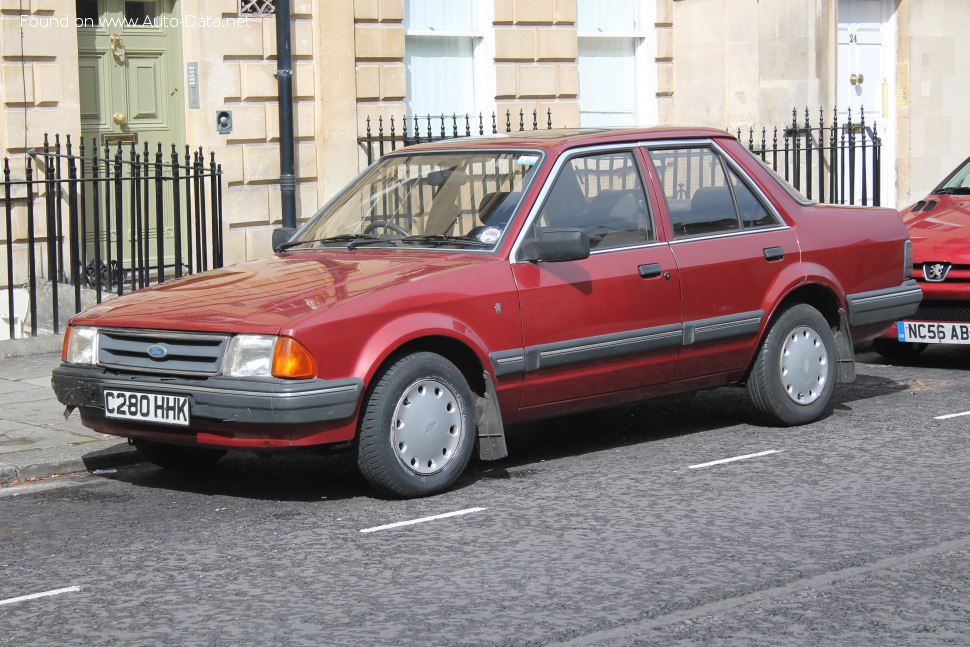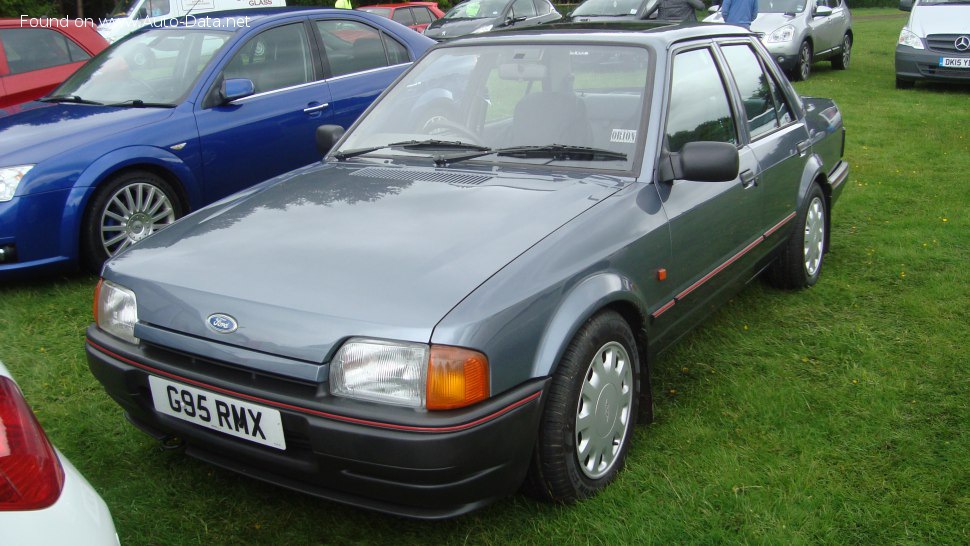
The Ford Orion II (AFF) represents a significant chapter in Ford of Europe’s strategy to cater to a diverse range of consumers in the late 1980s. Launched in 1987, the Orion II (AFF) was the second generation of Ford’s compact sedan, a derivative of the immensely popular Ford Escort. While never officially sold in the United States, the Orion played a crucial role in the European market, offering a more traditional three-box sedan alternative to its hatchback sibling. Positioned to appeal to families and individuals who preferred the classic sedan form factor, often associated with a slightly more prestigious or conventional image than a hatchback, the Ford Orion II (AFF) was a testament to practical, everyday motoring.
The Ford Orion II (AFF): A European Sedan
Produced until 1990, this generation continued the Orion’s legacy of providing reliable, economical, and spacious transportation within the compact segment. The specific variant under examination, the 1.4 CAT (73 Hp), highlights Ford’s early adoption of catalytic converter technology to meet emerging environmental standards in Europe, a feature that was becoming increasingly important during this period. The Orion II (AFF) was a staple on European roads, known for its straightforward engineering, comfortable ride, and accessible price point, making it a formidable competitor in its class.
Engine & Performance
At the heart of the Ford Orion II (AFF) 1.4 CAT (73 Hp) lay a naturally aspirated 1.4-liter internal combustion engine, designed for efficiency and dependable performance rather than outright speed. This gasoline-powered (petrol) engine delivered a respectable 73 horsepower (Hp), a figure well-suited for the vehicle’s intended purpose as a practical family sedan in the late 1980s. In an era before widespread turbocharging in compact cars, a naturally aspirated setup was the norm, offering predictable power delivery and simpler maintenance. The “CAT” designation signifies the inclusion of a catalytic converter, a significant advancement in automotive emissions control, converting harmful pollutants into less toxic substances. This demonstrated Ford’s commitment to environmental responsibility and compliance with stricter European emissions regulations.
While 73 Hp may seem modest by today’s standards, it provided ample power for city driving, highway cruising, and carrying passengers and luggage for its time and segment. The engine was known for its robustness and fuel economy, attributes highly valued by European consumers. The powertrain architecture was conventional for a front-engine, front-wheel-drive car, ensuring efficient power transfer and predictable handling. This contributed to the Orion II’s reputation as an easy-to-drive and manageable vehicle, suitable for a wide range of drivers. The focus was on delivering a smooth and reliable driving experience that prioritized practicality and cost-effectiveness.
Design & Features
The Ford Orion II (AFF) embraced the timeless appeal of the sedan body type, distinguishing itself from its Escort hatchback counterpart with a more formal and elongated profile. The design language was typical of late 1980s Ford Europe: clean lines, a relatively flat hood, and a distinctly separated trunk. This three-box design offered a sense of traditional elegance and perceived security that many buyers preferred. The exterior styling was understated, focusing on functionality and aerodynamic efficiency, which was a growing consideration for fuel economy.
Inside, the Orion II (AFF) prioritized ergonomics and passenger comfort. The cabin, while not luxurious, was thoughtfully laid out with durable materials designed to withstand daily family use. Seating was comfortable for four adults, with adequate legroom and headroom. The trunk space was a significant selling point, offering a generous volume superior to many contemporary hatchbacks, making it ideal for grocery runs, family vacations, and carrying bulky items. Key features included a capable heating and ventilation system, a basic radio/cassette player, and optional power windows or central locking on higher trim levels. Safety features were rudimentary by modern standards, typically comprising seatbelts and a robust body structure. The catalytic converter on the 1.4 CAT model was a forward-looking feature, highlighting an early emphasis on environmental considerations.
Technical Specifications: Ford Orion II (AFF) 1.4 CAT (73 Hp)
| Specification | Value |
| Brand | Ford |
| Model | Orion |
| Generation | Orion II (AFF) |
| Type (Engine) | 1.4 CAT (73 Hp) |
| Start of Production | 1987 year |
| End of Production | 1990 year |
| Powertrain Architecture | Internal Combustion engine |
| Body type | Sedan |
| Fuel Type | Petrol (Gasoline) |
| Power | 73 Hp |
| Engine Aspiration | Naturally aspirated engine |
Legacy and Market Impact
The Ford Orion II (AFF) carved out a distinct niche in the highly competitive European compact car market during its production run from 1987 to 1990. Its legacy is primarily one of quiet competence and widespread practicality. While it never achieved the iconic status of its hatchback sibling, the Escort, the Orion II successfully catered to a specific demographic that valued the traditional sedan’s attributes: a separate trunk for security, a more formal appearance, and a quieter cabin.
In its primary markets across Europe, the Orion II (AFF) faced competition from the Volkswagen Jetta, the Opel Kadett E sedan (Vauxhall Astra in the UK), the Renault 19 Chamade, and offerings from Fiat and Peugeot. The Orion distinguished itself through its proven Ford mechanics, widespread dealer network, and reputation for affordability and ease of maintenance, echoing the virtues that made the Escort so popular.
Historically, the Orion II (AFF) played a vital role in Ford’s European product strategy. It allowed Ford to offer a comprehensive lineup that addressed different consumer preferences within the compact segment without developing an entirely new platform. By sharing its underpinnings with the Escort, Ford achieved economies of scale while presenting a distinct product. The introduction of catalytic converter technology also highlights its significance in the automotive industry’s evolving response to environmental concerns. It was part of a broader trend where manufacturers began to integrate emissions control systems into their mainstream vehicles, pushing for cleaner air.
The Orion II (AFF) didn’t aim to be groundbreaking, but rather a dependable workhorse. Its impact was felt in its ability to consistently meet the demands of everyday family transport, contributing significantly to Ford’s market share in the compact sedan segment throughout the late 1980s. While it eventually made way for newer models and a shift in naming conventions, the Ford Orion II (AFF) remains a symbol of an era when straightforward, robust, and economical sedans were the backbone of European motoring. It solidified Ford’s reputation for building cars that were accessible, reliable, and perfectly suited for the practicalities of life, leaving a lasting, if understated, mark on the automotive landscape.