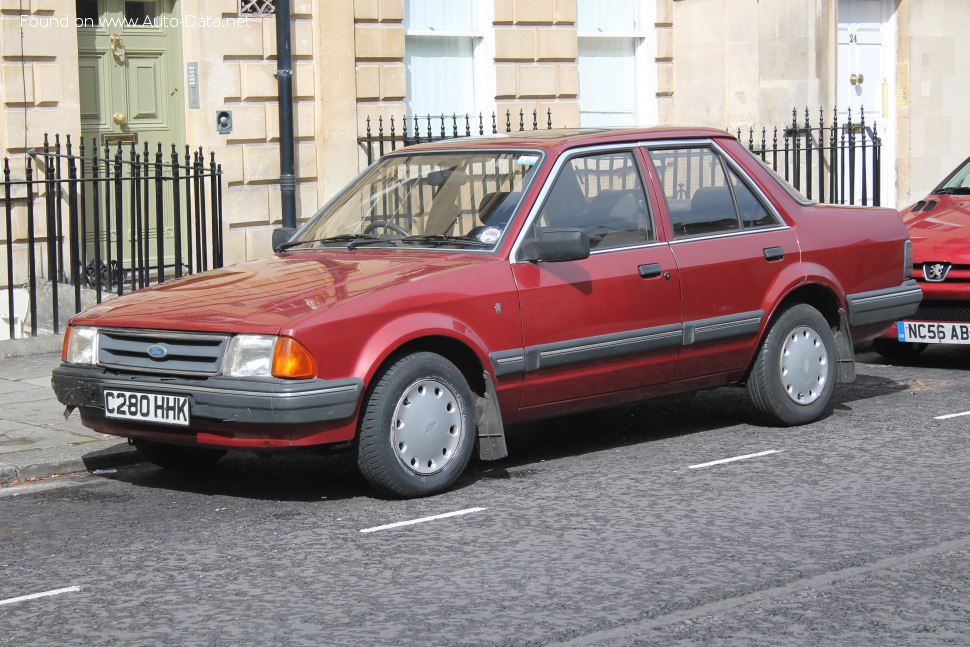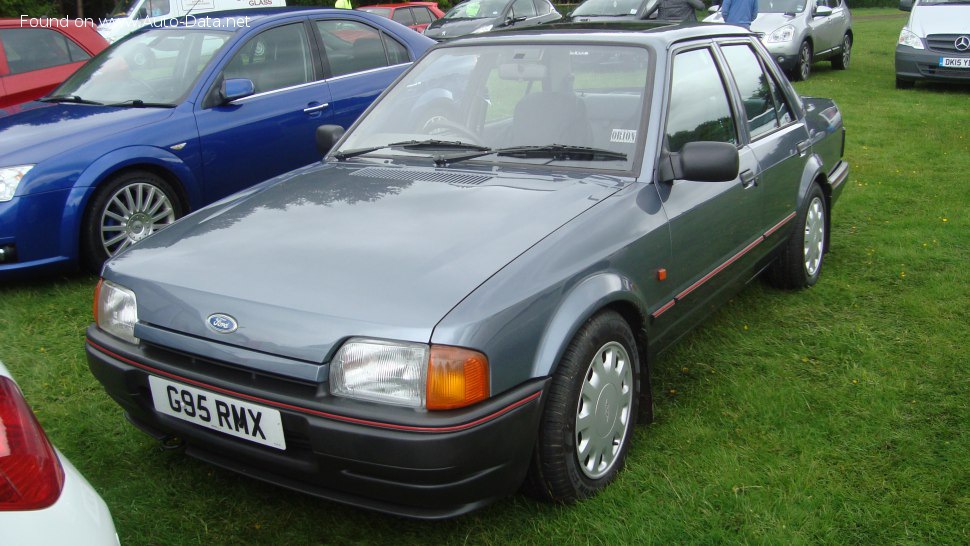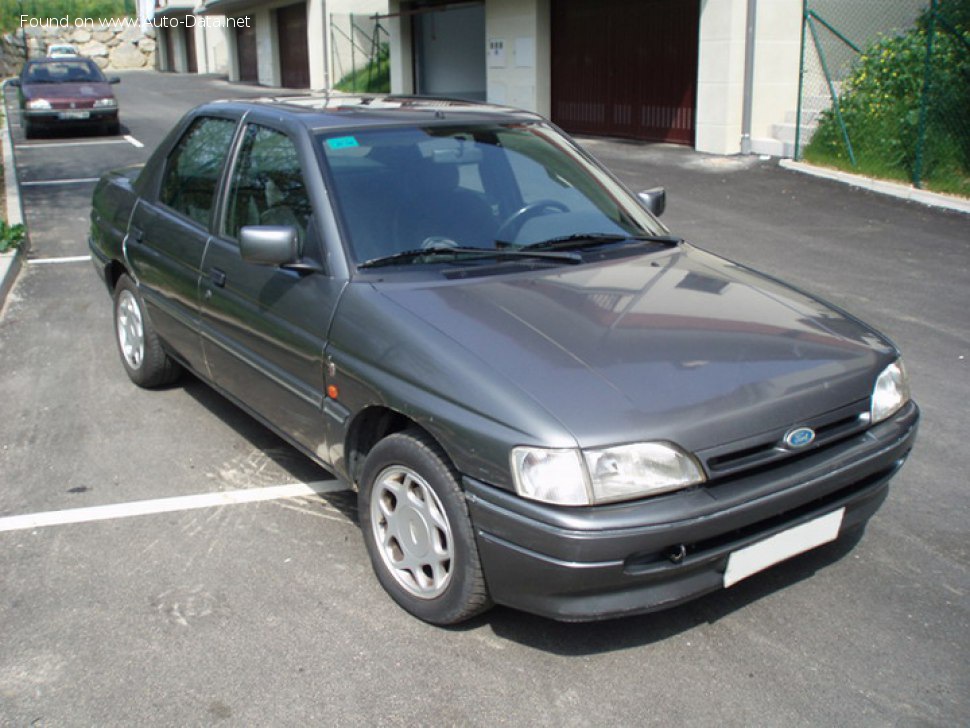
The Ford Orion III (GAL) represents the third generation of Ford’s compact sedan, a model specifically designed for the European market, offering a more traditional three-box alternative to the popular Ford Escort hatchback. Produced from 1990 to 1993, the Orion III, particularly the 1.8 D (60 horsepower) variant, embodied an era of practical, economical motoring in Europe. While never officially sold in the United States, the Orion played a significant role in Ford of Europe’s strategy, catering to buyers who preferred the distinct styling and secure trunk of a sedan over the more versatile but less formal hatchback design. This generation of the Orion, internally designated GAL, shared its underpinnings and much of its interior with the Escort MkV, distinguishing itself primarily through its rear bodywork.
The Ford Orion III (GAL): A European Compact Sedan
The Orion’s existence highlights a key difference between the European and American automotive markets. While American consumers largely favored larger cars and, increasingly, SUVs, European buyers often preferred smaller, more fuel-efficient vehicles. The Orion was designed to appeal to those European customers who desired the practicality of a compact car but preferred the traditional aesthetic of a sedan. It was a deliberate attempt by Ford of Europe to broaden its appeal and capture a larger share of the market.
Engine & Performance
The Ford Orion III (GAL) 1.8 D was powered by a naturally aspirated 1.8-liter diesel engine, producing 60 horsepower. Identified by engine codes RTE, RTF, or RTH, this powertrain prioritized fuel economy and durability over outright performance. The absence of a turbocharger resulted in a linear power delivery, requiring a more deliberate driving style. This engine was not designed for rapid acceleration but for efficient cruising and dependable daily use.
The naturally aspirated configuration contributed to lower complexity and potentially reduced maintenance costs compared to turbocharged engines. This appealed to budget-conscious buyers and fleet operators. The engine’s modest output was sufficient for navigating European city streets and maintaining reasonable speeds on highways, especially when fuel efficiency was a primary concern. The engine oil capacity of 5 liters (approximately 5.28 US quarts) reflected its conventional design, ensuring adequate lubrication for long-term operation. The diesel engine’s characteristic low-end torque provided a robust feel, minimizing strain under load.
Design & Features
The Ford Orion III (GAL) featured a classic sedan body style, setting it apart from the Escort hatchback with a distinct, extended trunk section. The design language of early 1990s Ford models emphasized rounded edges and aerodynamic considerations, moving away from the sharper lines of the 1980s. The Orion III presented a clean, understated aesthetic, appealing to a demographic that favored traditional automotive styling. Its three-box profile offered a perception of greater refinement and security compared to hatchbacks, a significant factor in many European markets.
The interior of the Orion III shared much of its architecture with the Escort, resulting in a functional and ergonomic layout. While luxury features were limited in the 1.8 D model, the focus was on practicality and durability. Cloth upholstery, manual window winders, and a basic heating and ventilation system were standard. The dashboard was straightforward, with clear instrumentation providing essential information to the driver. The key advantage of the Orion was its generous trunk space, often larger and more secure than the Escort hatchback’s, making it ideal for families or individuals needing substantial luggage capacity. Safety features, typical for the era, included basic seatbelts and rudimentary side-impact protection, lacking the advanced safety systems found in modern vehicles.
Technical Specifications
| Category | Specification |
| Brand | Ford |
| Model | Orion |
| Generation | Orion III (GAL) |
| Type (Engine) | 1.8 D (60 Hp) |
| Start of Production | 1990 |
| End of Production | 1993 |
| Powertrain Architecture | Internal Combustion Engine |
| Body Type | Sedan |
| Fuel Type | Diesel |
| Power | 60 Hp |
| Engine Model/Code | RTE, RTF, RTH |
| Engine Aspiration | Naturally aspirated engine |
| Engine Oil Capacity | 5 l (5.28 US qt | 4.4 UK qt) |
| Drivetrain | Internal Combustion Engine (Front-wheel drive, typical for platform) |
The Ford Orion III (GAL) 1.8 D (60 Hp) established a distinct position in the competitive European compact car market during its production. Its reputation was built on reliability, cost-effectiveness, and practicality. For many European families and businesses, the Orion represented a sensible, no-nonsense choice offering ample space and excellent fuel economy, particularly in its diesel configuration. It was often perceived as a step up in class from its Escort sibling without a significant price increase, appealing to those who valued a more formal appearance.
In its primary markets, the Orion faced competition from other European manufacturers offering similar compact sedan variants, including the Vauxhall Astra sedan (Opel Kadett/Astra sedan in some markets), the Renault 19 Chamade, and the Volkswagen Jetta. The Orion typically held its own through competitive pricing, a strong dealer network, and Ford’s reputation for building robust vehicles. The 1.8 D model, in particular, was praised for its frugality, making it a favorite among high-mileage drivers and taxi operators.
The Orion’s historical significance lies in its representation of a specific market trend in Europe where traditional sedans, derived from hatchback platforms, coexisted with their more versatile counterparts. It embodied a time when fuel efficiency and a conventional trunk were often prioritized over dynamic performance or advanced technology in the compact segment. Its discontinuation in 1993, with its role absorbed by the Escort saloon (and later, the Focus sedan), marked a shift in Ford’s strategy and evolving consumer preferences. While the Orion nameplate faded, its legacy as a dependable, economical, and practical compact sedan in Europe endures, a testament to its functional design and widespread appeal during its production run.