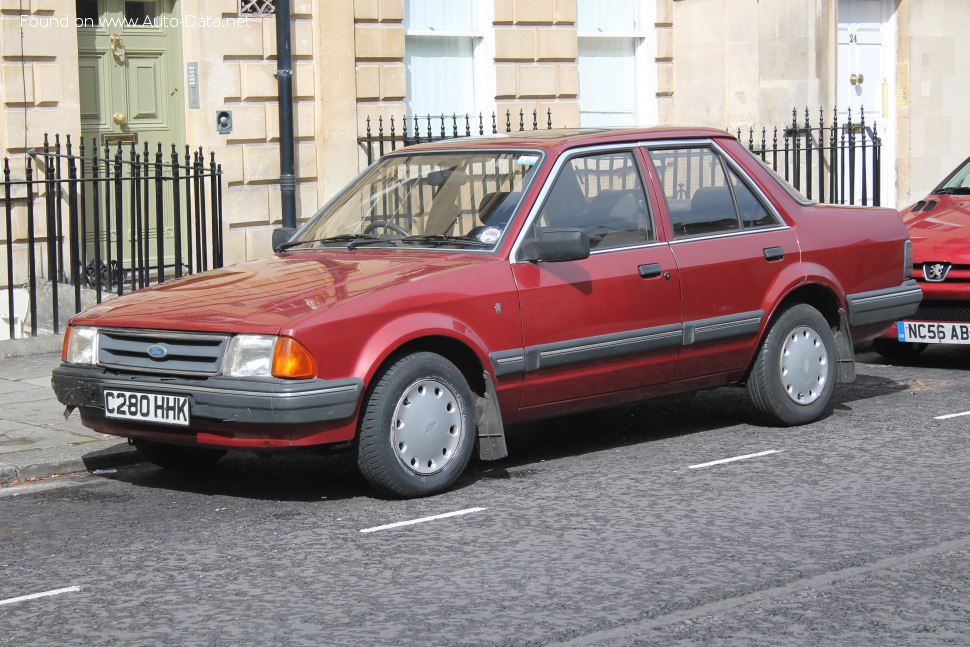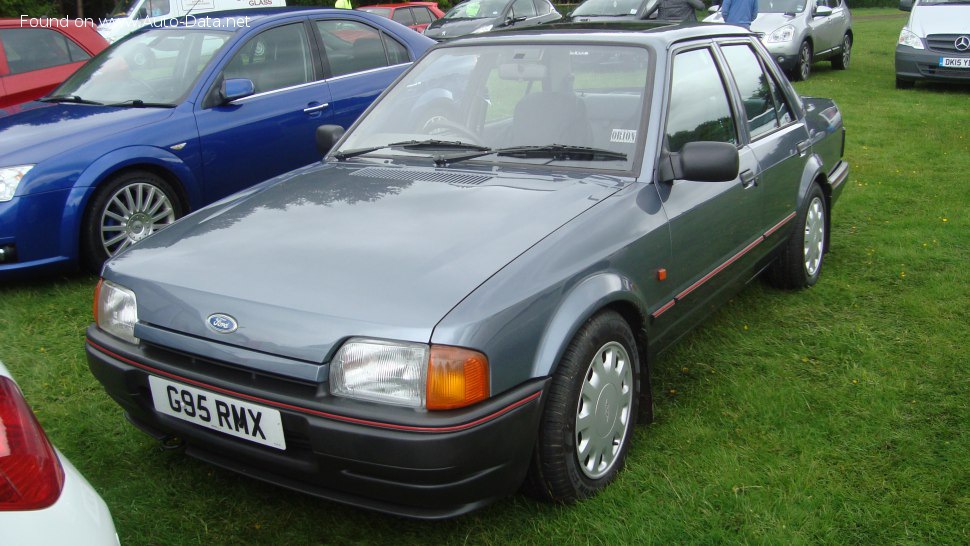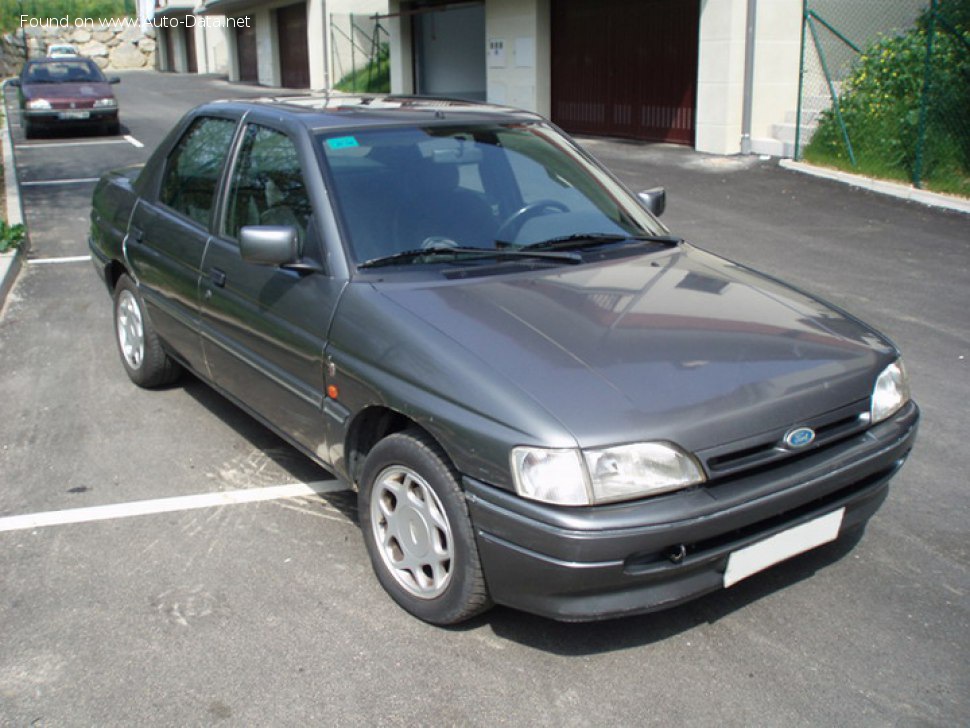
The Ford Orion III (GAL) represents a significant chapter in Ford of Europe’s history, serving as the conventional three-box sedan counterpart to the immensely popular Ford Escort hatchback. Produced for a brief but impactful period between 1992 and 1993, the third generation Orion, known internally as ‘GAL,’ built upon the foundation of its predecessors, offering a more traditional and family-oriented alternative in the fiercely competitive European compact car segment. While never officially sold in the United States, the Orion played a crucial role across the Atlantic, catering to buyers who preferred the added trunk space and perceived formality of a sedan over the versatility of a hatchback. The 1.8 i 16V variant, with its robust 131 horsepower, stood out as a particularly capable and spirited option within the Orion lineup, blending practicality with a surprising degree of performance for its class and era.
The Ford Orion III (GAL): A European Sedan
The Ford Orion, throughout its various iterations, was primarily a European market vehicle. It was designed to appeal to customers who favored the traditional sedan body style over the increasingly popular hatchback configuration. The Orion offered a more formal appearance and, crucially, a larger, separate trunk, making it a practical choice for families and those needing secure cargo space. The GAL designation refers to the platform code used internally by Ford during the development and production of this third-generation model. It was a direct response to competitor offerings like the Opel/Vauxhall Astra sedan, Volkswagen Jetta, and Renault 19 Chamade, aiming to provide a compelling alternative within the crowded compact car segment.
Engine & Performance
Powering the Ford Orion III (GAL) 1.8 i 16V model was the RQB engine, a 1.8-liter, naturally aspirated gasoline engine equipped with a 16-valve cylinder head. This configuration was a significant advancement over older 8-valve designs, allowing for improved airflow and combustion efficiency. The engine produced 131 horsepower, positioning the Orion 1.8 i 16V as one of the more powerful options in the European compact sedan market. The 16-valve head contributed to a smoother power delivery across the rev range and enhanced fuel economy, a growing concern for consumers in the early 1990s.
The naturally aspirated design provided predictable and linear power, making it suitable for everyday driving conditions. While official torque figures are not widely available, an engine of this displacement and output would have generated sufficient torque for confident acceleration and comfortable highway cruising. The RQB engine was known for its robust construction and reliability, attributes highly valued in family cars and fleet vehicles. Routine maintenance was straightforward, with an engine oil capacity of 4.25 liters (4.49 US quarts) and a coolant capacity of 7 liters (7.4 US quarts). This ease of maintenance further enhanced the Orion’s appeal as a practical and dependable vehicle.
Design & Features
The exterior design of the Ford Orion III (GAL) adhered to the classic three-box sedan profile, a deliberate choice to attract buyers who preferred a more conventional aesthetic. It shared numerous styling elements with the Ford Escort Mk5, particularly from the front fascia to the B-pillar. The Orion differentiated itself through a longer rear overhang, resulting in a significantly larger trunk. This emphasis on cargo capacity was a key selling point. The styling reflected the design trends of the early 1990s, featuring smoother lines and more aerodynamic profiles compared to the boxier designs of the previous decade, though the overall approach remained conservative to maximize broad appeal.
The interior of the Orion III (GAL) prioritized functionality and durability. The cabin layout was straightforward, with easily accessible controls. Materials used were primarily hard-wearing plastics and durable cloth upholstery, designed to withstand the demands of daily use. While not focused on luxury, the Orion offered a comfortable and practical environment. Standard features included a basic heating and ventilation system, an analog instrument cluster, and a capable audio system. Higher trim levels offered upgrades such as power windows, central locking, power steering (a significant comfort feature at the time), and air conditioning. Safety features, while limited by the standards of the era, included three-point seatbelts for all occupants and optional anti-lock brakes (ABS) on premium trims.
Technical Specifications: Ford Orion III (GAL) 1.8 i 16V
| Attribute | Specification |
| Brand | Ford |
| Model | Orion |
| Generation | Orion III (GAL) |
| Type (Engine) | 1.8 i 16V (131 Hp) |
| Start of Production | 1992 |
| End of Production | 1993 |
| Powertrain Architecture | Internal Combustion engine |
| Body type | Sedan |
| Fuel Type | Petrol (Gasoline) |
| Power | 131 Hp |
| Engine Model/Code | RQB |
| Engine Aspiration | Naturally aspirated engine |
| Engine Oil Capacity | 4.25 l (4.49 US qt) |
| Coolant Capacity | 7 l (7.4 US qt) |
Legacy and Market Impact
The Ford Orion III (GAL) occupied a distinct niche in the European automotive market during its brief production run. It directly competed with other compact sedans, offering a combination of Ford’s established dealer network, perceived reliability, and the practical benefits of a traditional sedan body style – particularly its generous trunk space. This made it appealing to families and those requiring secure luggage storage.
Despite its short lifespan as the “Orion III” before being integrated more closely with the Escort branding (and ultimately superseded by the Ford Focus sedan), its impact was significant. It demonstrated Ford’s commitment to offering a diverse range of body styles within its popular platforms. The Orion was generally regarded as a sensible, reliable vehicle that delivered on its promises of dependable transportation and practicality. It was a common sight on European roads, serving as a family car, a fleet vehicle, and a rental car option. The 1.8 i 16V variant, with its 131 horsepower, added a degree of desirability for drivers seeking a more engaging driving experience without sacrificing the Orion’s inherent practicality. The Orion’s legacy is that of a quintessential European compact sedan of its time – unpretentious, robust, and well-suited to the needs of its target market. It laid the groundwork for future Ford sedan offerings in Europe, ultimately leading to the successful Focus sedan.