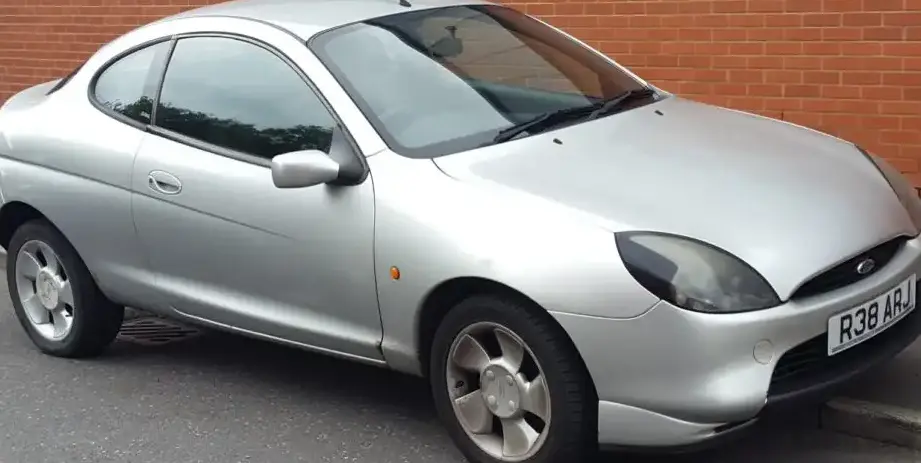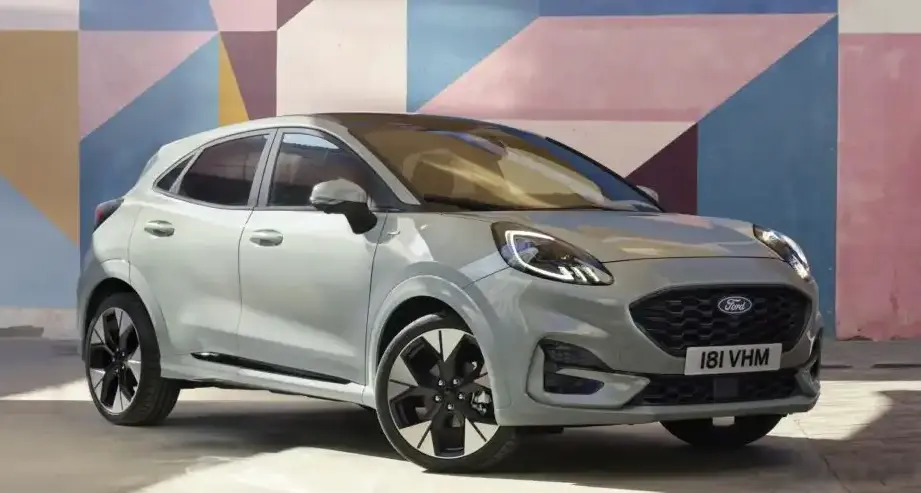
The Ford Puma 1.0 EcoBoost 155 hp Mild Hybrid, launched in September 2019 and produced through June 2020, represents a key variant within the revived Puma lineup. Positioned as a mid-range offering, it aimed to balance fuel efficiency with a respectable level of performance in the highly competitive European subcompact SUV/crossover market. This iteration of the Puma, built on the Ford B3 platform, sought to appeal to buyers desiring a modern, technologically advanced vehicle with a focus on practicality and affordability. It marked Ford’s entry into the mild-hybrid segment for the Puma, leveraging a 48-volt system to enhance fuel economy and reduce emissions.
Technical Specifications
| Brand | Ford |
| Model | Puma |
| Type (Engine) | 1.0 EcoBoost (155 Hp) Mild Hybrid |
| Start of production | September, 2019 |
| End of production | June, 2020 |
| Powertrain Architecture | MHEV (Mild Hybrid Electric Vehicle) |
| Body type | SUV, Crossover |
| Seats | 5 |
| Doors | 5 |
| Fuel consumption (urban) | 5.1 l/100 km (46.1 US mpg) |
| Fuel consumption (extra urban) | 4.1 l/100 km (57.4 US mpg) |
| Fuel consumption (combined) | 4.5 l/100 km (52.3 US mpg) |
| CO2 emissions | 101 g/km |
| Fuel Type | Petrol (Gasoline) |
| Acceleration 0 – 100 km/h | 9 sec |
| Acceleration 0 – 62 mph | 9 sec |
| Acceleration 0 – 60 mph | 8.6 sec |
| Maximum speed | 200 km/h (124.27 mph) |
| Emission standard | Euro 6d-TEMP-EVAP-ISC |
| Weight-to-power ratio | 7.8 kg/Hp |
| Weight-to-torque ratio | 5 kg/Nm |
| Electric motor power | 16 Hp |
| Power | 155 Hp @ 6000 rpm |
| Torque | 240 Nm @ 1750 rpm (177.01 lb.-ft. @ 1750 rpm) |
| Engine layout | Front, Transverse |
| Engine Model/Code | BZJA |
| Number of cylinders | 3 |
| Engine configuration | Inline |
| Fuel injection system | Direct injection |
| Engine aspiration | Turbocharger, Intercooler |
| Engine oil capacity | 4.6 l (4.86 US qt | 4.05 UK qt) |
| Coolant capacity | 5.6 l (5.92 US qt | 4.93 UK qt) |
| Kerb Weight | 1205 kg (2656.57 lbs) |
| Max. weight | 1760-1765 kg (3880.14 – 3891.16 lbs) |
| Max load | 555-560 kg (1223.57 – 1234.59 lbs) |
| Trunk (boot) space – minimum | 468 l (16.53 cu. ft) |
| Trunk (boot) space – maximum | 1161 l (41 cu. ft) |
| Fuel tank capacity | 42 l (11.1 US gal | 9.24 UK gal) |
| Permitted trailer load with brakes (12%) | 1100 kg (2425.08 lbs) |
| Permitted trailer load without brakes | 640 kg (1410.96 lbs) |
| Permitted towbar download | 75 kg (165.35 lbs) |
| Length | 4186-4207 mm (164.8 – 165.63 in) |
| Width | 1805 mm (71.06 in) |
| Width including mirrors | 1930 mm (75.98 in) |
| Height | 1537-1538 mm (60.51 – 60.55 in) |
| Wheelbase | 2588 mm (101.89 in) |
| Minimum turning circle | 10.4 m (34.12 ft) |
| Drive wheel | Front wheel drive |
| Number of gears | 6 gears, manual transmission |
| Front brakes | Disc |
| Rear brakes | Disc |
| Assisting systems | ABS (Anti-lock braking system) |
| Tires size | 215/55 R17; 215/50 R18 |
| Wheel rims size | 7J x 17; 7J x 18 |
Powertrain & Engine Architecture
The heart of the Puma 1.0 EcoBoost Mild Hybrid is the BZJA engine, a 1.0-liter, three-cylinder turbocharged gasoline engine. This engine utilizes direct fuel injection and an intercooler to optimize combustion and boost power. The mild-hybrid system incorporates a 48-volt belt-driven integrated starter generator (BiSG) which provides regenerative braking and electric assist during acceleration. This system isn’t capable of fully electric driving, but it allows for engine-off coasting and smoother start-stop functionality, contributing to improved fuel economy. The engine produces 155 horsepower at 6000 rpm and 240 Nm (177 lb-ft) of torque at 1750 rpm. The six-speed manual transmission was standard, offering a balance between fuel efficiency and driver engagement. The engine’s compact size and lightweight construction contribute to the Puma’s overall agility.
Driving Characteristics
The 155 hp EcoBoost Mild Hybrid Puma delivers a surprisingly lively driving experience for a subcompact crossover. While not a performance-oriented vehicle, the turbocharger provides a noticeable boost in power, making overtaking and merging onto highways relatively effortless. The manual transmission, while requiring more driver involvement than an automatic, allows for precise control and contributes to a more engaging driving experience. Gear ratios are tuned for a balance of acceleration and fuel economy. Compared to the base 1.0 EcoBoost 125 hp version, the 155 hp model offers a significant improvement in acceleration and overall responsiveness. It doesn’t match the performance of larger-engined competitors, but it provides adequate power for everyday driving situations. The mild-hybrid system is largely transparent to the driver, providing subtle assistance during acceleration and contributing to a smoother overall driving experience.
Equipment & Trim Levels
The 1.0 EcoBoost 155 hp Mild Hybrid Puma typically came equipped with a generous amount of standard features. These included air conditioning, a touchscreen infotainment system with Apple CarPlay and Android Auto compatibility, alloy wheels, and a suite of safety features such as automatic emergency braking and lane-keeping assist. Higher trim levels, such as Titanium and ST-Line, added features like a larger touchscreen, upgraded upholstery, a panoramic sunroof, and more advanced driver-assistance systems. Optional extras included parking sensors, a rear-view camera, and a premium sound system. Interior upholstery was typically cloth, with leather options available on higher trims. The dashboard layout was modern and functional, with a focus on ease of use.
Chassis & Braking
The Puma utilizes a front-wheel-drive chassis with MacPherson strut front suspension and a twist-beam rear suspension. This setup provides a comfortable ride quality while maintaining reasonable handling characteristics. The steering is light and precise, making it easy to maneuver in urban environments. Brakes are disc brakes on all four wheels, providing adequate stopping power. ABS (Anti-lock Braking System) is standard. The suspension tuning is geared towards comfort rather than outright sportiness, but the Puma still feels stable and composed in corners. Stabilizer bars are fitted to both the front and rear axles to reduce body roll.
Market Reception & Comparison
The Ford Puma 1.0 EcoBoost Mild Hybrid was generally well-received by automotive critics. It was praised for its fuel efficiency, comfortable ride, and modern features. However, some critics noted that the interior space was somewhat limited compared to some competitors. Compared to other trims in the Puma lineup, the 155 hp model offered a significant performance upgrade over the base 125 hp version, but at a slightly higher price point. Fuel economy was comparable to other mild-hybrid vehicles in its class. Reliability reports have been generally positive, with few major issues reported.
Legacy
The 1.0 EcoBoost Mild Hybrid powertrain has proven to be relatively reliable in the Puma, with few widespread mechanical issues reported. The engine’s compact size and fuel efficiency have made it a popular choice in the used car market. The Puma, as a whole, has helped Ford regain a foothold in the European subcompact SUV/crossover segment. The mild-hybrid technology introduced in this variant paved the way for Ford’s broader adoption of electrified powertrains in its future models. Today, the Puma 1.0 EcoBoost Mild Hybrid remains a viable option for buyers seeking a fuel-efficient, practical, and well-equipped subcompact SUV.