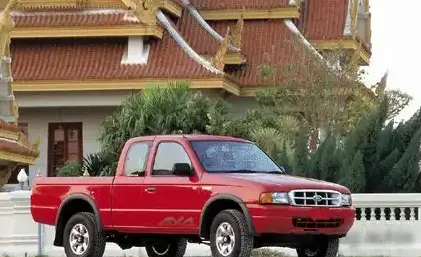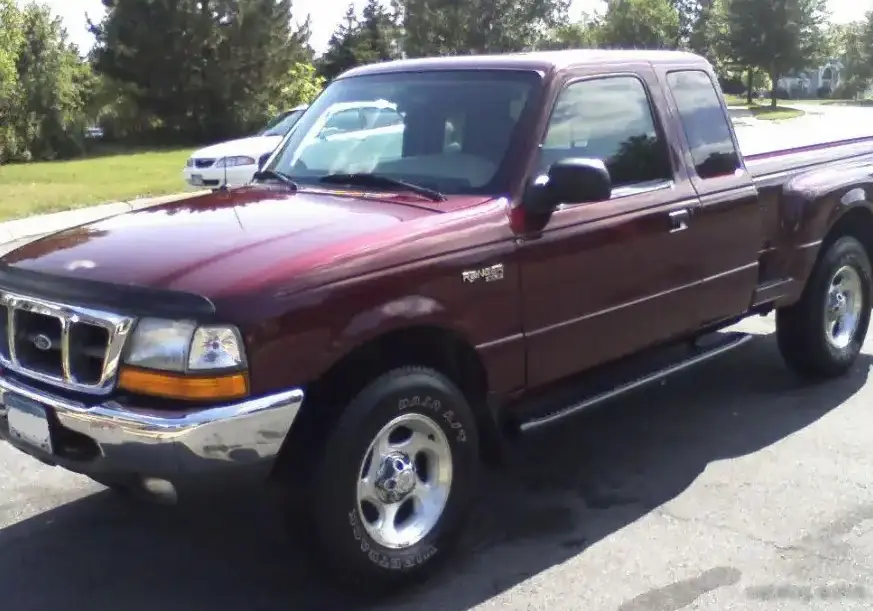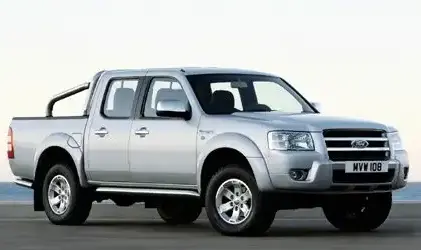
The Ford Ranger II Double Cab, specifically equipped with the 4.0-liter V6 engine and a five-speed automatic transmission, was a significant offering in the mid-size pickup truck segment in North America. Produced from 2006 to 2010, this variant aimed to provide a balance of capability, comfort, and convenience for families and individuals needing a versatile vehicle. It represented a key iteration of the Ranger, which had been a mainstay of the Ford lineup for decades, and offered a more spacious cabin than the standard cab models, appealing to a broader range of buyers. This configuration positioned itself as a step up from the base four-cylinder models, offering considerably more power and torque, while remaining more affordable than full-size Ford F-150 trucks.
Technical Specifications
| Brand | Ford |
| Model | Ranger |
| Generation | Ranger II Double Cab |
| Type (Engine) | 4.0 V6 (207 Hp) Automatic |
| Start of production | 2006 |
| End of production | 2010 |
| Powertrain Architecture | Internal Combustion engine |
| Body type | Pick-up |
| Seats | 5 |
| Doors | 4 |
| Fuel Type | Petrol (Gasoline) |
| Power | 207 Hp @ 5250 rpm |
| Power per litre | 51.6 Hp/l |
| Torque | 323 Nm @ 3000 rpm / 238.23 lb.-ft. @ 3000 rpm |
| Engine layout | Front, Longitudinal |
| Engine displacement | 4014 cm3 / 244.95 cu. in. |
| Number of cylinders | 6 |
| Engine configuration | V-engine |
| Compression ratio | 9.7:1 |
| Number of valves per cylinder | 2 |
| Fuel injection system | Multi-port manifold injection |
| Engine aspiration | Naturally aspirated engine |
| Engine oil capacity | 4.7 l / 4.97 US qt | 4.14 UK qt |
| Coolant | 12.5 l / 13.21 US qt | 11 UK qt |
| Trunk (boot) space – minimum | 1500 l / 52.97 cu. ft. |
| Fuel tank capacity | 70 l / 18.49 US gal | 15.4 UK gal |
| Length | 5075 mm / 199.8 in. |
| Width | 1805 mm / 71.06 in. |
| Height | 1745 mm / 68.7 in. |
| Wheelbase | 3000 mm / 118.11 in. |
| Front track | 1488 mm / 58.58 in. |
| Rear (Back) track | 1455 mm / 57.28 in. |
| Ride height (ground clearance) | 203 mm / 7.99 in. |
| Drivetrain Architecture | The Internal combustion engine (ICE) drives the rear wheels of the vehicle. |
| Drive wheel | Rear wheel drive |
| Number of gears and type of gearbox | 5 gears, automatic transmission |
| Front suspension | Independent torsion bar, double wishbone |
| Rear suspension | Dependent suspension of two longitudinal semi-elliptic leaf springs |
| Front brakes | Ventilated discs |
| Rear brakes | Drum |
| Assisting systems | ABS (Anti-lock braking system) |
| Steering type | Steering rack and pinion |
| Tires size | 235/75 R15; 245/70 R16 |
| Wheel rims size | 15; 16 |
Powertrain & Engine Architecture
The heart of this Ranger variant is the 4.0-liter (245 cubic inch) Cologne V6 engine. This engine, designated as the 4014 cm3, is a naturally aspirated, 90-degree V6 featuring a cast iron block and aluminum cylinder heads. It utilizes a multi-port fuel injection system, delivering fuel directly into the intake ports for efficient combustion. The engine produces 207 horsepower at 5250 rpm and 238 lb-ft of torque at 3000 rpm. The 9.7:1 compression ratio contributes to its balance of power and reliability. The five-speed automatic transmission (typically a 5R55E) was chosen for its smooth operation and ease of use, making it a popular choice for drivers who preferred not to operate a manual transmission. The transmission’s gear ratios were tuned to provide adequate acceleration and towing capacity, while also prioritizing fuel efficiency.
Driving Characteristics
The 4.0L V6 with the automatic transmission provided a noticeable step up in performance compared to the base 2.3L four-cylinder Ranger. While not a sports truck, it offered sufficient power for everyday driving, hauling moderate loads, and towing small trailers. The automatic transmission, while smooth, did result in some power loss compared to the available five-speed manual. Acceleration from 0 to 60 mph was typically in the 8-9 second range. The torque curve was relatively flat, providing usable power across a wide range of engine speeds. The automatic transmission’s shift points were generally well-programmed, but could sometimes feel hesitant during quick acceleration. Overall, the driving experience was comfortable and predictable, making it suitable for a variety of drivers.
Equipment & Trim Levels
The Double Cab configuration already offered a significant advantage in terms of passenger space. The 4.0L V6 automatic trim typically included features such as air conditioning, power windows and locks, an AM/FM stereo with a CD player, and cloth upholstery. Higher trim levels, such as the XLT, added features like alloy wheels, a premium sound system, keyless entry, and cruise control. Optional extras included a towing package, a sliding rear window, and upgraded interior trim. The interior design was functional and durable, prioritizing practicality over luxury.
Chassis & Braking
The Ranger II Double Cab utilized a body-on-frame construction, providing a robust and durable platform. The front suspension consisted of an independent torsion bar setup with double wishbone components, while the rear suspension employed a traditional leaf spring design. This configuration offered a good balance of ride comfort and load-carrying capacity. Braking duties were handled by ventilated discs in the front and drum brakes in the rear. Anti-lock braking system (ABS) was standard, enhancing safety during emergency braking situations. The steering system was a rack-and-pinion setup, providing responsive and precise steering feel.
Market Reception & Comparison
The Ford Ranger II Double Cab 4.0L V6 Automatic was generally well-received by critics and consumers alike. It was praised for its spacious cabin, comfortable ride, and ample power. However, some reviewers noted that the automatic transmission could feel sluggish at times, and the interior materials were not as refined as those found in some competing trucks. Compared to the four-cylinder Ranger models, the V6 offered a significant performance upgrade, but at a higher price point. Compared to the larger Ford F-150, the Ranger was more maneuverable and fuel-efficient, making it a good choice for buyers who didn’t need the full-size truck’s capabilities. Fuel economy was rated around 14 mpg city and 18 mpg highway.
Legacy
The 4.0L V6 engine in the Ranger II Double Cab proved to be a reliable and durable powertrain. While not without its quirks, it generally held up well over time with proper maintenance. Today, these Rangers are relatively affordable on the used car market, making them a popular choice for budget-minded buyers. However, potential buyers should be aware of common issues such as timing chain wear and oil leaks. The Ranger II Double Cab 4.0L V6 Automatic remains a capable and versatile pickup truck, offering a good balance of practicality, affordability, and reliability. Its enduring presence in the used car market is a testament to its overall quality and appeal.