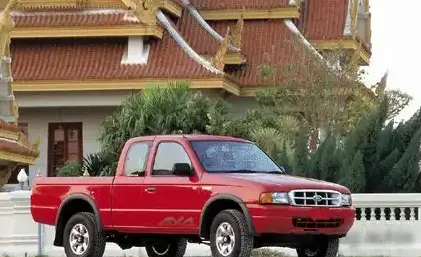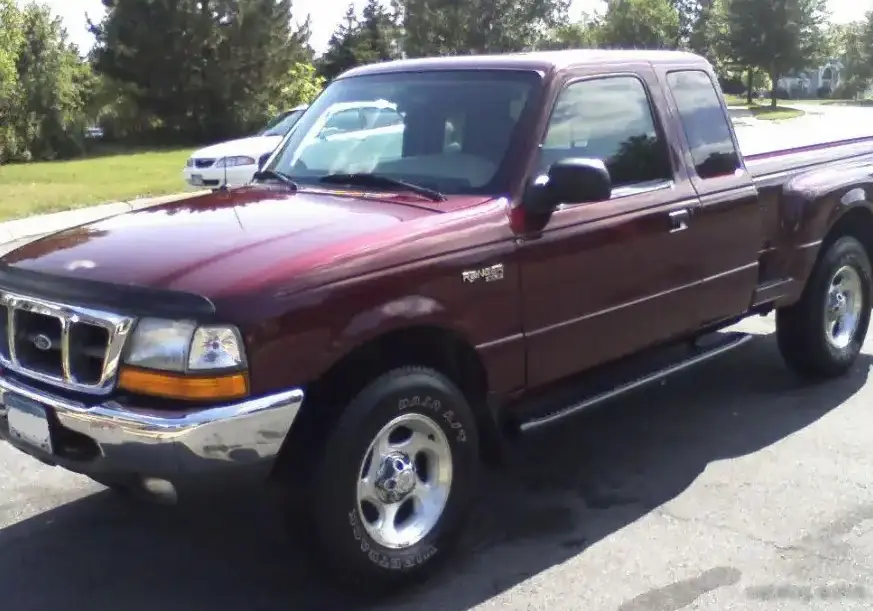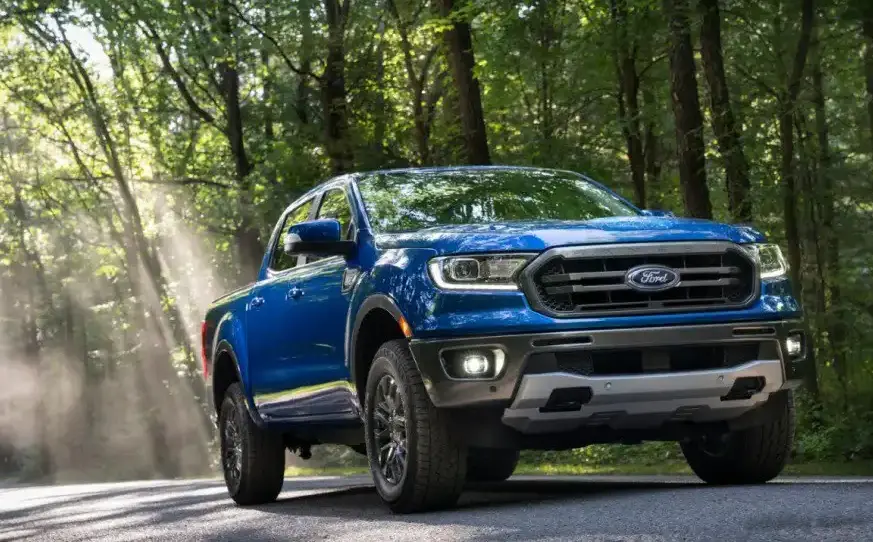
The Ford Ranger III Double Cab, specifically the facelifted version introduced in January 2019 and produced through 2022, represented a significant evolution of Ford’s mid-size pickup truck for global markets. This variant, equipped with the 3.2-liter Duratorq TDCi engine producing 200 horsepower and paired with a six-speed manual transmission, and a four-wheel drive system, was a popular choice for buyers needing a capable and versatile workhorse. It sat in the upper-mid range of the Ranger lineup, offering a balance between performance, features, and price. The facelift brought updated styling, improved technology, and refinements to the already robust Ranger platform, solidifying its position as a competitive offering in the international pickup truck segment.
Technical Specifications
| Brand | Ford |
| Model | Ranger |
| Generation | Ranger III Double Cab (facelift 2019) |
| Type (Engine) | 3.2 Duratorq TDCi (200 Hp) 4×4 |
| Start of production | January, 2019 |
| End of production | 2022 |
| Powertrain Architecture | Internal Combustion engine |
| Body type | Pick-up |
| Seats | 5 |
| Doors | 4 |
| Fuel consumption (combined) | 8.5-8.9 l/100 km (27.7 – 26.4 US mpg, 33.2 – 31.7 UK mpg, 11.8 – 11.2 km/l) |
| CO2 emissions | 219-229 g/km |
| Fuel Type | Diesel |
| Acceleration 0 – 100 km/h | 10.9 sec |
| Acceleration 0 – 62 mph | 10.9 sec |
| Acceleration 0 – 60 mph | 10.4 sec |
| Maximum speed | 175 km/h (108.74 mph) |
| Emission standard | Euro 6d-TEMP |
| Weight-to-power ratio | 11.2 kg/Hp, 89 Hp/tonne |
| Weight-to-torque ratio | 4.8 kg/Nm, 209.3 Nm/tonne |
| Power | 200 Hp |
| Power per litre | 62.5 Hp/l |
| Torque | 470 Nm (346.65 lb.-ft.) |
| Engine displacement | 3198 cm3 (195.15 cu. in.) |
| Number of cylinders | 5 |
| Engine configuration | Inline |
| Number of valves per cylinder | 4 |
| Fuel injection system | Diesel Commonrail |
| Engine aspiration | Turbocharger, Intercooler |
| Engine oil capacity | 8.9 l (9.4 US qt | 7.83 UK qt) |
| Coolant | 10.6 l (11.2 US qt | 9.33 UK qt) |
| Kerb Weight | 2246 kg (4951.58 lbs.) |
| Max. weight | 3270 kg (7209.12 lbs.) |
| Max load | 1024 kg (2257.53 lbs.) |
| Fuel tank capacity | 80 l (21.13 US gal | 17.6 UK gal) |
| AdBlue tank | 20 l (5.28 US gal | 4.4 UK gal) |
| Permitted trailer load with brakes (12%) | 3500 kg (7716.18 lbs.) |
| Permitted trailer load without brakes | 750 kg (1653.47 lbs.) |
| Length | 5359 mm (210.98 in.) |
| Width | 1867 mm (73.5 in.) |
| Width with mirrors folded | 1977 mm (77.83 in.) |
| Width including mirrors | 2163 mm (85.16 in.) |
| Height | 1848 mm (72.76 in.) |
| Wheelbase | 3220 mm (126.77 in.) |
| Front track | 1560 mm (61.42 in.) |
| Rear (Back) track | 1560 mm (61.42 in.) |
| Ride height (ground clearance) | 237 mm (9.33 in.) |
| Minimum turning circle | 12.7 m (41.67 ft.) |
| Approach angle | 29.0° |
| Departure angle | 27.0° |
| Ramp-over angle | 25.0° |
| Climb angle | 35.0° |
| Wading depth | 800 mm (31.5 in.) |
| Drive wheel | All wheel drive (4×4) |
| Number of gears and type of gearbox | 6 gears, manual transmission |
| Front brakes | Disc |
| Rear brakes | Drum |
| Assisting systems | ABS (Anti-lock braking system) |
| Tires size | 265/60 R18 |
| Wheel rims size | 8J x 18 |
Powertrain & Engine Architecture
The heart of this Ranger variant is the 3.2-liter Duratorq TDCi engine, a five-cylinder diesel known for its robustness and torque output. This engine, designated with various codes depending on the specific market, utilizes a common-rail direct injection system to deliver fuel directly into the cylinders at extremely high pressure. This, combined with a variable geometry turbocharger and intercooler, optimizes combustion for both power and efficiency. The engine features four valves per cylinder and a robust cast iron block, contributing to its longevity. The six-speed manual transmission was chosen for its durability and driver engagement, offering precise control over the engine’s power delivery. The transmission’s gear ratios were tuned to balance acceleration with fuel economy, providing adequate pulling power for towing and hauling while maintaining reasonable highway cruising speeds.
Driving Characteristics
The 3.2-liter Duratorq in the Ranger III Double Cab provided a noticeable step up in performance compared to the smaller engine options available. While not a sports truck, the 200 horsepower and 346 lb-ft of torque delivered strong acceleration, especially in the lower and mid-range. The manual transmission allowed drivers to fully utilize the engine’s powerband, making it well-suited for both on-road driving and off-road adventures. Compared to the higher-output bi-turbo diesel variants, this engine offered a more linear power delivery, making it easier to modulate for everyday driving. The four-wheel drive system, selectable via a rotary dial, provided enhanced traction in challenging conditions, making it a capable off-road performer. The ride quality, while firm due to the truck’s construction, was generally comfortable for a pickup, and the steering provided a good balance of precision and feedback.
Equipment & Trim Levels
The 3.2 Duratorq Double Cab typically came equipped with a solid array of standard features. These included air conditioning, power windows and locks, a basic audio system with USB connectivity, and steel wheels. Higher trim levels added features such as alloy wheels, a more advanced infotainment system with touchscreen display, automatic climate control, and parking sensors. Optional extras included a navigation system, leather upholstery, and a premium sound system. Safety features such as ABS, airbags, and stability control were standard across the range.
Chassis & Braking
The Ranger III Double Cab utilized a body-on-frame construction, providing a robust and durable platform. The suspension consisted of independent double wishbones at the front and leaf springs at the rear. The rear brakes were typically drum brakes, while the front brakes were disc brakes. This configuration was chosen to balance cost and durability, providing adequate stopping power for the truck’s weight and intended use. A stabilizer bar was fitted to the front suspension to reduce body roll during cornering.
Market Reception & Comparison
The Ford Ranger III Double Cab 3.2 Duratorq was generally well-received by automotive critics. It was praised for its robust engine, capable four-wheel drive system, and practical interior. However, some critics noted that the interior design was somewhat dated compared to newer competitors. Fuel economy was considered reasonable for a vehicle of its size and capability, but not class-leading. Compared to the smaller engine options, the 3.2-liter variant offered a significant improvement in performance, making it a popular choice for buyers who needed to tow or haul heavy loads. It competed directly with other mid-size pickups such as the Toyota Hilux, Nissan Navara, and Mitsubishi Triton.
Legacy
The 3.2-liter Duratorq engine proved to be a reliable and durable powerplant, and many examples of the Ranger III Double Cab with this engine are still on the road today. While maintenance costs can be higher than some newer vehicles, the engine’s robust construction and readily available parts supply contribute to its longevity. In the used car market, this variant remains a popular choice for buyers seeking a capable and affordable pickup truck. Its reputation for reliability and practicality ensures its continued presence on roads around the world.