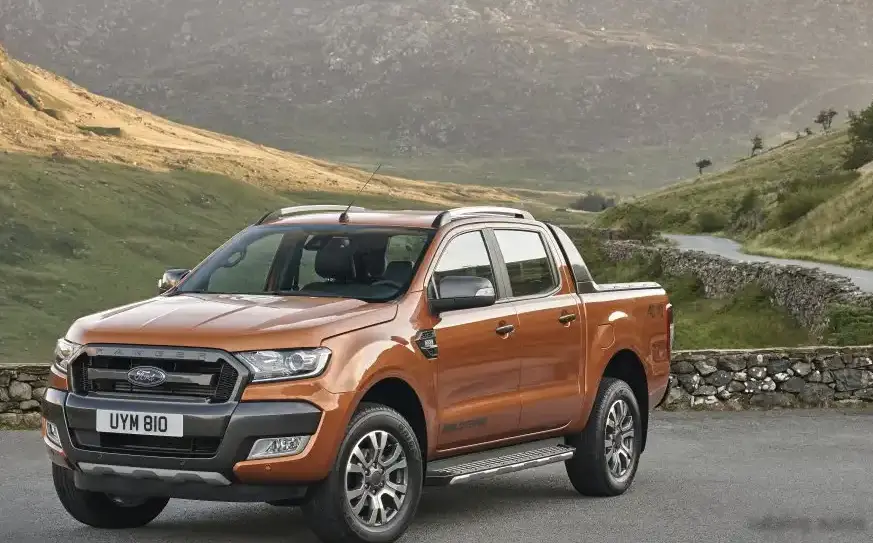
The Ford Ranger III Double Cab, specifically the facelifted version produced from 2015 to 2018, represented a significant evolution of Ford’s globally successful mid-size pickup truck. This iteration, sold primarily in Europe, Australia, New Zealand, and South Africa, offered a blend of practicality, capability, and increasingly refined comfort. The 3.2 TDCi 4×4 variant, equipped with a 200 horsepower turbodiesel engine, occupied a sweet spot in the lineup, appealing to buyers needing a robust workhorse with reasonable on-road manners. It served as a step up from the lower-powered engine options, while remaining more accessible than the range-topping trims.
Technical Specifications
| Brand | Ford |
| Model | Ranger |
| Generation | Ranger III Double Cab (facelift 2015) |
| Type (Engine) | 3.2 TDCi (200 Hp) 4×4 |
| Start of production | 2015 |
| End of production | 2018 |
| Powertrain Architecture | Internal Combustion engine |
| Body type | Pick-up |
| Seats | 5 |
| Doors | 4 |
| Fuel consumption (urban) | 9.7 l/100 km (24.2 US mpg, 29.1 UK mpg, 10.3 km/l) |
| Fuel consumption (extra urban) | 7.4 l/100 km (31.8 US mpg, 38.2 UK mpg, 13.5 km/l) |
| Fuel consumption (combined) | 8.3 l/100 km (28.3 US mpg, 34 UK mpg, 12 km/l) |
| CO2 emissions | 218 g/km |
| Fuel Type | Diesel |
| Acceleration 0 – 100 km/h | 10.9 sec |
| Acceleration 0 – 62 mph | 10.9 sec |
| Acceleration 0 – 60 mph | 10.4 sec |
| Maximum speed | 175 km/h (108.74 mph) |
| Emission standard | Euro 5 |
| Weight-to-power ratio | 10.8 kg/Hp, 93 Hp/tonne |
| Weight-to-torque ratio | 4.6 kg/Nm, 218.6 Nm/tonne |
| Power | 200 Hp @ 3000 rpm |
| Power per litre | 62.5 Hp/l |
| Torque | 470 Nm @ 1500-2750 rpm (346.65 lb.-ft. @ 1500-2750 rpm) |
| Engine layout | Front, Longitudinal |
| Engine displacement | 3198 cm3 (195.15 cu. in.) |
| Number of cylinders | 5 |
| Engine configuration | Inline |
| Cylinder Bore | 89.9 mm (3.54 in.) |
| Piston Stroke | 100.8 mm (3.97 in.) |
| Compression ratio | 15.7:1 |
| Number of valves per cylinder | 4 |
| Fuel injection system | Diesel Commonrail |
| Engine aspiration | Turbocharger, Intercooler |
| Engine oil capacity | 9.75 l (10.3 US qt | 8.58 UK qt) |
| Coolant | 13.5 l (14.27 US qt | 11.88 UK qt) |
| Kerb Weight | 2150 kg (4739.94 lbs.) |
| Max. weight | 3200 kg (7054.79 lbs.) |
| Max load | 1050 kg (2314.85 lbs.) |
| Fuel tank capacity | 80 l (21.13 US gal | 17.6 UK gal) |
| Length | 5277-5354 mm (207.76 – 210.79 in.) |
| Width | 1860 mm (73.23 in.) |
| Height | 1815-1848 mm (71.46 – 72.76 in.) |
| Wheelbase | 3220 mm (126.77 in.) |
| Front track | 1560 mm (61.42 in.) |
| Rear track | 1560 mm (61.42 in.) |
| Front overhang | 908 mm (35.75 in.) |
| Rear overhang | 1149-1226 mm (45.24 – 48.27 in.) |
| Ride height (ground clearance) | 223-237 mm (8.78 – 9.33 in.) |
| Approach angle | 28° |
| Departure angle | 28° |
| Ramp-over angle | 25° |
| Climb angle | 32° |
| Wading depth | 800 mm (31.5 in.) |
| Drive wheel | All wheel drive (4×4) |
| Number of gears | 6 |
| Gearbox type | Manual transmission |
| Front suspension | Independent coil spring |
| Rear suspension | Dependent suspension of two longitudinal semi-elliptic leaf springs |
| Front brakes | Ventilated discs |
| Rear brakes | Drum |
| Assisting systems | ABS (Anti-lock braking system) |
| Steering type | Steering rack and pinion |
| Power steering | Electric Steering |
| Tires size | 215/70 R16; 255/70 R16; 265/65 R17; 265/60 R18 |
| Wheel rims size | 16; 17; 18 |
INTRODUCTION
The Ford Ranger III Double Cab (facelift 2015) 3.2 TDCi 4×4 represents a pivotal point in the Ranger’s development. Built on the T6 platform, this version benefited from a mid-cycle refresh that included styling updates, improved interior materials, and enhanced technology. The 3.2-liter turbodiesel engine, sourced from Jaguar Land Rover, was a key differentiator, offering a substantial power increase over the smaller 2.2-liter options available. This variant was particularly popular in markets where pickup trucks are used both for work and family transport, offering a compelling combination of capability and comfort. The “Double Cab” configuration provided seating for five passengers, making it a practical choice for families.
Powertrain & Engine Architecture
The heart of this Ranger variant is the 3.2-liter Puma TDCi inline-five cylinder diesel engine. This engine, designated as the Duratorq, is a robust and relatively simple design, known for its durability. It utilizes a common-rail direct fuel injection system, delivering fuel at extremely high pressure for efficient combustion. The engine features a variable geometry turbocharger (VGT) and an intercooler to maximize power and torque output while minimizing turbo lag. The engine code is typically associated with the Puma engine family. The 3.2L engine produces 470 Nm (346.65 lb-ft) of torque between 1500 and 2750 rpm, providing strong pulling power for towing and hauling. The six-speed manual transmission was the standard offering, providing precise gear changes and allowing the driver to fully utilize the engine’s power band. The transmission was chosen for its robustness and ability to handle the engine’s torque output.
Driving Characteristics
The 3.2 TDCi 4×4 Ranger Double Cab delivers a driving experience that balances work-truck practicality with reasonable refinement. The engine provides ample power for everyday driving and confidently handles loads. While not a sports truck, the 200 horsepower and 470 Nm of torque allow for brisk acceleration, with a 0-60 mph time of around 10.4 seconds. The six-speed manual transmission offers good control, and the gear ratios are well-suited for both on-road cruising and off-road crawling. Compared to the 2.2-liter versions, the 3.2L feels significantly more responsive, especially when fully loaded or towing. The 4×4 system, typically selectable with a rotary dial, provides excellent traction in challenging conditions. The ride quality, while firm due to the leaf-spring rear suspension, is acceptable for a pickup truck, and the steering is reasonably precise.
Equipment & Trim Levels
The Ranger III Double Cab 3.2 TDCi 4×4 was typically offered in several trim levels, with the base models providing essential features and higher trims adding more luxury and convenience items. Standard equipment generally included air conditioning, power windows, central locking, and an audio system with USB connectivity. Higher trims often featured alloy wheels, a leather-wrapped steering wheel, upgraded interior trim, and a more sophisticated infotainment system. Optional extras could include a navigation system, a reversing camera, parking sensors, and a tow bar. Safety features typically included ABS brakes, electronic stability control, and multiple airbags.
Chassis & Braking
The Ranger III Double Cab utilizes a body-on-frame construction, providing a robust and durable chassis. The front suspension consists of independent coil springs, while the rear suspension employs a traditional leaf-spring setup. This configuration prioritizes load-carrying capacity and durability over ultimate ride comfort. The braking system features ventilated discs on the front wheels and drum brakes on the rear. ABS (Anti-lock Braking System) is standard, enhancing braking performance and stability. The 4×4 system typically includes a limited-slip differential in the rear axle to improve traction in slippery conditions.
Market Reception & Comparison
The Ford Ranger III Double Cab 3.2 TDCi 4×4 was generally well-received by automotive critics and buyers alike. It was praised for its strong engine, capable 4×4 system, and practical Double Cab configuration. Compared to the 2.2-liter versions, the 3.2L offered a noticeable performance advantage, making it a popular choice for those who needed to tow or haul heavy loads. Fuel economy, while respectable for a diesel pickup, was not class-leading. Reliability was generally good, although some owners reported minor issues with the fuel injection system. Compared to competitors like the Toyota Hilux and Mitsubishi Triton, the Ranger offered a more modern interior and a more refined driving experience.
Legacy
The Ford Ranger III Double Cab 3.2 TDCi 4×4 has proven to be a durable and reliable workhorse. On the used car market, these Rangers hold their value reasonably well, particularly those that have been well-maintained. The 3.2-liter engine is known for its longevity, and parts availability is generally good. While newer Ranger models have introduced more advanced technology and features, the III generation remains a popular choice for those seeking a capable and affordable pickup truck. The engine’s robust design and relatively simple mechanics make it a favorite among those who prefer a straightforward and reliable powertrain.