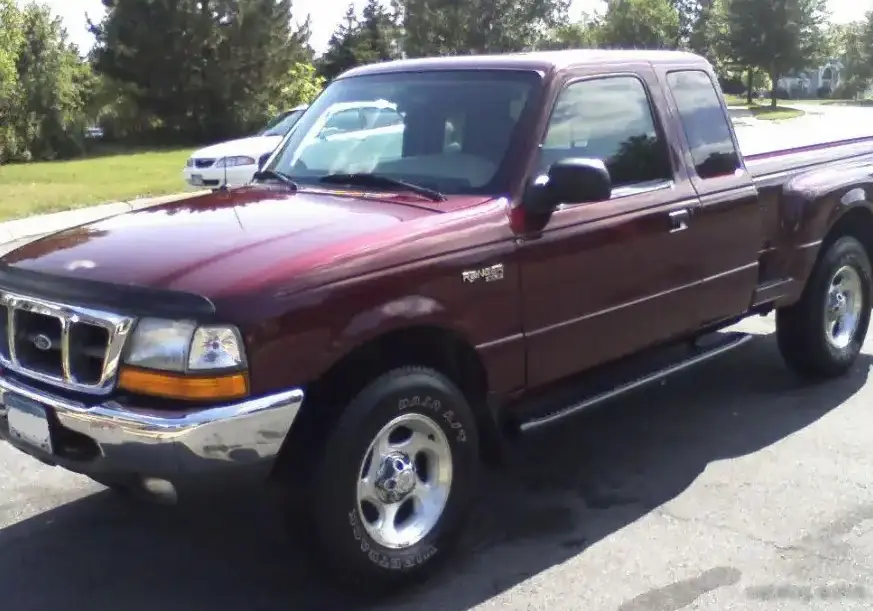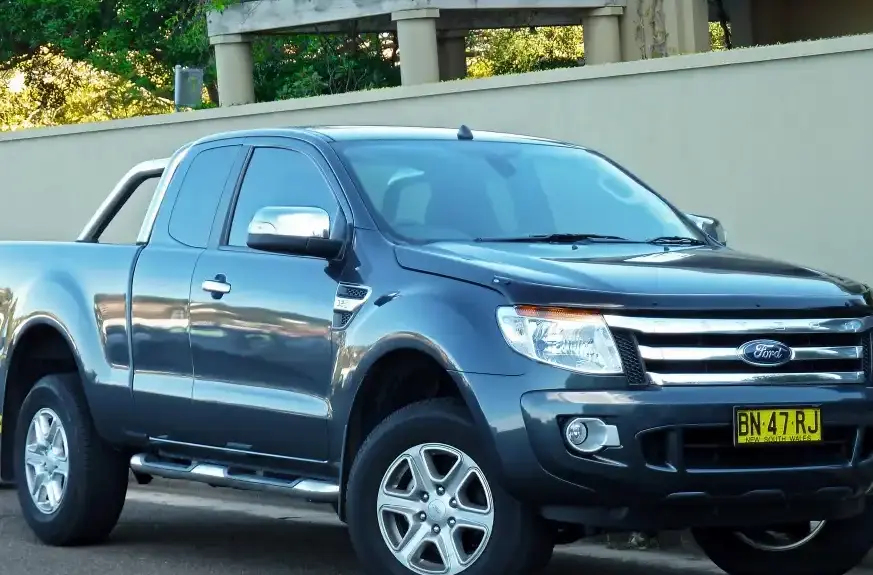
The Ford Ranger III Super Cab 3.2 TDCi 4×4, produced from 2011 to 2015, represented a significant evolution of Ford’s globally popular mid-size pickup truck. This variant, powered by the robust 3.2-liter turbodiesel engine, was primarily aimed at markets outside of North America, where the Ranger nameplate had been discontinued for some time. The Super Cab configuration offered extended passenger space compared to the standard cab, making it a versatile option for both work and family use. It slotted into the Ranger lineup as a premium offering, positioned above the lower-powered 2.5-liter diesel models and below any potential high-performance trims. This generation of Ranger was built on the T6 platform, a global chassis designed for durability and adaptability.
Technical Specifications
| Brand | Ford |
| Model | Ranger |
| Generation | Ranger III Super Cab |
| Type (Engine) | 3.2 TDCi (200 Hp) 4×4 |
| Start of production | 2011 |
| End of production | 2015 |
| Powertrain Architecture | Internal Combustion engine |
| Body type | Pick-up |
| Seats | 5 |
| Doors | 2 |
| Fuel consumption (urban) | 12 l/100 km (19.6 US mpg) |
| Fuel consumption (extra urban) | 8.1 l/100 km (29 US mpg) |
| Fuel consumption (combined) | 9.5 l/100 km (24.8 US mpg) |
| CO2 emissions | 249 g/km |
| Fuel Type | Diesel |
| Acceleration 0 – 100 km/h | 10.3 sec |
| Acceleration 0 – 62 mph | 10.3 sec |
| Acceleration 0 – 60 mph | 9.8 sec |
| Maximum speed | 175 km/h (108.74 mph) |
| Emission standard | Euro 4 |
| Weight-to-power ratio | 10.4 kg/Hp |
| Weight-to-torque ratio | 4.4 kg/Nm |
| Power | 200 Hp @ 3000 rpm |
| Torque | 470 Nm @ 1500-2750 rpm (346.65 lb.-ft.) |
| Engine layout | Front, Longitudinal |
| Engine displacement | 3198 cm3 (195.15 cu. in.) |
| Number of cylinders | 5 |
| Engine configuration | Inline |
| Cylinder Bore | 89.9 mm (3.54 in.) |
| Piston Stroke | 100.8 mm (3.97 in.) |
| Compression ratio | 15.7:1 |
| Number of valves per cylinder | 4 |
| Fuel injection system | Diesel Commonrail |
| Engine aspiration | Turbocharger, Intercooler |
| Engine oil capacity | 9.75 l (10.3 US qt) |
| Coolant capacity | 12.9 l (13.63 US qt) |
| Kerb Weight | 2073 kg (4570.18 lbs.) |
| Max. weight | 3200 kg (7054.79 lbs.) |
| Max load | 1127 kg (2484.61 lbs.) |
| Trunk (boot) space – minimum | 1450 l (51.21 cu. ft.) |
| Fuel tank capacity | 80 l (21.13 US gal) |
| Length | 5359 mm (210.98 in.) |
| Width | 1850 mm (72.83 in.) |
| Height | 1804 mm (71.02 in.) |
| Wheelbase | 3220 mm (126.77 in.) |
| Front track | 1560 mm (61.42 in.) |
| Rear track | 1560 mm (61.42 in.) |
| Ride height (ground clearance) | 229 mm (9.02 in.) |
| Drive wheel | All wheel drive (4×4) |
| Number of gears | 6 |
| Gearbox type | Manual transmission |
| Front suspension | Independent coil spring |
| Rear suspension | Dependent suspension of two longitudinal semi-elliptic leaf springs |
| Front brakes | Ventilated discs |
| Rear brakes | Drum |
| Assisting systems | ABS (Anti-lock braking system) |
| Steering type | Steering rack and pinion |
| Power steering | Hydraulic Steering |
| Tires size | 255/70 R16; 265/65 R17; 265/60 R18 |
| Wheel rims size | 16; 17; 18 |
Powertrain & Engine Architecture
The heart of the Ranger III Super Cab 3.2 TDCi is the Puma 3.2-liter inline five-cylinder diesel engine. This engine, part of Ford’s Puma family of diesels, was known for its durability and relatively smooth operation for a five-cylinder configuration. It featured a common-rail direct injection system, delivering fuel at extremely high pressures for optimized combustion. A variable geometry turbocharger (VGT) and intercooler were employed to boost power and torque while managing exhaust gas temperatures. The engine produced 200 horsepower at 3000 rpm and a substantial 470 Nm (346.65 lb-ft) of torque between 1500 and 2750 rpm. This broad torque curve was particularly beneficial for towing and hauling. The engine was paired with a robust six-speed manual transmission, chosen for its durability and driver control. While an automatic transmission was offered in some Ranger markets, the 3.2 TDCi was more commonly found with the manual gearbox.
Driving Characteristics
The 3.2 TDCi-powered Ranger offered a compelling blend of performance and practicality. The engine’s ample torque made it capable of handling heavy loads and tackling challenging terrain. Acceleration, while not sporty, was adequate, with a 0-60 mph time of around 9.8 seconds. The six-speed manual transmission allowed drivers to keep the engine in its optimal power band, providing responsive acceleration. Compared to the lower-powered 2.5-liter diesel versions, the 3.2 TDCi offered a noticeable improvement in both acceleration and towing capacity. The manual transmission provided a more engaging driving experience than the available automatic, offering greater control, especially when off-roading. The Ranger’s suspension, tuned for both on-road comfort and off-road capability, provided a reasonably compliant ride, even when unladen.
Equipment & Trim Levels
The Ranger III Super Cab 3.2 TDCi 4×4 typically came equipped with a respectable level of standard features. These included air conditioning, power windows, power door locks, and a basic audio system. Higher trim levels added features such as alloy wheels, a more sophisticated audio system with Bluetooth connectivity, cruise control, and upgraded interior trim. The Super Cab configuration offered extended rear seating, although legroom was still limited compared to a full-size crew cab. Optional extras included a limited-slip differential, a tow package, and various styling accessories.
Chassis & Braking
The Ranger III utilized a body-on-frame construction, providing a robust and durable platform. The front suspension featured independent coil springs, while the rear suspension employed a traditional leaf spring setup. This configuration offered a good balance of ride comfort and load-carrying capacity. Braking duties were handled by ventilated discs at the front and drum brakes at the rear. Anti-lock Braking System (ABS) was standard. The 4×4 system offered selectable four-wheel drive, allowing drivers to switch between two-wheel drive for fuel efficiency and four-wheel drive for enhanced traction in challenging conditions.
Market Reception & Comparison
The Ford Ranger III Super Cab 3.2 TDCi 4×4 was generally well-received by automotive critics. It was praised for its robust engine, capable 4×4 system, and practical Super Cab configuration. Fuel economy, while reasonable for a diesel pickup, was not exceptional, averaging around 24.8 US mpg in combined driving. Compared to other mid-size pickups available in its target markets, the Ranger offered a competitive combination of performance, capability, and value. The 2.5-liter diesel versions were more fuel-efficient but lacked the power and torque of the 3.2 TDCi.
Legacy
The Ford Ranger III Super Cab 3.2 TDCi 4×4 has proven to be a durable and reliable workhorse. The 3.2-liter Puma engine, while not without its potential issues (such as EGR valve problems and occasional turbocharger failures), is generally considered to be a robust and long-lasting unit. On the used car market, these Rangers hold their value reasonably well, particularly those that have been well-maintained. They remain a popular choice for those seeking a capable and affordable pickup truck for work, recreation, or both. The T6 platform itself went on to underpin several other Ford vehicles globally, demonstrating its versatility and durability.