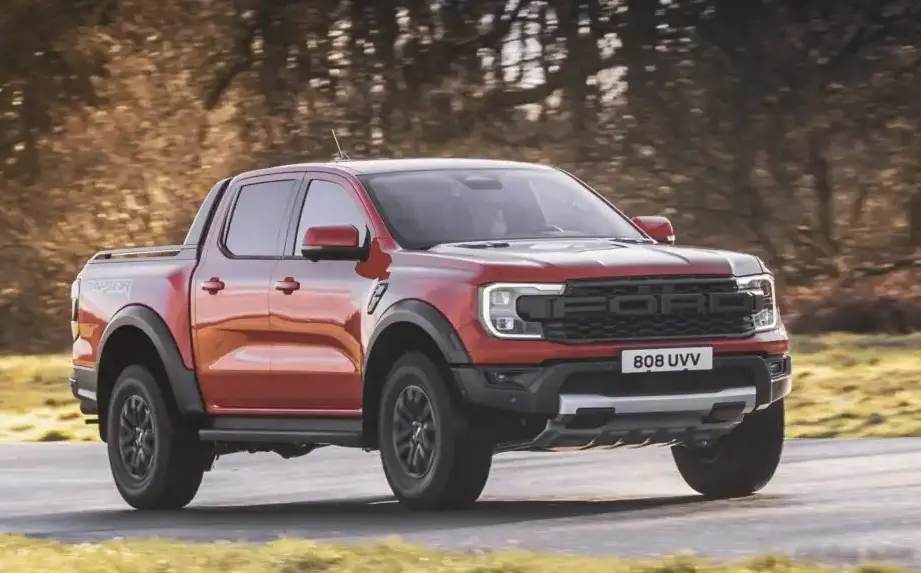
The Ford Ranger IV Double Cab 2.0 EcoBlue (170 Hp) 4×4, launched in March 2023, represents the latest iteration of Ford’s globally successful mid-size pickup truck. This variant occupies a significant position within the Ranger IV lineup, offering a balance between fuel efficiency, capability, and affordability. It’s designed to appeal to buyers needing a versatile vehicle for both work and personal use, particularly in markets where diesel engines remain popular. The Ranger IV platform itself is a substantial redesign from previous generations, incorporating modern technology and a more refined driving experience. This specific 2.0 EcoBlue engine and four-wheel-drive configuration is aimed at customers who require the added traction of 4×4 without the higher running costs associated with larger displacement engines.
Technical Specifications
| Brand | Ford |
| Model | Ranger |
| Generation | Ranger IV Double Cab |
| Type (Engine) | 2.0 EcoBlue (170 Hp) 4×4 |
| Start of production | March, 2023 |
| Powertrain Architecture | Internal Combustion engine |
| Body type | Pick-up |
| Seats | 5 |
| Doors | 4 |
| Combined fuel consumption (WLTP) | 8.5 l/100 km |
| Combined fuel consumption (US mpg) | 27.7 US mpg |
| Combined fuel consumption (UK mpg) | 33.2 UK mpg |
| Combined fuel consumption (km/l) | 11.8 km/l |
| CO2 emissions (WLTP) | 222 g/km |
| Fuel Type | Diesel |
| Acceleration 0 – 100 km/h | 11.6 sec |
| Acceleration 0 – 62 mph | 11.6 sec |
| Acceleration 0 – 60 mph | 11 sec |
| Maximum speed | 180 km/h (111.85 mph) |
| Weight-to-power ratio | 13.6 kg/Hp, 73.5 Hp/tonne |
| Weight-to-torque ratio | 5.7 kg/Nm, 175 Nm/tonne |
| Power | 170 Hp |
| Power per litre | 85.2 Hp/l |
| Torque | 405 Nm (298.71 lb.-ft.) |
| Engine layout | Front, Longitudinal |
| Engine Model/Code | P02X |
| Engine displacement | 1996 cm3 (121.8 cu. in.) |
| Number of cylinders | 4 |
| Engine configuration | Inline |
| Number of valves per cylinder | 4 |
| Fuel injection system | Diesel Commonrail |
| Engine aspiration | Turbocharger, Intercooler |
| Engine systems | Start & Stop System, Particulate filter |
| Kerb Weight | 2314 kg (5101.5 lbs.) |
| Max. weight | 3190 kg (7032.75 lbs.) |
| Max load | 876 kg (1931.25 lbs.) |
| Permitted trailer load with brakes (12%) | 3450 kg (7605.95 lbs.) |
| Permitted trailer load without brakes | 750 kg (1653.47 lbs.) |
| Length | 5370 mm (211.42 in.) |
| Width | 2015 mm (79.33 in.) |
| Width including mirrors | 2208 mm (86.93 in.) |
| Height | 1884-1914 mm (74.17 – 75.35 in.) |
| Wheelbase | 3270 mm (128.74 in.) |
| Front track | 1620 mm (63.78 in.) |
| Rear (Back) track | 1620 mm (63.78 in.) |
| Ride height (ground clearance) | 235-261 mm (9.25 – 10.28 in.) |
| Minimum turning circle (turning diameter) | 12.9 m (42.32 ft.) |
| Approach angle | 30-32° |
| Departure angle | 25.6-27° |
| Ramp-over (brakeover) angle | 21-24° |
| Wading depth | 800 mm (31.5 in.) |
| Drivetrain Architecture | The Internal combustion engine (ICE) drives the rear wheels permanently, and the front wheels are driven through an electrically or mechanically operated clutch if necessary. |
| Drive wheel | All wheel drive (4×4) |
| Number of gears and type of gearbox | 6 gears, manual transmission |
| Front brakes | Ventilated discs |
| Rear brakes | Drum |
| Assisting systems | ABS (Anti-lock braking system) |
| Steering type | Steering rack and pinion |
| Power steering | Electric Steering |
| Tires size | 255/70 R16 |
| Wheel rims size | 16 |
Powertrain & Engine Architecture
The heart of this Ranger variant is the 2.0 EcoBlue turbocharged diesel engine, specifically the P02X code. This engine is part of Ford’s EcoBlue family, known for its focus on efficiency and reduced emissions. It utilizes a common-rail direct fuel injection system, delivering fuel directly into the cylinders at extremely high pressure for optimized combustion. The engine features a single turbocharger with an intercooler to increase air density and improve power output. The four-cylinder configuration, with four valves per cylinder, contributes to a good balance of power and refinement. The 6-speed manual transmission is chosen for its durability and driver engagement, offering precise gear changes. While an automatic transmission is available on other Ranger IV models, this 170 hp version is exclusively offered with the manual gearbox.
Driving Characteristics
The 170 hp 2.0 EcoBlue engine, paired with the 6-speed manual transmission, provides adequate performance for everyday driving and moderate towing needs. Acceleration from 0-60 mph takes around 11 seconds, which is competitive within its class but noticeably slower than higher-powered Ranger variants. The engine delivers a respectable 405 Nm (298.71 lb.-ft.) of torque, providing sufficient pulling power for hauling loads or navigating challenging terrain. The manual transmission allows for greater driver control, particularly when off-roading or towing. Gear ratios are well-chosen to maximize fuel efficiency and provide usable power across a wide range of speeds. Compared to the more powerful bi-turbo 2.0 EcoBlue or the larger displacement engines, this variant prioritizes fuel economy and affordability over outright performance.
Equipment & Trim Levels
The Ranger IV Double Cab 2.0 EcoBlue (170 Hp) 4×4 typically serves as a mid-range trim level, offering a good balance of features and value. Standard equipment generally includes air conditioning, a basic infotainment system with Bluetooth connectivity, power windows and locks, and a rearview camera. Safety features such as ABS, electronic stability control, and multiple airbags are also standard. Interior upholstery is typically cloth, with durable plastic trim. Optional extras can include upgraded infotainment systems with larger touchscreens, navigation, Apple CarPlay/Android Auto compatibility, heated seats, and a premium sound system. Exterior options may include alloy wheels, bed liners, and various styling packages.
Chassis & Braking
The Ranger IV utilizes a robust ladder-frame chassis, providing a solid foundation for both on-road and off-road performance. The front suspension consists of independent double wishbones, while the rear suspension employs leaf springs. This configuration provides a good balance of ride comfort and load-carrying capacity. Braking duties are handled by ventilated discs at the front and drum brakes at the rear. The ABS system ensures optimal braking performance in various conditions. The 4×4 system features an electronically controlled transfer case, allowing the driver to switch between 2WD, 4Hi, and 4Lo modes for enhanced traction in different terrains.
Market Reception & Comparison
The Ford Ranger IV Double Cab 2.0 EcoBlue (170 Hp) 4×4 has been well-received in markets where diesel-powered pickups are popular. Critics have praised its fuel efficiency, comfortable ride, and capable 4×4 system. Compared to other trims in the Ranger IV lineup, this variant offers a more affordable entry point into the range, making it attractive to budget-conscious buyers. It provides a compelling alternative to competitors such as the Toyota Hilux, Nissan Navara, and Isuzu D-Max, offering a similar level of capability and refinement at a competitive price point. Fuel economy is a key strength, with the 8.5 l/100 km (27.7 US mpg) combined consumption figure being competitive within its segment.
Legacy
The 2.0 EcoBlue engine has proven to be a reliable and durable powertrain in other Ford vehicles. While long-term reliability data for this specific Ranger IV configuration is still emerging, the engine’s robust design and advanced technology suggest it will offer years of dependable service. On the used car market, this variant is expected to hold its value well due to its practicality, fuel efficiency, and the enduring popularity of the Ford Ranger nameplate. The combination of a manual transmission and a capable 4×4 system will likely appeal to enthusiasts and those seeking a more engaging driving experience.