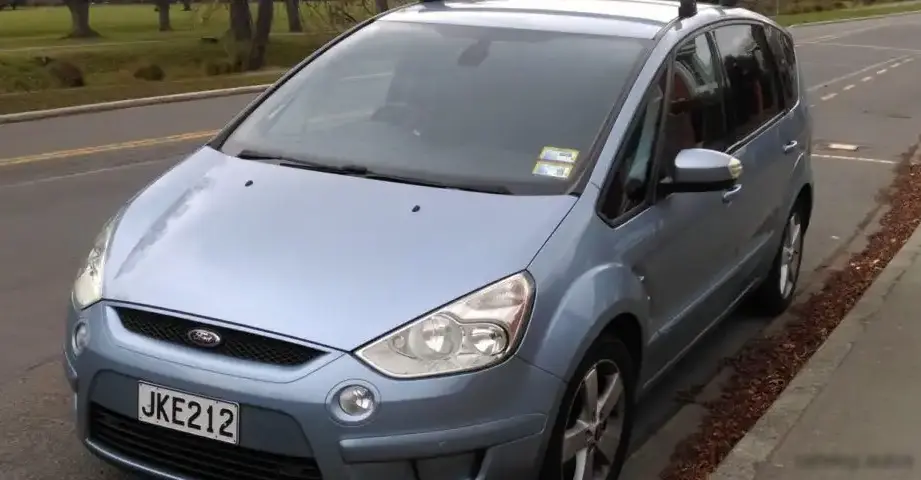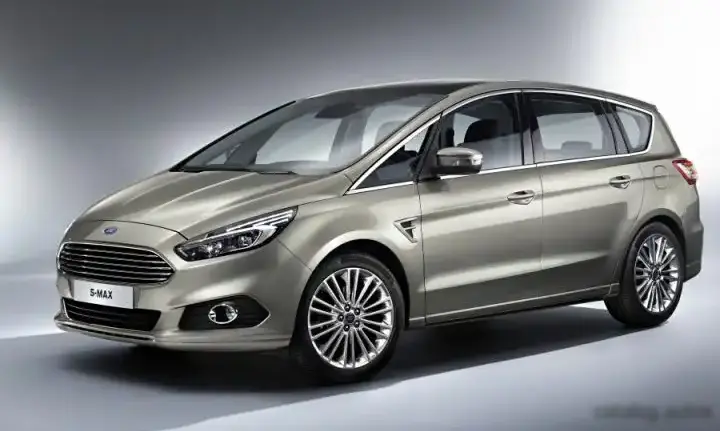
The Ford S-MAX II 2.0 Bi-Turbo EcoBlue (240 hp) Automatic S&S 7-Seat, produced from 2018 to 2019, represents a sophisticated iteration of Ford’s multi-purpose vehicle (MPV). Positioned as a premium offering within the second-generation S-MAX range (introduced in 2015), this variant aimed to deliver a blend of performance, efficiency, and practicality for families. It was primarily marketed in Europe, where the MPV segment remained strong, offering a compelling alternative to crossovers and SUVs. The S-MAX II, built on the Ford C2 platform, sought to elevate the MPV experience with advanced technology and a more dynamic driving character than its predecessor.
Technical Specifications
| Brand | Ford |
| Model | S-MAX |
| Generation | S-MAX II |
| Type | 2.0 Bi-Turbo EcoBlue (240 Hp) Automatic S&S 7 Seat |
| Start of production | 2018 |
| End of production | 2019 |
| Powertrain Architecture | Internal Combustion engine |
| Body type | MPV |
| Seats | 7 |
| Doors | 5 |
| Fuel consumption (urban) | 7.1-7.2 l/100 km (33.1 – 32.7 US mpg) |
| Fuel consumption (extra urban) | 5.2-5.3 l/100 km (45.2 – 44.4 US mpg) |
| Fuel consumption (combined) | 5.9-6.3 l/100 km (39.9 – 37.3 US mpg) |
| CO2 emissions | 154-162 g/km |
| Fuel Type | Diesel |
| Acceleration 0 – 100 km/h | 8.6 sec |
| Acceleration 0 – 62 mph | 8.6 sec |
| Acceleration 0 – 60 mph | 8.2 sec |
| Maximum speed | 218 km/h (135.46 mph) |
| Emission standard | Euro 6 d-TEMP |
| Weight-to-power ratio | 7.4 kg/Hp |
| Weight-to-torque ratio | 3.5 kg/Nm |
| Power | 240 Hp @ 4000 rpm |
| Torque | 500 Nm @ 2000 rpm (368.78 lb.-ft. @ 2000 rpm) |
| Engine layout | Front, Transverse |
| Engine Model/Code | YLCB |
| Engine displacement | 1997 cm3 (121.86 cu. in.) |
| Number of cylinders | 4 |
| Engine configuration | Inline |
| Cylinder Bore | 85 mm (3.35 in.) |
| Piston Stroke | 88 mm (3.46 in.) |
| Compression ratio | 16:1 |
| Number of valves per cylinder | 4 |
| Fuel injection system | Diesel Commonrail |
| Engine aspiration | BiTurbo, Intercooler |
| Valvetrain | DOHC |
| Engine oil capacity | 6.4 l (6.76 US qt | 5.63 UK qt) |
| Coolant capacity | 10.7 l (11.31 US qt | 9.41 UK qt) |
| Kerb Weight | 1766 kg (3893.36 lbs.) |
| Max. weight | 2575 kg (5676.9 lbs.) |
| Max load | 809 kg (1783.54 lbs.) |
| Trunk (boot) space – minimum | 285 l (10.06 cu. ft.) |
| Trunk (boot) space – maximum | 2020 l (71.34 cu. ft.) |
| Fuel tank capacity | 70 l (18.49 US gal | 15.4 UK gal) |
| Length | 4796 mm (188.82 in.) |
| Width | 1916 mm (75.43 in.) |
| Width including mirrors | 2137 mm (84.13 in.) |
| Height | 1655 mm (65.16 in.) |
| Wheelbase | 2849 mm (112.17 in.) |
| Front track | 1606 mm (63.23 in.) |
| Rear track | 1606 mm (63.23 in.) |
| Ride height (ground clearance) | 128-150 mm (5.04 – 5.91 in.) |
| Minimum turning circle | 12 m (39.37 ft.) |
| Drivetrain Architecture | Front wheel drive |
| Number of gears | 8 |
| Gearbox type | Automatic transmission |
| Front suspension | Independent, McPherson with coil spring and anti-roll bar |
| Rear suspension | Independent coil spring |
| Front brakes | Ventilated discs |
| Rear brakes | Disc |
| Assisting systems | ABS (Anti-lock braking system) |
| Steering type | Steering rack and pinion |
| Tires size | 235/55 R17; 235/50 R18; 245/45 R19 |
| Wheel rims size | 7.5J x 17; 7.5J x 18; 8J x 19 |
Powertrain & Engine Architecture
The heart of the S-MAX II 2.0 Bi-Turbo EcoBlue is the YLCB engine, a 1997cc inline-four cylinder diesel. This engine utilizes a sophisticated twin-turbocharger setup – a low-inertia turbo for rapid response and a larger turbo for peak power. The EcoBlue technology incorporates advanced combustion strategies, high-pressure fuel injection (Commonrail), and cooled exhaust gas recirculation (EGR) to optimize efficiency and reduce emissions. The engine produces 240 horsepower at 4000 rpm and a substantial 500 Nm (368 lb-ft) of torque from just 2000 rpm. This torque output is a key characteristic of the engine, providing strong pulling power for a vehicle of this size. The engine is paired with a smooth-shifting eight-speed automatic transmission, featuring a torque converter. The transmission is programmed for both fuel efficiency and responsive performance, with selectable drive modes.
Driving Characteristics
The 240 hp Bi-Turbo EcoBlue engine delivers brisk acceleration, achieving 0-60 mph in approximately 8.2 seconds and a top speed of 135 mph. The abundance of torque makes overtaking effortless, even when fully loaded with passengers and luggage. The eight-speed automatic transmission contributes to a relaxed driving experience on the highway, maintaining low engine speeds at cruising speeds. Compared to the lower-powered 1.5 EcoBlue variants, the 2.0 Bi-Turbo offers a significantly more engaging driving experience. While not as sporty as some performance-focused SUVs, the S-MAX II provides a confident and composed ride, thanks to its well-tuned suspension. The automatic transmission, while convenient, doesn’t offer the same level of driver control as a manual gearbox, and some drivers may find the gear changes slightly hesitant in certain situations.
Equipment & Trim Levels
The 2.0 Bi-Turbo EcoBlue Automatic S&S 7-Seat typically came equipped with a high level of standard features. These included Ford’s SYNC 3 infotainment system with an 8-inch touchscreen, navigation, Apple CarPlay and Android Auto compatibility, and a premium sound system. Comfort features such as leather upholstery, heated front seats, and a panoramic sunroof were often included. Safety features were comprehensive, encompassing adaptive cruise control, lane-keeping assist, blind-spot monitoring, and automatic emergency braking. Optional extras included a hands-free power tailgate, a rear-view camera, and upgraded alloy wheels.
Chassis & Braking
The S-MAX II features a McPherson strut front suspension and an independent coil spring rear suspension. The suspension is tuned to provide a balance between comfort and handling. The vehicle is equipped with ventilated disc brakes at the front and solid discs at the rear. Anti-lock Braking System (ABS) and Electronic Stability Control (ESC) are standard features, enhancing safety and control. The steering is a rack-and-pinion system, providing precise and responsive steering feel.
Market Reception & Comparison
The S-MAX II 2.0 Bi-Turbo EcoBlue was generally well-received by automotive critics. It was praised for its spacious interior, comfortable ride, and strong performance. The fuel economy, averaging around 40 mpg combined, was considered competitive for a vehicle of its size and capability. Compared to the lower-powered diesel variants, the 2.0 Bi-Turbo offered a more refined and enjoyable driving experience. However, some critics noted that the interior design, while functional, lacked the premium feel of some competitors. Against rivals like the Volkswagen Sharan and Citroën Grand C4 Picasso, the S-MAX II offered a more dynamic driving experience, but potentially at the expense of ultimate practicality.
Legacy
The 2.0 Bi-Turbo EcoBlue engine has proven to be a relatively reliable unit, although, like all modern diesel engines, it is susceptible to issues related to the diesel particulate filter (DPF) if not properly maintained. Regular servicing and the use of high-quality diesel fuel are crucial for ensuring long-term reliability. On the used car market, the S-MAX II 2.0 Bi-Turbo EcoBlue Automatic S&S 7-Seat holds its value reasonably well, particularly well-maintained examples with a full service history. It remains a popular choice for families seeking a spacious, practical, and relatively efficient MPV.