Technical Specifications
| Brand | Ford |
| Model | S-MAX |
| Generation | S-MAX II |
| Type | 2.0 EcoBlue (120 Hp) S&S 7 Seat |
| Start of production | 2018 |
| End of production | 2019 |
| Powertrain Architecture | Internal Combustion engine |
| Body type | MPV |
| Seats | 7 |
| Doors | 5 |
| Fuel consumption (urban) | 6.1-6.2 l/100 km (38.6 – 37.9 US mpg, 46.3 – 45.6 UK mpg, 16.4 – 16.1 km/l) |
| Fuel consumption (extra urban) | 4.6-4.7 l/100 km (51.1 – 50 US mpg, 61.4 – 60.1 UK mpg, 21.7 – 21.3 km/l) |
| Fuel consumption (combined) | 5.1-5.6 l/100 km (46.1 – 42 US mpg, 55.4 – 50.4 UK mpg, 19.6 – 17.9 km/l) |
| CO2 emissions | 134-145 g/km |
| Fuel Type | Diesel |
| Acceleration 0 – 100 km/h | 12.5 sec |
| Acceleration 0 – 62 mph | 12.5 sec |
| Acceleration 0 – 60 mph | 11.9 sec |
| Maximum speed | 180 km/h (111.85 mph) |
| Emission standard | Euro 6 d-TEMP |
| Weight-to-power ratio | 14.4 kg/Hp, 69.6 Hp/tonne |
| Weight-to-torque ratio | 5.1 kg/Nm, 197.1 Nm/tonne |
| Power | 120 Hp @ 3500 rpm |
| Power per litre | 60.1 Hp/l |
| Torque | 340 Nm @ 1750-2250 rpm (250.77 lb.-ft. @ 1750-2250 rpm) |
| Engine layout | Front, Transverse |
| Engine Model/Code | YNCA |
| Engine displacement | 1997 cm3 (121.86 cu. in.) |
| Number of cylinders | 4 |
| Engine configuration | Inline |
| Cylinder Bore | 85 mm (3.35 in.) |
| Piston Stroke | 88 mm (3.46 in.) |
| Compression ratio | 17:1 |
| Number of valves per cylinder | 4 |
| Fuel injection system | Diesel Commonrail |
| Engine aspiration | Turbocharger, Intercooler |
| Valvetrain | DOHC |
| Engine oil capacity | 6.4 l (6.76 US qt | 5.63 UK qt) |
| Coolant | 10.7 l (11.31 US qt | 9.41 UK qt) |
| Kerb Weight | 1725 kg (3802.97 lbs.) |
| Max. weight | 2505 kg (5522.58 lbs.) |
| Max load | 780 kg (1719.61 lbs.) |
| Trunk (boot) space – minimum | 285 l (10.06 cu. ft.) |
| Trunk (boot) space – maximum | 2020 l (71.34 cu. ft.) |
| Fuel tank capacity | 70 l (18.49 US gal | 15.4 UK gal) |
| Length | 4796 mm (188.82 in.) |
| Width | 1916 mm (75.43 in.) |
| Width including mirrors | 2137 mm (84.13 in.) |
| Height | 1655 mm (65.16 in.) |
| Wheelbase | 2849 mm (112.17 in.) |
| Front track | 1606 mm (63.23 in.) |
| Rear (Back) track | 1606 mm (63.23 in.) |
| Ride height (ground clearance) | 128-150 mm (5.04 – 5.91 in.) |
| Minimum turning circle | 12 m (39.37 ft.) |
| Drivetrain Architecture | Front wheel drive |
| Number of gears | 6 |
| Gearbox type | Manual transmission |
| Front suspension | Independent, type McPherson with coil spring and anti-roll bar |
| Rear suspension | Independent coil spring |
| Front brakes | Ventilated discs |
| Rear brakes | Disc |
| Assisting systems | ABS (Anti-lock braking system) |
| Steering type | Steering rack and pinion |
| Tires size | 235/55 R17; 235/50 R18; 245/45 R19 |
| Wheel rims size | 7.5J x 17; 7.5J x 18; 8J x 19 |
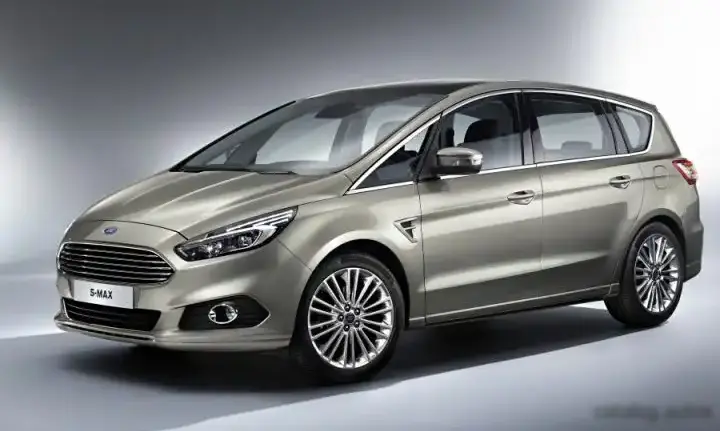
The Ford S-MAX II 2.0 EcoBlue (120 hp) S&S 7-Seat, produced from 2018 to 2019, represents a mid-range offering within the second generation of Ford’s popular multi-purpose vehicle (MPV). Positioned as a practical and fuel-efficient option for families, this variant aimed to balance affordability with the S-MAX’s inherent spaciousness and versatility. It falls within the broader context of the second-generation S-MAX (introduced in 2015), which aimed to refine the original’s sporty character with improved comfort and technology. This model was primarily marketed in Europe, where the MPV segment remained strong, offering a compelling alternative to crossovers and SUVs.
Powertrain & Engine Architecture
The heart of the S-MAX II 2.0 EcoBlue (120 hp) is the YNCA engine, a member of Ford’s Duratorq family of diesel engines. This 1997cc inline-four cylinder engine utilizes a common-rail direct fuel injection system, delivering fuel at extremely high pressure for optimized combustion. The engine features a single turbocharger with an intercooler, enhancing power and efficiency. The DOHC (Double Overhead Camshaft) valvetrain, with four valves per cylinder, contributes to improved breathing and overall performance. The 17:1 compression ratio is typical for a modern diesel engine, maximizing energy extraction from the fuel. This particular engine is paired with a six-speed manual transmission, chosen for its efficiency and driver engagement, although an automatic option was available on other trims. The Start & Stop system, denoted by the “S&S” in the model name, automatically shuts off the engine when the vehicle is stationary to reduce fuel consumption and emissions.
Driving Characteristics
The 120 hp output of the 2.0 EcoBlue engine, coupled with 340 Nm (250.77 lb-ft) of torque, provides adequate, but not exhilarating, performance. Acceleration from 0-60 mph takes around 11.9 seconds, and top speed is limited to 180 km/h (111.85 mph). The engine’s torque peak, available from 1750-2250 rpm, provides good low-end grunt, making it suitable for everyday driving and hauling passengers or cargo. Compared to the higher-powered 2.0 EcoBlue variants (150 hp and 185 hp), this version feels noticeably less responsive, particularly during overtaking maneuvers. The six-speed manual transmission offers a decent spread of gears, allowing the driver to keep the engine within its optimal torque band. However, the gear ratios are tuned for fuel economy rather than outright performance. The driving experience is generally comfortable, thanks to the S-MAX’s well-tuned suspension, but it lacks the sporty feel of some competitors.
Equipment & Trim Levels
The 2.0 EcoBlue (120 hp) S&S 7-Seat typically represented a mid-level trim in the S-MAX II lineup. Standard equipment generally included air conditioning, a basic infotainment system with Bluetooth connectivity, alloy wheels, and a suite of safety features such as ABS, ESP (Electronic Stability Program), and multiple airbags. Interior upholstery was typically cloth, and the dashboard featured a functional, if not particularly luxurious, design. Optional extras included a more advanced infotainment system with navigation, leather upholstery, parking sensors, a rearview camera, and a panoramic sunroof. The seven-seat configuration was standard, offering flexible seating arrangements for families.
Chassis & Braking
The S-MAX II utilizes an independent suspension setup on both the front and rear axles. The front suspension employs McPherson struts with coil springs and an anti-roll bar, while the rear features an independent multi-link setup with coil springs. This configuration provides a good balance between ride comfort and handling. Braking duties are handled by ventilated discs on the front wheels and solid discs on the rear. ABS (Anti-lock Braking System) is standard, enhancing braking performance and stability. The S-MAX’s chassis is relatively lightweight, contributing to its agility and fuel efficiency.
Market Reception & Comparison
The Ford S-MAX II 2.0 EcoBlue (120 hp) was generally well-received by critics as a practical and fuel-efficient MPV. However, some reviewers noted that the 120 hp engine felt underpowered, particularly when the vehicle was fully loaded. Compared to the higher-output 2.0 EcoBlue variants, this version offered lower running costs but compromised on performance. Fuel economy figures of 5.1-5.6 l/100 km (46.1 – 42 US mpg) were competitive for its class. Reliability reports suggest that the Duratorq engine is generally robust, but regular maintenance is essential to prevent issues with the diesel particulate filter (DPF) and fuel injection system.
Legacy
The Ford S-MAX II 2.0 EcoBlue (120 hp) remains a popular choice in the used car market, particularly for families seeking a spacious and versatile vehicle. The Duratorq engine has proven to be relatively durable, although potential buyers should be aware of the potential for DPF issues. The S-MAX’s reputation for practicality and comfort ensures continued demand, making it a sensible and affordable option for those needing a seven-seat vehicle. While newer crossovers and SUVs have gained popularity, the S-MAX II continues to offer a compelling alternative for those who prioritize space and functionality.