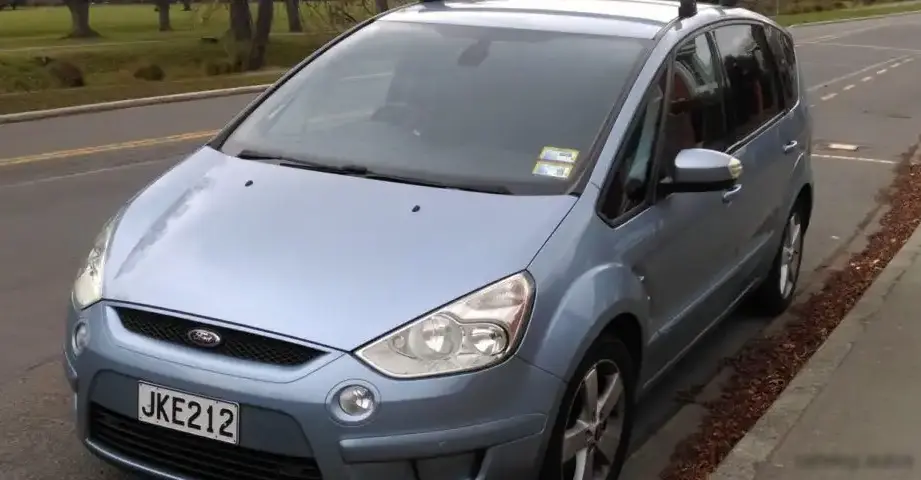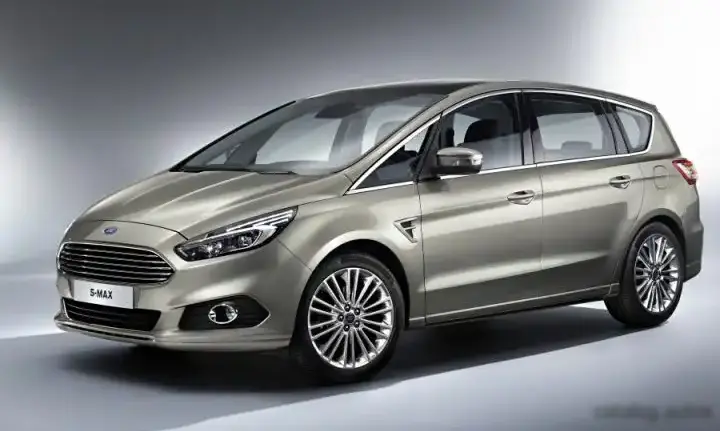
The Ford S-MAX II 2.0 TDCi (150 hp) S&S 7-Seat, produced between 2015 and 2018, represents a significant iteration of Ford’s multi-purpose vehicle (MPV) offering. Positioned as a mid-range trim within the second-generation S-MAX lineup (introduced in 2015, internally designated as the 2015-2018 model year), this variant aimed to balance fuel efficiency, practicality, and a reasonable level of performance for family transport. It served as a key model in the European market, where MPVs remained popular, offering a compelling alternative to crossovers and SUVs. The S-MAX II, built on the Ford C240 platform, sought to improve upon the original S-MAX’s blend of sporty handling and spaciousness.
Technical Specifications
| Brand | Ford |
| Model | S-MAX |
| Generation | S-MAX II |
| Type | 2.0 TDCi (150 Hp) S&S 7 Seat |
| Start of production | 2015 |
| End of production | 2018 |
| Powertrain Architecture | Internal Combustion engine |
| Body type | MPV |
| Seats | 7 |
| Doors | 5 |
| Fuel consumption (urban) | 5.6 l/100 km (42 US mpg, 50.4 UK mpg, 17.9 km/l) |
| Fuel consumption (extra urban) | 4.6 l/100 km (51.1 US mpg, 61.4 UK mpg, 21.7 km/l) |
| Fuel consumption (combined) | 5 l/100 km (47 US mpg, 56.5 UK mpg, 20 km/l) |
| CO2 emissions | 129 g/km |
| Fuel Type | Diesel |
| Acceleration 0 – 100 km/h | 10.8 sec |
| Acceleration 0 – 62 mph | 10.8 sec |
| Acceleration 0 – 60 mph | 10.3 sec |
| Maximum speed | 198 km/h (123.03 mph) |
| Emission standard | Euro 6 |
| Weight-to-power ratio | 11.5 kg/Hp, 87 Hp/tonne |
| Weight-to-torque ratio | 4.9 kg/Nm, 202.9 Nm/tonne |
| Power | 150 Hp @ 3500 rpm |
| Power per litre | 75.1 Hp/l |
| Torque | 350 Nm @ 2000-2500 rpm (258.15 lb.-ft. @ 2000-2500 rpm) |
| Engine layout | Front, Transverse |
| Engine Model/Code | T7CI, T7CJ, T7CK, T7CL |
| Engine displacement | 1997 cm3 (121.86 cu. in.) |
| Number of cylinders | 4 |
| Engine configuration | Inline |
| Cylinder Bore | 85 mm (3.35 in.) |
| Piston Stroke | 88 mm (3.46 in.) |
| Compression ratio | 17:1 |
| Number of valves per cylinder | 4 |
| Fuel injection system | Diesel Commonrail |
| Engine aspiration | Turbocharger, Intercooler |
| Valvetrain | DOHC |
| Engine oil capacity | 5.6 l (5.92 US qt | 4.93 UK qt) |
| Coolant | 7.3 l (7.71 US qt | 6.42 UK qt) |
| Kerb Weight | 1725 kg (3802.97 lbs.) |
| Max. weight | 2530 kg (5577.7 lbs.) |
| Max load | 805 kg (1774.72 lbs.) |
| Trunk (boot) space – minimum | 285 l (10.06 cu. ft.) |
| Trunk (boot) space – maximum | 2020 l (71.34 cu. ft.) |
| Fuel tank capacity | 70 l (18.49 US gal | 15.4 UK gal) |
| Length | 4796 mm (188.82 in.) |
| Width | 1916 mm (75.43 in.) |
| Width including mirrors | 2137 mm (84.13 in.) |
| Height | 1655 mm (65.16 in.) |
| Wheelbase | 2849 mm (112.17 in.) |
| Front track | 1606 mm (63.23 in.) |
| Rear (Back) track | 1606 mm (63.23 in.) |
| Ride height (ground clearance) | 128-150 mm (5.04 – 5.91 in.) |
| Minimum turning circle | 12 m (39.37 ft.) |
| Drivetrain Architecture | Front wheel drive |
| Number of gears | 6 |
| Gearbox type | Manual transmission |
| Front suspension | Independent, type McPherson with coil spring and anti-roll bar |
| Rear suspension | Independent coil spring |
| Front brakes | Ventilated discs |
| Rear brakes | Disc |
| Assisting systems | ABS (Anti-lock braking system) |
| Steering type | Steering rack and pinion |
| Tires size | 235/55 R17; 235/50 R18; 245/45 R19 |
| Wheel rims size | 7.5J x 17; 7.5J x 18; 8J x 19 |
Powertrain & Engine Architecture
The heart of the S-MAX II 2.0 TDCi is the Ford Duratorq engine family, specifically the 2.0-liter turbocharged diesel. Engine codes T7CI, T7CJ, T7CK, and T7CL were used depending on the specific calibration and market. This engine utilizes a common-rail direct injection system, delivering fuel at extremely high pressure for optimized combustion. The engine features a single turbocharger with an intercooler to increase air density and improve power output. The double overhead camshaft (DOHC) valvetrain, with four valves per cylinder, contributes to efficient gas exchange. The 150 horsepower output is achieved at 3500 rpm, while the peak torque of 350 Nm (258 lb-ft) is available between 2000 and 2500 rpm. This engine was paired with a 6-speed manual transmission in this configuration, providing a balance between fuel economy and driver control. The inclusion of a Start & Stop system further enhances fuel efficiency by automatically shutting off the engine when the vehicle is stationary.
Driving Characteristics
The 2.0 TDCi 150 hp engine, coupled with the 6-speed manual transmission, delivers adequate performance for everyday driving and family duties. Acceleration from 0-60 mph takes around 10.3 seconds, and the top speed is 198 km/h (123 mph). While not a particularly sporty setup, the engine provides sufficient torque for comfortable cruising and overtaking maneuvers. The manual transmission allows for greater driver engagement compared to the automatic options available on other S-MAX trims. The gear ratios are tuned for fuel efficiency, meaning the engine can feel slightly strained when pushed hard. Compared to the higher-output 2.0 TDCi variants (typically around 185 hp) or the petrol-powered models, this version offers less outright performance but compensates with improved fuel economy. The weight of the vehicle, around 1725 kg, is noticeable, but the well-tuned suspension helps to maintain a relatively composed ride.
Equipment & Trim Levels
The 2.0 TDCi 150 hp S&S 7-Seat trim typically included features such as air conditioning, a basic audio system with USB connectivity, power windows and mirrors, and alloy wheels. Safety features included ABS, electronic stability control, and multiple airbags. Higher trim levels, such as Titanium, offered additional features like leather upholstery, a more advanced infotainment system with navigation, parking sensors, and automatic climate control. Optional extras included a panoramic sunroof, heated seats, and a premium sound system. The interior generally featured durable materials and a functional design, prioritizing practicality over luxury.
Chassis & Braking
The S-MAX II utilizes an independent suspension setup on both the front and rear axles. The front suspension employs McPherson struts with coil springs and an anti-roll bar, while the rear features an independent multi-link suspension. This configuration provides a good balance between ride comfort and handling. The braking system consists of ventilated discs on the front wheels and solid discs on the rear. ABS (Anti-lock Braking System) is standard, enhancing braking performance and stability. The steering is rack and pinion, providing precise and responsive control.
Market Reception & Comparison
The Ford S-MAX II 2.0 TDCi 150 hp S&S 7-Seat was generally well-received by critics as a practical and fuel-efficient MPV. It was praised for its spacious interior, comfortable ride, and decent handling. However, some reviewers noted that the engine could feel underpowered when fully loaded or driving on steep inclines. Compared to the more powerful 2.0 TDCi variants, this trim offered better fuel economy – around 5 l/100 km (47 US mpg) combined – but at the expense of performance. It also represented a more affordable entry point into the S-MAX range, making it an attractive option for budget-conscious families.
Legacy
The Duratorq 2.0 TDCi engine, in its various iterations, has proven to be a relatively reliable powertrain. While not immune to issues such as diesel particulate filter (DPF) clogging and occasional turbocharger problems, it generally offers good longevity with proper maintenance. In the used car market, the S-MAX II 2.0 TDCi 150 hp S&S 7-Seat remains a popular choice for families seeking a spacious and practical vehicle. Its fuel efficiency and reasonable running costs contribute to its continued appeal. However, potential buyers should be aware of the potential for DPF issues and ensure that the vehicle has been regularly serviced.